
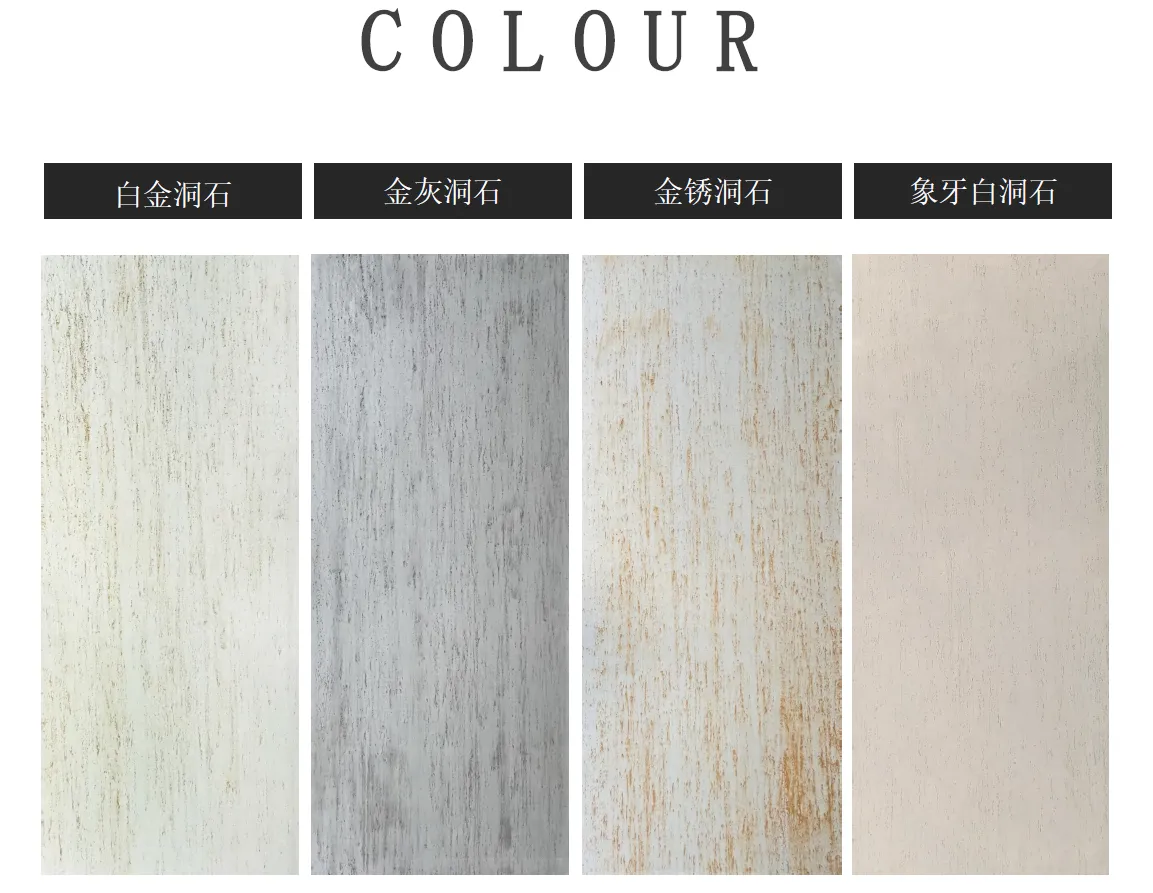
There's a quiet magic in running your hand over a slab of Roman Huge Travertine. Its surface, pockmarked with tiny fossilized bubbles and gently worn by time, tells a story older than most cities. Quarried from the same Italian hills that supplied the Colosseum and the Pantheon, this stone isn't just a building material—it's a bridge between ancient craftsmanship and modern preservation. Yet, when tasked with restoring or historic structures, architects and builders face a delicate dance: honoring the past without sacrificing durability, functionality, or the needs of today's world. This is where MCM (Modified Composite Material) steps in, offering a range of products that complement Roman Huge Travertine's timeless elegance while adding the resilience and versatility modern heritage projects demand.
To understand why Roman Huge Travertine remains a cornerstone of heritage renovations, we must first trace its roots. For millennia, travertine has been prized for its warm, earthy tones—ranging from creamy beiges to deep, sunbaked golds—and its unique porous texture, formed by mineral-rich hot springs depositing calcium carbonate over centuries. The Romans, masters of engineering and aesthetics, recognized its potential early on. They quarried massive blocks (hence "huge" in its name) from Tivoli, near Rome, using techniques that seem almost artisanal by today's standards: iron chisels, wooden wedges, and sheer human effort to extract stones weighing up to 100 tons. These blocks weren't just stacked; they were shaped to fit like puzzle pieces, creating arches, columns, and facades that have withstood earthquakes, wars, and the test of time.
What makes Roman Huge Travertine irreplaceable in heritage work is its authenticity . It carries the patina of history—the subtle discoloration from rainwater, the faint tool marks left by Roman stonemasons, the way it glows softly under sunlight. In a world of mass-produced materials, this tactile, living quality is irreplaceable. Walk through the ruins of the Roman Forum, and you'll feel it: the stone isn't just cold and hard; it's warm, as if it retains the energy of the people who built and walked upon it. For architects restoring a 17th-century villa or a medieval town hall, using Roman Huge Travertine isn't just about matching the original material—it's about preserving the soul of the structure.
Yet, for all its beauty, Roman Huge Travertine presents challenges in modern renovations. Traditional travertine is heavy—so heavy that older buildings, with their aging foundations, often struggle to bear the load of new installations. Its porosity, while charming, can make it prone to staining and water damage if not sealed meticulously. And sourcing large, authentic Roman travertine blocks? It's not just expensive; it's increasingly unsustainable, as historic quarries face stricter regulations to protect their finite resources. Add to this the need for modern amenities—insulation, moisture resistance, energy efficiency—and the task becomes clear: heritage projects need materials that honor the past and adapt to the present.
This is where MCM's innovative product lines shine. Born from a desire to merge traditional aesthetics with cutting-edge technology, MCM's offerings—from Flexible Stone to the 3D Printing Series—are engineered to work in harmony with materials like Roman Huge Travertine. They're lightweight, reducing structural strain on old buildings. They're durable, resisting the wear and tear of modern life without losing their visual appeal. And perhaps most importantly, they're designed to mimic the look and feel of natural stone, so the eye (and the hand) can't tell the difference between the original travertine and the MCM accent piece.
Let's start with MCM Flexible Stone, a standout in their lineup. Imagine (oops, scratch that— picture ) a thin, pliable sheet that looks exactly like a slice of Roman Huge Travertine, complete with those characteristic pits and veining, but light enough to be installed on curved surfaces or even ceilings. That's Flexible Stone. It's made by compressing natural stone particles into a composite matrix, retaining the stone's authentic texture while adding flexibility and strength. In a heritage renovation, this means you can repair a damaged travertine cornice with a Flexible Stone patch that blends seamlessly, or line the interior walls of a historic church with it to add warmth without adding weight to the structure.
Then there's the MCM 3D Printing Series, which takes customization to new heights. Traditional travertine carving is a labor of love, requiring skilled artisans to chisel intricate patterns by hand. MCM's 3D printing technology allows for the same level of detail—think floral motifs, geometric designs, or even replicas of historic inscriptions—but with precision and speed that modern projects demand. For example, if a 19th-century mansion's facade has a missing travertine relief, MCM can 3D scan the remaining section, print an exact match in their composite material, and install it in days, not weeks. The result? A restoration that's faithful to the original, without the wait or cost of hand-carving.
To see how MCM enhances Roman Huge Travertine, let's explore a few key products and their roles in heritage projects:
| MCM Product | Key Features | Role in Heritage Renovation |
|---|---|---|
| Lunar Peak Silvery | Subtle silver-gray tone with a matte finish; lightweight (1/5 the weight of natural stone); weather-resistant. | Used for trim or accent panels alongside Roman Huge Travertine, adding a modern, understated shimmer without clashing with the travertine's warm hues. |
| Foamed Aluminium Alloy Board (Vintage Silver) | Metallic finish with a "lived-in" patina; ultra-lightweight; fire-resistant. | Ideal for interior accents (e.g., stair risers, ceiling beams) in historic buildings, pairing the industrial chic of aluminum with the organic texture of travertine. |
| Travertine (Starry Green) (MCM Variant) | Deep green base with flecks of gold (mimicking mineral deposits); stain-resistant; easier to cut than natural travertine. | Perfect for adding subtle color to a heritage project—say, a courtyard wall or a fireplace surround—without straying from the natural stone aesthetic. |
| 3D Art Concrete Board | Custom 3D-printed patterns (e.g., replicas of historic moldings); high compressive strength; compatible with traditional mortar. | Used to replicate ornate travertine details that were damaged beyond repair, ensuring the building's architectural integrity is maintained. |
Let's ground this in a real scenario: the restoration of a 15th-century palazzo in Tuscany, Italy, whose travertine facade had suffered decades of weathering. The original Roman Huge Travertine blocks were still structurally sound, but many had cracks, and the mortar between them was crumbling. The goal? Restore the facade's grandeur while making the building energy-efficient and safe for modern use.
The architects turned to MCM for solutions. First, they used MCM Flexible Stone (matching the palazzo's original travertine hue) to patch the cracked blocks. The flexible sheets conformed to the irregular shapes of the damage, creating a seamless repair. For the mortar replacement, they opted for MCM's Epoch Stone, a high-performance composite that mimics the look of traditional lime mortar but offers better adhesion and water resistance. Inside, the once-drafty halls were lined with MCM Lunar Peak Silvery panels, adding insulation without covering up the original travertine walls. The result? A palazzo that looks as it did in 1480, but now stays warm in winter, cool in summer, and stands ready to endure another 500 years.
What struck the restoration team most? How the MCM products disappeared into the design. Visitors run their hands over the repaired travertine blocks and can't tell where the original stone ends and the Flexible Stone begins. The Lunar Peak Silvery panels catch the light just enough to highlight the travertine's texture, not overshadow it. It's a partnership, not a competition—and that's the beauty of MCM's approach.
At the end of the day, heritage renovation isn't just about bricks and mortar—or travertine and composite materials. It's about preserving stories. The Roman Huge Travertine in that Tuscan palazzo was quarried by workers who likely never imagined their stone would still be standing centuries later. The MCM products added to it were crafted by engineers and designers who care deeply about ensuring those stories continue to be told. Together, they create spaces that feel both ancient and alive, where a child can trace a Roman chisel mark on a travertine column and a homeowner can enjoy the comfort of modern insulation.
So the next time you walk past a historic building—whether it's a grand cathedral, a cozy cottage, or a bustling town square—take a closer look. If it's been renovated with care, you might just spot the quiet collaboration between Roman Huge Travertine and MCM: old and new, stone and innovation, past and present, all working together to keep history breathing.
Because some legacies aren't meant to be frozen in time—they're meant to evolve. And with Roman Huge Travertine and MCM leading the way, the future of heritage preservation looks brighter (and more beautiful) than ever.
Recommend Products












