
There's something undeniably magical about travertine. For centuries, this natural stone has adorned the floors of Roman villas, the facades of ancient temples, and the interiors of grand palaces, its warm beige tones and subtle veining telling stories of time and craftsmanship. But for modern homeowners and designers, the dream of bringing that same timeless elegance into today's spaces often hits a wall—literally. Natural travertine is heavy, expensive, prone to staining, and its extraction leaves a significant environmental footprint. Enter MCM technology, a game-changer that's redefining how we think about architectural surfaces. Today, we're diving into one of its most stunning creations: Roman Huge Travertine, a look-alike that captures the soul of natural travertine while solving its biggest headaches.
MCM, or Modified Composite Material, isn't just another synthetic substitute. It's a revolutionary engineering feat that blends natural minerals, high-performance polymers, and advanced manufacturing techniques to create surfaces that look and feel like stone—without the weight, cost, or hassle. At its core, MCM is about smart design : taking the best of nature and enhancing it with science. The result? Surfaces that are flexible, lightweight, incredibly durable, and—most importantly—visually indistinguishable from their natural counterparts.
One of the standout features of MCM is its flexibility. Unlike rigid natural stone, MCM flexible stone can bend and curve, making it possible to install on rounded walls, arches, or even furniture with curved edges—spaces where natural travertine would crack or require painstaking customization. This flexibility opens up a world of design possibilities, letting creativity take the lead over material limitations.
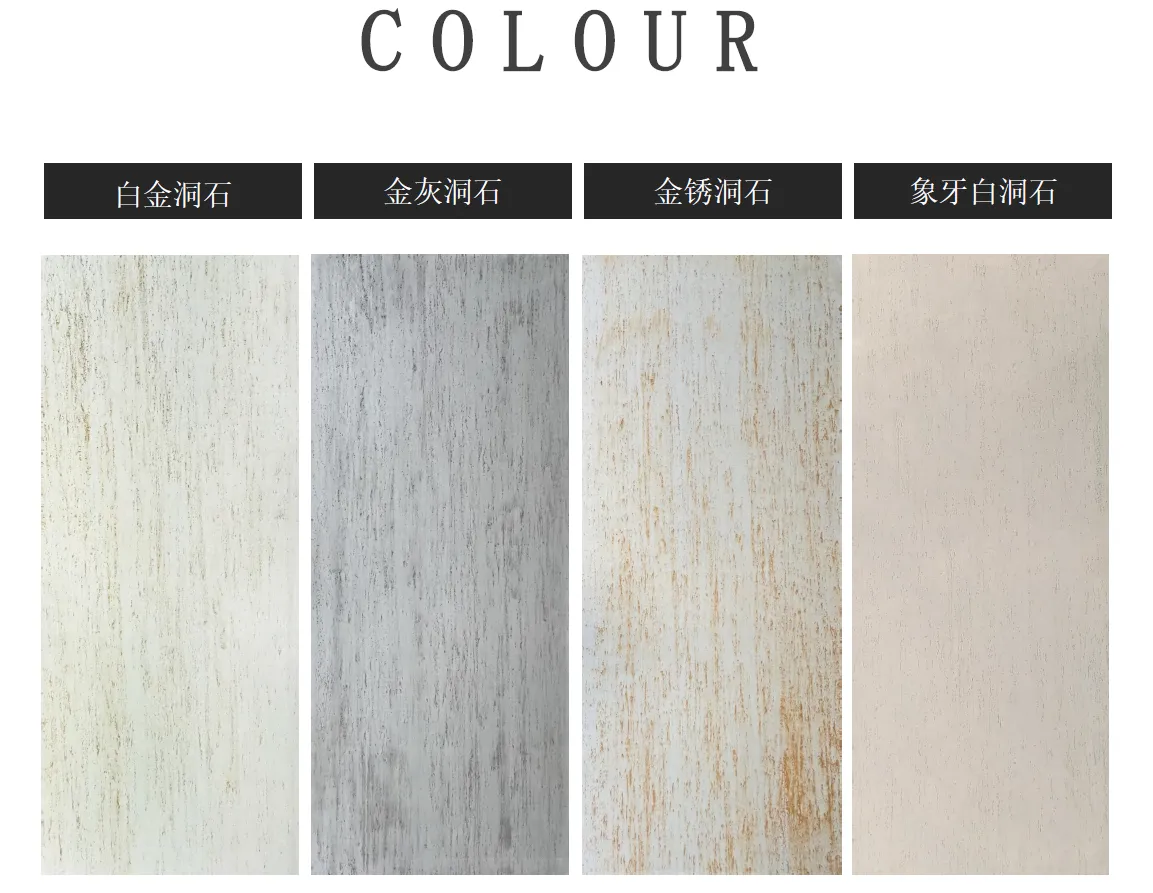
Roman Huge Travertine isn't just a product—it's an homage to the grandeur of ancient architecture. Designed to mimic the look of large-format natural travertine slabs, it boasts the same warm, earthy base tones, the same delicate veining that seems to flow like rivers through stone, and the same subtle pitting (tiny holes) that give travertine its characteristic texture. Run your hand over it, and you'll feel the slight roughness, the organic quality that makes natural stone so tactilely satisfying. But here's the twist: this isn't stone at all. It's MCM, and that makes all the difference.
While Roman Huge Travertine stays true to the classic travertine aesthetic, MCM's color palette doesn't stop there. For those craving a bolder statement, there are options like travertine (starry green) —a variant that infuses the stone's natural texture with a deep, celestial green hue, perfect for accent walls or outdoor patios that want to stand out. But for purists, Roman Huge Travertine remains the gold standard, offering that "lived-in luxury" vibe that feels both opulent and approachable.
Curious how Roman Huge Travertine stacks up against the real deal? Let's break it down. The table below compares the two across key factors that matter most to homeowners, designers, and project managers:
| Feature | MCM Roman Huge Travertine | Natural Travertine |
|---|---|---|
| Cost (per sqm) | $40–$80 (30–50% cheaper) | $80–$150+ |
| Weight (kg per sqm) | 3–5 kg (light enough for drywall) | 20–30 kg (requires reinforced structures) |
| Installation Time | 1–2 days for a standard room (no heavy machinery) | 3–5 days (needs professional stonemasons and cranes) |
| Stain Resistance | High (sealing not required; spills wipe clean) | Low (porous; requires annual sealing and immediate spill cleanup) |
| Environmental Impact | Low (uses recycled materials; 90% less waste than stone cutting) | High (quarrying disrupts ecosystems; high water/energy use) |
The numbers speak for themselves. MCM Roman Huge Travertine isn't just a cheaper alternative—it's a smarter one. Its lightweight nature means you can install it on upper floors without reinforcing your home's structure, and its durability means it'll look fresh for decades, even in high-traffic areas like kitchens or entryways.
Roman Huge Travertine is just the tip of the iceberg when it comes to MCM's versatility. The technology has spawned an entire universe of surfaces, each designed to cater to different aesthetics and needs. For example, if you're craving a modern, industrial vibe, foamed aluminium alloy board (vintage silver) offers a sleek, metallic finish with a hint of retro charm—perfect for accent walls in lofts or commercial spaces. For those who love the raw, unpolished look of concrete but want something warmer, fair-faced concrete MCM panels deliver that minimalist edge without the coldness of real concrete.
What's exciting is how these materials can play together. Imagine a kitchen where Roman Huge Travertine backsplashes meet foamed aluminium alloy cabinets, or a bathroom where fair-faced concrete walls contrast with travertine (starry green) shower niches. MCM doesn't just replace natural materials—it lets you mix and match them in ways that were once impossible, creating spaces that feel layered, personal, and uniquely yours.
Let's get practical: where can you actually use Roman Huge Travertine? The answer is almost anywhere. Here are just a few ideas:
In homes, Roman Huge Travertine shines as kitchen backsplashes (no more worrying about tomato sauce stains!), bathroom walls (resistant to moisture and mold), or fireplace surrounds (adds warmth to winter evenings). Its lightweight nature even makes it ideal for ceiling accents—imagine a tray ceiling wrapped in travertine-like panels, turning an ordinary room into a spa-like retreat.
For businesses, first impressions matter. Roman Huge Travertine can transform hotel lobbies into grand entrances, restaurant facades into inviting beacons, or office reception areas into spaces that feel professional yet welcoming. Since it's easy to install and requires minimal maintenance, businesses save on labor and upkeep costs—money that can be invested back into customer experiences.
Unlike natural travertine, which etches and fades when exposed to rain, snow, or UV rays, MCM flexible stone is built to withstand the elements. That makes Roman Huge Travertine perfect for outdoor patios, pool decks, garden pathways, or even exterior cladding. Imagine stepping onto your backyard patio, surrounded by the look of ancient stone, without worrying about cracks from freezing temperatures or discoloration from the sun.
In a world where "sustainable" is more than just a buzzword, MCM has a compelling story to tell. Natural stone quarrying is notoriously hard on the planet: it disrupts ecosystems, uses massive amounts of water, and generates tons of waste (up to 70% of a quarried block is discarded as rubble). MCM, by contrast, uses recycled materials in its production, generates 90% less waste, and requires far less energy to manufacture. Because it's lightweight, transporting MCM panels also reduces carbon emissions—trucks can carry 5x more MCM than natural stone, cutting down on fuel use.
For eco-conscious homeowners and designers, this isn't just a bonus—it's a requirement. Roman Huge Travertine lets you have your cake and eat it too: the beauty of natural stone, with a conscience that stays clear.
Let's talk about the elephant in the room: upkeep. Natural travertine demands annual sealing to prevent stains, and even then, acidic substances like lemon juice or vinegar can etch its surface. Roman Huge Travertine? It's practically maintenance-free. A quick wipe with mild soap and water is all it takes to clean up spills, and since it's non-porous, there's no need for sealing. Even in homes with kids or pets, it holds up beautifully—no more panicking over muddy paw prints or spilled juice boxes.
Don't just take our word for it. Architects and interior designers are increasingly turning to MCM for its ability to balance aesthetics, functionality, and sustainability. "Roman Huge Travertine gives me the freedom to design curved walls or vaulted ceilings with travertine-like texture—something I could never do with natural stone," says Sarah Chen, a residential designer in Chicago. "Clients love that they get the look they want without blowing their budget, and I love that I can push creative boundaries without compromising on durability."
At the end of the day, Roman Huge Travertine isn't just a substitute for natural stone. It's a better alternative—one that honors the past while embracing the future. It lets us bring the elegance of ancient travertine into our homes and businesses without the weight, cost, or environmental guilt. Whether you're renovating a small bathroom or designing a commercial complex, MCM technology offers a simple promise: beauty that doesn't break the bank, doesn't hurt the planet, and doesn't require a lifetime of maintenance.
So, if you've been dreaming of travertine but held back by its downsides, it might be time to explore MCM. Roman Huge Travertine isn't just a look-alike—it's a better version. And in a world where we all want more from our spaces, that's a game-changer worth celebrating.
Recommend Products












