
There's a reason travertine has been a design staple for millennia. From the Colosseum's weathered arches to the sunlit patios of modern villas, its porous texture and earthy tones carry a quiet grandeur—a whisper of history in every veined surface. But for anyone who's fallen for its beauty, there's a silent question: Can I afford to love it long-term? The answer, it turns out, depends on which travertine you choose. Today, we're diving into the world of natural travertine versus modern innovations like MCM flexible stone and MCM big slab board series—unpacking not just their aesthetics, but the real cost of keeping them looking stunning for years to come.
Walk through a historic Italian villa, and you'll likely find natural travertine underfoot—warm, honeyed, and subtly worn by centuries of footsteps. Its beauty is undeniable, but that beauty comes with a price tag that extends far beyond the initial purchase. Let's start with sealing: natural travertine is porous, like a sponge waiting to soak up spills. Installers will tell you to seal it immediately after installation, then re-seal every 1–2 years. A gallon of high-quality travertine sealer costs $50–$100, and hiring a professional to apply it? That's another $2–$4 per square foot. For a 200-square-foot patio, that's $400–$800 every 18 months—hardly pocket change.
Then there's the daily upkeep. A glass of red wine spilled on unsealed travertine? Stain city. Even sealed stone can etch if acidic liquids (think lemon juice, vinegar) sit too long. Cleaning requires special pH-neutral products—no harsh detergents allowed—adding $15–$30 to your monthly cleaning budget. And if a tile cracks? Good luck matching the color and veining of natural stone. Repairs often mean replacing entire sections, costing $50–$100 per square foot for materials and labor. It's no wonder historic preservationists joke that maintaining travertine is like caring for a temperamental antique: beautiful, but endlessly demanding.
"I once specified natural travertine for a client's kitchen backsplash," recalls Maria, a residential designer in Chicago. "She loved the way it looked with her oak cabinets—until tomato sauce splashed during a dinner party. We tried every stain remover, but that orange mark? It's still there. A year later, she called to say she was ripping it out and replacing it with something 'less high-maintenance.' That project taught me: beauty without practicality is just a headache waiting to happen."
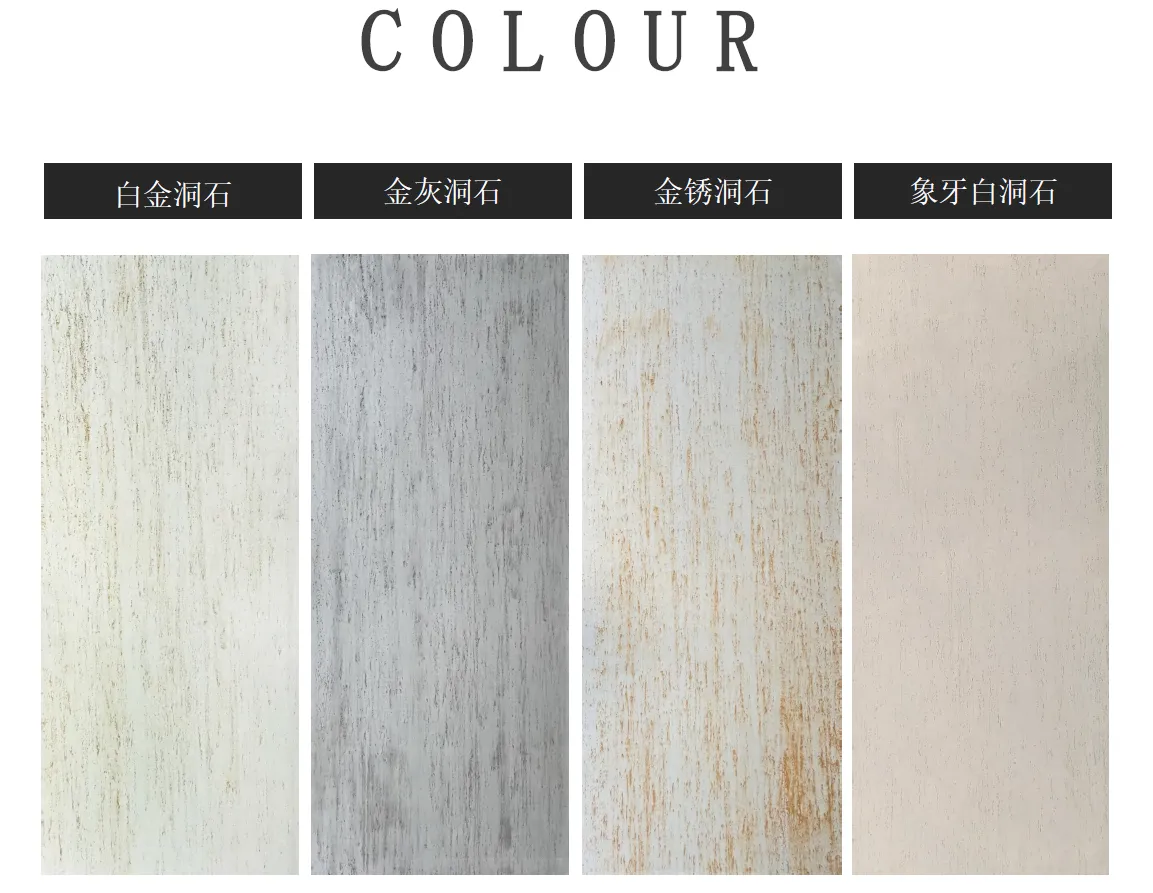
Enter MCM (Modified Composite Material) products—specifically, the MCM flexible stone and MCM big slab board series. These aren't your average synthetic imitations. Crafted from a blend of natural minerals and advanced polymers, they're engineered to mimic the look of natural travertine (and other stones like travertine (starry green) or lunar peak silvery) while fixing its biggest flaws. Take flexibility: MCM panels bend without cracking, making them ideal for curved walls or uneven surfaces where rigid natural stone would shatter. But the real game-changer? Their near-zero maintenance needs.
Unlike natural travertine, MCM flexible stone arrives pre-sealed and stain-resistant. No initial sealing, no annual re-sealing—just install and enjoy. Spills wipe clean with a damp cloth, even acidic ones. "I tested it with ketchup, coffee, and red wine," laughs Jake, a contractor who recently used MCM big slab boards for a restaurant renovation. "Left them sitting for 24 hours, then wiped. Not a trace. My client was shocked—she'd budgeted $200/month for travertine cleaning, and now she spends $0."
Durability is another win. MCM panels resist chipping, fading, and moisture damage, even in harsh climates. A Florida homeowner reported her MCM travertine-look patio survived Hurricane Ian with zero cracks, while her neighbor's natural travertine required $3,000 in repairs. And when damage does occur (say, a heavy planter tips over), MCM is easy to patch or replace. A single replacement panel costs $20–$40, and most DIYers can swap it out in an hour—no need for a stone mason.
Talk is cheap—let's crunch the numbers. We analyzed a 200-square-foot residential project (think a patio or living room floor) using natural travertine versus MCM flexible stone. Here's how their 10-year upkeep costs stack up:
| Maintenance Category | Natural Travertine | MCM Flexible Stone |
|---|---|---|
| Initial Sealing (Professional) | $400–$800 | $0 (Pre-sealed) |
| Annual Re-Sealing (Every 1.5 Years) | $2,600–$5,200 (6 treatments over 10 years) | $0 |
| Specialized Cleaning Products (Monthly) | $240–$360/year = $2,400–$3,600 total | $60–$120/year (standard soap and water) = $600–$1,200 total |
| Repair Costs (Assuming 2 Cracks/Chips) | $1,000–$2,000 (replacement sections) | $80–$160 (2 replacement panels) |
| Total 10-Year Upkeep | $6,400–$11,600 | $680–$1,360 |
The difference? MCM saves $5,000–$10,000 over a decade. For commercial projects—like hotels or retail spaces with 1,000+ square feet—the savings skyrocket into the tens of thousands. It's not just about money, either: MCM frees up time. No more scheduling sealers, no more stressing over spills, no more weekends spent scrubbing stains. As one homeowner put it: "I used to spend 4 hours every month maintaining my natural travertine floors. Now with MCM, I spend 15 minutes—and that's on a messy month."
Does this mean natural travertine is obsolete? Hardly. For historic restorations where authenticity is non-negotiable, it's irreplaceable. But for most of us—homeowners, business owners, designers balancing beauty and budget—MCM offers something revolutionary: the look of travertine (or lunar peak golden, or even fair-faced concrete) without the endless upkeep. It's a material that respects the past while embracing the future—a future where design shouldn't require sacrificing practicality.
Take the MCM big slab board series, for example. These large-format panels (up to 4x8 feet) create seamless surfaces that mimic the drama of "huge travertine" slabs but weigh 70% less, cutting installation time and costs. They're also eco-friendly, made with recycled materials and low-VOC resins—appealing to the growing number of clients who want their spaces to look good and do good.
When Tito's Bistro in Austin needed to update its outdoor dining area, owner Marco initially leaned toward natural travertine. "Our theme is 'rustic Italian,' and I wanted that old-world feel," he says. But after seeing the maintenance estimates—$1,200/year for sealing and cleaning—he hesitated. His contractor suggested MCM flexible stone in a travertine (starry blue) finish. "I was skeptical at first—it looked too perfect," Marco admits. "But a year later? It still looks brand-new. We've had rain, BBQ sauce, even a broken beer bottle, and there's not a scratch. And we saved $6,000 in upkeep costs. Best decision I made for the restaurant's budget."
At the end of the day, choosing between natural travertine and MCM isn't about picking "better" or "worse"—it's about picking smarter . Natural travertine is a masterpiece of nature, but it demands a commitment of time and money that not everyone can afford. MCM flexible stone and big slab board series, on the other hand, offer that same timeless beauty with a modern twist: durability, affordability, and the freedom to enjoy your space without stressing over stains or cracks.
So whether you're designing a cozy home patio or a bustling commercial space, remember: the best materials aren't just pretty—they're partners in your vision. And in a world where every dollar and minute counts, MCM proves that you don't have to choose between loving your space and keeping your budget intact. After all, even the Colosseum needed centuries of upkeep—why not let your modern space be a little less demanding?
Recommend Products












