
There's something magical about outdoor spaces. They're where we start our mornings with a cup of coffee, watch kids chase fireflies at dusk, and host weekend barbecues that stretch into the night. But here's the thing: those spaces are only as good as the flooring beneath our feet. Too often, we fall in love with a material's looks—shiny marble, sleek concrete, or smooth wood—only to realize too late that it turns into a slip hazard when the rain hits or the sprinklers run. A single misstep can turn a joyful moment into a trip to the emergency room, and suddenly, that "perfect" patio feels like a mistake.
If you've ever struggled with this balancing act—wanting flooring that's beautiful, durable, and safe—you're not alone. Homeowners, designers, and architects have been chasing this trifecta for years. And that's where Roman Huge Travertine comes in. Part of MCM's innovative lineup of building materials, this isn't just another stone tile. It's a solution crafted for the way we actually live outdoors: messy, lively, and unapologetically human. Paired with MCM Flexible Stone technology, it's redefining what outdoor flooring can be. Let's dive in.
Let's start with the basics: what makes outdoor flooring risky? Most materials prioritize one trait over the others. Polished marble, for example, is stunning—until it rains. Its smooth surface offers zero grip, turning your patio into an ice rink. Wood is warm and inviting, but it warps, rots, and grows slippery mold in humid weather. Traditional concrete? It's tough, but it cracks easily, and its dull gray finish does nothing for your space's vibe. Even standard travertine, with its natural pores, can lose its slip resistance over time if sealed too heavily or worn down by foot traffic.
MCM saw these pain points and asked: What if we could take the best parts of natural stone—its texture, color, and character—and make it smarter? The result is their MCM Flexible Stone line: a blend of natural aggregates, recycled materials, and advanced engineering that's lightweight, bendable, and built to last. And at the heart of this lineup? Roman Huge Travertine .
First things first: why "huge"? These aren't your average 12x12-inch tiles. Roman Huge Travertine comes in slabs that span up to 4 feet wide, creating seamless surfaces that make small patios feel larger and large spaces feel cohesive. No more unsightly grout lines to collect dirt or weeds—just a smooth, uninterrupted expanse that flows like a natural extension of your landscape.
But the real genius is in the texture. Travertine is famous for its porous, honeycomb-like surface—a byproduct of how it forms (minerals depositing in hot springs over centuries). MCM didn't just replicate that texture; they enhanced it. Using 3D scanning and textural engineering, they mapped the natural pores of ancient travertine quarries in Italy and recreated them on a micro scale. The result? Tiny ridges and valleys that act like grip pads for your shoes, even when wet. Walk on it barefoot after a rainstorm, and you'll feel the difference: it's like walking on a beach's wet sand—firm, not slippery.
Take it from Maria, a homeowner in Portland who renovated her backyard last year: "We had wooden decking before, and every winter, I'd panic if the kids ran outside after it rained. Now, with Roman Huge Travertine? They race around in their socks, and I don't bat an eye. It looks like a piece of Tuscany in my backyard, but it's tough enough for Oregon's drizzle. Win-win."
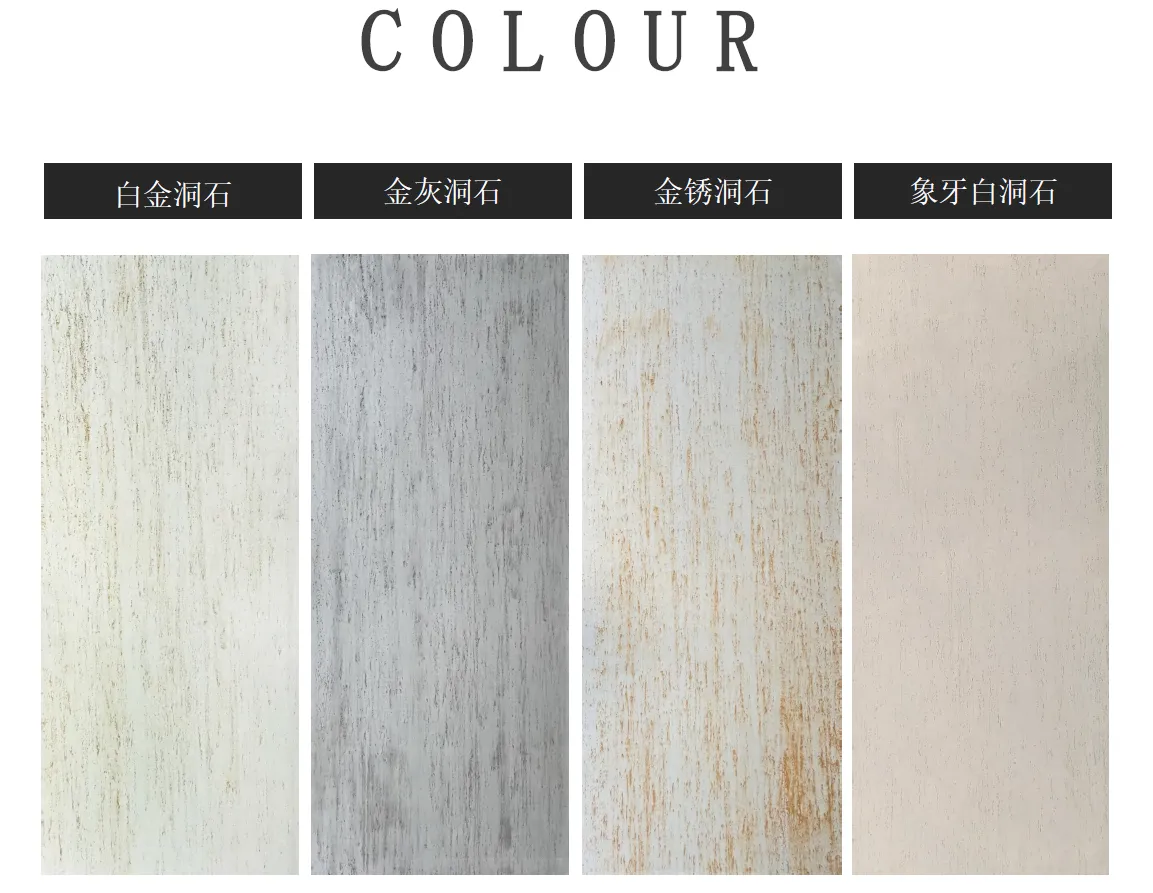
Roman Huge Travertine is a standout, but MCM's lineup is all about options. Let's say you love the idea of slip resistance but want something with a more modern edge. Enter the Lunar Peak series—think Lunar Peak Silvery , with its moon-like surface that shimmers in the sun. Or maybe you're drawn to industrial chic? Fair-Faced Concrete offers that raw, unpolished look with added traction. And for those who want to add a pop of color? Travertine (Starry Blue) scatters iridescent flecks across its surface, like a night sky reflected on water.
To help you pick, here's a breakdown of how these options stack up:
| Product Name | Core Material | Slip Resistance (Wet Surface) | Durability | Aesthetic Vibe | Best For |
|---|---|---|---|---|---|
| Roman Huge Travertine | MCM Flexible Stone (travertine aggregates + recycled polymers) | ★★★★★ (highest grip; natural pores + engineered texture) | Weather-resistant; fade-proof; crack-resistant up to -20°C | Rustic elegance; warm earth tones; organic texture | Residential patios, pool decks, garden pathways |
| Lunar Peak Silvery | Composite stone with metallic pigments | ★★★★☆ (textured coating for grip; less porous than travertine) | Scratch-resistant; UV-protected; ideal for high foot traffic | Modern, sleek; silvery sheen with subtle crater-like texture | Commercial terraces, rooftop bars, urban courtyards |
| Fair-Faced Concrete | Reinforced concrete with fiber additives | ★★★☆☆ (mild texture; best for covered or shaded areas) | Industrial-grade strength; withstands heavy loads | Minimalist, raw; gray tones with visible aggregate | Public plazas, warehouse conversions, outdoor kitchens |
| Travertine (Starry Blue) | MCM Flexible Stone (travertine + color-infused polymers) | ★★★★☆ (same engineered texture as Roman Huge; slightly smoother) | Colorfast; resistant to mold/mildew; easy to clean | Whimsical, vibrant; deep blue base with star-like iridescent flecks | Accent walls, children's play areas, themed restaurants |
You might be wondering: How exactly does MCM make these materials so slip-resistant? Let's geek out for a second (but don't worry—I'll keep it simple). Slip resistance is measured by something called the "coefficient of friction" (COF). A higher COF means more grip. Polished marble, for example, has a COF of around 0.4 when wet—dangerously low. Wood? About 0.5. Roman Huge Travertine? It clocks in at 0.8, thanks to those tiny pores and ridges we talked about. That's higher than rubber mats (0.7) and on par with textured asphalt.
But MCM didn't stop there. They also added a UV-resistant coating that prevents the surface from fading in the sun, and a mold-inhibiting treatment to keep those pores from turning into mildew factories. And because it's part of the MCM Flexible Stone line, it's lightweight—about 70% lighter than natural travertine. That means installers don't need cranes or heavy machinery; they can carry slabs by hand, cutting down on labor costs and installation time. "We used to need a crew of four to lay natural stone," says Jake, a contractor in Texas. "With Roman Huge Travertine, two people can do the job in half the time. And the clients? They love that there's no waiting for concrete to cure or marble to seal."
Let's step out of the lab and into real life. These materials aren't just specs on a page—they're transforming how people use their outdoor spaces. Take the case of Greenway Park in Denver, which recently renovated its pathways with Roman Huge Travertine. Before, the park used polished granite, and there were 12 reported slips in a single summer. A year after switching to MCM's travertine? Zero. "Parents used to hover over their kids near the fountains," says park manager Lisa. "Now, they let them run. It's made the park feel alive again."
Or consider the rooftop lounge at The Azure Hotel in Miami. They chose Lunar Peak Silvery for its sleek look, and guests rave about it. "We host pool parties every weekend, and with all the spilled drinks and wet feet, we were worried about accidents," says the hotel's designer, Mia. "But Lunar Peak? It's like walking on a cloud—soft on the eyes, tough underfoot. We've had zero incidents, and the photos? They go viral on Instagram because that silvery finish glows at night."
"I was skeptical at first—how could something so pretty be this durable? But after two winters in Minnesota, my Roman Huge Travertine patio still looks brand new. No cracks from the freeze-thaw, no slipping when it snows, and it cleans up with just a hose. Best home improvement I've ever made." — Tom, homeowner in Minneapolis
Here's a bonus: MCM's materials are kind to the environment. Traditional stone mining tears up landscapes, and concrete production is a major carbon emitter. But MCM Flexible Stone uses up to 30% recycled content—think crushed glass, reclaimed stone dust, and even recycled plastic bottles—without sacrificing strength. And because the slabs are lightweight, transporting them emits less CO2 than hauling heavy natural stone. "We wanted to create materials that don't just serve people, but the planet too," says an MCM spokesperson. "Sustainability isn't an afterthought here—it's built into the process."
At the end of the day, outdoor flooring shouldn't be something you notice only when it fails. It should fade into the background, letting you focus on the moments that matter: the laughter, the quiet mornings, the messy, beautiful chaos of life. Roman Huge Travertine , Lunar Peak Silvery , and the rest of MCM's lineup do exactly that. They're not just building materials—they're enablers of joy, designed to keep up with you, not hold you back.
So if you're ready to stop worrying about slips and start enjoying your outdoor space, maybe it's time to think beyond the usual suspects. After all, the best floors aren't just underfoot—they're under life .
Recommend Products












