
In the heart of Rome, where ancient ruins whisper tales of empires past, travertine has stood as a symbol of timeless grandeur for millennia. From the Colosseum's weathered arches to the Trevi Fountain's cascading tiers, this natural stone—with its warm hues, porous texture, and organic veining—has shaped the architectural identity of civilizations. Today, as global architects and designers seek to blend heritage with innovation, Roman huge travertine remains a coveted choice. Yet, the challenges of working with traditional stone—its weight, fragility, and logistical complexities—have long limited its potential. Enter MCM (Modified Composite Material) solutions: a revolutionary approach that preserves the stone's natural beauty while redefining its functionality for the modern world. This article explores how MCM's flexible stone, 3D printing series, and specialized product lines like Lunar Peak and foamed aluminium alloy board are making Roman huge travertine and other iconic materials accessible to international projects, blending history with cutting-edge technology.
Roman huge travertine is more than a building material; it is a narrative etched in stone. Formed over centuries by mineral-rich hot springs, each slab carries the unique (imprint) of nature—subtle variations in color from creamy beige to deep golden, surface pores that tell of ancient water flow, and veins that resemble rivers frozen in time. This is a stone that ages gracefully, its patina deepening with exposure to sun, rain, and human touch, making it ideal for spaces that aim to feel both rooted and alive.
In modern architecture, the desire to channel this timelessness is palpable. Luxury hotels in Dubai, boutique boutiques in Paris, and cultural centers in Tokyo all seek the warmth and authenticity that Roman huge travertine brings. However, traditional travertine comes with significant drawbacks. A single slab can weigh hundreds of kilograms, requiring reinforced structures and specialized installation teams. Its porosity, while part of its charm, makes it prone to staining and damage in high-traffic areas. For international projects, shipping large, heavy stone slabs across continents adds exorbitant costs and carbon footprints. These challenges have led designers to ask: How can we honor travertine's legacy while making it feasible for the global stage?
MCM, or Modified Composite Material, emerged as the answer to this dilemma. Developed by combining natural stone aggregates with advanced polymers, MCM technology creates ultra-thin, lightweight panels that mimic the look and feel of natural stone—without the bulk. At the forefront of this innovation is MCM flexible stone, a product that has transformed how architects approach cladding, flooring, and interior design. Imagine a material that bends to follow curved facades, weighs a fraction of traditional stone, and resists scratches, moisture, and UV rays—all while retaining the organic texture of Roman huge travertine. That is MCM flexible stone in action.
The magic lies in MCM's construction. Each panel is crafted by embedding crushed natural stone (including travertine, marble, and granite) into a high-performance composite matrix. The result is a sheet just 3-5mm thick, weighing as little as 4kg per square meter—compared to 50-80kg for traditional travertine slabs. This drastic reduction in weight eliminates the need for heavy structural support, cuts shipping costs by up to 70%, and simplifies installation, allowing projects to be completed faster and with fewer resources. For international projects, where deadlines and budgets are tight, these benefits are game-changing.
But MCM doesn't just solve logistical problems; it enhances design possibilities. Unlike rigid natural stone, MCM flexible stone can be curved, cut into intricate shapes, or even 3D-printed into custom patterns—a feature of the MCM 3D printing series that unlocks endless creative potential. Whether replicating the rough-hewn texture of ancient Roman columns or creating sleek, modern surfaces, MCM ensures that the essence of natural stone is never lost. It's a material that speaks to both the preservationist and the innovator.
If Roman huge travertine evokes earthy warmth, the Lunar Peak series embodies celestial coolness. Inspired by the moon's ethereal glow over mountain peaks, this collection—available in Silvery, Golden, and Black—blends the organic texture of stone with a metallic sheen that shifts with light. Lunar Peak Silvery, with its pale, iridescent surface, resembles moonlight on snow; Golden shimmers like a harvest moon, adding opulence to interiors; and Black, with its deep, starry undertones, evokes the mystery of a night sky. These hues are not just colors—they are moods, capable of transforming a space from serene to dramatic with a single panel.
In global projects, the Lunar Peak series has found a home in luxury hospitality and high-end retail. A five-star hotel in Seoul, for instance, used Lunar Peak Golden for its lobby facade, creating a welcoming glow that contrasts beautifully with the city's glass and steel skyline. Inside, Lunar Peak Silvery lines the spa walls, its cool tone enhancing the sense of tranquility. Meanwhile, a boutique jewelry store in Milan paired Lunar Peak Black with mirrored surfaces, creating a celestial-themed interior that makes diamond displays feel like constellations. What makes these applications possible is MCM's lightweight nature: the hotel's facade, which spans 500 square meters, was installed in just two weeks, a timeline unthinkable with traditional stone.
For projects that demand a blend of durability and modern edge, MCM's foamed aluminium alloy board is a standout choice. Available in Vintage Silver, Vintage Gold, and Metal finishes, this product marries the strength of aluminium with the versatility of MCM technology. Foamed aluminium—a material known for its lightweight, shock-absorbent properties—undergoes a specialized treatment to create a textured, industrial surface that pairs surprisingly well with Roman huge travertine and other natural materials. The Vintage Silver finish, with its muted, weathered look, adds a touch of rustic charm to modern spaces, while Vintage Gold brings warmth to minimalist designs. The Metal variant, with its sleek, reflective surface, is a favorite for contemporary office buildings and tech hubs.
Consider the case of a co-working space in Berlin, where designers sought to balance industrial heritage with a fresh, collaborative vibe. They chose foamed aluminium alloy board in Vintage Silver for the reception area, pairing it with MCM flexible stone in travertine (beige) for the floors. The result? A space that feels both raw and refined, where the cool metal and warm stone create a dynamic contrast. Similarly, a restaurant in Singapore used Vintage Gold foamed aluminium for its ceiling panels, reflecting light from pendant lamps and complementing the rich wooden furniture below. In both cases, the material's durability is as impressive as its aesthetics: resistant to corrosion, fire, and impact, it's built to withstand the rigors of high-traffic global projects.
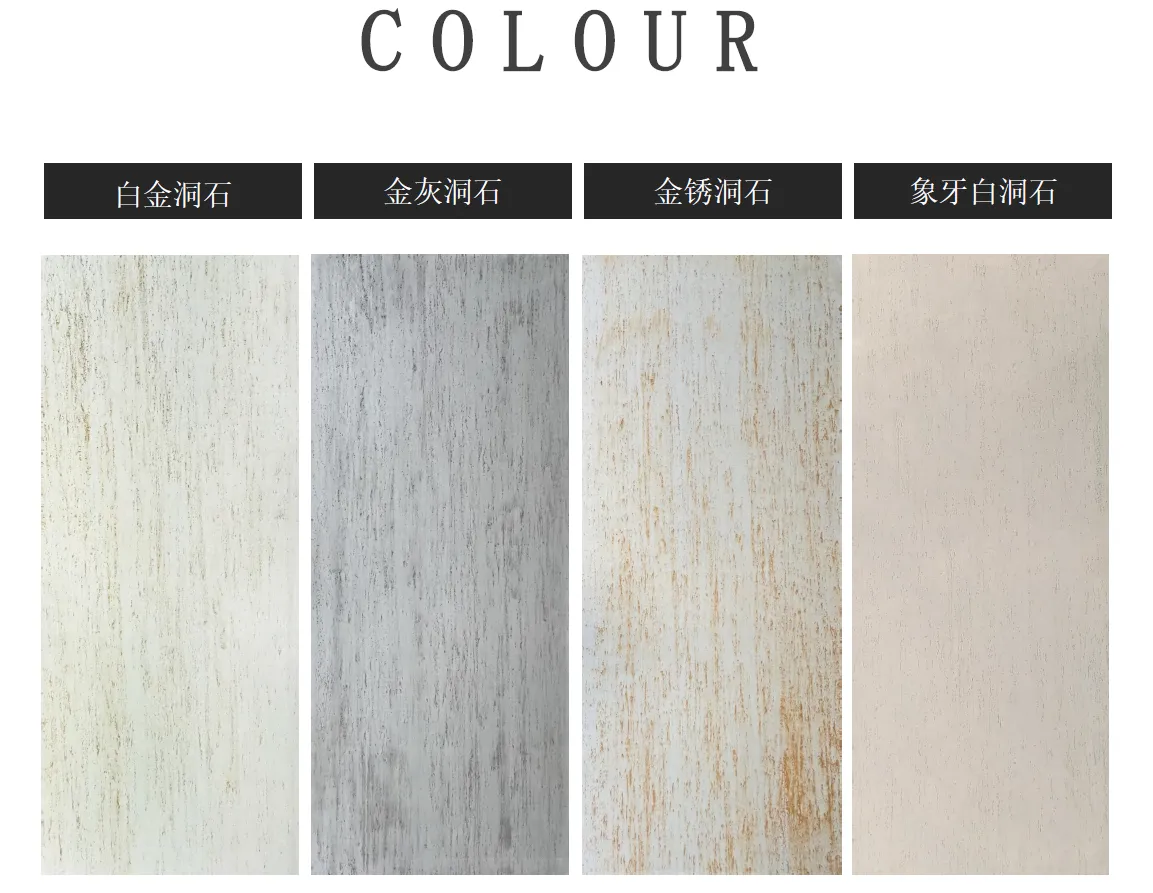
At the core of MCM's product lineup is its reimagining of Roman huge travertine. Using advanced scanning and molding techniques, MCM replicates the stone's iconic texture—from its porous surface to its characteristic veining—with stunning accuracy. The result is a flexible panel that captures the grandeur of the original while offering all the benefits of MCM technology. Whether used for a museum facade in Rome (paying homage to the city's ancient past) or a residential complex in New York (seeking to evoke European elegance), MCM's Roman huge travertine brings heritage into the present.
One notable project is the renovation of a 19th-century theater in Barcelona. The architects wanted to restore the building's original travertine cladding but faced challenges with sourcing matching stone and supporting the weight of traditional slabs. MCM's Roman huge travertine panels provided the solution: they were lightweight enough to be installed without reinforcing the theater's historic structure, and their color and texture matched the original stone so closely that even preservation experts were impressed. Today, the theater stands as a testament to how MCM can bridge past and present, allowing heritage buildings to meet modern safety and accessibility standards without losing their soul.
To understand MCM's global appeal, it's essential to compare it with traditional materials. The table below highlights how MCM flexible stone—particularly its Roman huge travertine variant—stacks up against traditional travertine and fair-faced concrete, a common alternative in modern construction.
| Feature | MCM Flexible Stone (Roman Huge Travertine) | Traditional Travertine | Fair-Faced Concrete |
|---|---|---|---|
| Weight (per sqm) | 4-6kg | 50-80kg | 20-30kg |
| Installation Time | 1-2 days per 100 sqm | 5-7 days per 100 sqm | 3-4 days per 100 sqm |
| Durability | Resistant to scratches, moisture, UV rays; 50+ year lifespan | Porous; prone to staining and chipping; 20-30 year lifespan | Strong but prone to cracking; 30-40 year lifespan |
| Sustainability | Recyclable materials; low carbon footprint; reduces waste | High quarrying impact; energy-intensive transportation | High cement production emissions; limited recyclability |
| Design Flexibility | Curvable, 3D-printable, custom patterns | Rigid; limited to straight cuts | Moldable but lacks natural texture |
| Cost (per sqm) | Mid-range ($40-60) | High ($80-120) | Low ($20-30) |
The table reveals a clear advantage for MCM: it offers the best of both worlds—natural aesthetics and modern performance. Its mid-range cost is offset by savings in installation, shipping, and maintenance, making it a cost-effective choice for international projects. Sustainability, too, is a key factor. MCM's manufacturing process uses 70% less energy than traditional stone quarrying and cutting, and its lightweight panels reduce fuel consumption during transportation. For eco-conscious developers in Europe, Asia, and the Americas, this aligns with strict green building standards like LEED and BREEAM.
Rising 300 meters above Dubai's skyline, the Azure Tower is a beacon of sustainable luxury. Its facade combines MCM's Roman huge travertine panels with Lunar Peak Golden accents, creating a striking contrast between earthy warmth and celestial shimmer. The choice of MCM was strategic: traditional travertine would have added thousands of tons to the building's weight, increasing construction costs and carbon emissions. Instead, MCM's lightweight panels reduced the tower's load by 40%, allowing for a more efficient structural design. Inside, the lobby features foamed aluminium alloy board in Vintage Gold, paired with MCM's marble stream stone floors, creating a space that feels both opulent and environmentally responsible. Since its completion, the Azure Tower has become a landmark, proving that luxury and sustainability can coexist—thanks in no small part to MCM solutions.
In Tokyo's historic Asakusa district, where traditional wooden temples stand alongside modern skyscrapers, the Mori Cultural Center was designed to bridge two eras. Its exterior uses MCM's Roman huge travertine to evoke the timelessness of ancient architecture, while its interior features Lunar Peak Silvery panels and woven real photos (a textured MCM variant) to create a contemporary, inviting space. The center's most striking feature is its curved auditorium wall, crafted using MCM's 3D printing series to replicate the organic shape of a traditional Japanese drum. Thanks to MCM's flexibility, this design was achieved without the need for custom stone carving, saving both time and resources. Today, the Mori Cultural Center is a hub for art and community, where MCM's materials tell a story of cultural continuity in a rapidly changing world.
Milan's Via Roma, known for its high-end fashion boutiques and historic cafes, recently underwent a revitalization to create a pedestrian-friendly "modern piazza." Central to the design was the use of MCM materials to unify the district's diverse architectural styles. Sidewalks are paved with MCM's linear travertine (claybank), a nod to Milan's historic stone streets, while building facades feature a mix of dolomitic travertine (dark grey) and foamed aluminium alloy board (vintage silver). The result is a cohesive, contemporary space that honors the area's heritage. Retailers have reported increased foot traffic, with customers drawn to the district's warm, inviting atmosphere—created in large part by the natural textures of MCM's stone panels. For Milan, MCM wasn't just a building material; it was a tool for urban renewal.
While Roman huge travertine and the Lunar Peak series take center stage, MCM's product lineup is vast, catering to every design vision. For projects seeking a rustic, earthy feel, there's the rammed earth board series—available in gradient colors like matcha green and khaki—replicating the texture of hand-packed soil. The weaving series, with its tactile, textile-like surface in khaki, jacinth, and grey, adds softness to interiors, while the wood grain board brings the warmth of timber without the maintenance. Even industrial aesthetics are catered to with products like fair-faced concrete and charcoal burnt wood board, which mimic the raw, weathered look of factory spaces.
This diversity is what makes MCM a global solution. Whether designing a beachfront resort in Bali (using MCM's bamboo mat board and bali stone) or a tech campus in Silicon Valley (featuring foamed aluminium alloy board and 3D art concrete), MCM offers materials that adapt to local cultures, climates, and design sensibilities. It's a testament to the brand's understanding that "global appeal" doesn't mean uniformity—it means versatility.
Roman huge travertine's journey from ancient Rome to modern Dubai, Tokyo, and Milan is a story of resilience—a material that has captured humanity's imagination for millennia. Today, MCM solutions are writing the next chapter in that story, transforming stone from a heavy, static resource into a lightweight, flexible, and sustainable medium for global innovation. By preserving the natural beauty of travertine, Lunar Peak, and other iconic materials while enhancing their functionality, MCM is not just building structures; it's building connections—between past and present, heritage and innovation, and cultures around the world.
As international projects continue to push the boundaries of design, MCM stands ready to meet the challenge. It is a reminder that the most impactful architecture is not just about aesthetics or function, but about emotion—about creating spaces that feel both familiar and extraordinary. In the end, Roman huge travertine's global appeal lies not just in its beauty, but in its ability to evolve—and with MCM, its evolution has only just begun.
Recommend Products












