
There's a quiet magic in the way ancient stones tell stories. Walk through the streets of Rome, and you'll feel it—the Colosseum's weathered arches, the Pantheon's smooth dome, the Forum's crumbling columns—all whispering tales of emperors, artisans, and a civilization that turned stone into legacy. At the heart of this narrative lies travertine : a mineral-rich stone formed by hot springs, cherished by Roman builders for its warm hues, unique veining, and remarkable durability. Today, as we strive to preserve these stories for future generations, a modern challenge emerges: how do we honor the past without sacrificing the practical needs of the present? Enter MCM, a brand that's not just creating building materials, but weaving new chapters into the timeless saga of Roman travertine.
To understand travertine's legacy, we must first step back to 70 AD, when workers quarried massive blocks of the stone from Tivoli, a town 30 kilometers east of Rome. These blocks, some weighing over 100 tons, were transported via oxen and boats to build the Colosseum—a structure that still stands today, its travertine facade bearing the scars of two millennia. What made travertine so beloved? Its porous yet strong composition, which allowed for intricate carvings, and its natural resistance to weathering. The Pantheon's dome, a marvel of engineering, relies on travertine's lightness (compared to marble) to span 43 meters without internal supports. Even the Trevi Fountain, with its cascading waters, owes its elegance to travertine's ability to mimic the flow of liquid in solid form.
Roman architects weren't just building structures—they were crafting a language of permanence. Travertine wasn't merely a material; it was a statement. Its soft beige and gold tones reflected the Mediterranean sun, while its subtle pits and veins told the story of its formation, forged by mineral deposits in hot springs over centuries. To build with travertine was to align oneself with the gods, to create something that would outlive empires. And yet, for all its strength, travertine has vulnerabilities. Quarrying it is labor-intensive, transporting it is costly, and installing it in modern buildings often requires heavy machinery and structural reinforcement. As cities grow and sustainability becomes a global priority, the question arises: can we keep travertine's beauty alive without repeating the inefficiencies of the past?
Fast forward to the 21st century, and the challenges of working with traditional travertine have only grown. Imagine a modern architect tasked with restoring a historic building or designing a new structure that pays homage to Roman aesthetics. They dream of travertine's warmth, but are met with practical hurdles: the stone's weight (up to 25kg per square meter) requires reinforced foundations; its porosity demands constant sealing to prevent staining; and its extraction contributes to environmental degradation, with quarries disrupting ecosystems and consuming energy. For preservationists, the stakes are even higher—original Roman travertine is irreplaceable, and over-restoration can erase the very patina that makes historic buildings precious.
Then there's the issue of availability. High-quality roman huge travertine —the type used in ancient monuments—is increasingly rare. Most modern travertine comes from Turkey, Iran, or Mexico, and while beautiful, it lacks the unique mineral composition that gave Roman travertine its distinct character. Architects and designers are left with a choice: compromise on aesthetics, overspend on logistics, or abandon travertine altogether. But what if there was another way? What if we could capture the essence of Roman travertine—its texture, color, and soul—without the drawbacks? That's where MCM steps in.
MCM isn't just a manufacturer of building materials; it's a guardian of heritage. For over two decades, the brand has focused on one mission: to create products that honor traditional craftsmanship while embracing cutting-edge technology. Their MCM flexible stone and MCM big slab board series are testaments to this philosophy. These aren't mere imitations—they're reimaginings, born from a deep respect for the past and a vision for the future. How do they do it? By combining natural minerals with advanced polymers to create lightweight, durable panels that replicate the look and feel of natural travertine, but with a modern twist.
Let's break it down. Traditional travertine is heavy, brittle, and hard to install. MCM's flexible stone, by contrast, weighs just 3-5kg per square meter—so light it can be installed on walls, ceilings, and even curved surfaces without structural reinforcement. Its flexibility allows for seamless installation, reducing waste and labor costs. And because it's made from recycled natural stone powder and eco-friendly polymers, it has a fraction of the carbon footprint of quarried stone. But the real magic? It looks exactly like travertine. Run your hand over an MCM flexible stone panel, and you'll feel the same subtle pits, the same warm veining, the same organic texture that Roman artisans loved. It's as if the stone itself has been given a new lease on life.
Creating MCM flexible stone is a blend of art and science. The process starts with collecting natural stone waste—crushed travertine, marble, and limestone—from quarries, diverting tons of material from landfills. This powder is then mixed with a proprietary blend of polymers, which act as a binder, giving the stone flexibility without sacrificing strength. The mixture is poured into molds that replicate the texture of Roman travertine—down to the smallest pit and vein. After curing, the panels are cut into large slabs (up to 1200x2400mm in the MCM big slab board series ), making installation faster and more efficient than traditional stone.
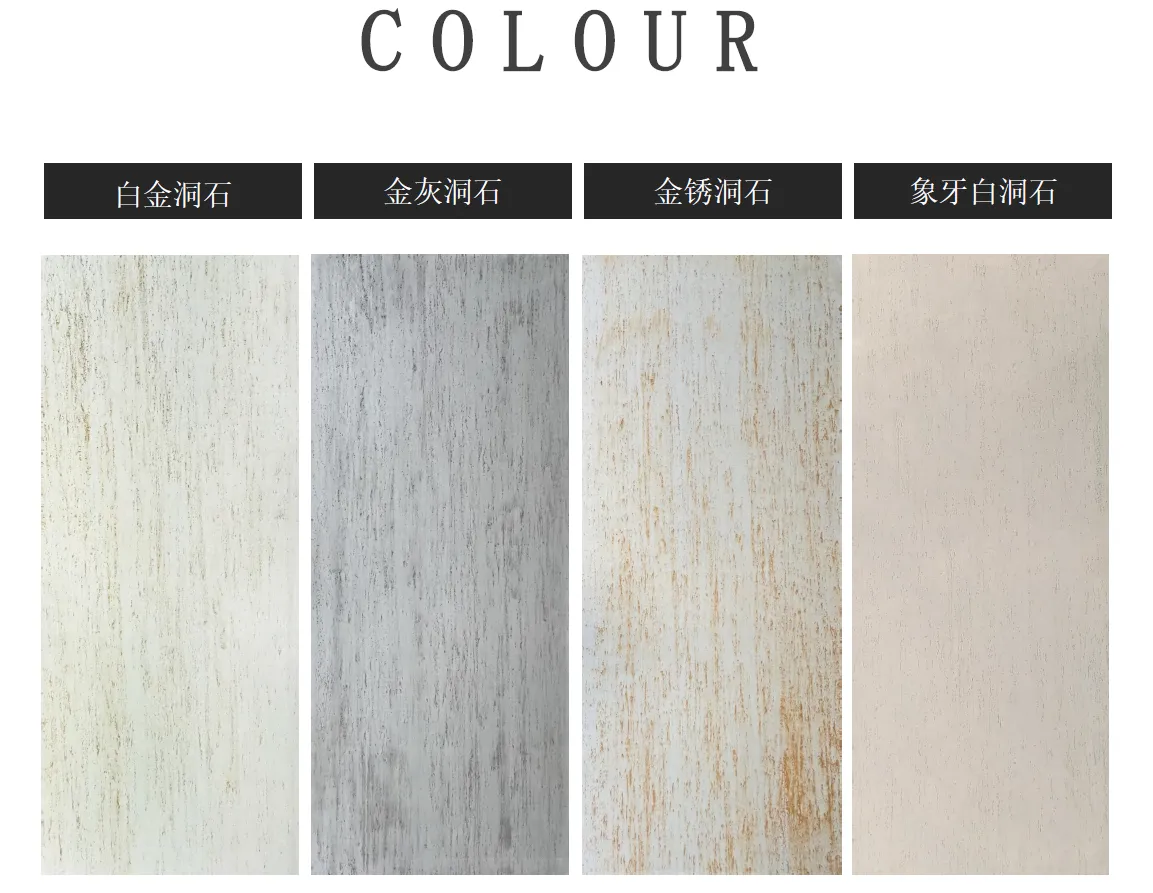
But MCM doesn't stop at replication. They enhance. Take travertine (starry green) , for example—a variant that captures the ethereal beauty of the night sky. By adding microscopic metallic particles to the stone matrix, MCM creates a subtle shimmer that mimics the way Roman travertine might have glinted under torchlight in ancient forums. It's a modern interpretation, yes, but one rooted in reverence for the original. Similarly, their lunar peak silvery collection draws inspiration from the moonlit marble of the Pantheon, with a silvery-gray hue that shifts with light, just like the ancient stone.
Close your eyes and picture the Roman Forum at night—torch flames dancing, stars twinkling above, and the travertine columns glowing softly in the dark. Travertine (starry green) channels that magic. Its base is a deep, earthy green, reminiscent of the moss that clings to ancient stones, while tiny flecks of iridescent mineral add a celestial sparkle. Run your finger over it, and you'll feel the familiar travertine texture—porous, yet smooth—with veins of cream and gold weaving through like constellations. It's a stone that doesn't just decorate a space; it transports you, making modern buildings feel connected to something timeless.
Architects love it for its versatility. Use it on a restaurant facade to evoke the warmth of a Roman taverna, or in a hotel lobby to create a sense of grandeur. Because it's lightweight, it can even be used on ceilings, turning ordinary spaces into starlit sanctuaries. And unlike natural green travertine (which is rare and expensive), MCM's starry green is accessible, making heritage-inspired design possible for projects of all sizes.
If starry green is the night sky, lunar peak silvery is moonlight itself. This collection takes cues from the Pantheon's dome, which was designed to flood the interior with natural light. The panels have a soft, silvery-gray base with delicate white veining, mimicking the way light plays on marble. What sets it apart is its finish—matte, but with a subtle sheen that catches the light, just like the ancient stone would after centuries of weathering. It's understated yet elegant, perfect for projects that aim to blend classical and contemporary styles.
Consider a modern museum dedicated to Roman history. The curators want the space to feel authentic, to complement the artifacts on display. With lunar peak silvery panels, they can line the walls with a material that echoes the travertine of the Colosseum, but without the weight or maintenance. Visitors won't just see history—they'll feel it, surrounded by stone that carries the same quiet dignity as the real thing.
One of the biggest frustrations with traditional travertine is its size. Natural stone slabs are often small (600x600mm or less), requiring multiple joints during installation. These joints disrupt the visual flow, making it hard to recreate the seamless grandeur of Roman architecture. MCM's big slab board series solves this problem with panels up to 2400mm long. Imagine covering an entire wall with a single slab of roman huge travertine -inspired stone—no unsightly grout lines, no breaks in the pattern. It's the kind of continuity that Roman architects strived for, now made possible with modern technology.
But size isn't the only advantage. These big slabs are also incredibly thin—just 3-5mm thick—making them easy to handle and install. A team of two can carry and mount a panel in minutes, compared to the heavy machinery needed for natural travertine. This not only saves time and labor costs but also reduces the risk of damage during installation. For restoration projects, where precision is key, this flexibility is invaluable. Imagine repairing a section of a historic building's facade: with MCM big slabs, you can match the original travertine's texture and color exactly, ensuring the repair blends seamlessly with the existing stone.
| Feature | Traditional Roman Travertine | MCM Flexible Stone / Big Slab Series |
|---|---|---|
| Weight per sqm | 20-25kg | 3-5kg |
| Installation | Requires heavy machinery and structural reinforcement | Lightweight; can be installed by hand with basic tools |
| Durability | Resistant to weathering but prone to chipping and staining | Waterproof, stain-resistant, and impact-resistant (5x stronger than natural stone) |
| Sustainability | High carbon footprint (quarrying, transportation, and sealing) | Recycled materials, low energy production, and zero sealing required |
| Aesthetic Versatility | Limited color options; natural variation can be unpredictable | Customizable colors (e.g., starry green, lunar peak silvery) with consistent texture |
| Cost | High (quarrying, transportation, and installation) | 50-60% lower total cost (materials + labor) |
To see MCM's impact in action, look no further than the "Forum Residences" in Dubai—a luxury apartment complex designed to evoke the grandeur of ancient Rome. The architects wanted the exterior to feature travertine-like stone, but with the durability to withstand Dubai's harsh climate (temperatures up to 50°C, sandstorms, and high humidity). Traditional travertine would have cracked under thermal expansion and required constant sealing to resist sand erosion. Instead, they chose MCM's MCM big slab board series in travertine (vintage gold) —a warm, golden hue that mirrors the color of Roman travertine at sunset.
The result? A building that looks like it was carved from ancient stone, but performs like a modern marvel. The panels withstood Dubai's summer heat without warping, and their lightweight design reduced the need for a reinforced foundation, saving the project millions in construction costs. Residents and visitors alike remark on the building's "timeless feel"—proof that MCM's approach isn't just about replication, but about capturing the emotion of Roman architecture.
Another example is the restoration of a 19th-century villa in Tuscany, Italy, which originally featured travertine quarried from the same Tivoli mines used by the Romans. Over the years, the villa's facade had deteriorated, with chunks of stone falling off and water damage staining the surface. The preservation team needed to replace the damaged sections, but using original Tivoli travertine was cost-prohibitive and environmentally unsound. Instead, they turned to MCM's travertine (starry green) panels, which matched the original stone's texture and color so closely that even experts struggled to tell the difference. Today, the villa stands restored, its heritage intact, thanks to MCM's innovation.
In a world grappling with climate change, sustainability isn't just a buzzword—it's a responsibility. MCM takes this seriously. Their MCM flexible stone is made from 80% recycled natural stone powder, diverting waste from landfills and reducing the need for new quarrying. The production process uses 60% less energy than traditional stone manufacturing, and the panels themselves are 100% recyclable at the end of their lifespan. For architects and developers aiming for LEED or BREEAM certifications, this is a game-changer—MCM materials contribute to points for sustainable site development, materials and resources, and indoor environmental quality.
But sustainability isn't just about materials; it's about longevity. MCM panels are designed to last for decades, withstanding UV rays, rain, and temperature fluctuations without fading or deteriorating. This means fewer replacements, less waste, and a lower overall environmental impact. Compare that to traditional travertine, which often needs to be repaired or replaced every 10-15 years due to staining or chipping. In the long run, MCM isn't just preserving heritage—it's preserving the planet.
As we move forward, the need to preserve architectural heritage will only grow. Urbanization, climate change, and evolving design trends threaten to erase the physical reminders of our past. But with brands like MCM leading the way, there's hope. Their commitment to innovation—whether through MCM 3D printing series (which allows for custom textures and shapes) or their foamed aluminium alloy board (a lightweight alternative to metal cladding)—shows that we don't have to choose between tradition and progress. We can have both.
Imagine a future where every historic building can be restored with materials that honor its original craftsmanship, where new buildings can evoke the grandeur of Rome without the environmental cost, and where the stories written in stone continue to be told for centuries to come. That future is already here, thanks to MCM. By blending the art of the past with the science of the present, they're not just building materials—they're building bridges between eras, ensuring that Roman travertine's legacy isn't just preserved, but reborn.
Roman travertine isn't just stone—it's a legacy. It's the sound of chisels striking rock in a Tivoli quarry, the pride of an architect seeing their design take shape, the awe of a child staring up at the Colosseum for the first time. MCM understands this. Their flexible stone , big slab board series , and innovative collections like travertine (starry green) and lunar peak silvery are more than products—they're tributes to the artisans who came before, and promises to those who will come after.
In the end, heritage preservation isn't about freezing the past in time. It's about keeping its spirit alive, adapting it to new contexts, and ensuring that future generations can connect with the stories that shaped us. MCM gets that. So the next time you walk past a building clad in MCM stone, take a moment to look closer. You might not see the Roman Empire, but you'll feel it—in the texture, the color, the quiet strength of a material that carries the weight of history, but moves forward with the lightness of innovation. That's the legacy of Roman travertine, and that's MCM's gift to the world.
Recommend Products












