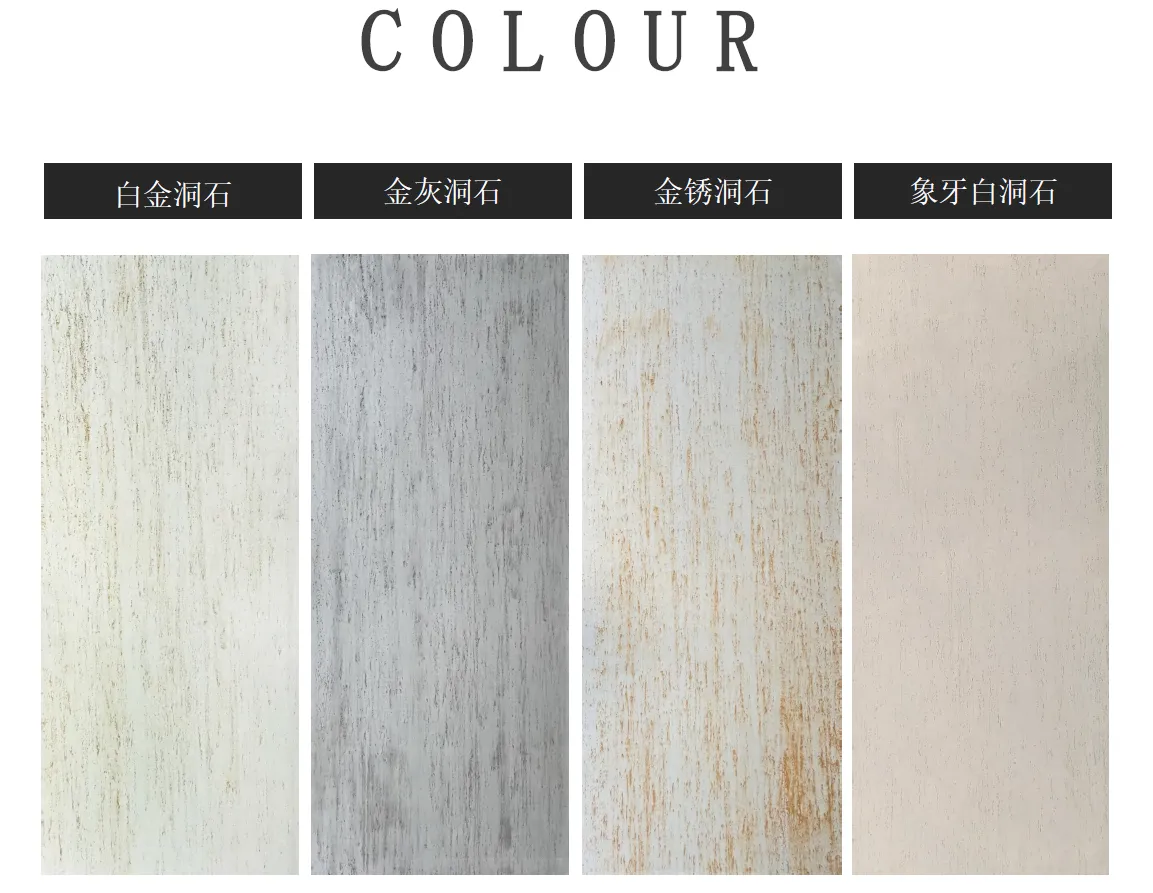
Stand in the shadow of the Colosseum, and you'll feel it—the quiet grandeur of
travertine. The stone's honey-colored surface, pockmarked with tiny pores like a face marked by time, tells a story of ancient craftsmanship and natural wonder. For millennia, this sedimentary rock has been the backbone of Roman architecture, from the sweeping arches of the Pantheon to the weathered steps of the Roman Forum. Its secret? Those unassuming pores. They're not flaws; they're fingerprints of nature, formed over centuries as mineral-rich water bubbled up from springs, leaving behind layers of calcium carbonate that slowly solidified into stone. And today, thanks to innovations in MCM technology, that same texture—warm, tactile, and steeped in history—is finding new life in modern buildings around the world.
The Legacy of Roman Travertine: More Than Just Stone
To understand why
travertine's pore structure matters, you have to start with the Romans. When they quarried
travertine from the Tivoli region, just east of Rome, they weren't just choosing a building material—they were selecting a partner. The stone's pores, formed by gas bubbles trapped during its formation, gave it a unique combination of strength and lightness. A block of
travertine could support the weight of the Colosseum's upper tiers while being easy enough to transport and carve. Those pores also acted as natural insulators, keeping interiors cool in summer and warm in winter. Walk your hand along a
travertine column in the Roman Forum today, and you'll notice how the surface isn't perfectly smooth; it's slightly rough, with indentations that catch the light. That's the texture of history, and it's a texture that modern architects have long sought to replicate.
But here's the problem: natural
travertine is heavy. Quarrying it disrupts ecosystems, and transporting large slabs to construction sites is costly and carbon-intensive. Worse, no two pieces are identical—while that's part of its charm, it can be a headache for projects needing uniformity. Enter MCM, or Modified Composite Material. This innovative technology isn't just about mimicking
travertine's look; it's about capturing its soul—the way light plays on its pores, the slight give under your fingertips, the sense that you're touching something that's been shaped by both time and intention.
Travertine's Pore Structure: Nature's Masterpiece
Let's zoom in on those pores. Imagine a sponge, but made of stone.
Travertine's pores range in size from tiny pinpricks to small indentations, and they're distributed unevenly across the surface. Some cluster together, like stars in a constellation; others are scattered, as if someone flicked a handful of sand at the stone. This randomness is key to its beauty. It breaks up the monotony of solid color, creating depth and movement. In Roman buildings, these pores also served a practical purpose: they allowed the stone to breathe. Moisture could seep in and evaporate without causing cracks, which is why
travertine structures have stood for millennia despite Rome's humid summers and rainy winters.
Take
travertine (starry green)
, for example. This variant, with its deep green base and pore-like flecks that glint like distant stars, showcases just how dynamic
travertine's texture can be. The pores here aren't just holes—they're part of the stone's color story, adding dimension that a smooth surface could never achieve. It's this interplay of texture and color that MCM set out to replicate, not with paint or cheap imitations, but with a material that behaves like stone but bends like a sheet of plastic.
MCM Technology: Bridging Ancient Craft and Modern Innovation
MCM isn't magic—it's science, art, and a lot of trial and error. The process starts with scanning. Engineers take high-resolution images of natural
travertine slabs, capturing every pore, groove, and color variation. These scans are then fed into 3D modeling software, where designers can tweak and refine the texture to meet modern needs. Want more pores for a weathered look? Adjust the algorithm. Need fewer for a sleeker finish? No problem. This digital blueprint is then sent to production, where MCM panels are created using a combination of natural minerals, polymers, and fibers. The result? A material that's 70% lighter than natural stone, flexible enough to wrap around curved surfaces, and so durable it can withstand extreme temperatures, rain, and UV rays.
At the heart of this innovation is
MCM flexible stone
. Unlike traditional stone cladding, which is rigid and prone to cracking,
MCM flexible stone bends. Imagine wrapping a stone wall around a circular lobby or a curved facade—something that would be nearly impossible with natural
travertine. But MCM makes it easy, all while retaining that signature pore texture. How? The secret is in the layers. MCM panels have a thin, mineral-rich top layer that mimics
travertine's surface, including its pores, bonded to a lightweight, flexible backing. It's like putting a
travertine skin on a foam core—strong on the outside, light and adaptable on the inside.
From Scan to Slab: The Making of MCM
Travertine Texture
Let's walk through the process. First, a team travels to
travertine quarries in Italy, Turkey, or Iran, selecting slabs with the most interesting pore patterns. Back in the lab, these slabs are scanned using 3D imaging technology that captures details as small as 0.1 millimeters—smaller than the average pore. The scan is then cleaned up, removing any imperfections that might be due to damage, not natural formation. Next, the 3D model is sent to the
MCM 3D printing series
production line. Here, a specialized printer lays down layers of mineral composite, precisely replicating the pore structure from the scan. The printer can adjust the depth and density of pores in real time, ensuring each panel is consistent yet has that subtle variation that makes natural
travertine so appealing. Finally, the panels are cured, cut to size, and ready for installation. The whole process takes days, not centuries—and the result is a material that honors the past while embracing the future.
MCM Products That Capture Travertine's Essence
MCM doesn't just stop at basic
travertine mimics. The product line is vast, with options designed to suit every architectural vision. Take the
boulder slab
series, for example. These panels are modeled after large, weathered boulders, complete with the pockmarked, pore-filled surfaces you'd find in a riverbed. Run your hand over a
boulder slab panel, and you'll feel the same uneven texture as a real boulder—deep grooves where water once flowed, tiny pores where air bubbles were trapped. It's a far cry from the smooth, uniform surfaces of
fair-faced concrete
, a material often used for modern minimalism but lacking
travertine's warmth. With boulder slabs, you get the best of both worlds: the clean lines of modern design and the organic texture of ancient stone.
Then there's
MCM flexible stone, which is changing the game for interior design. Imagine a bathroom wall clad in
travertine (starry green) MCM panels. The light hits the surface, and the pore-like flecks sparkle, making the space feel like a sunlit grotto. But unlike natural stone, these panels are water-resistant and easy to clean—no sealing required. Or picture a restaurant with a feature wall made of
MCM 3D printing series
panels, each one printed with a unique pore pattern that mimics the Colosseum's facade. Diners aren't just eating—they're (immersed) in history, without the building having to bear the weight of real
travertine.
|
Feature
|
Natural Roman Travertine
|
MCM Flexible Stone
|
|
Weight
|
Heavy (20-25 kg/sq.m)
|
Lightweight (3-5 kg/sq.m)
|
|
Installation
|
Requires heavy machinery; labor-intensive
|
Can be cut with standard tools; installed like wallpaper
|
|
Texture Replication
|
Unique per slab; uneven pores
|
Consistent yet natural-looking pore patterns
|
|
Sustainability
|
Quarrying disrupts ecosystems; high carbon footprint
|
Recyclable materials; low energy production
|
|
Durability
|
High, but prone to cracking if dropped
|
Impact-resistant; flexible to prevent cracking
|
Applications: Where Roman Texture Meets Modern Spaces
MCM's ability to mimic
travertine's pore structure has opened up a world of possibilities for architects and designers. In commercial spaces,
boulder slab (vintage silver)
panels add a touch of industrial chic to office lobbies, their metallic sheen and pitted texture contrasting beautifully with sleek glass and steel. In residential homes,
MCM flexible stone in
travertine (beige) creates cozy, earthy interiors that feel grounded yet modern. Even public spaces are getting in on the action: a recent museum in Madrid used
MCM 3D printing series panels to recreate the texture of the Roman Forum's
travertine floors, allowing visitors to walk on a surface that looks and feels ancient but is actually lightweight and easy to maintain.
One of the most exciting applications is in heritage restoration. When renovating historic buildings, architects often struggle to match original
travertine. MCM solves this by scanning the existing stone and printing panels that are indistinguishable from the real thing. A church in Rome, for example, recently used
MCM flexible stone to repair a damaged
travertine facade. The new panels blended seamlessly with the old, preserving the building's character while ensuring it stands for another century. It's a powerful reminder that innovation doesn't have to erase the past—it can honor it.
Conclusion: Touching the Past, Building the Future
Travertine's pores are more than just geological quirks; they're a link between ancient Rome and the modern world. They tell the story of a civilization that worked with nature, not against it, and of a material that has endured because of its imperfections, not in spite of them. MCM technology doesn't just replicate these pores—it celebrates them. Whether through
MCM flexible stone
that bends to a designer's will,
MCM 3D printing series
panels that capture every nuance of natural texture, or
boulder slab
series that brings riverbed stones into urban spaces, MCM is proof that we don't have to choose between tradition and innovation.
So the next time you walk into a building and feel that familiar rough texture under your hand, take a moment to appreciate it. It might not be 2,000-year-old
travertine, but it's something just as special: a modern material with an ancient heart, keeping the spirit of Rome alive in every pore.