
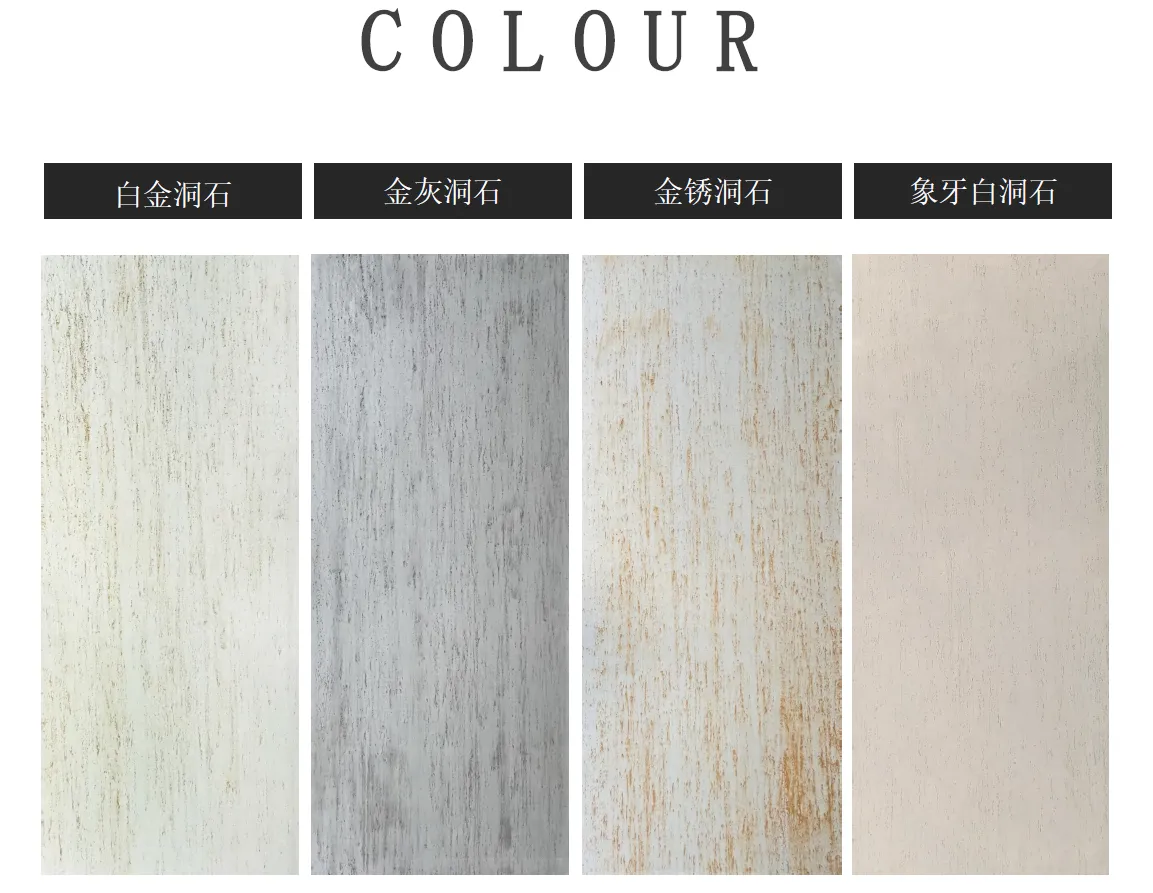
Ever stood in a showroom, staring at a tiny image of a stone texture on your phone, and thought, "But will this really look like that in my space?" You're not alone. Choosing building materials is a big decision—one that shapes how a room feels, how light plays off surfaces, and even how guests interact with your space. That's where texture samples come in. They're not just small pieces of material; they're windows into the soul of your project. And when it comes to materials that blend history, innovation, and unbeatable texture, few do it like MCM's Roman Huge Travertine and its siblings in the MCM family.
Let's start with the obvious: screens lie. A photo of travertine (starry blue) might glow with deep, oceanic hues on your laptop, but under the warm glow of your living room lamp, it could shift to something softer, more muted. Or maybe that "lunar peak silvery" finish you saw online looks sleek and modern in a studio shot, but up close, its subtle metallic flecks catch the light in a way that feels almost alive. Swatches fix that. They let you hold the material, run your fingers over its texture, and test it against your existing decor, lighting, and even paint swatches. It's the difference between guessing and knowing—and in design, knowing saves time, money, and regret.
Take it from Sarah, an interior designer in Chicago who recently worked on a boutique hotel project. "I almost ordered 500 square feet of what I thought was 'rustic beige' travertine based on a digital render," she told me. "Then the swatch arrived. Turns out, in person, it had these warm, terracotta undertones that clashed with the hotel's cool gray palette. If I hadn't requested a sample, we would've been staring at a $20,000 mistake. Swatches aren't optional—they're non-negotiable."
Let's dive into the star of the show: Roman Huge Travertine. Travertine itself is a stone with pedigree—it's been used for millennia, from the Colosseum in Rome to the Getty Center in Los Angeles. What makes MCM's Roman Huge Travertine special? It's all in the "huge" part. These slabs are bold, with thick, organic veining that mimics the look of ancient stone quarried from the hills of Italy, but with a modern twist: MCM's modified composite material (MCM) technology makes them lightweight, durable, and surprisingly flexible.
Run your hand over a Roman Huge Travertine swatch, and you'll feel it immediately—the texture is tactile, with tiny indentations and ridges that tell a story of slow formation, like water flowing over stone for centuries. It's not perfectly smooth, nor should it be. That imperfection is what gives it character. Imagine it as a feature wall in a restaurant: diners run their eyes over its surface, tracing the veins with their gaze, and suddenly the space feels less like a generic eatery and more like a place with history. Or in a home office: that same texture adds warmth to an otherwise sterile environment, making long workdays feel a little more grounded.
But Roman Huge Travertine isn't alone. It's part of a family of materials designed to cater to every aesthetic—from the celestial to the industrial, the rustic to the futuristic. Let's meet a few of its siblings.
MCM doesn't just do travertine. They've reimagined what building materials can be, blending natural inspiration with cutting-edge technology. Take travertine (starry blue) , for example. It's travertine, but with a twist: tiny, iridescent flecks embedded in the stone that catch the light like stars in a night sky. It's not glittery or over-the-top—just a subtle, magical detail that turns a plain wall into a conversation starter. I recently saw it used in a coastal home's bathroom, paired with white subway tiles and brass fixtures. The result? A space that felt like standing under the ocean at night, with the "stars" reflecting off the water. Stunning.
Then there's lunar peak silvery , a material that feels like it was chiseled from the surface of the moon. Its smooth, almost metallic finish has a cool, silvery sheen that's equal parts modern and otherworldly. It's perfect for spaces that need a touch of drama without being overwhelming—think a lobby wall in a tech startup, or a backsplash in a minimalist kitchen. What's most surprising about lunar peak silvery? It's not cold. The texture, though sleek, has a softness to it, like polished stone that's been worn smooth by time. It's the kind of material that makes you want to reach out and touch it, just to confirm it's real.
And let's not forget MCM flexible stone , the unsung hero of the lineup. Traditional stone is heavy, brittle, and hard to install on curved surfaces. MCM flexible stone? It bends. Imagine wrapping a column in the look of natural travertine, or creating a curved accent wall in a home theater—all without the hassle of cutting and fitting rigid slabs. It's a game-changer for designers who dream in curves, not just straight lines.
To help you navigate this texture-rich world, we've put together a quick guide to some of MCM's most popular swatches. Think of it as your first step toward finding "the one" for your project:
| Product Name | Texture Notes | Ideal For |
|---|---|---|
| Roman Huge Travertine | Thick, organic veining; matte finish with subtle pits and ridges. | Feature walls, fireplaces, restaurant interiors. |
| Travertine (Starry Blue) | Deep blue base with iridescent "star" flecks; smooth with a slight shimmer. | Accent walls, bathroom backsplashes, coastal-themed spaces. |
| Lunar Peak Silvery | Sleek, metallic silver finish with fine, linear texture; cool to the touch. | Modern kitchens, office lobbies, tech-focused spaces. |
| MCM Flexible Stone | Mimics natural stone texture (veining, pits) but bends up to 90 degrees. | Curved walls, columns, furniture wraps, tight spaces. |
Let's get practical. How do these textures actually work in real life? Let's walk through a hypothetical project: a boutique café in downtown Portland, aiming for a vibe that's "rustic-chic with a celestial twist." The designer, Mia, starts by ordering swatches—Roman Huge Travertine, travertine (starry blue), and lunar peak silvery. Here's how it plays out:
The result? A café that feels intentional, cohesive, and uniquely itself—all because Mia took the time to feel the textures, test the colors, and imagine how they'd work together. That's the power of swatches: they turn abstract ideas into tangible plans.
So, you're sold. You want to hold Roman Huge Travertine in your hand, see how travertine (starry blue) looks in your morning light, and feel the flexibility of MCM flexible stone. How do you get started? It's surprisingly simple.
First, head to MCM's website. Navigate to their "Swatches" section—you'll find a list of all their product lines, from Roman Huge Travertine to lunar peak silvery and beyond. Click on the ones that catch your eye; each product page has detailed descriptions, photos (though remember, swatches are better!), and a "Request Swatch" button. Fill out a quick form with your project details (residential? commercial? rough square footage?) and shipping info, and hit send. Most swatches ship within 3-5 business days, and many are free or low-cost—consider it an investment in avoiding costly mistakes.
Pro tip: Order more than you think you need. If you're torn between travertine (starry blue) and travertine (starry orange), get both. Test them in different rooms, at different times of day. Tape them to the wall, lay them on your existing furniture. The more you interact with the swatches, the clearer your vision will become.
Design is about details—the way a texture catches the light, the way a color makes you feel when you walk into a room, the way a surface invites touch. MCM's Roman Huge Travertine and its family of textures aren't just building materials; they're tools to tell your project's story. And the best way to start that story is by holding a swatch in your hand, feeling its texture, and knowing—without a doubt—that it's the right fit.
So don't settle for screenshots or guesswork. Order your MCM swatches today. Your future space—whether it's a cozy home, a bustling café, or a cutting-edge office—will thank you.
Because great design isn't just seen—it's felt.
Recommend Products












