
For centuries, architects and designers have turned to natural stone to infuse spaces with timeless elegance. Two heavyweights in this realm—Roman huge travertine and marble—have long vied for the spotlight, each bringing its own allure and challenges. But what if there was a way to capture the best of both worlds, without the compromises? Enter MCM, a revolutionary line of modified composite materials that's redefining how we think about stone, metal, and texture in design.
Walk through the streets of Rome, and you'll feel it—the warm, sun-baked texture of travertine underfoot. Quarried from regions like Tivoli, where ancient Romans sourced the stone for the Colosseum and Pantheon, Roman huge travertine is more than a material; it's a storyteller. Its porous surface, formed by mineral-rich (hot springs) over millennia, bears the marks of time: tiny bubbles, subtle veining, and a palette that ranges from creamy beige to deep honey.
Designers love it for its organic, lived-in charm. A boutique hotel in Tuscany might clad its lobby walls in Roman huge travertine, letting the stone's natural pits and ridges add depth to a space filled with leather sofas and vintage brass fixtures. In a modern home, a kitchen backsplash of travertine brings warmth to sleek, minimalist cabinetry, softening the sharp edges of stainless steel appliances.
But for all its beauty, travertine has its quirks. Its porosity means it stains easily—spill a glass of red wine, and you'll be reaching for the sealant. It's also heavy: a single slab can weigh upwards of 80 kg, making it impractical for high-rise facades or projects where structural load is a concern. And while its earthy tones are versatile, they can feel limiting for designers craving bold color or metallic accents.
If travertine is the soul of rustic elegance, marble is the crown jewel of luxury. From the Taj Mahal's shimmering white domes to the marble-clad lobbies of New York's penthouses, this stone has long symbolized opulence. Formed from limestone subjected to intense heat and pressure, marble boasts a smooth, glass-like surface and veins that swirl like frozen rivers—each slab as unique as a fingerprint.
Imagine a bathroom in a Parisian apartment: walls lined with Calacatta marble, its crisp white background and gold veining reflecting light from a crystal chandelier. Or a kitchen countertop in Carrara marble, where the stone's cool touch contrasts with the warmth of wooden bar stools. Marble elevates spaces, turning the ordinary into the extraordinary.
Yet, this luxury comes at a price—literally. High-quality marble can cost hundreds of dollars per square meter, putting it out of reach for many projects. It's also surprisingly fragile: a dropped pan can chip its surface, and acidic substances like lemon juice or vinegar etch its finish. And like travertine, it's heavy, making installation a logistical nightmare for large-scale projects. For all its beauty, marble often leaves designers wrestling with trade-offs: Do we splurge on the perfect slab, or compromise to stay on budget?
Between travertine's rustic warmth and marble's polished luxury lies a gap—a space where neither stone quite fits. Let's say you're designing a high-rise residential building in Tokyo. You love the look of travertine for the facade, but its weight would require reinforcing the structure, blowing your budget. Or you're creating a restaurant in Miami, where humidity and salt air would wreak havoc on marble tabletops. Or maybe you want the drama of marble veins but in a bold, unconventional color—say, travertine (starry green) —but natural stone can't deliver that consistency.
This gap isn't just about practicality; it's about creativity. Designers shouldn't have to choose between aesthetics and functionality, or between tradition and innovation. That's where MCM steps in.
MCM, short for Modified Composite Material, isn't just a product line—it's a philosophy. By combining natural minerals with advanced polymers, MCM creates surfaces that mimic the look and feel of natural stone, metal, and wood, but with superpowers: they're lighter, more durable, and infinitely customizable. Let's break down how MCM bridges the design gap, starting with its most celebrated offering: mcm flexible stone .
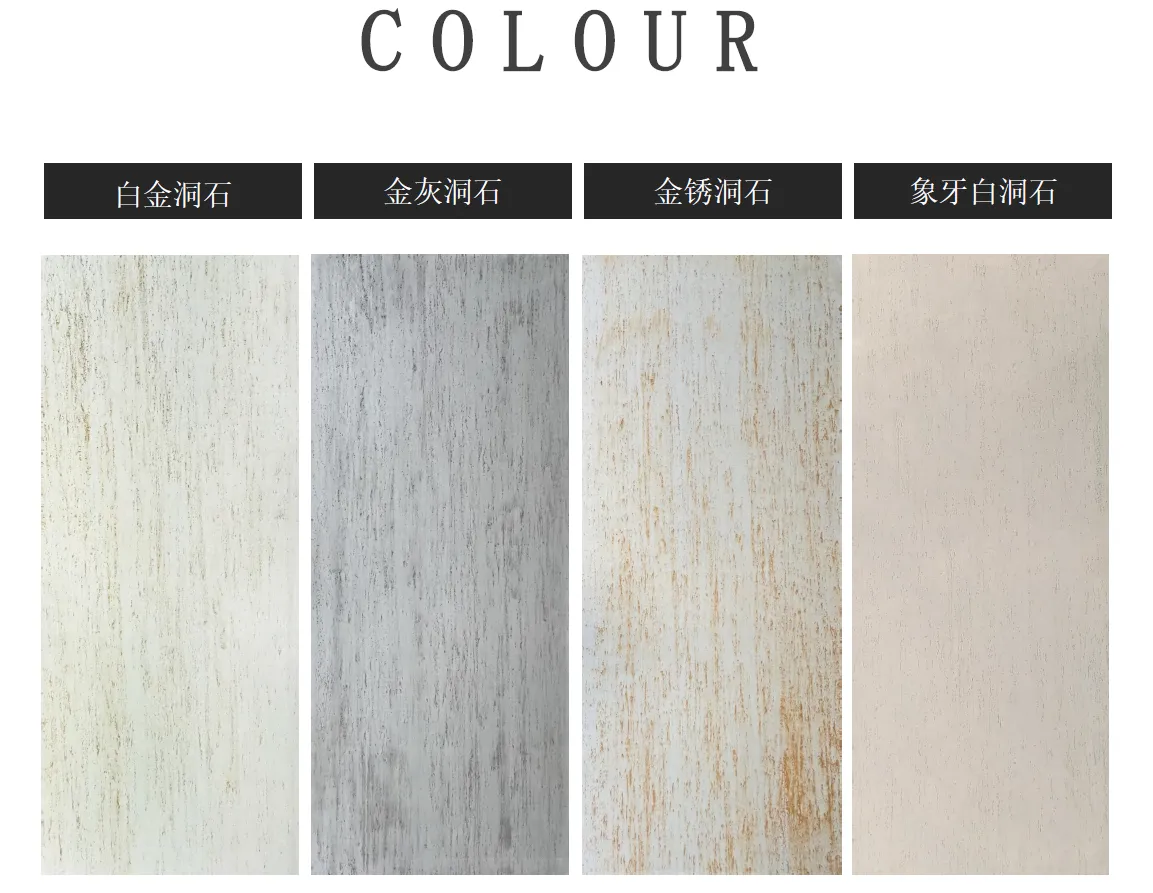
Traditional stone is rigid, heavy, and unforgiving. MCM flexible stone? It's a game-changer. At just 3-5 kg per square meter—about 70% lighter than natural travertine—it can be installed on curved surfaces, ceilings, or even furniture without structural stress. Imagine a boutique hotel in Seoul with a sweeping, curved lobby wall clad in travertine (starry green) MCM flexible stone. The stone's deep green base, dotted with iridescent flecks like a night sky, wraps around the space, creating an immersive experience—something impossible with heavy natural stone.
But it's not just about weight. MCM flexible stone is engineered to resist stains, scratches, and moisture. That Parisian bathroom we imagined earlier? Swap the marble for MCM flexible stone, and you'll never worry about etching or water damage. It's also easy to install: no need for heavy machinery or specialized labor. A small team can clad an entire wall in a day, cutting down on project timelines.
MCM doesn't stop at stone. Take lunar peak silvery , a metallic series that channels the moon's ethereal glow. Unlike solid metal panels, which are dense and prone to corrosion, Lunar Peak Silvery uses a composite core wrapped in a thin metallic layer, giving it a sleek, reflective finish that's perfect for modern exteriors. Picture a tech startup's headquarters in San Francisco: the facade shimmers like moonlight, changing color as the sun sets, all without the weight of traditional aluminum cladding.
Then there's foamed aluminium alloy board (vintage silver) , a nod to industrial chic. With its matte, weathered finish, it adds texture to spaces that crave a raw, unpolished edge—think a Brooklyn coffee shop with exposed brick walls and foamed aluminium alloy countertops, where the material's slight dents and scratches tell a story of daily life. And because it's foamed, it's surprisingly lightweight, making it ideal for ceiling installations or furniture accents.
For designers who love the texture of natural boulders but need a more polished look, boulder slab (vintage gold) is a revelation. MCM's take on boulder stone mimics the rough-hewn surface of river rocks, but with a luxurious golden hue that adds warmth to modern spaces. A luxury retail store in Dubai might use it for a feature wall, pairing the stone's rugged texture with sleek glass display cases and gold accents—creating a contrast that feels both timeless and contemporary.
| Characteristic | Roman Huge Travertine | Marble | MCM Flexible Stone |
|---|---|---|---|
| Weight (per sqm) | 25-30 kg | 20-25 kg | 3-5 kg |
| Stain Resistance | Low (requires sealing) | Low (acid-sensitive) | High (no sealing needed) |
| Installation Complexity | High (needs heavy machinery) | High (fragile, precision cutting) | Low (lightweight, flexible) |
| Customization | Limited (natural variation) | Limited (color/vein consistency) | Unlimited (colors, textures, finishes) |
| Cost (per sqm) | Mid-range ($80-$150) | High ($150-$400+) | Mid-range ($60-$120) |
Let's circle back to that high-rise in Tokyo we mentioned earlier. With MCM flexible stone, the architects could clad the facade in a material that looks identical to Roman huge travertine but weighs a fraction of the real thing. No structural reinforcements, no budget overruns—just a building that feels rooted in history while reaching for the future.
Or take a family home in Arizona, where the homeowners wanted the luxury of marble countertops but needed something that could withstand kids, pets, and the occasional spilled smoothie. MCM's marble-look flexible stone gave them the glossy finish and veining they loved, with none of the stress. "We used to panic if someone set a hot pan down," says the homeowner. "Now? We just wipe it off and move on."
And for the designer craving travertine (starry green) ? MCM delivers that exact shade, batch after batch, so every panel matches perfectly. No more hunting through quarries for the "right" slab—just consistent, vibrant color that makes a statement.
Roman huge travertine and marble will always hold a special place in design history—they're icons, testaments to nature's artistry. But in a world where buildings reach higher, budgets are tighter, and creativity knows no bounds, we need materials that keep up. MCM doesn't replace natural stone; it elevates it. It takes the warmth of travertine, the luxury of marble, the shine of metal, and wraps them in a package that's practical, affordable, and endlessly customizable.
So the next time you're standing in front of a design dilemma—weight vs. beauty, tradition vs. innovation—remember: MCM is the bridge. It's where the past meets the future, and where your boldest design dreams finally find their match.
Recommend Products












