
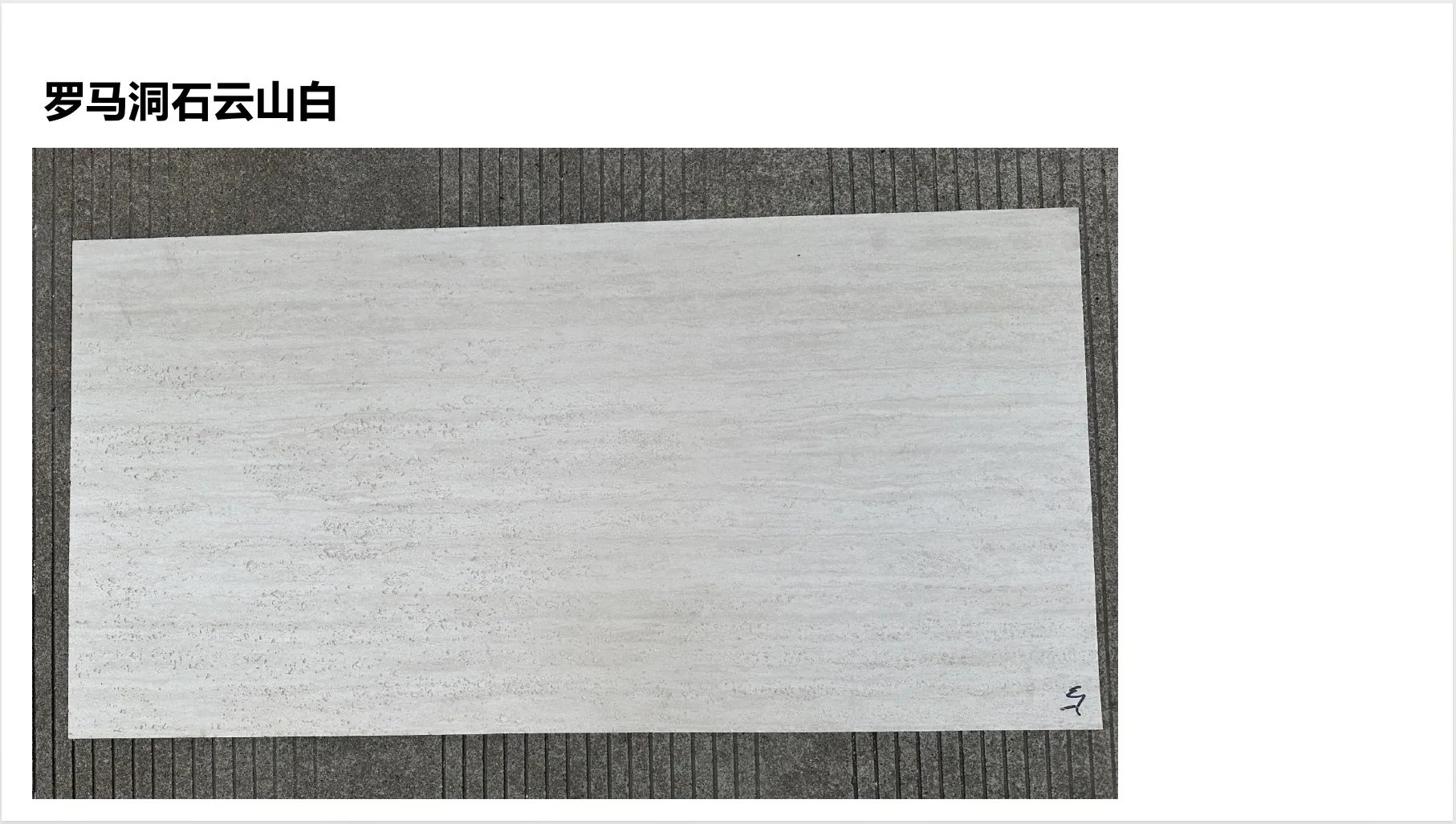
In the heart of Saudi Arabia's architectural renaissance, where tradition meets innovation, COLORIA has emerged as a quiet pioneer. For over a decade, the brand has partnered with local architects, designers, and visionaries to redefine how buildings feel—not just function. At the center of this movement is Romanite, a material that defies easy categorization: part stone, part art, entirely transformative. Today, we dive into the world of Romanite real photos (large size) from COLORIA's Saudi projects, exploring how this material isn't just shaping walls, but crafting experiences that linger long after you've left a space.
Walk into the lobby of Jeddah's Al-Majd Cultural Center, and your first thought might be, "Is that stone? Or something else?" The walls rise 12 feet high, clad in Romanite panels so large they seem to flow like a single, unbroken canvas. Run a hand along the surface, and you'll feel a texture that's both rough and refined—pockmarked with tiny indentations that catch the light, yet smooth enough to exude elegance. This is Romanite in its grandest form: large-size panels (some spanning 4x8 feet) that turn ordinary surfaces into focal points.
"Romanite isn't just about durability, though it's incredibly strong," says Lina Al-Harbi, lead architect on the Al-Majd project. "It's about emotion. In Saudi culture, spaces are meant to tell stories—of heritage, of ambition, of community. Romanite's depth lets us do that without words. The way it shifts color from dawn to dusk—warm gold at sunrise, soft gray at twilight—it mirrors the rhythm of our days. Clients walk in and say, 'This feels like home,' even in a public building. That's the magic."
What makes Romanite unique? It starts with the raw materials: a blend of natural travertine aggregates and a proprietary resin that binds them into a lightweight, flexible panel. Unlike traditional stone, which can crack under its own weight in large sizes, Romanite bends (slightly) with building movement, making it ideal for Saudi Arabia's desert climate, where temperature swings are extreme. But the real art is in the finishing. Each large-size panel is hand-finished by artisans, who use tools passed down through generations to etch, polish, and texture the surface—no two panels are exactly alike.
The Skyline Tower, a 30-story commercial hub in Riyadh's King Abdullah Financial District, is a masterclass in Romanite's versatility. Here, COLORIA supplied over 5,000 square feet of Romanite real photos (large size) panels, used in everything from elevator lobbies to executive suites. In the main atrium, the material takes center stage: a curved wall of Romanite in "Vintage Gray" finish, backlit to reveal the stone's natural veining. The effect? It's as if the building itself is breathing, the light filtering through the panel's pores like sunlight through desert rock.
"We wanted the atrium to feel like a modern oasis," explains Omar Khalid, the tower's interior designer. "Romanite's large panels allowed us to create a seamless curve—no grout lines, no breaks. When clients enter, they don't just see a wall; they feel a sense of calm. In a city that never stops moving, that's priceless."
Romanite rarely stands alone. In COLORIA's Saudi projects, it's often paired with materials that amplify its strengths—adding contrast, warmth, or drama. Take the travertine (starry blue) panels used alongside Romanite in the lobby of Dammam's Azure Hotel. The Romanite provides a neutral, grounded base, while the travertine, with its flecks of iridescent blue (reminiscent of the Red Sea at dusk), adds a pop of color that feels both unexpected and right at home.
Another standout pairing? Romanite with lunar peak golden. At Riyadh's Al-Rawdah Residential Complex, the exterior facade combines Romanite's matte texture with lunar peak golden's metallic sheen. The result? A building that shimmers gently in the sun, paying homage to Saudi Arabia's Bedouin heritage (where gold has long symbolized prosperity) while feeling utterly contemporary.
| Material | Finish | Texture | Best For | Emotional Tone |
|---|---|---|---|---|
| Romanite (Large Size) | Vintage Gray | Matte with hand-etched indentations | Feature walls, atriums | Timeless, grounding, introspective |
| Travertine (Starry Blue) | Polished with iridescent flecks | Smooth with subtle sparkle | Accent walls, reception desks | Playful, vibrant, connected to nature |
| Lunar Peak Golden | Metallic sheen | Sleek, reflective | Exterior facades, column wraps | Luxurious, hopeful, celebratory |
In an age of filtered images and digital enhancement, COLORIA's commitment to "real photos" is intentional. "We don't retouch Romanite photos to hide flaws because the flaws are part of the beauty," says Mahmoud Faraj, COLORIA's Saudi Arabia creative director. "A small crack in the texture, a variation in color—those are the marks of a material made by hand, not a machine. When clients see our Romanite real photos (large size), they're seeing exactly what they'll get. No surprises, just authenticity."
Nowhere is this more evident than in the photos from the Madinah Heritage Museum, where Romanite panels were used to recreate the look of ancient Nabatean stone carvings. The large-size panels bear the same irregularities as the original rock faces—chisel marks, natural pits, even a few "imperfect" edges that make the exhibit feel less like a reproduction and more like a portal to the past. "Visitors often reach out to touch the walls, half-expecting them to be centuries old," says museum curator Amina Al-Sayed. "That's the power of Romanite: it doesn't just mimic history—it honors it."
While Romanite takes the spotlight, COLORIA's portfolio includes other gems that complement its storytelling. Take the gobi rammed earth board, used in the guest rooms of Riyadh's Green Oasis Hotel. Paired with Romanite accent walls, the gobi panels—with their warm, terracotta hues and sandy texture—evoke the vastness of Saudi Arabia's deserts. "Guests tell us the rooms feel 'rooted,'" says hotel manager Kareem Hassan. "Like they're staying in a luxury tent, but with all the modern comforts. Romanite adds the polish; gobi adds the soul."
As Saudi Arabia continues to invest in mega-projects like NEOM and the Red Sea Development, the demand for materials that blend innovation with cultural relevance is skyrocketing. Romanite, with its large-size capabilities, durability, and emotional depth, is poised to play a starring role. "We're already working on a project in NEOM where Romanite will be used in outdoor installations—exposed to sand, wind, and extreme heat," says Faraj. "If it can thrive there, it can thrive anywhere. But more than that, it's about creating spaces that make people proud to call Saudi Arabia home. Romanite doesn't just build buildings. It builds legacies."
Step back from the Romanite real photos (large size), and you'll see more than a collection of panels. You'll see a vision: of buildings that don't just rise from the desert, but converse with it. Of spaces that honor the past while racing toward the future. And of a material that, at the end of the day, is really about people—how they live, work, and find beauty in the world around them.
In the end, that's COLORIA's greatest achievement: turning stone into stories. And in Saudi Arabia, where every story matters, that's the most powerful tool of all.
Recommend Products












