
In the heart of the Arabian Peninsula, Saudi Arabia stands as a testament to how architecture can bridge centuries of tradition with the bold ambition of modernity. From the gleaming skyscrapers of Riyadh to the cultural landmarks rising in Jeddah, the country's built environment is undergoing a transformation—one that demands materials as resilient as the desert and as elegant as the region's heritage. Enter COLORIA GROUP, a name increasingly synonymous with innovative building solutions that don't just meet these demands but redefine them. Among their portfolio of game-changing materials, one stands out for its ability to make a grand statement in large-scale projects: Romanite, especially when rendered in striking large-size formats. Today, we're diving into how Romanite, paired with COLORIA's MCM (Modified Composite Material) technology, is leaving an indelible mark on Saudi Arabia's architectural landscape—one oversized panel at a time.
To understand the role of Romanite in Saudi projects, it helps to first grasp the scale of ambition driving the country's construction boom. Vision 2030, a transformative plan to diversify the economy and elevate quality of life, has sparked a wave of development—from futuristic megacities like NEOM to revamped cultural districts and sustainable commercial hubs. These projects aren't just about size; they're about identity. Architects and developers are seeking materials that honor Saudi Arabia's rich cultural tapestry while embracing cutting-edge performance. Traditional stone has long been a staple, but its weight, rigidity, and installation challenges often clash with the demands of modern, large-scale design. This is where COLORIA GROUP's MCM solutions step in—and Romanite, with its large-size capabilities, has emerged as a star player.
Take, for example, the recently completed Al-Murabba Cultural Center in Riyadh, a sprawling complex designed to celebrate Saudi heritage through contemporary art and exhibition spaces. The center's facade, a focal point of its design, required a material that could span vast surfaces without compromising on detail or durability. Enter Romanite in large-size panels—each measuring up to 1200x2400mm—cladding the building's exterior in a seamless, textured finish that evokes the weathered grandeur of ancient stone yet stands up to Riyadh's scorching summers and occasional sandstorms. "We needed something that felt both timeless and forward-thinking," says Lina Hassan, the lead architect on the project. "Romanite delivered that. The large panels created a sense of continuity, like a modern-day stone tapestry, while COLORIA's MCM technology meant we could install them without the structural stress of traditional marble or granite."
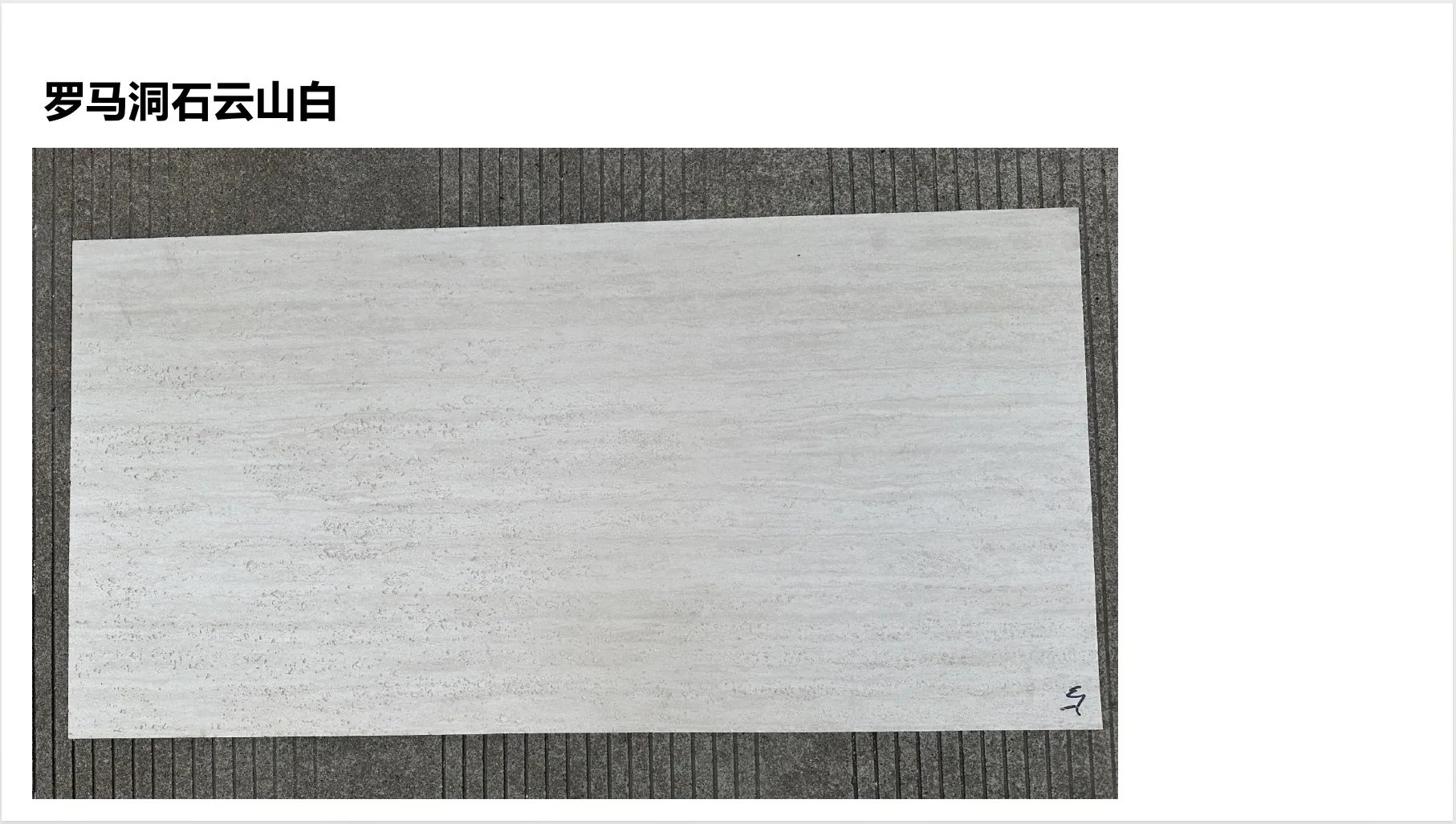
So, what exactly makes Romanite in large sizes such a standout choice for Saudi projects? Let's break it down. At its core, Romanite is a premium MCM material, crafted by bonding natural stone aggregates with a lightweight, flexible composite backing. This unique composition gives it the best of both worlds: the authentic look and feel of natural stone, paired with the practical benefits of modern engineering. When scaled up to large-format panels (think 1m x 2.4m or even larger), these benefits become even more pronounced.
First, there's the aesthetic impact. Large-size Romanite panels minimize visible joints, creating a sleek, monolithic surface that's visually striking. Whether finished in a matte, honed texture or a subtle sheen, the material plays with light in fascinating ways—absorbing the harsh midday sun to soften shadows, then glowing warmly as the sun dips below the horizon. In the Al-Murabba Center, the architects opted for a neutral, earthy tone that complements the surrounding desert landscape, while the panel size (1200x2400mm) allowed for bold geometric patterns in the facade, adding depth without cluttering the design. "It's like painting with stone," Hassan notes. "The large format gives you a bigger canvas to work with, which is invaluable for creating impactful, cohesive designs."
Durability is another non-negotiable in Saudi Arabia's climate, and Romanite doesn't disappoint. The composite backing resists warping, cracking, and moisture absorption—critical in a region where temperatures can soar above 45°C (113°F) and sand particles act like sandpaper on exposed surfaces. Unlike traditional stone, which can chip or erode over time, Romanite maintains its integrity, ensuring facades look fresh for decades. "We tested samples for over a year in our lab, subjecting them to extreme heat, UV radiation, and simulated sandstorms," explains Khalid Al-Mansoori, COLORIA GROUP's technical director. "Romanite not only met but exceeded our durability standards. It's built to last, even in the harshest conditions."
Installation efficiency is a third key advantage. Large-format traditional stone panels are heavy—often requiring specialized lifting equipment and reinforced structural support. Romanite, by contrast, is up to 70% lighter, making handling and installation faster and more cost-effective. This was a game-changer for the Al-Murabba project, where tight deadlines meant the construction team needed to accelerate the facade installation without sacrificing quality. "We reduced installation time by nearly 40% compared to using natural granite," says Ahmed Faraj, the project's construction manager. "That's a huge saving, both in labor costs and project timeline."
While Romanite (Large Size) has stolen the spotlight in many Saudi projects, it's often part of a broader palette of COLORIA GROUP materials. Let's take a closer look at how it compares to other popular options, such as Lunar Peak Silvery, Travertine (Starry Green), and MCM Flexible Stone, to see why it's the top choice for large-scale applications.
| Material | Finish & Aesthetic | Typical Application | Key Advantage in Saudi Projects |
|---|---|---|---|
| Romanite (Large Size) | Matte/honed; earthy neutrals; seamless large panels | Facade cladding, feature walls, large-scale interiors | Minimal joints for sleek design; lightweight for large installations |
| Lunar Peak Silvery | Metallic sheen; silvery-gray with subtle texture | Accent panels, canopies, modern commercial exteriors | Reflective finish reduces heat absorption; resistant to corrosion |
| Travertine (Starry Green) | Polished; green base with iridescent "starry" flecks | Interior walls, luxury retail spaces, decorative accents | Unique color adds vibrancy; natural stone texture with MCM durability |
| MCM Flexible Stone | Varied finishes (stone, wood, concrete); ultra-thin and bendable | Curved surfaces, column cladding, irregular architectural elements | Flexibility for organic designs; lightweight for complex structures |
As the table shows, each material has its niche, but Romanite (Large Size) excels where scale and cohesion matter most. For instance, in the King Abdullah Financial District (KAFD) in Riyadh, a mixed-use tower designed by a leading international firm combined Romanite large panels with Lunar Peak Silvery accents. The Romanite formed the main facade, providing a neutral backdrop, while Lunar Peak's metallic finish added a modern twist to the tower's crown, catching the light and making it a standout in the skyline. "The contrast between the two materials created visual interest without overwhelming the design," says the project's design lead. "Romanite's large size grounded the building, while Lunar Peak added that touch of contemporary flair we were after."
At the heart of Romanite's success—and indeed, all COLORIA GROUP materials—is MCM (Modified Composite Material) technology. MCM Flexible Stone, the backbone of their product line, is a revolutionary alternative to traditional building materials, and its benefits are particularly well-suited to Saudi Arabia's unique challenges.
First and foremost, MCM Flexible Stone is lightweight. Traditional natural stone panels can weigh 50-80 kg per square meter, putting immense strain on building structures. MCM panels, by contrast, weigh just 4-6 kg per square meter—light enough to be installed on almost any surface without requiring extensive structural reinforcement. This is a huge advantage in Saudi Arabia, where many projects aim for bold, cantilevered designs or retrofits of existing buildings. "We recently worked on a heritage restoration project in Jeddah's historic Al-Balad district," says Al-Mansoori. "The original structure couldn't support heavy stone cladding, so we used MCM Flexible Stone to replicate the look of traditional sandstone. It was the perfect solution—authentic appearance, zero structural stress."
Flexibility is another game-changer. MCM panels can bend up to 30 degrees, making them ideal for curved surfaces, cylindrical columns, or organic architectural forms. In the King Salman Park development in Riyadh, a circular auditorium features a facade clad in MCM Flexible Stone with a radius of just 5 meters. "Traditional stone would have required cutting hundreds of small, wedge-shaped pieces to follow the curve," explains the project's architect. "With MCM, we used large, flexible panels that curved naturally, saving time and creating a smoother finish."
Weather resistance is, of course, critical in Saudi Arabia. MCM Flexible Stone is engineered to withstand extreme temperatures (from -40°C to 80°C), high humidity, and UV radiation—all while resisting fading, cracking, or peeling. Its non-porous surface also repels dust and sand, reducing maintenance needs. "In Riyadh, buildings can get covered in a layer of sand overnight," says Faraj. "With Romanite and other MCM materials, a quick rinse with water is enough to restore their appearance. Traditional stone often traps dust in pores, requiring intensive cleaning."
While Romanite (Large Size) is a standout, it's part of COLORIA GROUP's broader MCM Big Slab Board Series—a collection designed specifically for projects that demand grand, uninterrupted surfaces. This series includes options like Boulder Slab (Vintage Silver), Century Stone, and Epoch Stone, each bringing its own character to large-scale designs.
Boulder Slab, for example, mimics the rugged texture of natural boulder stone but in lightweight, large panels. Available in Vintage Silver, Vintage Gold, and Vintage Black, it's a favorite for creating industrial-chic or rustic-modern aesthetics. A recent project in Dammam, a waterfront retail complex, used Boulder Slab (Vintage Black) for its exterior walls, pairing the material's rough-hewn texture with floor-to-ceiling glass windows for a striking contrast of old and new. "Boulder Slab adds a sense of solidity and permanence, which is perfect for a commercial space that wants to feel established," says the project's designer. "And because it's part of the Big Slab Series, we could cover large areas without breaking the bank on installation."
Century Stone, on the other hand, leans into a more refined, classic look—think polished marble or limestone, but with the durability of MCM. It's a popular choice for luxury hotels and high-end residential buildings, where elegance meets practicality. The Ritz-Carlton Riyadh recently incorporated Century Stone into its lobby renovation, using large slabs (1500x3000mm) for the reception desk backdrop. "The client wanted the opulence of marble without the maintenance headaches," explains the interior designer. "Century Stone looks identical to the real thing, but it's stain-resistant and doesn't etch with acidic spills—critical for a busy lobby."
As Saudi Arabia continues to build toward its Vision 2030 goals, materials like Romanite (Large Size) and COLORIA GROUP's MCM solutions are proving to be more than just building blocks—they're enablers of innovation. They allow architects to push boundaries, create more sustainable structures, and craft spaces that honor tradition while embracing the future.
In projects like the Al-Murabba Cultural Center, Romanite has shown that large-scale design doesn't have to sacrifice beauty for practicality. Its seamless panels, durability, and lightweight nature make it a versatile choice for everything from iconic facades to intimate interior spaces. And when paired with other COLORIA materials—Lunar Peak for metallic accents, Travertine (Starry Green) for pops of color, or MCM Flexible Stone for curved surfaces—it becomes part of a holistic design language that's uniquely Saudi: bold, resilient, and deeply rooted in both heritage and progress.
Looking ahead, as cities like NEOM and The Line take shape, the demand for innovative building materials will only grow. COLORIA GROUP, with its focus on MCM technology and materials like Romanite, is poised to play a central role in this journey. "We don't just sell materials—we partner with architects and developers to turn their visions into reality," says Al-Mansoori. "In Saudi Arabia, where the sky's the limit for design, that partnership is more important than ever."
So, the next time you walk past a striking new building in Riyadh, Jeddah, or Dammam, take a closer look. Chances are, you're admiring the work of COLORIA GROUP—and perhaps even Romanite (Large Size), quietly redefining what's possible in architecture, one large panel at a time.
Recommend Products












