
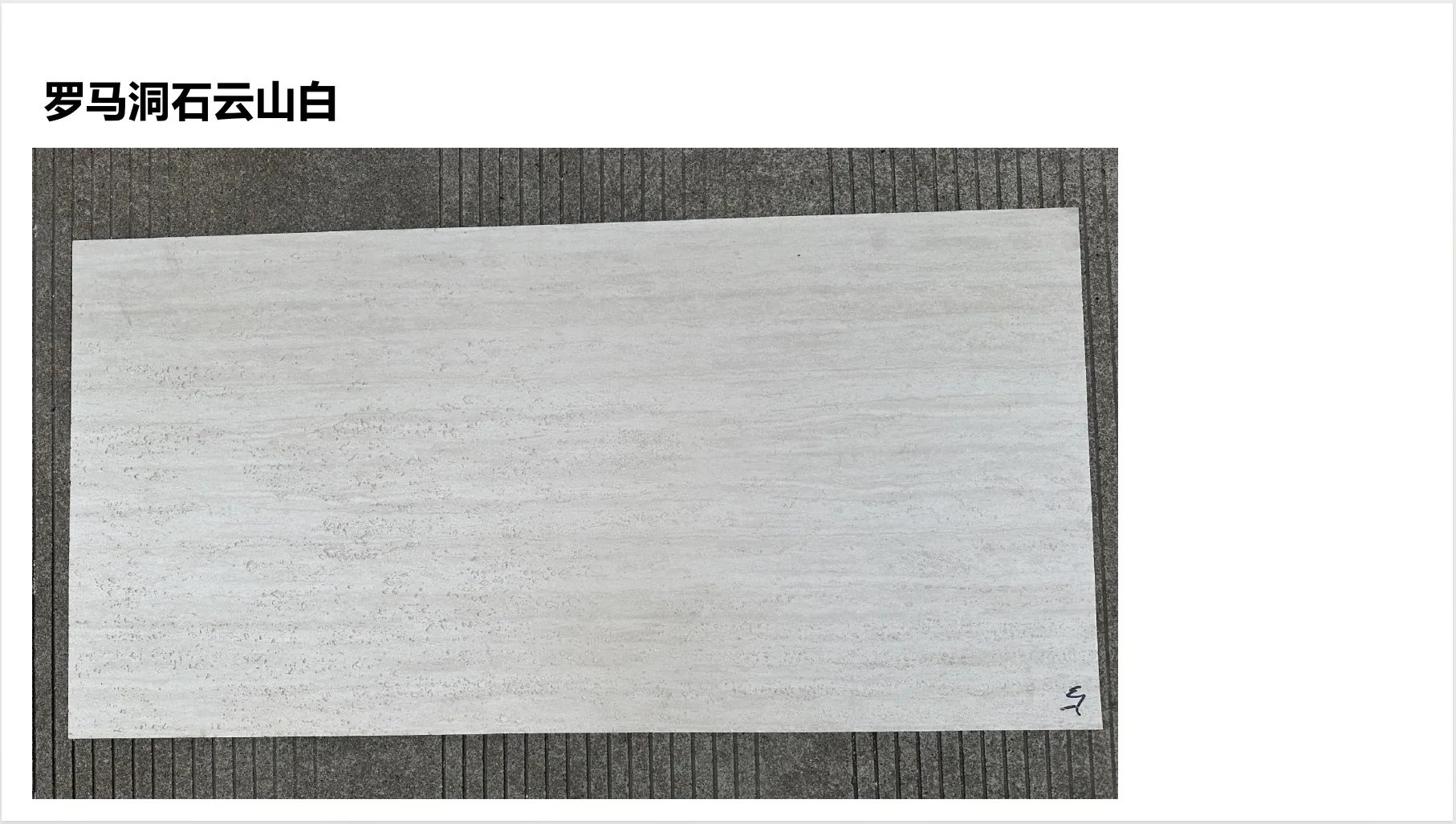
Exploring how textures, tones, and scale in materials like Romanite are reshaping the way we build—and how large-format photography captures their transformative power.
Architecture is more than steel and concrete—it's a language. Materials are the words, and how we arrange them tells stories of culture, innovation, and emotion. For today's designers, the hunt for materials that blend durability with drama has led to discoveries like Romanite, a stone that marries earthy warmth with striking visual presence. But what truly brings these materials to life for architects, interior designers, and even clients? Real photos—especially large-size ones—that capture every nuance, from the flicker of light on a textured surface to the sweep of a vein across a slab.
Romanite, in particular, shines in these large-format images. Its unique composition—think subtle veining, depth of color, and a finish that shifts with light—becomes a narrative tool. A close-up photo might reveal the stone's tactile grain, while a wide shot of a facade showcases how it anchors a building in both strength and beauty. These images don't just document; they inspire. They let designers "walk" a space before it's built, testing how Romanite interacts with other materials, how it changes from dawn to dusk, and how it makes people feel when they stand before it.
Romanite isn't just another building material—it's a statement. What sets it apart? Its ability to balance grandeur with intimacy. Large-size Romanite slabs (often spanning 2m x 3m or more) create seamless surfaces that feel expansive, yet their detailed texture—think soft, undulating veining or tiny, glittering mineral inclusions—draws the eye in, inviting touch and contemplation. This duality is why Romanite real photos (large size) have become a staple in design studios: they bridge the gap between the abstract "idea" of a material and its tangible impact.
Take, for example, a recent project in a downtown arts district: the facade, clad in Romanite, uses large-format slabs in "Interstellar Gray" (a deep, moody tone with silver undertones). A large-size photo of this facade, taken at golden hour, shows how the stone absorbs the warm light, turning from cool gray to a rich, amber-tinged hue. The photo's scale—capturing the entire 12-story building—lets designers see how the stone's texture breaks up the monotony of the structure, while close-cropped shots reveal the veining that mimics the night sky, tying the building to its artsy, cosmic-themed neighborhood.
Great architecture rarely relies on a single material. Romanite's versatility shines when paired with complementary options that enhance its strengths. Let's explore three standout partners— MCM flexible stone , fair-faced concrete , and lunar peak silvery —and how their interplay is captured in large-format photography.
| Material | Key Traits | Romanite Pairing Magic | Photo Highlight |
|---|---|---|---|
| Romanite | Durable, textured, large-format slabs; colors range from warm beiges to deep grays. | The anchor—provides structure and visual weight. | Close-ups of veining; wide shots of facades and interior walls. |
| MCM Flexible Stone | Lightweight, bendable, mimics natural stone; ideal for curved surfaces. | Softens Romanite's rigidity—perfect for rounded arches or organic-shaped feature walls. | Curved installations showing flexibility; shots with Romanite's straight edges. |
| Fair-Faced Concrete | Raw, industrial, matte finish; exposed aggregate for texture. | Creates contrast—Romanite's warmth vs. concrete's cool, modern edge. | photos highlighting texture contrast; hybrid walls with Romanite and concrete panels. |
| Lunar Peak Silvery | Metallic, shimmering finish; lightweight aluminum alloy base. | Adds a futuristic accent—pairs with Romanite's earthiness for "past meets future" designs. | Lighting tests showing how it reflects light against Romanite's matte surface. |
One of the most striking combinations? Romanite in "Starry Blue" (a vibrant, celestial hue) paired with lunar peak silvery accents on a museum extension. Large-size photos of this project, taken at night, show the Romanite panels glowing softly under spotlights, while the silvery lunar peak elements catch and reflect the light, creating a dynamic, almost otherworldly effect. It's a reminder that materials don't just fill space—they create mood.
For architects, Romanite real photos (large size) are more than inspiration—they're a practical tool. Take the case of a boutique hotel in Bali, where the design team used Romanite "Bali Stone" (a warm, sandy variant with subtle coral undertones) for guest room walls. Before finalizing, they studied large-format photos of the stone in different lighting: morning sun brought out its golden hues, while evening lamplight deepened its earthiness. This helped them adjust window placements to maximize the stone's beauty throughout the day.
Another example: a tech company headquarters in Tokyo, which blended Romanite with foamed aluminium alloy board (vintage silver) for a "heritage meets innovation" vibe. Large photos of the proposed facade—Romanite's rough, natural texture alongside the alloy's sleek, metallic finish—convinced stakeholders that the combination would feel both rooted and forward-thinking. The result? A building that's become a local landmark, with Instagram-worthy shots often featuring the contrast between the two materials.
Large-size Romanite photos aren't just for designers—they're powerful for clients too. When presenting a concept, pair close-up shots of the stone's texture with mockups of their space (e.g., a kitchen backsplash or office lobby). Clients often struggle to visualize materials from small samples; a 3ft x 4ft print of Romanite in their chosen color (say, travertine (starry green) or lime stone (beige) ) makes the design feel tangible, increasing buy-in and reducing revisions.
As architecture continues to evolve, materials like Romanite will play a starring role—not just for their functionality, but for their ability to tell stories. With sustainability becoming a priority, Romanite's durability (it resists weathering and requires minimal maintenance) adds another layer of appeal. And as large-format photography and digital tools improve, designers will have even more ways to explore how materials like Romanite, mcm flexible stone , and lunar peak golden can come together.
Imagine a future where virtual reality lets clients "walk" through a space clad in Romanite, touching the screen to feel its texture—a future where large-size photos are just the starting point. For now, though, we have something almost as powerful: the ability to capture Romanite's beauty in stunning detail, share it with the world, and inspire the next generation of buildings that feel less like structures, and more like experiences.
Recommend Products












