
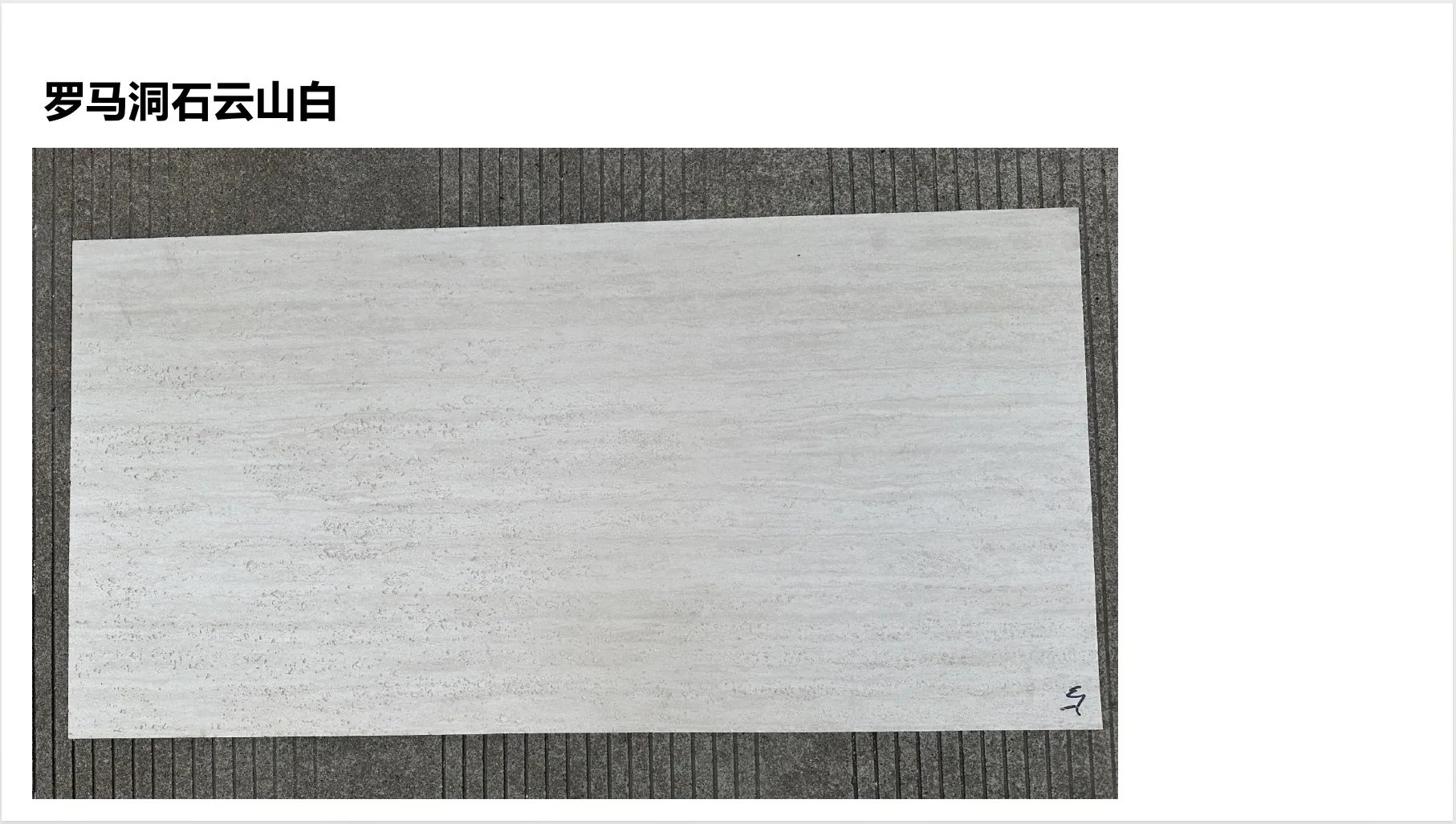
Imagine standing in Riyadh in July: the sun blazes overhead, pushing temperatures past 45°C, while a dry wind carries fine sand that stings exposed skin. In Jeddah, humidity clings to the air like a heavy blanket, even as the mercury hovers at 40°C. For architects and builders in Saudi Arabia, these aren't just weather conditions—they're battles. Battles against materials that warp, fade, or crack under the relentless stress of extreme heat, UV radiation, and abrasive sandstorms. But what if there was a solution that didn't just survive these challenges, but turned them into opportunities to create buildings that are both durable and stunningly beautiful? Enter MCM (Modified Composite Material) panels—a revolution in construction that's reshaping Saudi Arabia's architectural landscape. And at the heart of this revolution? Romanite, a flagship product whose large-size real photos tell a story of resilience, elegance, and triumph over nature's harshest tests.
Saudi Arabia's climate is a masterclass in extremes. In the inland deserts, summer days see temperatures spike to 50°C, with UV radiation so intense it can fade paint in months. Sandstorms—some carrying grains fine as powder, others with pebbles sharp as shards—blast buildings, wearing down surfaces like a slow-motion sandblaster. Along the coast, humidity levels swing from 30% to 85% in a single day, creating the perfect conditions for mold and corrosion. Even winter brings surprises: sudden cold snaps in the north, or rare but heavy rains that test a material's water resistance.
Traditional building materials often stumble here. Natural stone, while beautiful, absorbs heat, turning facades into radiators that drive up cooling costs. Concrete can crack under thermal expansion, and wood? It warps, rots, or fades beyond recognition in a matter of years. For developers and architects, the quest has long been for something that bridges the gap: tough enough to stand up to the elements, yet aesthetically versatile enough to bring bold design visions to life. That's where MCM steps in.
At its core, MCM (Modified Composite Material panels) is a feat of engineering: a blend of natural stone aggregates, high-performance polymers, and reinforcing fibers that creates a material lighter than stone, stronger than concrete, and infinitely more adaptable. What makes MCM different isn't just its composition, but its philosophy: it's designed with harsh climates in mind, not just despite them. Take, for example, MCM flexible stone—a variant that bends without breaking, making it ideal for curved facades or intricate designs, even in areas where temperature fluctuations cause traditional materials to snap. Or the MCM 3D printing series, which uses advanced additive manufacturing to create textures so precise, they mimic the look of hand-carved stone, but with the consistency of a factory-made product.
But if MCM is the army, Romanite is its most decorated general. A star product in the MCM lineup, Romanite isn't just another cladding option—it's a statement. Its name evokes strength and timelessness, and when you see its large-size real photos, that promise comes to life: deep, earthy textures that catch the light like ancient stone, rich colors that hold fast even under the Saudi sun, and a scale (large slabs up to 1.2m x 2.4m) that turns building facades into canvases. But Romanite's beauty isn't skin-deep. Let's dig into why it's becoming the go-to choice for projects where performance is non-negotiable.
Walk through Riyadh's King Abdullah Financial District, and you'll spot it: a sleek commercial tower with a facade that shimmers softly, even at noon. That's Romanite. Touch it, and you'll notice it doesn't burn your hand—unlike natural granite, which absorbs heat until it's too hot to handle. Romanite's secret? A low thermal conductivity that keeps buildings cooler, reducing AC loads by up to 20% (a game-changer in a country where cooling costs can eat up 60% of a building's energy budget). But that's just the start.
Heat Resistance: Saudi summers don't just get hot—they stay hot. Romanite is tested to withstand continuous exposure to 80°C (far above the highest recorded temperatures in the kingdom) without warping, delaminating, or losing structural integrity. Its polymer matrix acts like a shield, preventing the material from expanding or contracting excessively, which is the leading cause of cracks in traditional cladding.
UV Stability: The Saudi sun's UV rays are brutal, capable of fading even the boldest colors in months. Romanite's pigments are embedded deep within its composite structure, not just painted on the surface. In accelerated aging tests, it retained over 95% of its color after 3,000 hours of UV exposure—equivalent to 25 years in the Saudi sun. That means the warm terracotta of Romanite (Vintage Gold) or the deep charcoal of Romanite (Vintage Black) will look as vivid on day 10,000 as they did on day one.
Sandstorm Survival: Sandstorms in Saudi Arabia aren't gentle. They hurl grains of sand at speeds up to 60 km/h, wearing down surfaces like sandpaper. Romanite's textured finish is intentionally designed to resist abrasion; its top layer is reinforced with fine ceramic particles that create a hard, scratch-resistant barrier. After a storm, a quick rinse with water is all it takes to restore its original luster—no need for costly repairs or repainting.
Humidity & Rain: While Saudi Arabia is mostly dry, coastal cities like Jeddah and Dammam experience humid summers and occasional downpours. Romanite is 100% waterproof, with no porous spaces for moisture to seep in and cause mold or rot. Unlike natural travertine, which can absorb water and become stained, Romanite repels rain, leaving behind only clean, crisp lines.
Romanite may be the headline act, but MCM's supporting cast is just as impressive. From the cosmic-inspired Travertine (Starry Green) to the industrial-chic Foamed Aluminium Alloy Board (Vintage Silver), each product brings unique strengths to Saudi Arabia's construction challenges. To see how they stack up, let's take a closer look:
| MCM Product | Key Features | Climate Benefit for Saudi Arabia | Top Applications |
|---|---|---|---|
| Romanite | Large slabs (up to 1.2m x 2.4m), low thermal conductivity, UV-stable pigments, scratch-resistant texture | Reduces cooling costs, retains color in harsh sun, withstands sand abrasion | Commercial towers, luxury hotels, cultural centers |
| Lunar Peak (Golden/Silvery/Black) | Metallic finish, lightweight (only 8kg/m²), fire-resistant (Class A rating) | Reflects sunlight to keep buildings cool; fire safety for high-rises | Residential complexes, hospitals, educational institutions |
| Travertine (Starry Series) | Glittering mineral inlays (Starry Green, Red, Blue), flexible stone technology | Flexibility resists cracking from thermal expansion; unique aesthetics for landmarks | Mosques, museums, public plazas |
| Foamed Aluminium Alloy Board (Vintage Gold) | Lightweight, corrosion-resistant, sound-dampening properties | Withstands coastal humidity; reduces noise from sandstorms | Coastal resorts, airports, sports stadiums |
| MCM Big Slab Board Series | Extra-large panels (up to 3m x 1.5m), seamless installation | Fewer joints mean less sand infiltration; faster installation in tight deadlines | Exhibition centers, shopping malls, office parks |
They say a picture is worth a thousand words, and when it comes to Romanite, large-size real photos tell the full story of its impact. Take the Al Faisaliah Tower expansion in Riyadh: architects wanted a material that complemented the original stone facade but was lighter and more durable. Romanite (Vintage Silver) was chosen, and the result is striking—a modern extension that blends seamlessly with the historic structure, its large slabs creating clean, uninterrupted lines that catch the city's skyline. In Jeddah's Corniche, a luxury beachfront villa uses Romanite (Starry Blue) for its exterior, the starry inlays twinkling like the Red Sea at night, even after years of salt spray and sun.
But it's not just high-end projects. In Medina, a new residential compound opted for Romanite (Beige) to create a warm, welcoming feel. Homeowners rave about how their walls stay cool in summer, and the material's resistance to sand has meant less maintenance—no more scrubbing off dust or replacing faded panels. "We used to repaint our old villa every two years," says one resident. "With Romanite, it still looks brand-new after five."
At Riyadh's new National History Museum, Romanite (Vintage Black) is paired with MCM 3D printing series panels to recreate ancient rock carvings. The 3D-printed textures mimic the look of petroglyphs, while Romanite's durability ensures the exhibits will stand for generations—even as millions of visitors pass through.
A luxury mall in Dammam chose Travertine (Starry Orange) for its facade, the warm, starry pattern drawing shoppers in from blocks away. "In Saudi, first impressions matter," says the mall's designer. "Romanite and Travertine don't just look good—they make people want to stop and explore."
King Fahd Medical City in Riyadh uses Lunar Peak (Silvery) for its outpatient wings. The material's light color reflects heat, keeping waiting areas cooler, and its non-porous surface is easy to sanitize—critical for infection control in hospitals.
What makes MCM so resilient? It starts with the material itself: a proprietary blend of natural stone powder (up to 70%), high-grade polymers, and glass fibers. This mix is compressed under high pressure and heat, creating a dense, homogeneous panel that's both strong and flexible. For Romanite, an extra step is added: a ceramic coating that enhances scratch resistance and UV protection.
Manufacturing matters too. MCM panels are produced in state-of-the-art facilities with strict quality control. Each batch is tested for thermal shock (rapid temperature changes from day to night), water absorption, and impact resistance—using standards far exceeding those required in milder climates. For example, Romanite undergoes 1,000 hours of salt spray testing (ASTM B117) to ensure it holds up in coastal areas like Jeddah, where salt-laden air can corrode metal and stone alike.
Installation is another advantage. MCM panels are lightweight (6-12kg/m², compared to 25-30kg/m² for natural stone), which reduces structural load and cuts down on installation time. In Saudi Arabia, where construction deadlines are tight and labor costs are high, this translates to faster project completion and lower overall expenses. Plus, MCM's flexibility means it can be curved, cut, or shaped on-site to fit unique architectural designs—no need for custom molds or expensive machinery.
Saudi Arabia's Vision 2030 isn't just about economic growth—it's about building a sustainable future. MCM aligns perfectly with this vision. For starters, MCM panels are 100% recyclable, and their lightweight nature reduces transportation emissions (fewer trucks needed to haul materials). Romanite's thermal efficiency also lowers energy use, which is critical in a country working to reduce its carbon footprint.
But sustainability isn't just about the environment—it's about longevity. A building clad in Romanite won't need to be renovated every decade; it will stand strong for 50+ years, reducing waste from constant repairs or replacements. "In Saudi, we think in generations," says an architect working on NEOM. "MCM materials like Romanite let us build something that our grandchildren will be proud of."
As Saudi Arabia continues to grow—with megaprojects like NEOM, Qiddiya, and the Red Sea Project transforming the landscape—the demand for high-performance, beautiful building materials will only rise. MCM is poised to lead this charge, with innovations like gradient color rammed earth board (which mimics the look of desert sunsets) and wood concrete board (combining the warmth of wood with concrete's strength) already in the pipeline.
But for now, all eyes are on Romanite. Its large-size real photos aren't just marketing tools—they're proof that in Saudi Arabia, beauty and durability don't have to be trade-offs. Whether you're designing a skyscraper that defies the desert sun or a home that feels cool and welcoming year-round, Romanite and MCM are more than materials—they're partners in building a bolder, more resilient future.
So the next time you're in Saudi Arabia, look up. Chances are, that stunning facade catching the light? It's Romanite. And it's not just standing there—it's thriving.
Recommend Products












