
Where Innovation Meets Sustainability—One Texture, One Image, One Green Choice at a Time
Architecture is more than steel beams and concrete walls. It's a language spoken through textures, colors, and light—a story told by the materials we choose to clothe our buildings. In an era where "green" is no longer a buzzword but a responsibility, the search for materials that blend durability, beauty, and eco-consciousness has become a journey of both innovation and heart. Enter Modified Composite Materials (MCM)—a category of building materials that doesn't just build structures, but builds a bridge between human creativity and planetary care. And among these, Romanite stands out not just for its striking aesthetics, but for how it embodies the future of sustainable design. Today, we're diving into the world of Romanite, exploring how large-format real photos aren't just pretty pictures—they're powerful tools that let us see, feel, and believe in the green components that make MCM materials like Romanite more than just building blocks. They're proof that sustainability can be stunning, and that the future of architecture is as kind to the earth as it is captivating to the eye.
Before we zoom in on Romanite, let's take a step back to understand the "why" behind MCM. Short for Modified Composite Materials, MCM is the result of decades of asking: What if building materials could be strong without being heavy? Beautiful without being wasteful? Long-lasting without leaving a heavy footprint? The answer is MCM—a blend of natural minerals, recycled polymers, and advanced binders that creates a material that's lightweight (up to 80% lighter than traditional stone), hyper-durable (resistant to weather, fire, and time), and inherently sustainable. Unlike some traditional building materials that demand intensive mining, high energy use, or toxic chemicals, MCM is engineered with the planet in mind from the start. Think recycled content, low-VOC (volatile organic compound) production, and manufacturing processes that slash water and energy consumption. It's architecture with a conscience—and it doesn't skimp on style.
But MCM isn't a one-size-fits-all solution. It's a universe of textures, colors, and functionalities, each series designed to meet specific needs. There's the MCM 3D Printing Series , which lets designers dream up custom geometries with minimal waste, since 3D printing only uses the material needed. The MCM Flexible Stone Series bends and curves around architectural nuances—think sweeping arches or organic facades—without the need for excessive cutting (and thus, excessive waste). And then there's Romanite—a star in this universe, celebrated for its ability to mimic the depth of natural stone while packing in green features that make eco-conscious architects swoon. But to truly appreciate Romanite, we need more than words. We need to see it.
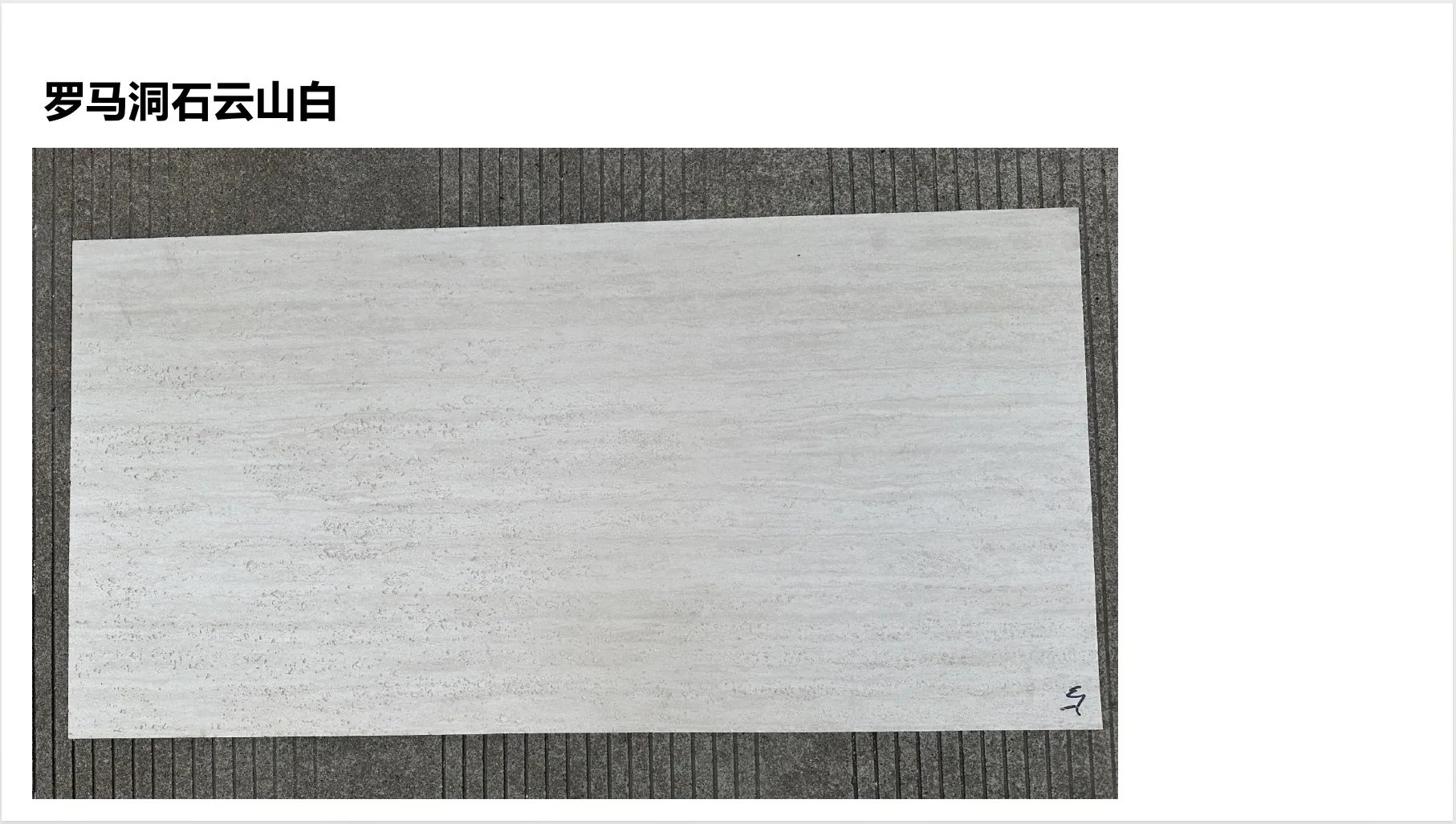
Romanite isn't just a material—it's a conversation between the past and the future. Its name evokes the grandeur of ancient architecture, but its composition is firmly rooted in modern sustainability. At first glance, it might remind you of travertine, with its soft, porous texture, or perhaps the weathered charm of fair-faced concrete , but Romanite carves its own path. Run your hand over a sample (or, better yet, lose yourself in a large real photo), and you'll notice the subtleties: tiny flecks of recycled glass that catch the light like distant stars, a matte finish that absorbs rather than reflects heat (hello, energy efficiency), and a density that feels solid yet surprisingly lightweight. It's a material that doesn't just look good—it works hard for the planet.
So, what makes Romanite "green"? Let's break it down. First, its core is often made with up to 40% recycled content—think reclaimed stone dust, post-industrial plastics, and even repurposed metal shavings. This not only keeps waste out of landfills but reduces the need to extract new raw materials. Second, its manufacturing process is a study in efficiency: low-temperature curing (cutting energy use by 30% compared to traditional stone processing), water recycling systems that reuse 90% of the water involved, and zero toxic emissions. Third, Romanite is built to last. Its resistance to UV rays, moisture, and wear means buildings clad in Romanite won't need frequent replacement, cutting down on the "demolish and rebuild" cycle that plagues so much of the construction industry. And when the time does come for a refresh? Romanite is fully recyclable, closing the loop on its lifecycle.
But here's the thing: sustainability on paper is one thing. Seeing sustainability is another. That's where large real photos of Romanite come in. A high-resolution, full-scale image isn't just a snapshot—it's a window into the material's soul. It captures the way light filters through its surface at dawn, the way rainwater beads off its weather-resistant finish, the way its color deepens subtly over time (a "living" quality that reduces the need for artificial treatments). For architects and designers, these photos are more than inspiration—they're a bridge between the abstract idea of "sustainability" and the tangible reality of building something that will stand the test of time, both aesthetically and environmentally.
Imagine scrolling through a catalog and seeing a tiny thumbnail of a material labeled "sustainable stone." It looks nice, but can you tell if its texture will complement the warm wood beams in your client's living room? Can you visualize how its color will shift with the seasons, or how it will age in a coastal climate? Probably not. Now, imagine standing in front of a 4x6-foot real photo of Romanite—so detailed you can almost feel the grit of its surface, so vivid you can trace the flow of its natural patterns. Suddenly, the material stops being a "product" and becomes a partner in your design vision. That's the power of large real photos: they turn abstract choices into sensory experiences.
For MCM materials like Romanite, this is especially critical. Their beauty lies in their authenticity—the way they mimic natural materials without the environmental cost. A large real photo captures the "imperfections" that make them perfect: the slight variations in color that echo the uniqueness of natural stone, the subtle pores that tell the story of their recycled composition, the matte sheen that whispers "low maintenance, high impact." These details aren't just aesthetic—they're proof of the material's green credentials. For example, the travertine (starry green) variant of Romanite, with its speckled, galaxy-like pattern, isn't just stunning; those "stars" are recycled glass particles, a visible reminder of its commitment to waste reduction. A small image might make them look like mere decoration, but a large photo lets you appreciate them as symbols of sustainability.
Real photos also foster trust. In an industry where "greenwashing" is a real concern, seeing the material up close—unfiltered, unedited—gives designers and clients confidence that what they're choosing lives up to its eco-friendly claims. It's one thing to read that Romanite has low VOC emissions; it's another to see a photo of it being installed in a children's hospital, knowing those low emissions contribute to healthier indoor air for the little ones inside. Large real photos turn "sustainable" from a marketing term into a visible, verifiable promise.
Romanite is just one star in the MCM constellation, and its green components shine even brighter when compared to other innovative materials in the lineup. Below is a breakdown of how Romanite stacks up against some of its peers, based on insights gleaned from their large real photos and sustainability specs:
| Material | Key Green Feature | Visual Trait (From Real Photos) | Sustainability Benefit | Common Application |
|---|---|---|---|---|
| Romanite | 40% recycled content (glass, stone dust) | Subtle flecks of light (recycled glass) in earthy tones; matte, porous finish | Reduces landfill waste; low energy production | Residential facades, commercial lobbies, eco-resorts |
| Travertine (Starry Green) | Low-VOC pigments; 100% recyclable | Deep green base with "starry" glass particles; soft, natural veining | Non-toxic; circular lifecycle | Healthcare facilities, educational buildings |
| Lunar Peak Silvery | Reflective surface reduces cooling costs | Metallic, moon-like sheen; smooth, cool texture | Energy-efficient; lowers HVAC demand | High-rise exteriors, sunlit atriums |
| Foamed Aluminium Alloy (Vintage Silver) | 75% recycled aluminum; lightweight (cuts emissions) | Brushed, industrial-chic finish; lightweight yet rigid appearance | Reduces transportation carbon footprint; infinitely recyclable | Modern offices, art installations |
| Fair-Faced Concrete | Minimal processing; natural color (no dyes) | Raw, organic texture; visible aggregate (recycled stone) | Low embodied energy; timeless aesthetic reduces replacement | Public spaces, community centers |
*All sustainability metrics based on manufacturer data and third-party certifications. Large real photos of each material highlight these features, making it easier to align with project-specific green goals.
Romanite's green credentials run deeper than what meets the eye (or the camera lens). To truly appreciate its impact, let's peel back the layers and explore the "invisible" sustainability features that large real photos hint at but don't always spell out. For starters, consider its weight. At just 8-12 kg per square meter, Romanite is exponentially lighter than natural stone (which can weigh 25-30 kg/sqm). This lightness translates to smaller, more energy-efficient support structures, reduced transportation emissions (since more material can be shipped in a single load), and easier installation (lowering labor costs and construction time). A large photo of Romanite being hoisted onto a building facade might not show the reduced carbon footprint, but it implies it—no heavy machinery belching smoke, no crews straining under the weight of traditional stone. It's sustainability in motion.
Then there's thermal performance. Romanite's cellular structure (visible in close-up real photos as tiny air pockets) acts as a natural insulator, keeping buildings cooler in summer and warmer in winter. This reduces reliance on heating and cooling systems, slashing energy use and greenhouse gas emissions. Pair that with the reflective properties of variants like lunar peak silvery , which bounce sunlight away from the building, and you've got a material that actively fights climate change—one facade at a time. Again, a large photo captures this: the way sunlight glances off the surface rather than being absorbed, the shadow patterns that suggest a cooler interior. It's a visual clue to a hidden superpower.
Water conservation is another unsung hero of MCM materials. Traditional stone processing is notoriously water-intensive, requiring millions of gallons to cut, polish, and finish. Romanite, by contrast, uses a dry-curing process that slashes water use by 85%. Its sealed surface also means buildings clad in Romanite require less frequent cleaning, saving even more water over time. A real photo of Romanite after a rainstorm—water beading off, no stains, no need for harsh detergents—tells this story silently but powerfully. It's a material that respects our planet's most precious resource.
And let's not forget about adaptability. The MCM Flexible Stone Series , which includes Romanite, is designed to bend without breaking, conforming to curved walls, domes, and unconventional shapes. This flexibility reduces cutting waste, as the material can be shaped on-site with minimal trimming. A large photo of Romanite wrapping around a circular lobby column isn't just a design statement—it's a sustainability win. No offcuts in the dumpster, no extra material ordered "just in case." It's precision meets planet care.
To truly grasp Romanite's impact, let's step into the shoes of a designer tasked with creating a community center that's both welcoming and eco-friendly. The client wants a space that feels "grounded" in nature but doesn't drain natural resources. The designer flips through a portfolio of large real photos and pauses at Romanite's travertine (beige) variant. In the photo, the material glows softly under natural light, its warm, earthy tone evoking a sense of calm. Close-up shots reveal tiny flecks of recycled wood fiber—proof of its sustainable sourcing. The designer imagines this material on the exterior, complemented by foamed aluminium alloy board (vintage gold) accents for a touch of warmth. The large photos let them visualize how the two materials will interact: the Romanite's matte texture balancing the aluminium's subtle sheen, the way both will age gracefully without fading or cracking.
A few months later, the community center stands tall. Kids laugh in the courtyard, where Romanite's non-slip surface (visible in the real photos' detailed shots) keeps them safe. The building's energy bills are 20% lower than projected, thanks to Romanite's insulating properties. Parents comment on how "alive" the facade feels, with the Romanite's color shifting gently from morning to evening—a detail the designer fell in love with in those large photos. It's not just a building anymore. It's a testament to what happens when sustainability and beauty walk hand in hand.
Romanite's versatility shines in commercial spaces, too. A tech startup in a bustling city wants its office to reflect innovation and responsibility. They choose Romanite's ethereal shadow travertine for the accent wall in their lobby—a deep, moody gray with subtle white veining (visible in large photos as recycled marble dust). The material's durability means it will withstand the foot traffic of clients and employees for decades, while its low-VOC finish ensures the air inside stays clean and healthy. Visitors stop to touch the wall, remarking on its "natural" feel—unaware that what they're feeling is the future of green architecture.
Even public projects are embracing Romanite. A coastal boardwalk, battered by salt air and harsh sun, needed a material that could stand up to the elements without harming marine life. Romanite's gobi panel variant, with its rough, sandblasted texture (captured in stunning detail in real photos), was the perfect choice. Its resistance to corrosion means no toxic paints or sealants are needed, protecting the nearby ocean. Walkers run their hands over the paneling, feeling the grit that speaks to both resilience and respect for the environment.
As the world grapples with climate change, the construction industry is at a crossroads. We can't keep building the way we have—extracting, consuming, discarding—without irreparably harming the planet. MCM materials like Romanite offer a way forward, proving that sustainability and beauty aren't competing ideals—they're partners. And large real photos are the glue that holds this partnership together, making the abstract tangible, the complex simple, the future visible.
Looking ahead, the innovation in MCM shows no signs of slowing. The MCM 3D Printing Series is already pushing boundaries, allowing for custom, zero-waste designs that were once impossible with traditional materials. Imagine a museum facade printed in Romanite, its curves and angles dictated by the flow of foot traffic, its texture varying to tell the story of the exhibits inside—all made with recycled materials and minimal energy. Large real photos of these 3D-printed wonders will let designers experiment, iterate, and dream bigger, knowing the final result will be as sustainable as it is stunning.
Circularity is also taking center stage. Future MCM materials, building on Romanite's lead, will be designed for disassembly—easily taken apart and recycled at the end of a building's life. Real photos will document this process, showing how a facade panel removed from a 50-year-old office can be ground down and reborn as part of a new school's wall. It's a vision of architecture as a cycle, not a linear "make and break" process.
And let's not forget the human element. At the end of the day, buildings are for people. MCM materials like Romanite don't just protect the planet—they nurture the people inside them. Their warm textures, natural colors, and healthy finishes create spaces that reduce stress, boost creativity, and foster connection. A large real photo of a Romanite-clad classroom, sunlight streaming in, kids engaged in learning—this is the ultimate goal of sustainable architecture. It's not just about saving the planet. It's about saving our place in it.
Romanite isn't just a material. It's a promise—a promise that we can build better, live better, and leave the planet better than we found it. Large real photos are the keepers of that promise, translating complex sustainability features into images that inspire, inform, and connect. They remind us that green architecture isn't about sacrifice—it's about abundance: abundant beauty, abundant innovation, abundant care for the world we share.
So the next time you walk past a building and pause, struck by its texture or color, take a closer look. Maybe it's Romanite, or another MCM material, quietly doing its part to heal the planet. Maybe there's a large real photo somewhere that helped make that choice possible—a photo that showed a designer not just a product, but a partner in building a greener future. And maybe, just maybe, that photo will inspire you to see architecture not as a collection of walls, but as a love letter to the earth.
In the end, that's the magic of MCM materials and the real photos that showcase them. They turn sustainability from a concept into a calling. And in that calling, we find the future of architecture—and the future of us.
Recommend Products












