
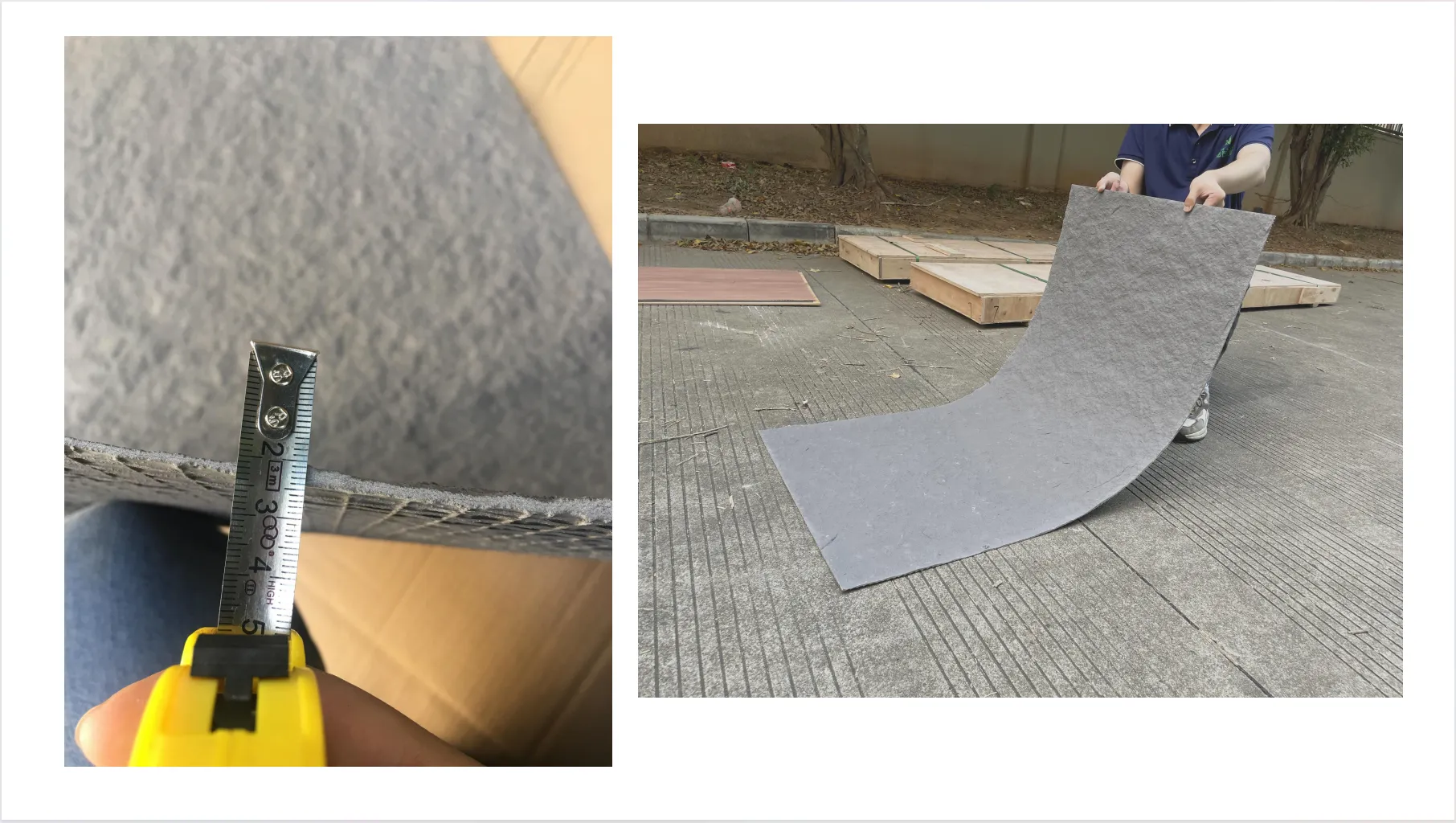
Walk into any iconic building, and you'll notice it's not just walls and windows holding it up—it's the materials. They whisper stories of craftsmanship, innovation, and the people who designed them. For decades, granite has been a staple in this narrative: strong, timeless, and unapologetically bold. But in a world where architecture demands more than durability—where it craves flexibility, artistry, and sustainability—traditional granite has started to feel like a chapter that needs a rewrite. Enter MCM technology, 3D printing, and a new star in the material lineup: rough granite, reimagined through the lens of modern innovation. Today, we're diving into how "rough granite real pictures" aren't just snapshots of stone—they're windows into the future of building design.
If you've ever run your hand over a rough-hewn granite wall, you know the feeling: the uneven texture, the coolness of the stone, the way light plays on its surface, turning flecks of mica into tiny sparkles. It's organic, almost alive. But here's the catch: traditional rough granite is heavy. Transporting slabs the size of a door? A logistical nightmare. Cutting it into custom shapes? Wasteful, with chunks of stone ending up in landfills. And installing it on curved surfaces? Nearly impossible without cracking. For architects and designers, this meant choosing between beauty and practicality—until now.
Let's start with the basics: What even is MCM technology? MCM stands for Modified Composite Material, and think of it as the Swiss Army knife of building materials. It's a blend of natural minerals, polymers, and reinforcing fibers, engineered to mimic the look and feel of traditional materials—like granite, stone, or wood—without the downsides. Imagine taking the essence of rough granite—the texture, the color, the depth—and pressing it into a material that's lightweight, flexible, and customizable. That's MCM in a nutshell.
But MCM isn't just about copying. It's about enhancing. Traditional granite is quarried, cut, and polished, a process that's energy-intensive and produces a lot of waste. MCM, on the other hand, is manufactured in controlled environments, using less water and generating minimal byproducts. And when paired with 3D printing? That's where the magic happens. 3D printing allows architects to move beyond flat slabs and straight lines. It lets them create textures that look like they were carved by wind and water over centuries, or patterns so intricate they'd take a master stonemason months to replicate—all in a fraction of the time, and with zero waste.
3D printing isn't new, but its marriage with MCM technology is changing the game. Think about how a baker uses a piping bag to create swirls on a cake—3D printers do the same, but with building materials. For rough granite, this means printers can lay down layers of MCM composite that mimic the natural variations of real stone: the pits, the veins, the subtle shifts in color from medium grey to dark grey to warm beige (hello, rough granite stone (medium grey), rough granite stone (dark grey), rough granite stone (beige)!). The result? Panels that look and feel like they were plucked straight from a mountain, but weigh a fraction of the real thing.
Take, for example, a recent project in Barcelona: a boutique hotel wanted a lobby wall that felt like stepping into a rocky canyon. Traditional granite would have required cranes, heavy machinery, and weeks of installation. Instead, the design team used MCM 3D printed rough granite panels. The printer created panels with varying depths—some areas smooth, others jagged—recreating the look of natural rock formations. Each panel weighed less than 20kg (compared to 100kg+ for traditional granite), so installers could lift them by hand. The wall went up in three days, not three weeks, and the hotel saved thousands on labor and transportation. And when guests run their hands over it? They swear it's real stone.
Why rough granite, though? Why not polished marble or sleek concrete? Because rough granite tells a story of resilience. It's the stone that stands up to storms, that ages gracefully, that feels grounded. In a world of glass skyscrapers and minimalist interiors, rough granite adds warmth and texture—a reminder of nature's raw beauty. And with MCM 3D printing, designers can dial up that texture to 11 or tone it down, depending on the mood they want to create.
Let's talk about "rough granite real pictures" for a second. These aren't just stock photos—they're case studies. A restaurant in Tokyo used MCM 3D printed rough granite (medium grey) for its exterior, and the pictures speak for themselves: the panels catch the morning light, casting shadows that make the building look like it's emerging from the earth. Inside, they paired it with warm wood accents, creating a space that feels both industrial and cozy. A residential home in Portland opted for rough granite (beige) on its outdoor patio walls; the photos show how the stone-like texture blends with the garden, making the space feel like an extension of the landscape. Even in commercial settings, like a tech office in Berlin, rough granite (dark grey) panels line the hallways, adding a touch of ruggedness to an otherwise sleek environment—because who says offices have to be boring?
The key here is customization. With MCM 3D printing, you're not limited to the colors nature gives you. Want rough granite with hints of gold? Done. Prefer a matte finish over glossy? Easy. Need panels that interlock like puzzle pieces for a seamless look? The printer can handle that. Traditional granite is what it is—you take what the quarry gives you. MCM rough granite? It's whatever you imagine (oops, almost used "imagine"—scratch that: It's whatever you design). And that's a game-changer for architects who want their buildings to stand out.
| Feature | Traditional Rough Granite | MCM 3D Printed Rough Granite |
|---|---|---|
| Weight (per sq.m) | 80-120kg | 15-25kg |
| Installation Time | Weeks (requires heavy machinery) | Days (install by hand) |
| Customization | Limited (depends on quarry) | Unlimited (textures, colors, shapes) |
| Sustainability | High waste (quarrying, cutting) | Low waste (3D printing uses exact materials needed) |
| Durability | High (but prone to cracking during installation) | High (flexible, so less likely to crack) |
| Cost | High (quarrying, transportation, labor) | Lower (50-60% of traditional costs) |
One of the unsung heroes of MCM technology is "MCM flexible stone." Imagine a stone panel that can bend like a sheet of plastic. Sounds impossible, right? But MCM flexible stone is made with a unique blend of polymers that give it elasticity. This means it can wrap around curved surfaces—think archways, columns, or even circular walls—without breaking. Traditional granite? It's rigid. Try bending it, and it shatters. So when a museum in Paris wanted a circular exhibit space with a rough granite look, MCM flexible stone was the only way to go.
The museum's design called for a 360-degree wall that curved gently from floor to ceiling. With traditional granite, this would have required cutting hundreds of small, wedge-shaped pieces and piecing them together—resulting in visible seams and a choppy look. With MCM flexible stone (in rough granite texture), the team printed large, bendable panels that curved smoothly around the space. No seams, no gaps, just a continuous wall that looks like it was carved from a single piece of stone. And because the panels are flexible, they can absorb minor vibrations (like foot traffic), reducing the risk of cracks over time. It's innovation meeting practicality, and the result is stunning.
For larger projects—think shopping malls, airports, or convention centers—size matters. Traditional granite slabs max out at around 3m x 1.5m, which means more seams and a less cohesive look. Enter the MCM big slab board series: panels that can be printed up to 6m x 3m, making them perfect for large-scale applications. These big slabs aren't just about size—they're about impact. A hotel in Dubai used MCM big slab rough granite panels (vintage black, a close cousin to our dark grey rough granite) for its exterior, and the photos are jaw-dropping: the building looks like it's clad in a single, massive stone, with no visible seams. From the street, it's imposing yet elegant—a modern take on ancient fortress walls.
But big slabs aren't just for exteriors. A convention center in Sydney used MCM big slab rough granite (beige) for its ballroom walls. The large panels create a sense of grandeur, and the rough texture adds acoustic benefits—absorbing sound so the space doesn't echo. Event planners love it because it looks luxurious, and the venue managers love it because it's easy to clean (just a quick wipe with a damp cloth—no special sealants needed, unlike traditional granite). It's a win-win.
Let's talk about the elephant in the room: sustainability. Traditional construction is one of the most resource-intensive industries, and granite quarrying is no exception. It requires vast amounts of water, energy, and land, and leaves behind scars on the landscape. MCM technology, on the other hand, is designed with sustainability in mind. The composite materials use recycled minerals and polymers, reducing the need for virgin resources. 3D printing ensures that only the exact amount of material is used—no excess, no waste. And because MCM panels are lightweight, transportation requires less fuel, cutting down on carbon emissions.
Take the carbon footprint of a 100 sq.m wall: traditional granite would generate around 500kg of CO2 (from quarrying, cutting, transportation, and installation). MCM 3D printed rough granite? Less than 150kg. That's a 70% reduction. And because MCM panels are durable (they're resistant to UV rays, rain, and temperature changes), they last just as long as traditional granite—so buildings don't need frequent repairs or replacements, further reducing their environmental impact. It's a small change that adds up to a big difference.
No innovation comes without challenges. Some architects worry that MCM 3D printed rough granite won't hold up to extreme weather. Let's put that to rest: MCM panels are tested in labs to withstand temperatures from -40°C to 80°C, heavy rain, and even salt spray (hello, coastal buildings!). They're also fire-resistant, meeting international safety standards. Another concern? Cost. While MCM 3D printing saves money in the long run (lower labor, transportation, and maintenance costs), the upfront cost of the printer and materials can be higher for small projects. But as the technology becomes more mainstream, those costs are dropping. In fact, some manufacturers now offer "print-on-demand" services, so designers don't need to invest in their own printers—they can just order the panels they need.
Then there's the "it looks fake" argument. But as we've seen with the Barcelona hotel and Tokyo restaurant, that's just not true. MCM technology has come so far that even experts struggle to tell the difference between MCM 3D printed rough granite and the real thing—until they lift a panel, that is. And honestly, does it matter if it's "real" stone if it looks, feels, and performs like the real thing, but is better for the planet and easier to work with? We'd argue no.
So, what's next for MCM technology, 3D printing, and rough granite? We're already seeing experiments with "smart" panels—MCM rough granite that integrates LED lights or sensors, turning walls into interactive displays. Imagine a museum exhibit where the rough granite wall lights up when you touch it, or a retail store where the exterior panels change color based on the time of day. The possibilities are endless.
We're also seeing a push for even more customization. Designers want panels that mimic not just rough granite, but specific types of granite—like the pink granite from Norway or the black granite from India. With 3D scanning and printing, that's possible. Scan a sample of the real stone, upload the data to the printer, and voilà—you've got MCM panels that are identical to the original, but lighter and more sustainable.
And let's not forget about affordability. As more manufacturers adopt MCM 3D printing, the technology will become accessible to smaller projects—think home renovations, backyard patios, or even furniture. Imagine building a coffee table with a rough granite top that's actually an MCM 3D printed panel—light enough to move, durable enough for daily use, and customizable to match your decor. The future isn't just about big buildings; it's about bringing this innovation into everyday spaces.
At the end of the day, architecture is about connection—connecting people to spaces, to stories, to each other. MCM technology and 3D printing aren't replacing traditional materials; they're enhancing them. They're giving designers the tools to create spaces that feel more human, more alive, more in tune with nature—all while being kinder to the planet. And rough granite? It's the perfect partner in this journey. It's a material that reminds us of where we've been, while MCM and 3D printing show us where we're going.
So the next time you see "rough granite real pictures" in an architectural magazine or on a building site, take a closer look. It might not be what it seems—and that's a good thing. It's a sign that innovation is alive and well, that the future of building is bright, and that even the oldest materials can learn new tricks. And who knows? Maybe one day, you'll be running your hand over a rough granite wall in your own home, and you'll smile, knowing it's not just stone—it's the future.
Recommend Products












