
Blending Nature's Raw Beauty with Cutting-Edge 3D Technology
There's something inherently grounding about rough granite. It's a material that carries the weight of the earth's history in every grain, every imperfection, every ripple of texture. Run your hand over a slab of natural rough granite, and you'll feel the story of millennia—volcanic eruptions, tectonic shifts, the slow dance of water and wind eroding and shaping. It's not just stone; it's a tactile connection to the planet's past, a reminder of nature's unruly, magnificent artistry.
For architects, designers, and homeowners alike, rough granite has long been a symbol of durability and authenticity. It's the stone that clads ancient castles, lines mountain trails, and adds character to modern homes. But here's the thing: while nature's handiwork is unparalleled, it's also unpredictable. Traditional rough granite slabs come with limitations—fixed sizes, inconsistent textures, and a limited range of natural hues. What if you could capture that raw, organic feel, but tailor it exactly to your vision? What if you could design a texture that's uniquely yours, without compromising the stone's inherent soul?
Enter 3D printing technology—a revolution that's quietly reshaping how we think about natural materials. And at the forefront of this innovation is the MCM 3D printing series , a line of products that marries the timeless appeal of rough granite with the precision of modern engineering. Today, we're diving into how 3D printing is unlocking custom rough granite finishes, why materials like MCM flexible stone are changing the game, and how you can bring this blend of nature and technology into your next project.
When you think of 3D printing, you might picture plastic prototypes or small-scale gadgets. But in the world of architecture and design, 3D printing has grown up—and it's now tackling materials as robust and nuanced as granite. The magic lies in its ability to replicate the complexity of natural textures while offering unprecedented control. With 3D printing, designers aren't just limited to what nature provides; they can collaborate with it, tweaking every ridge, groove, and color gradient to match their creative vision.
The MCM 3D printing series takes this a step further by focusing specifically on stone-like finishes, with rough granite being a star player. Unlike traditional manufacturing, which often requires cutting and shaping large slabs (leading to waste and limited flexibility), 3D printing builds the material layer by layer. This means less waste, more design freedom, and the ability to create custom textures that would be nearly impossible to achieve with natural stone alone.
Imagine a designer wanting a rough granite wall with a texture that mimics the surface of a riverbed—smooth in some areas, pockmarked with tiny indentations in others. With traditional methods, they might spend months sourcing the perfect slab, only to compromise on size or consistency. With 3D printing, that texture can be digitized, adjusted, and printed to exact specifications. It's like having a conversation with the stone: "I love your natural look, but could we tweak this part to fit the space better?" And the stone—thanks to 3D tech—says, "Absolutely."
The MCM 3D printing series isn't just about technology—it's about honoring the essence of materials while making them more accessible and adaptable. Let's break down what makes this series a game-changer for rough granite enthusiasts:
At the heart of the MCM 3D printing series is its ability to replicate the most intricate rough granite textures. Using high-resolution scanning, the team at MCM has captured the details of hundreds of natural rough granite samples—from the coarse, craggy surfaces of mountain granite to the smoother, more weathered textures of riverbed stones. These scans serve as the foundation for custom designs, allowing clients to start with a "base" texture and then add their own twists: deeper grooves for a more dramatic look, shallower indentations for a subtler effect, or even patterns that blend rough granite with other natural elements like wood or marble.
But it's not just about copying nature—it's about enhancing it. For example, if a client wants a rough granite finish that's slip-resistant for a pool deck, the 3D printer can adjust the texture to include micro-grooves that improve traction without sacrificing the stone's natural appearance. Or, for a feature wall in a luxury hotel, the printer can create a gradient texture that transitions from rough to smooth, adding depth and movement to the space.
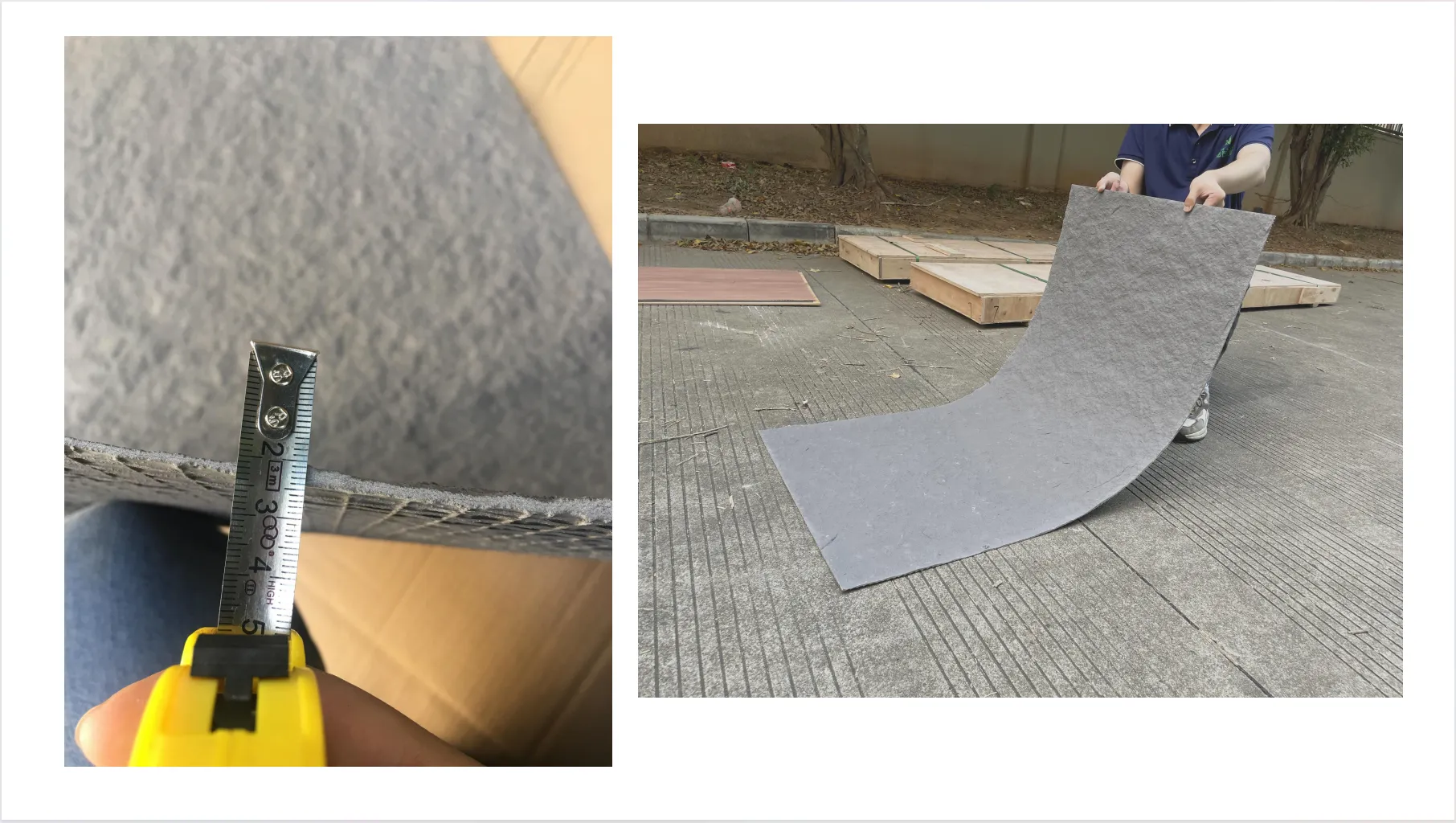
One of the most exciting aspects of the MCM 3D printing series is its use of MCM flexible stone as a base material. Traditional granite is hard and brittle, making it challenging to install on curved surfaces or in tight spaces. MCM flexible stone, however, is a composite material that combines the look and feel of natural stone with the flexibility of a thin, lightweight panel. Think of it as nature's strength wrapped in a more adaptable package.
How does this work? MCM flexible stone is made by blending natural stone particles with a polymer binder, creating a material that's both durable and bendable. When paired with 3D printing, this means you can print rough granite textures onto panels that can curve around columns, wrap over arches, or even be used as ceiling accents—applications that would be nearly impossible with traditional rigid granite slabs. It's a game-changer for architects looking to push the boundaries of form without compromising on material integrity.
And let's talk about weight. Traditional granite slabs can weigh hundreds of pounds, requiring heavy machinery and structural support. MCM flexible stone panels, by contrast, are lightweight—often less than 5 pounds per square foot—making installation faster, safer, and more cost-effective. This opens up possibilities for projects where weight is a concern, like high-rise buildings or historic renovations where structural limits are tight.
Rough granite isn't just about texture—it's about color, too. Nature offers a stunning range of hues, from deep, moody grays to warm, earthy beiges. The MCM 3D printing series celebrates this diversity by offering a curated selection of rough granite stone finishes, each with its own personality. Let's explore some of the standout options:
| Finish Name | Color Description | Vibe & Best For |
|---|---|---|
| Rough Granite Stone (Medium Grey) | A balanced, versatile grey with subtle flecks of white and black, mimicking the look of classic mountain granite. | Modern interiors, industrial-chic spaces, or exterior cladding. Pairs beautifully with warm woods and bold accent colors. |
| Rough Granite Stone (Dark Grey) | A deep, dramatic grey with hints of charcoal and silver, evoking stormy skies and ancient rock formations. | Statement walls, luxury hotels, or contemporary fireplaces. Adds a sense of depth and sophistication. |
| Rough Granite Stone (Beige) | A warm, earthy beige with soft undertones of sand and gold, reminiscent of sun-baked desert granite. | Cozy living rooms, rustic kitchens, or outdoor patios. Creates a welcoming, grounded atmosphere. |
What's most exciting is that these are just the starting points. The MCM 3D printing series allows for custom color matching, too. Have a specific shade of grey in mind that matches your brand's logo? Or a beige that complements your existing tile? The 3D printing process can blend pigments to create a hue that's uniquely yours, ensuring your rough granite finish ties seamlessly into your overall design scheme.
Take, for example, a boutique hotel in the mountains that wanted to echo the surrounding landscape. They chose the rough granite stone (medium grey) as a base but added custom blue-gray undertones to mirror the nearby lake. The result? A lobby wall that feels both rooted in the local environment and tailored to the hotel's unique aesthetic. It's nature, but with a personal touch.
We've talked a lot about the beauty and customization of 3D printed rough granite, but let's not overlook the practical perks. After all, great design should be as functional as it is. Here's why the MCM 3D printing series and MCM flexible stone stand out in real-world applications:
Don't let the "flexible" in MCM flexible stone fool you—this material is built to last. The composite blend resists scratches, stains, and weathering, making it ideal for both indoor and outdoor use. Unlike natural granite, which can be porous and prone to etching from acidic substances, MCM flexible stone is non-porous and easy to clean. A quick wipe with a damp cloth is often all it takes to keep your rough granite finish looking fresh, even in high-traffic areas like kitchens or entryways.
And because it's 3D printed, the material is consistent throughout—no weak spots or hidden flaws that might compromise its longevity. Whether you're using it for a backsplash, a feature wall, or an outdoor patio, you can trust that it will hold up to the demands of daily life, year after year.
In an era where sustainability matters more than ever, the MCM 3D printing series shines. Traditional stone mining and processing can be resource-intensive, with large amounts of waste generated from cutting and shaping slabs. 3D printing, by contrast, is additive—meaning it only uses the material needed for the project, reducing waste significantly. Additionally, MCM flexible stone incorporates recycled stone particles, giving new life to materials that might otherwise end up in landfills.
For environmentally conscious designers and homeowners, this is a huge win. You get the look and feel of natural rough granite, but with a smaller carbon footprint. It's design that respects both your vision and the planet.
We touched on this earlier, but it's worth repeating: MCM flexible stone panels are a dream to install. Their lightweight, flexible nature means they can be cut with standard tools, glued directly to most surfaces (including drywall, concrete, and wood), and even installed by a small team without heavy machinery. This not only saves time and labor costs but also opens up installation possibilities in hard-to-reach areas—think ceiling accents, curved walls, or tight corners where traditional slabs would be too cumbersome.
The applications are virtually limitless: residential feature walls, commercial lobbies, restaurant facades, outdoor fire pits, pool surrounds, and even furniture pieces like coffee tables or countertops. With 3D printed rough granite, your design isn't confined to "traditional" stone uses—it can be integrated into every corner of a space, creating a cohesive, immersive aesthetic.
Let's paint a picture. Imagine walking into a home where the entryway is clad in rough granite stone (dark grey) —3D printed to mimic the texture of a weathered cliff face, with custom indentations that catch the light as you pass. To your left, a living room features a fireplace surround in rough granite stone (beige) , its warm tones complementing the wooden beams overhead. Upstairs, the master bathroom has a shower wall made of MCM flexible stone in rough granite stone (medium grey) , curved to fit the shower's rounded corners, with a texture that feels like smooth river rock underfoot.
This isn't just a house—it's a reflection of the homeowner's personality, a space where every texture tells a story. And it's all made possible by the MCM 3D printing series and the versatility of MCM flexible stone .
For designers, this means more than just a new tool—it's a new language. A language where you can describe a texture as "the way the wind carves stone in the desert" and have that vision translated into a tangible material. For architects, it's the ability to blend the organic with the modern, creating buildings that feel rooted in place while pushing the boundaries of design. For homeowners, it's the chance to own a space that's truly one-of-a-kind—no cookie-cutter finishes, no compromises on what you love.
As 3D printing technology continues to evolve, so too will the possibilities for rough granite finishes. We're already seeing experiments with incorporating recycled materials into the MCM flexible stone mix, further reducing environmental impact. There's talk of 4D printing—materials that change shape or texture in response to temperature or light—opening up even more dynamic design possibilities.
But at the end of the day, the most exciting thing about this innovation isn't the technology itself—it's how it reconnects us with the materials we love. Rough granite has always been about more than just a surface; it's about feeling connected to something larger, something timeless. 3D printing doesn't replace that connection—it deepens it by letting us collaborate with nature, to co-create something that's both ancient and new.
So whether you're planning a home renovation, a commercial project, or simply dreaming of the perfect accent wall, consider the possibilities of 3D printed rough granite. With the MCM 3D printing series and MCM flexible stone , you're not just choosing a material—you're choosing to blend the best of nature and technology, to create something that's as unique as your vision.
After all, the most beautiful spaces aren't just built—they're crafted with intention, heart, and a little help from the future. And in that future, rough granite isn't just a stone. It's a canvas.
Recommend Products












