
It's 9 a.m. on a Tuesday, and Mia Chen, lead designer at a boutique architecture firm in downtown Seattle, is staring at her screen, frustration creasing her brow. The client—a high-end café chain aiming to revamp their flagship location—wants "raw, unpolished energy" with "zero distractions." They've rejected three material samples already: marble was too refined, concrete felt cold, and traditional granite slabs? "Too choppy," the client had said, pointing to the visible seams that broke the space into disjointed sections. Mia sighs, scrolling through a endless catalog of stone suppliers, when a thumbnail catches her eye: a close-up of a surface that looks like a slab of mountain rock, smooth yet tactile, with no visible breaks. The caption reads: COLORIA Rough Granite Big Slab—Seamless by Design. Intrigued, she clicks.
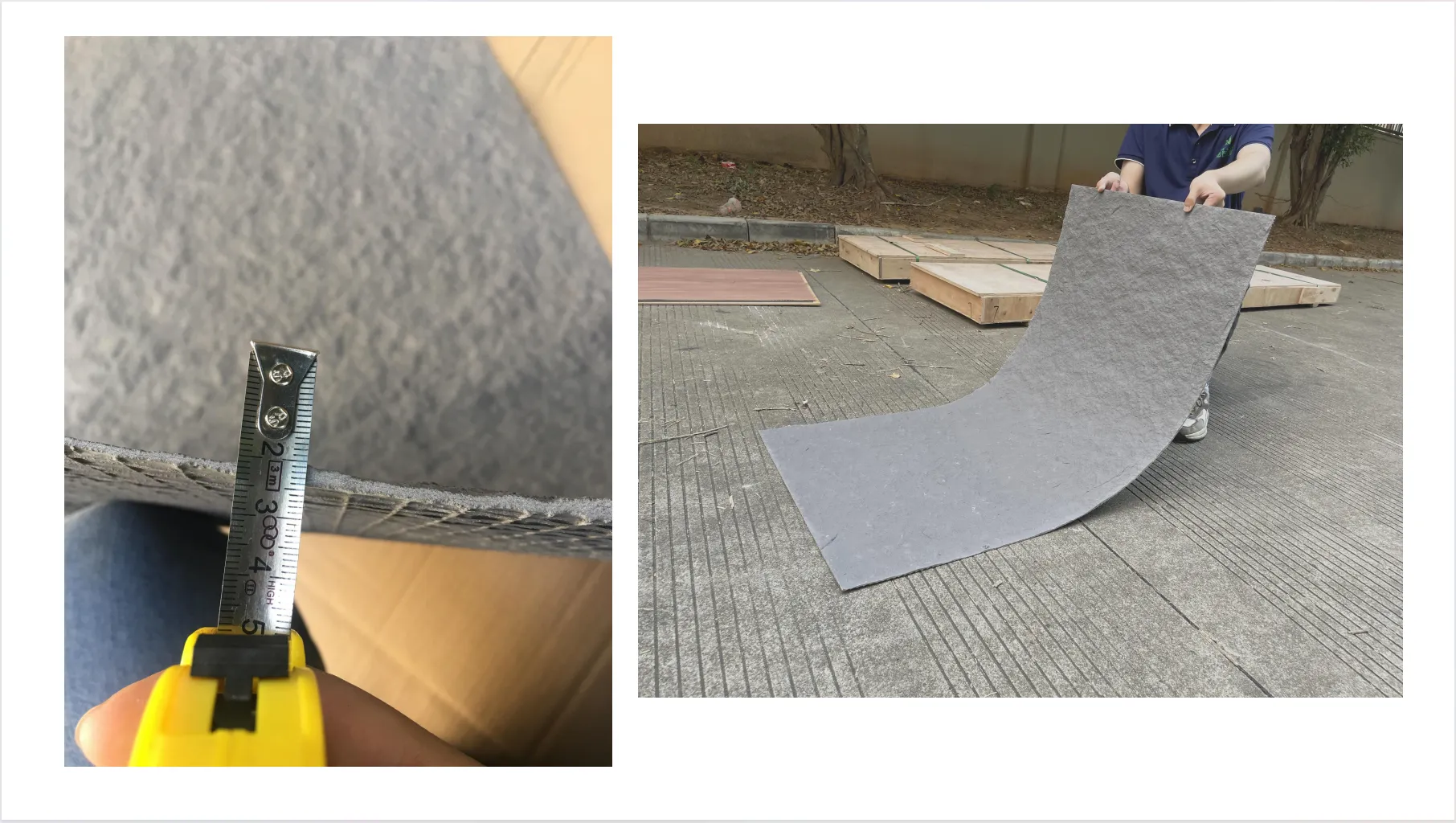
Mia's first thought, when she opens the attached gallery of rough granite real pictures, is how alive the material feels. Unlike the flat, uniform slabs she's used to, COLORIA's rough granite big slab has depth: tiny pits and ridges that mimic the natural erosion of stone, flecks of mica that catch the light like scattered stardust, and a color palette that ranges from stormy medium grey to warm beige to inky dark grey—each shade telling a different story. But what stops her mid-scroll is the second photo: a sprawling café countertop, stretching 20 feet without a single seam. "That's impossible," she mutters. Traditional granite slabs max out at 10 feet; anything longer requires (pīn jiē)—joining—creating lines that disrupt the flow. How did COLORIA pull this off?
A quick call to COLORIA's design consultant, Raj, clarifies things. "It's not just the stone—it's the system," he explains. "Our rough granite is part of the MCM Big Slab Board Series, engineered with MCM flexible stone technology. Think of it as nature's strength meets modern flexibility. The slabs are reinforced with a lightweight, high-tensile backing that lets them bend slightly, so we can install them in longer, continuous runs without cracking. No seams, no gaps, just one unbroken expanse." Raj emails over a video: installers lifting a 16-foot slab as easily as a yoga mat, pressing it into place, and smoothing out air bubbles with a roller. Mia watches, transfixed. "This could be it," she thinks.
To convince her client, Mia needs hard data. She creates a side-by-side comparison of traditional granite installation versus COLORIA's seamless method, using the rough granite real pictures as visual evidence. The results? Striking.
| Aspect | Traditional Granite Installation | COLORIA Seamless Big Slab Installation |
|---|---|---|
| Installation Time | 2-3 days for a 20ft countertop (multiple slabs, curing time for adhesive) | 6 hours (single slab, no curing wait) |
| Seam Visibility | Noticeable lines between slabs; prone to discoloration over time | Zero visible seams; uniform texture across the entire surface |
| Durability | Seams weaken over time; moisture can seep in, causing cracks | Single-piece construction; water-resistant backing prevents moisture damage |
| Aesthetic Appeal | Choppy, segmented look; disrupts visual flow | Continuous, organic expanse; mimics natural rock formations |
The client, a former geologist, is sold after seeing the rough granite real pictures of a completed hotel lobby. "It looks like we sliced a piece of the Cascade Mountains and brought it indoors," he says, grinning. "Let's do it."
Project:
2,500 sq. ft. flagship café, Seattle
Challenge:
Create a cohesive, Instagram-worthy space with a "raw yet inviting" vibe.
Materials Used:
COLORIA Rough Granite Big Slab (medium grey), Fair-Faced Concrete panels, woven rattan accents.
Installation Timeline:
3 days (vs. 1 week with traditional materials)
On installation day, Mia arrives early, coffee in hand, to watch the process. The crew unloads the rough granite big slab—surprisingly lightweight, considering its size—and carries it through the café's front door with ease. "Traditional granite this size would need a crane," Raj notes, gesturing to the slab. "Ours weighs 30% less, thanks to the MCM backing." As they lay it across the main counter, Mia runs her hand over the surface. It's cool, with a texture that's rough enough to feel organic but not sharp—like running your palm over river-worn stone. When the installer steps back, the effect is transformative: the countertop stretches from wall to wall, a single, unbroken "river" of stone that guides the eye toward the back of the café, where fair-faced concrete walls complement the granite's earthiness.
Two weeks later, the café reopens. Mia visits during the morning rush, and what strikes her most is how people interact with the space. A barista leans against the counter, her palm flat on the rough granite, as if grounding herself. A customer traces the stone's natural veins with her finger, muttering, "This feels like… home." The client, beaming, pulls up his phone: "Look at the Instagram tags—everyone's posting the countertop. They're calling it 'the heart of the café.'"
What makes COLORIA's rough granite big slab so different? It starts with the stone itself. Sourced from quarries in northern Italy, the granite is selected for its uniform density and minimal natural fractures—key for creating large, seamless pieces. Then, it undergoes a proprietary process: the stone is sliced into ultra-thin layers (just 8mm thick), bonded to a composite backing made from recycled polyester and fiberglass, and treated with a UV-resistant sealant. The result? A slab that's 70% lighter than traditional granite, flexible enough to curve around corners, and strong enough to withstand daily wear—coffee spills, heavy appliances, even the occasional dropped mug.
But the real innovation is in the installation. Traditional methods rely on mortar and clips, which create uneven pressure points and leave gaps that expand with temperature changes. COLORIA's system uses a pressure-sensitive adhesive that bonds the slab directly to the substrate, eliminating air pockets and ensuring a tight, seamless fit. "We test every batch in our lab," Raj explains, "simulating 10 years of thermal expansion, moisture, and impact. The seams? They just don't exist."
While the café project showcases the medium grey rough granite, Mia is eager to explore the full range. The COLORIA catalog features three core shades—medium grey, dark grey, and beige—each with its own personality. The dark grey, she realizes, would be perfect for a residential fireplace surround, adding drama without overwhelming the room. The beige, with its warm undertones, could soften a modern kitchen, pairing beautifully with wood accents. And the medium grey? "It's a chameleon," she thinks, recalling how it shifted from moody to bright as the café's lighting changed throughout the day.
But the applications don't stop at interiors. Raj shares photos of a coastal home in Malibu, where the homeowner used rough granite big slab for an outdoor patio. "Salt spray, rain, harsh sun—this stuff laughs at it," he says. "Traditional stone would fade or crack, but our sealant and backing protect against the elements. Plus, the non-slip texture makes it safe for pool areas." Mia files that away; she has a client with a lake house renovation coming up.
For Mia, who prioritizes eco-friendly design, COLORIA's commitment to sustainability is the cherry on top. The MCM flexible stone backing uses 40% recycled materials, and the quarrying process adheres to strict European environmental standards, with reforestation efforts in place to restore mined areas. "We're not just selling stone—we're selling a future where beauty and responsibility coexist," Raj says. Mia nods; her clients are increasingly asking about carbon footprints, and this gives her another selling point.
A month after the café opens, Mia receives a package from COLORIA: a portfolio of rough granite real pictures, documenting the installation process from start to finish. There's the slab being unloaded, the crew working in sync, the moment the last corner is pressed into place. But her favorite photo is the final shot: a wide-angle view of the café at sunset, golden light streaming through the windows, the rough granite countertop glowing like a slab of polished obsidian, unbroken and alive. She emails it to the client with a note: "See? No distractions. Just the space, and the stone." His reply comes 10 minutes later: "Let's roll this out to all 12 locations."
As Mia closes her laptop, she thinks about how materials shape experience. A seamless slab of rough granite isn't just a countertop—it's a story, a connection to nature, a canvas for life. And in a world that's always rushing, sometimes the most powerful design statement is the one that says, quietly and confidently: This is whole. This is unbroken. This is home.
For designers, homeowners, and dreamers alike, COLORIA's rough granite big slab isn't just a material—it's a revolution. And the real pictures? They're just the beginning.
Recommend Products












