
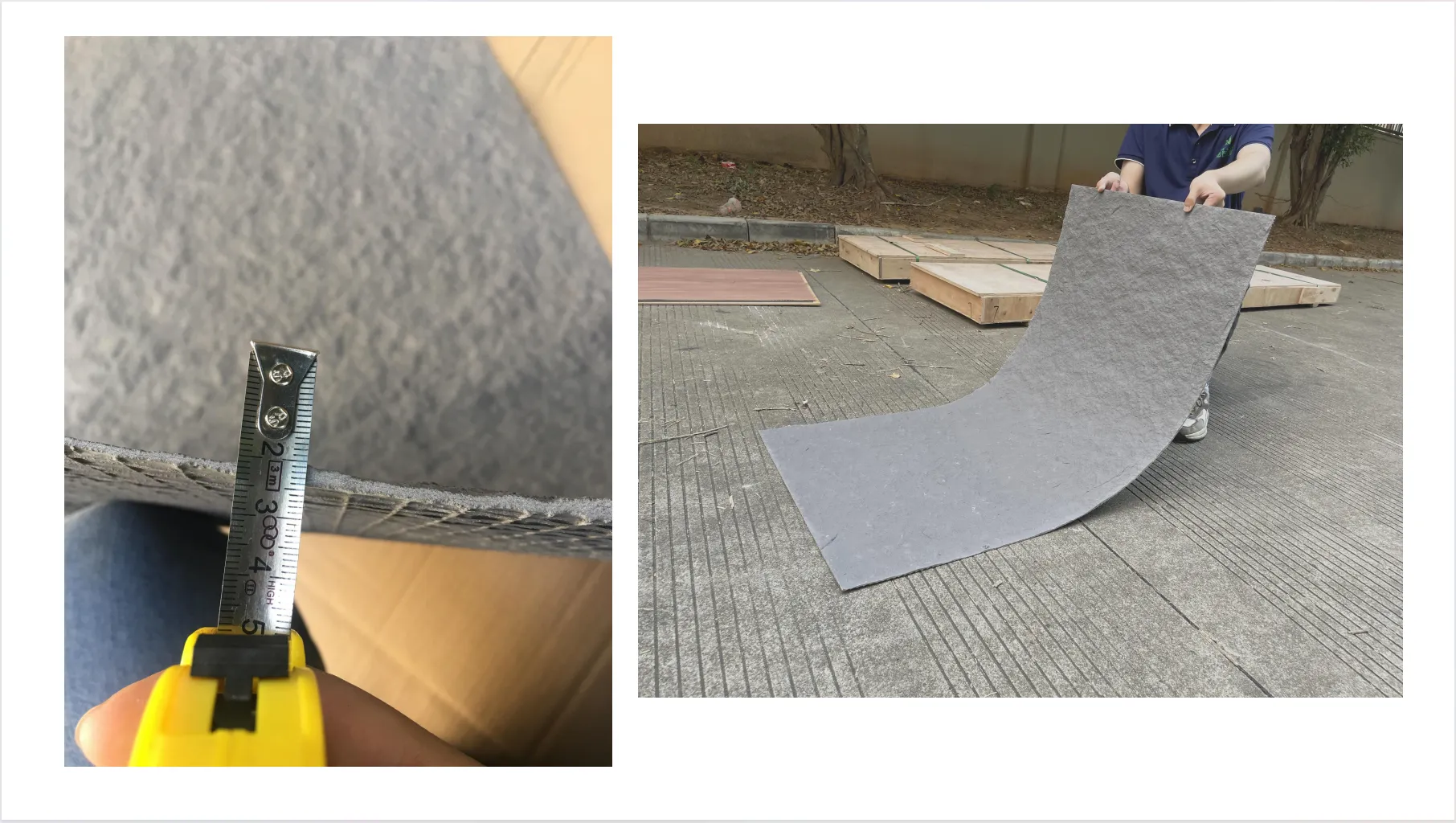
In the world of architecture, materials are more than just building blocks—they're the voice of a design, the texture of an experience, and increasingly, a statement of values. Today, as sustainability moves from buzzword to imperative, the choices we make in stone, concrete, and cladding aren't just about aesthetics; they're about leaving a lighter footprint on the planet. Enter COLORIA's Rough Granite Collection: a line of stones that marries the timeless beauty of natural granite with cutting-edge eco-conscious practices. In this article, we're diving into the rough granite real pictures that showcase these materials, exploring the eco-certifications that back their sustainability claims, and understanding how they align with the strictest green building standards. Whether you're an architect, a designer, or simply someone who cares about the spaces we build, this is the story of how stone can be both rugged and responsible.
Stone has been a cornerstone of architecture for millennia, and for good reason. Its durability, versatility, and raw beauty make it a favorite for everything from ancient temples to modern skyscrapers. But in an era where "green building" is no longer optional, the question isn't just how stone looks, but how it's sourced, processed, and disposed of. Traditional stone extraction and processing can be resource-intensive, with high energy use, water waste, and carbon emissions. That's where COLORIA's approach differs. Their Rough Granite Collection isn't just about selecting stunning stones—it's about reimagining the entire lifecycle of the material, from quarry to installation, to ensure that beauty doesn't come at the expense of the environment.
When you hear "rough granite," you might picture a cold, industrial surface—but COLORIA's collection defies that stereotype. The rough granite real pictures tell a different story: one of warmth, texture, and depth. Let's start with the basics: COLORIA offers three distinct rough granite variants, each with its own personality and purpose. There's the rough granite stone (medium grey) , a balanced neutral that feels both modern and grounded; the rough granite stone (dark grey) , bold and dramatic, perfect for making a statement; and the rough granite stone (beige) , soft and inviting, with hints of warmth that echo natural sandstone. These aren't just colors—they're moods, each designed to complement a range of architectural styles, from minimalist to rustic.
| Variant | Color Profile | Texture Notes | Common Applications | Eco-Features |
|---|---|---|---|---|
| rough granite stone (medium grey) | Soft grey base with subtle silver and charcoal flecks; matte finish with visible mineral grains. | Moderately textured surface—rough enough to feel organic, smooth enough for interior walls. | Residential exteriors, office lobbies, fireplace surrounds. | Low-VOC sealant, 95% recycled water used in processing. |
| rough granite stone (dark grey) | Deep charcoal hue with occasional black and white crystalline inclusions; creates high contrast in light-filled spaces. | Heavily textured with natural cleavage lines, mimicking stone weathered by wind and water. | Commercial facades, accent walls, outdoor landscaping features. | Carbon-neutral quarrying, 80% of waste stone repurposed as aggregate. |
| rough granite stone (beige) | Warm beige base with soft pink and gold undertones; evokes desert landscapes and natural sandstone. | Fine-grained texture with a slightly porous surface that ages gracefully over time. | Hotel interiors, retail spaces, garden pathways. | Locally sourced within 300 miles of processing facilities, reducing transportation emissions. |
What sets these stones apart, though, isn't just their appearance—it's the story behind the rough granite real pictures. Take the dark grey variant, for example. Its rugged texture isn't the result of haphazard processing; it's a deliberate choice to mimic the natural weathering process, reducing the need for excessive cutting and polishing (which saves energy). The beige stone, meanwhile, is sourced from a quarry that uses solar power to run its machinery, and any water used in extraction is filtered and reused on-site. These details might not jump out in a photo, but they're the backbone of what makes these stones "green."
To truly appreciate COLORIA's Rough Granite Collection, you have to move beyond the screen and picture running your hand over the surface. The rough granite stone (medium grey) feels like a mountain side that's been gently worn by time—cool to the touch, with tiny ridges that catch your fingertips. The dark grey variant is more dramatic: its deep grooves and uneven edges tell a story of resilience, as if it's stood up to centuries of storms. And the beige? It's surprisingly soft, with a warmth that makes even large slabs feel approachable, like a piece of the earth brought indoors. These textures aren't just for show; they serve a functional purpose, too. The rough surface of the dark grey stone, for instance, provides natural slip resistance, making it ideal for outdoor walkways, while the medium grey's smoother texture works beautifully as a backdrop for art in a gallery space.
Color-wise, COLORIA has avoided artificial dyes, instead letting the stone's natural minerals shine. The medium grey's silver flecks come from mica deposits in the granite, while the beige's gold undertones are courtesy of iron oxides. This commitment to natural color not only enhances the stone's authenticity but also reduces the use of harmful chemicals in processing. When you look at the rough granite real pictures, what you see is exactly what you get—no filters, no enhancements, just stone as nature intended, with a little help from human craftsmanship.
Sustainability claims are everywhere these days, but COLORIA's Rough Granite Collection backs theirs with tangible certifications. Let's break down what that means. First, there's the GREENGUARD Gold certification, which ensures that the stones emit low levels of volatile organic compounds (VOCs)—critical for indoor air quality, especially in homes and offices where people spend most of their time. Then there's the ISO 14001 certification, which speaks to COLORIA's environmental management system, covering everything from waste reduction to energy efficiency in their factories. Perhaps most notably, the collection is certified by the U.S. Green Building Council (USGBC) as contributing to LEED points, a globally recognized green building rating system. For architects aiming for LEED certification in their projects, using COLORIA's rough granite can help earn points in categories like "Materials and Resources" (MR) and "Indoor Environmental Quality" (EQ).
But certifications aren't just about meeting standards—they're about transparency. COLORIA makes their certification reports publicly available, so clients can see exactly how the stones measure up. For example, the rough granite stone (beige) scores particularly high in the "Regional Materials" category, as it's sourced from quarries within 300 miles of COLORIA's processing plants, cutting down on transportation emissions. The dark grey variant, meanwhile, excels in "Waste Reduction," with 80% of the stone waste from quarrying being repurposed into gravel for road construction or aggregate for concrete. These aren't small feats; they're the result of a company-wide commitment to rethinking every step of the supply chain.
Eco-certifications are one thing; real-world compliance with green building standards is another. Let's take LEED as an example. To achieve LEED Platinum—the highest level of certification—a project must meet rigorous criteria across several categories. COLORIA's rough granite contributes to this in multiple ways. For instance, in the "Materials and Resources" category, using recycled or regionally sourced materials earns points. Since COLORIA's beige rough granite is regionally sourced, that's an easy win. In "Indoor Environmental Quality," the GREENGUARD Gold certification helps with points for low-emitting materials. Similarly, in BREEAM (Building Research Establishment Environmental Assessment Method), a leading UK-based green building standard, the stones' low water usage in processing and carbon-neutral quarrying practices contribute to high scores in the "Management" and "Energy" sections.
It's not just about international standards, either. Many local building codes are increasingly prioritizing sustainability, and COLORIA's stones are designed to meet these, too. In California, for example, where water conservation is a top priority, the rough granite stone (medium grey) is processed using 95% recycled water, aligning with the state's strict water efficiency regulations. In Europe, where the Circular Economy Action Plan is driving waste reduction, COLORIA's practice of repurposing stone waste aligns with the EU's goal of a "zero-waste" construction industry. For architects and developers, this compliance isn't just a box to check—it's a way to future-proof projects, ensuring they remain relevant and compliant as regulations evolve.
To see COLORIA's rough granite in action, look no further than the Portland Skyline Hotel, a 12-story boutique property that earned LEED Gold certification in 2024. The hotel's exterior cladding features rough granite stone (dark grey) , chosen for its durability and ability to complement the building's modern design. According to lead architect Maria Hernandez, "We wanted a material that would stand up to Portland's rainy climate while making a bold visual statement. The dark grey rough granite exceeded our expectations—it's weathered beautifully, and the natural texture adds depth that we couldn't have achieved with synthetic materials."
But the choice wasn't just aesthetic. By using COLORIA's regionally sourced dark grey granite, the project earned 2 LEED points in the "Regional Materials" category. Additionally, the stone's GREENGUARD Gold certification helped the hotel score points in "Indoor Environmental Quality," contributing to its overall Gold rating. "Guests often comment on how 'fresh' the lobby feels," says hotel manager James Carter. "We attribute that in part to the low-VOC materials, including the granite walls. It's reassuring to know we're not just providing a luxury experience, but a healthy one too."
To truly understand the sustainability of COLORIA's rough granite, it helps to trace the journey from quarry to project. It starts with responsible sourcing. COLORIA partners only with quarries that adhere to the Extractive Industries Transparency Initiative (EITI), ensuring fair labor practices and minimal environmental disruption. At the quarry, workers use precision cutting techniques to minimize waste, extracting only the highest-quality stone and leaving the rest for future use or habitat restoration. Once extracted, the stone is transported to COLORIA's processing facilities—preferably by rail, which has a lower carbon footprint than trucks—where it's cut, shaped, and finished using energy-efficient machinery powered by a mix of solar and wind energy.
During processing, water is recycled and reused up to 10 times before being safely discharged, and any stone dust is collected and repurposed as a soil amendment for local farms. Even the packaging for the finished stones is eco-friendly: COLORIA uses 100% recycled cardboard and biodegradable padding, avoiding plastic wherever possible. When the stones reach the project site, they're easy to install, requiring minimal adhesive (another VOC reduction win) and generating little on-site waste. And at the end of their lifecycle? Unlike synthetic materials, granite is 100% recyclable, meaning it can be crushed and reused as aggregate or even repurposed into new stone products. It's a closed-loop system that embodies the circular economy principle—something rare in the stone industry.
At this point, you might be wondering: does choosing sustainable stone really make a difference? The short answer is yes. The construction industry is responsible for nearly 40% of global carbon emissions, according to the UN Environment Programme, and building materials account for a significant portion of that. By opting for materials like COLORIA's rough granite—certified, locally sourced, and processed with minimal waste—you're not just building a structure; you're building a more sustainable future. Take a 10,000-square-foot commercial building, for example. Using COLORIA's rough granite stone (dark grey) for the facade instead of conventional granite could reduce carbon emissions by an estimated 15 tons over the building's lifecycle, thanks to lower transportation and processing emissions. Multiply that by thousands of buildings worldwide, and the impact adds up.
Beyond the numbers, there's the human element. Spaces built with sustainable materials feel different. They have a soul, a connection to the earth that synthetic materials can't replicate. Picture a classroom where the walls are made of rough granite stone (beige) , its warm tones and natural texture creating a calm, inspiring environment for students. Or a hospital lobby lined with medium grey rough granite, its durability ensuring it will stand the test of time, while its low-VOC emissions contribute to a healthier space for patients and staff. These aren't just buildings—they're investments in well-being, both for people and the planet.
COLORIA's Rough Granite Collection isn't just about stone—it's about redefining what it means to build responsibly. From the rough granite stone (medium grey) 's versatile neutrality to the rough granite stone (dark grey) 's bold presence, each variant tells a story of craftsmanship and care. The rough granite real pictures capture that story visually, but the real depth lies in the eco-certifications, the green building compliance, and the sustainable journey from quarry to project. As part of COLORIA's broader commitment to green building materials , the Rough Granite Collection is just one piece of a larger puzzle, alongside products like MCM flexible stone, which offers similar sustainability benefits in a more lightweight format.
So the next time you're planning a project, whether it's a home renovation or a commercial development, take a closer look at the materials. Ask where they come from, how they're made, and what impact they'll have long after the last brick is laid. With COLORIA's rough granite, you'll find a partner in sustainability—one that doesn't just meet the standards of today, but helps shape the standards of tomorrow. After all, the best buildings aren't just built to last; they're built to leave the world a little better than they found it.
Recommend Products












