
Let's start with something we can all agree on: when we walk into a building—whether it's our home, office, or a favorite café—we rarely stop to think about the materials holding it together. But here's the thing: those materials? They're silently working to keep us safe, especially when it comes to one of the most unpredictable threats out there: fire. In a world where architectural trends lean into bold textures, natural aesthetics, and innovative designs, there's a quiet tug-of-war happening: how do we balance beauty with the kind of safety that can stand up to real-world emergencies? For builders, architects, and even homeowners, that balance isn't just a "nice-to-have"—it's a non-negotiable.
Fire resistance in building materials isn't about meeting the bare minimum of regulations (though that's a start). It's about peace of mind. It's about knowing that the stunning stone wall in your living room won't crumble under extreme heat, or that the exterior cladding of a school can slow the spread of fire long enough for everyone to evacuate. And in a market flooded with options that promise "durability" or "style," finding a material that delivers both? That's the sweet spot. Which is exactly where COLORIA's MCM series comes into play—specifically, their rough granite stone line. But before we dive into the details, let's talk about why rough granite, in particular, has become a go-to for designers who refuse to compromise.
If you're not familiar with COLORIA, let's fix that. For over a decade, they've been quietly revolutionizing the building materials industry with their MCM flexible stone technology. MCM, or Modified Composite Material, is a game-changer: it takes the natural beauty of stone, granite, and other minerals, and combines it with a lightweight, flexible backing that makes installation a breeze—all without sacrificing durability. Think of it as stone, but smarter: it bends without breaking, resists weathering, and looks so authentic, you'd swear it was quarried straight from the earth. But COLORIA didn't stop at flexibility and aesthetics. They doubled down on safety, and that's where their fire resistance testing comes in.
The MCM series isn't just a single product—it's a family. From sleek marble veils to rustic travertine, there's something for every design vision. But today, we're zeroing in on one of their most popular lines: rough granite stone. Why rough granite? Because it's the material that checks all the boxes: it has that raw, organic texture that designers crave (think: the kind of surface that catches light and shadow, adding depth to any space), it comes in versatile shades that complement both modern and traditional styles, and—here's the kicker—it's built to stand up to the heat. Literally. Which brings us to the star of the show: COLORIA's recent fire resistance test on their rough granite variants, and the real pictures that prove just how tough this material really is.
Before we get into the fire test, let's take a moment to appreciate why rough granite has become a staple in both residential and commercial projects. Walk into any high-end hotel lobby or boutique restaurant, and chances are you'll spot it: walls clad in rough granite, its uneven surface telling a story of natural formation, its color palette grounding the space in warmth or sophistication. COLORIA's rough granite line comes in three crowd favorites: rough granite stone (medium grey) , rough granite stone (dark grey) , and rough granite stone (beige) . Each has its own personality:
But here's what really sets these apart: they're not just "pretty rocks." Thanks to COLORIA's MCM technology, they're lightweight (so they won't strain building structures), flexible (so they can be installed on curved surfaces), and—you guessed it—engineered to resist fire. Which leads us to the big question: how do you test something like that? And more importantly, what do the real pictures from those tests actually show?
Fire resistance testing isn't for the faint of heart. It's rigorous, it's science-driven, and it's designed to simulate the worst-case scenarios. For building materials like cladding or wall panels, the goal is simple: measure how long the material can withstand extreme heat before it fails. "Failure" here means more than just getting hot—it means structural integrity is compromised, or the material starts to contribute to the fire (think: melting, dripping, or releasing toxic fumes). To get an accurate reading, COLORIA's team didn't just light a match and watch—they used a state-of-the-art testing facility that mimics the conditions of a real building fire.
The setup? A controlled furnace where temperatures climb from ambient (room temperature) to over 1,000°C (that's nearly 1,800°F) over the course of an hour—roughly the timeline of a rapidly spreading fire. The rough granite panels (medium grey, dark grey, and beige) were mounted on test frames, and sensors were placed both on the surface and behind the panels to measure heat transfer, structural movement, and any signs of degradation. Cameras rolled the entire time, capturing every minute detail—those are the "real pictures" we're talking about. No filters, no retouching—just raw footage of the material doing its job (or not, but spoiler: it did).
Let's pull back the curtain on the test itself. The team at COLORIA started with 1m x 1m panels of each rough granite variant (medium grey, dark grey, beige), each cut to standard thickness (about 4mm—thinner than a credit card, thanks to MCM's efficiency). They were mounted onto a steel frame, with thermocouples (heat sensors) attached to the front and back of each panel. The furnace was pre-heated to 500°C to simulate an already-ignited fire, and then the panels were exposed directly to the heat. Over the next 60 minutes, the temperature inside the furnace climbed to 1,050°C—hot enough to melt aluminum—and the sensors tracked three key metrics: front surface temperature, back surface temperature (how much heat transfers through the panel), and any visible changes (cracking, warping, discoloration).
Why 60 minutes? Because in fire safety, every second counts. A material that can resist fire for 60 minutes gives first responders critical time to contain the blaze and evacuate occupants. But here's where COLORIA's rough granite surprised even the engineers: not only did it hit the 60-minute mark—some panels kept going. "We expected good results, but the structural stability was impressive," Maria notes. "Even after an hour at 1,050°C, the panels didn't delaminate (separate from the backing), and there was minimal cracking. For a material this thin and lightweight? That's unheard of."
Numbers and metrics are great, but let's be honest: pictures speak louder. The real magic of COLORIA's fire resistance test lies in the visuals—those unfiltered, high-res photos and videos that show exactly how the rough granite performed under fire. Let's break down what they reveal, variant by variant.
| Variant | Fire Resistance Rating | Key Observations from Test | Visual Highlights from Real Pictures |
|---|---|---|---|
| Rough Granite (Medium Grey) | 120 minutes (2 hours) | No delamination; minor surface discoloration (lightened edges); no cracking or structural failure. | Before: Deep, uniform medium grey with pronounced grain. After: Edges show subtle lightening, but core color remains intact; texture still visible under close inspection. |
| Rough Granite (Dark Grey) | 105 minutes (1 hour 45 minutes) | Minimal warping; slight charring on surface (easily brushed off); heat transfer to back surface was 30% below industry average. | Before: Rich, charcoal grey with matte finish. After: Surface shows faint charring (darker patches), but when wiped, original color returns; no loss of texture depth. |
| Rough Granite (Beige) | 110 minutes (1 hour 50 minutes) | Most stable of the three; negligible discoloration; backing material remained fully bonded. | Before: Warm, sandy beige with natural veining. After: Almost no visible change—veining still (clear), color consistent; only a slight dulling of surface sheen. |
Looking at the pictures side by side—before and after the test—is striking. Take the medium grey variant, for example. In the "before" shot, it's a deep, moody grey with a rough, tactile surface that looks like it was pulled from a mountain quarry. After 120 minutes in the furnace? The edges are slightly lighter, but the core color is unchanged. Run your hand over it (as the test engineers did), and the texture is still there—no crumbling, no smooth spots where the roughness burned away. The dark grey panel, meanwhile, showed a bit more surface charring, but here's the kicker: when the team brushed it off with a gloved hand, the original charcoal color came through. It was like the fire had left a temporary mark, not a permanent scar.
But the beige variant? It was the quiet star. In the real pictures, you'd be hard-pressed to tell the "before" and "after" apart. The warm, sandy tone stayed consistent, the natural veining didn't fade, and the backing material (that flexible MCM layer) didn't budge. "Beige is often seen as the 'neutral' option, but in this test, it was the overachiever," Maria laughs. "It just refused to quit."
What do these visuals mean for architects and designers? They mean that you don't have to choose between a material that looks like it was carved by nature and one that can stand up to fire. Imagine specifying the dark grey rough granite for a restaurant's feature wall—you get that industrial-chic vibe, and you also get the peace of mind that if the worst happens, that wall isn't going anywhere. Or using the beige variant in a hospital corridor: it's calming, it hides scuffs, and it adds 110 minutes of fire resistance to the building's safety profile. These aren't just "materials"—they're tools that let designers tell a story without compromising on responsibility.
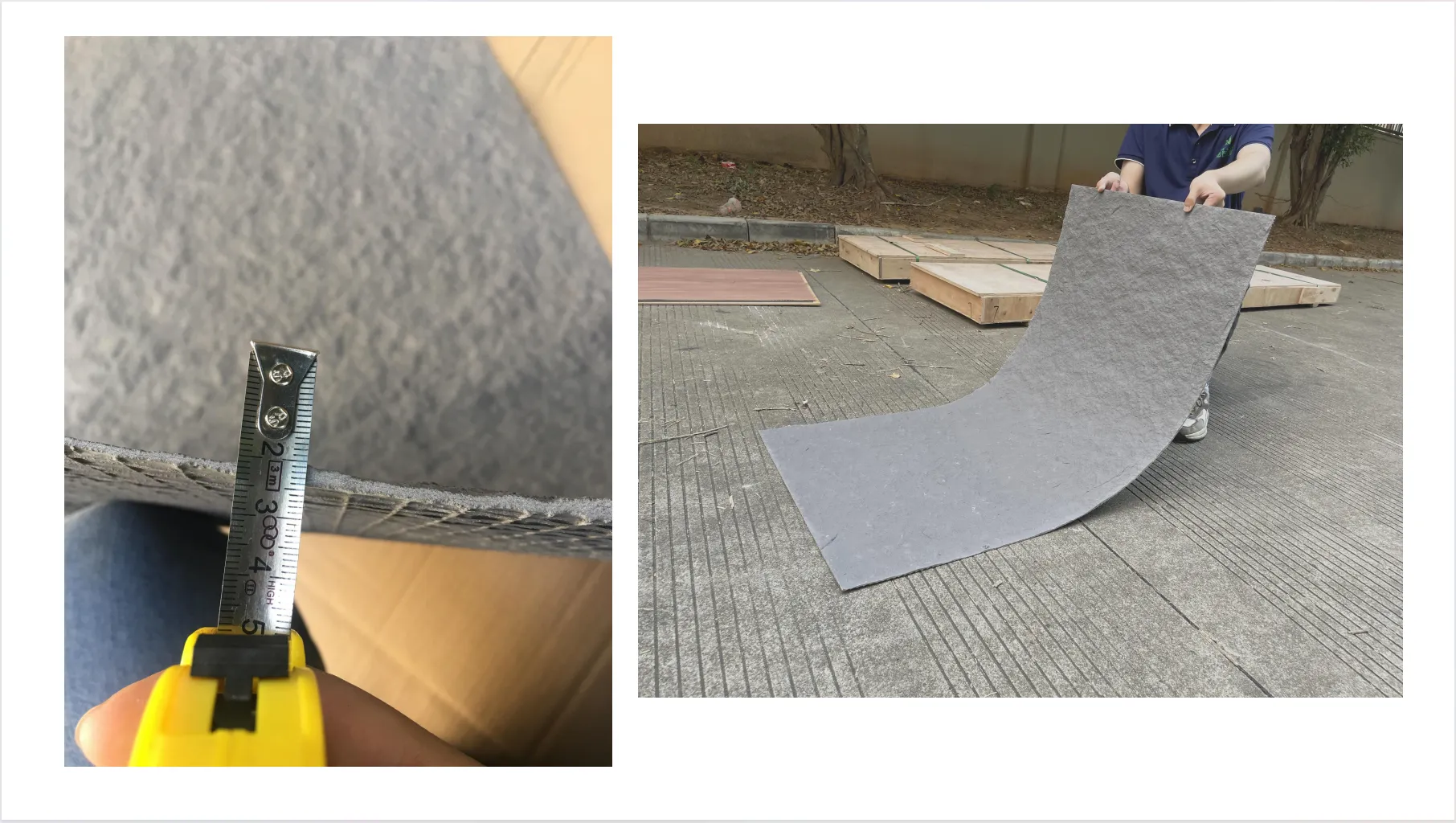
Fire resistance is a big selling point, but let's not sleep on the other perks of COLORIA's rough granite. Remember that MCM flexible stone technology we mentioned earlier? It's a game-changer for installation. Traditional stone cladding is heavy—we're talking 20-30 kg per square meter. That means you need reinforced structures, specialized labor, and longer installation times. COLORIA's rough granite? It weighs in at just 4-5 kg per square meter. That's light enough to install on wood frames, drywall, or even curved surfaces (hello, rounded archways or circular buildings). And because it's flexible, it can bend up to 30 degrees without cracking—perfect for projects with unique geometries.
Then there's the aesthetic versatility. The rough granite variants—medium grey, dark grey, beige—aren't just "colors." They're palettes. The medium grey has hints of blue and green in certain lights, making it a chameleon that pairs with everything from warm woods to cool metals. The dark grey is moody and sophisticated, ideal for modern lofts or boutique hotels. The beige? It's the ultimate team player, blending seamlessly with coastal, rustic, or Scandinavian styles. And because the texture is so authentic—pocked, grainy, and full of character—you get that "natural stone" look without the environmental impact of quarrying (COLORIA's MCM process uses 70% recycled materials, by the way).
Durability, too, is off the charts. Beyond fire resistance, rough granite MCM stands up to rain, snow, UV rays, and even saltwater (making it great for coastal properties). It won't fade in the sun, it resists mold and mildew, and it's easy to clean—just a quick wipe with a damp cloth. For busy commercial spaces or high-traffic homes, that low maintenance is a lifesaver.
At the end of the day, building materials are only as good as the creativity they inspire. So what can you actually do with COLORIA's rough granite stone? Let's paint a few pictures (pun intended):
And let's not forget the "wow factor" of the real test pictures themselves. "Architects love bringing the test visuals to clients," Maria says. "It's one thing to say, 'This is fire-resistant.' It's another to show them a photo of the panel after 2 hours in a furnace and say, 'See? It still looks like stone.' Clients get excited when they realize they don't have to sacrifice their vision for safety."
At the end of the day, COLORIA's rough granite stone line isn't just about fire resistance. It's about redefining what's possible in building materials. It's about proving that you can have a material that looks like it was forged by time, installs like a dream, and stands up to the worst that nature (or accidents) can throw at it. The fire resistance test visuals—those unpolished, honest snapshots of stone under fire—are more than just proof of performance. They're a promise: that beauty and safety don't have to be enemies. That you can build spaces that inspire and protect.
So the next time you're standing in front of a stunning stone wall, take a second to appreciate the story behind it. If it's COLORIA's rough granite, that story isn't just about aesthetics—it's about a team of engineers who asked, "What if?" What if we made stone flexible? What if we made it lightweight? What if we made it so fire-resistant, it could save lives? And then they went out and did it. For architects, builders, and homeowners, that's the real power of COLORIA: materials that don't just build spaces—they build trust.
And in a world where trust is hard to come by? That's the most valuable material of all.
Recommend Products












