
There's a moment in every home or commercial project where the material choices start to feel personal. Maybe it's when you run your hand over a sample slab in a showroom, or when you picture your morning coffee on a kitchen countertop that feels like it's always belonged there. For decades, natural granite has been that "heartbeat" material—rugged, timeless, and unapologetically earthy. It's the stone that built countertops in family kitchens, flooring in boutique hotels, and accent walls in cozy cafes. But here's the thing: loving granite doesn't mean you have to live with its limitations. Enter COLORIA's mcm flexible stone—a modern twist on tradition that's making people rethink what "natural" can mean.
Let's start with the obvious: natural granite is stunning. Its unique veining, cool-to-the-touch surface, and raw texture tell a story of millions of years of geological formation. But if you've ever tackled a renovation with natural granite, you know the other side of the story: slabs that weigh as much as small cars, installers who need industrial equipment, and a price tag that can make even the most enthusiastic DIYer pause. What if there was a way to keep the soul of granite—the look, the feel, the warmth—without the hassle? That's where COLORIA's flexible stone steps in.
Close your eyes and imagine running your hand over a natural granite slab. It's cool, dense, with tiny pits and ridges that catch the light. No two slabs are exactly alike—each has its own "fingerprint" of minerals, cracks, and color variations. That uniqueness is part of its charm, but it can also be a headache if you're trying to match slabs for a large project. One might have a bold vein of quartz; the next, a subtle fleck of mica. Consistency? Not exactly granite's strong suit.
COLORIA's approach? Honor the beauty of natural granite while adding a touch of intentionality. Take their rough granite stone series, for example. Run your hand over rough granite stone (medium grey), and you'll feel the same gritty texture as natural granite—like sand polished smooth by time. Switch to rough granite stone (dark grey), and the depth intensifies, with undertones of charcoal that mimic the look of granite quarried from mountain beds. And for those who prefer softer neutrals, rough granite stone (beige) brings warmth, with hints of cream and taupe that feel like a desert sunrise frozen in stone.
But COLORIA doesn't stop at replicating granite. They've leaned into the flexibility of engineered materials to offer finishes that natural stone can't match. Ever wished your granite had a hint of sparkle? Check out travertine (starry green)—a cousin to the rough granite line, with tiny, iridescent flecks that catch the light like a starry sky. Or if you're craving something with more movement, wood grain board adds organic texture that pairs beautifully with rough granite, creating a space that feels both grounded and alive.
"I thought I'd have to sacrifice the 'natural' look for something easier to install," says Mark, a homeowner in Denver who used rough granite stone (beige) in his kitchen remodel. "But when friends come over, they swear it's real granite. One even asked where I got the 'rare, light-colored slab'—I had to laugh and tell them it's flexible stone. The texture, the color… it's all there. And honestly? I love that I could pick exactly the shade I wanted, no surprises."
Natural granite has a reputation for being indestructible—and for good reason. It's scratch-resistant, heat-resistant, and can handle everything from a hot pot to a dropped knife (most of the time). But here's the secret no one tells you: granite is porous. Without regular sealing (every 1-3 years, depending on use), liquids like wine, oil, or coffee can seep in, leaving permanent stains. And while it's hard, it's not unbreakable—drop a heavy pan on the edge, and you might end up with a chip that's impossible to repair without replacing the entire slab.
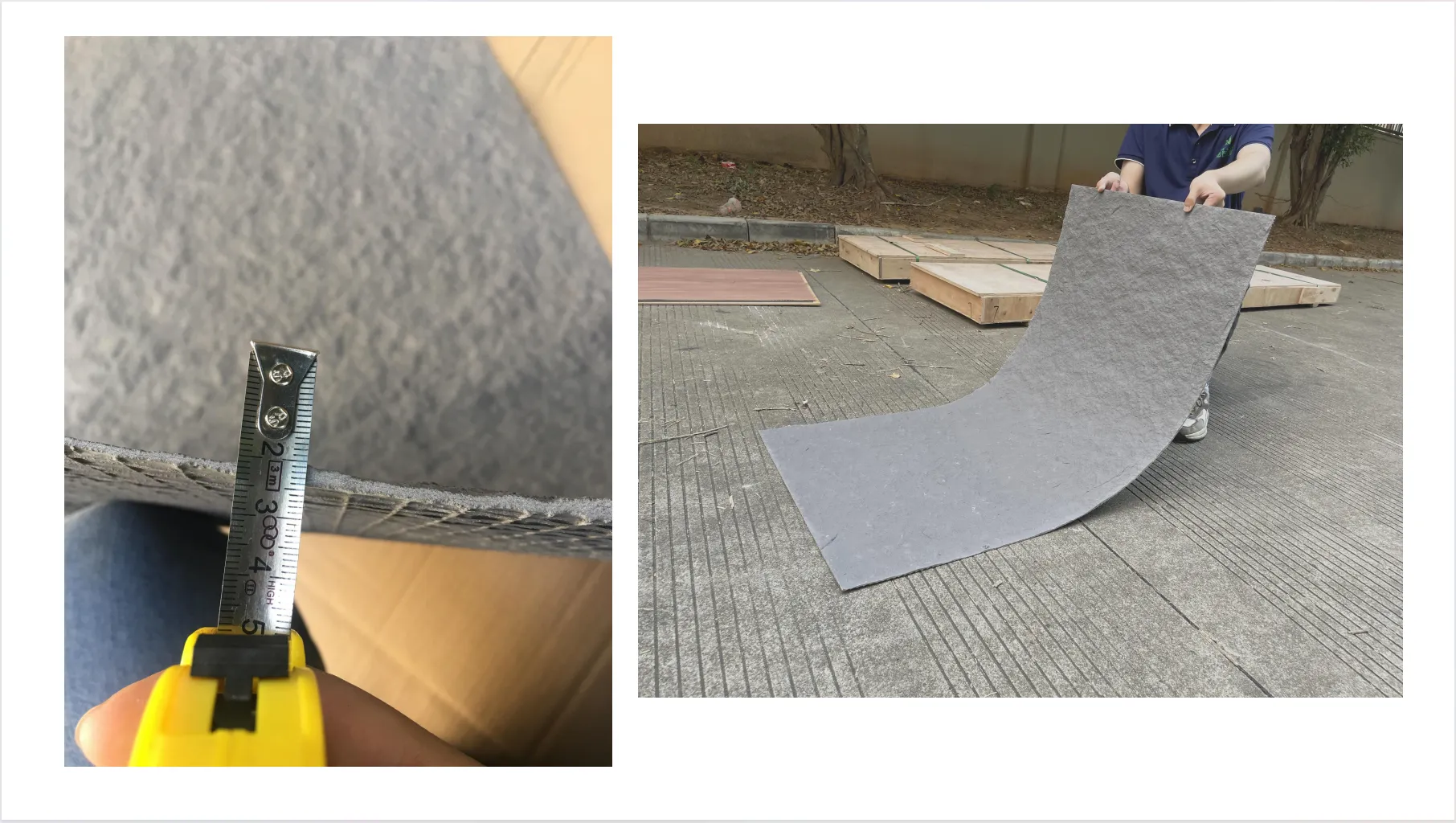
COLORIA's mcm flexible stone flips the script on durability. Made from a blend of modified composite materials and reinforced fibers, it's lightweight but surprisingly tough. Spill coffee? Wipe it up with a cloth—no sealing required. drop a plate? The material flexes slightly, absorbing impact to resist chipping. And unlike natural granite, it's moisture-resistant, making it perfect for bathrooms, basements, or even outdoor patios where rain and humidity would wreak havoc on unsealed stone.
Take it from Lisa, a restaurant owner in Portland who swapped her natural granite bar tops for rough granite stone (dark grey) last year. "We used to seal the granite every six months, and we still had stains from cocktails and ketchup," she says. "Now? We wipe the bar down at the end of the night, and it looks brand new. No more scrubbing, no more expensive sealants. And the best part? It's held up to years of rowdy customers and late-night spills. If it can survive a Friday happy hour here, it can survive anything."
Let's talk about the elephant in the room: installing natural granite is hard. I mean, really hard. A standard 3cm thick granite slab weighs around 19 pounds per square foot. A typical kitchen countertop? That's 20-30 square feet—nearly 600 pounds. Moving that requires a team of strong people, a dolly, and often, a crane. And once it's in place, you need to reinforce cabinets to support the weight, or risk sagging (and expensive repairs) down the line.
COLORIA's flexible stone? It weighs a fraction of that—around 3-5 pounds per square foot. That's lighter than drywall. Suddenly, installation goes from a multi-day project with a crew to a weekend DIY job. No need for a crane, no need to reinforce your cabinets, no need to stress about dropping a slab and cracking your floor (or your foot). All you need is a utility knife to cut the panels to size, some adhesive, and a roller to press them into place. It's so simple, even if you've never picked up a tool in your life, you could probably handle it.
"I installed rough granite stone (dark grey) in my home office by myself," says Jamie, a freelance writer in Austin. "I watched a YouTube tutorial, bought a $10 utility knife, and had the whole wall done in an afternoon. The panels are lightweight enough to hold with one hand while I applied the adhesive. It felt like putting up giant stickers—except the end result looks like I hired a pro. My partner still can't believe I did it alone."
| Feature | Natural Granite | COLORIA Flexible Stone (Rough Granite Series) |
|---|---|---|
| Weight | 15-20 lbs per sq ft (requires structural support) | 3-5 lbs per sq ft (no structural reinforcement needed) |
| Installation | Professional installers, heavy machinery, 2-3 day process | DIY-friendly, basic tools, 1-2 day process (even for large projects) |
| Durability | Scratch/heat-resistant but porous (needs sealing every 1-3 years); prone to chipping | Stain/moisture/impact-resistant; no sealing required; flexible to prevent chipping |
| Design Options | Limited to natural variations (blacks, whites, greys, beiges); rigid (no curved surfaces) | Diverse range including rough granite stone (medium grey), rough granite stone (dark grey), rough granite stone (beige), plus complementary finishes like travertine (starry green) and wood grain board; flexible for curved walls/ceilings |
| Cost (Installed) | $50-$200 per sq ft (material + labor + delivery) | $20-$50 per sq ft (material + DIY installation or minimal labor) |
| Sustainability | Quarrying disrupts ecosystems; heavy shipping = high carbon footprint | Made with recycled materials; lightweight = lower shipping emissions; minimal waste in production |
Natural granite is a one-trick pony, for the most part. It's great for countertops, solid for flooring, and that's about it. Try installing it on a curved wall, and you'll end up with gaps and cracks. Use it on a ceiling, and you're asking for a structural nightmare. But COLORIA's mcm flexible stone? It's a chameleon.
Imagine wrapping a column in rough granite stone (dark grey) to add industrial edge to a lobby. Or lining a bathroom shower with travertine (starry blue) for a spa-like vibe that's moisture-resistant and easy to clean. Want to create a feature wall in your living room? Mix rough granite stone (beige) with wood grain board for a look that's both rustic and modern. The possibilities are endless because the material bends, cuts, and conforms to whatever shape you need.
Commercial designers are especially loving this versatility. Take hotels, for example: using flexible stone on elevator walls, reception desks, even outdoor patios. It holds up to high traffic, looks luxurious, and won't break the bank. Or restaurants, where the lightweight panels mean more design freedom—think curved banquettes wrapped in rough granite, or bar fronts that mimic the look of natural stone without the weight restrictions.
Natural granite will always have a special place in design history. It's a symbol of endurance, a link to the earth's raw power. But in a world where we crave beauty and practicality, where we want spaces that feel authentic and easy to maintain, COLORIA's flexible stone is a revelation.
It's not about replacing natural stone—it's about honoring it. Rough granite stone (medium grey) doesn't just look like granite; it feels like granite, with all the texture and warmth that makes the material so beloved. But it's smarter: lighter, stronger, more affordable, and kinder to the planet. It's granite, reimagined for the way we live now.
So whether you're renovating your kitchen, designing a commercial space, or just dreaming of a home that feels both timeless and modern, maybe it's time to look beyond the quarry. Because sometimes, the best way to bring the outdoors in is to embrace a material that's as flexible as your vision—and as tough as life itself.
After all, home isn't just about the materials we choose. It's about the moments we create in those spaces. And with COLORIA's flexible stone, those moments can be a little easier, a little more beautiful, and a lot more uniquely yours.
Recommend Products












