Walk into any timeless building—whether it's a historic library with stone walls that seem to breathe stories or a modern home where the fireplace wraps around the room like a warm hug—and you'll likely find one element tying it all together:
texture
. Natural stone, with its rugged grooves, subtle veins, and earthy tones, has been the backbone of architectural beauty for centuries. Among these, rough granite stands out as a quiet champion. Its raw, unpolished surface carries the weight of mountains and the softness of time, making it a favorite for designers who crave both strength and soul. But as our cities grow taller, our designs bolder, and our need for sustainable materials sharper, traditional natural stone has started to show its limits. Enter MCM technology—a game-changer that's not just preserving the essence of rough granite, but elevating it to new heights of possibility.
The Struggle with "Traditional" Natural Stone: When Beauty Meets Baggage
Let's be honest: traditional rough granite is stunning, but it's not without its headaches. Imagine a contractor trying to hoist a 200-pound slab of dark grey rough granite up to the 15th floor of a boutique hotel. Or a homeowner staring at water stains on their beige rough granite kitchen backsplash, wondering how to scrub them off without dulling the stone. For years, architects and designers have loved natural stone for its authenticity, but hated the trade-offs:
-
Weight & Installation:
A single slab of traditional rough granite can weigh as much as a small car, requiring heavy machinery, reinforced structures, and a team of workers. This isn't just costly—it limits where stone can go. Curved walls? Sloped ceilings? Forget it.
-
Maintenance:
Natural stone is porous, meaning it soaks up spills, stains, and even mold. Sealing it every few years becomes a chore, and over time, the texture can wear down, losing that "lived-in" charm we love.
-
Design Rigidity:
Quarried stone comes in fixed sizes and shapes. Want a custom pattern or a gradient from medium grey to beige rough granite? You're limited by what the earth gives you that day.
It's a classic case of "you can have beauty, or you can have practicality—but not both." Until now.
MCM Technology: The "Magic" Behind Modern Stone Textures
MCM, or Modified Composite Material, isn't just a new material—it's a
philosophy
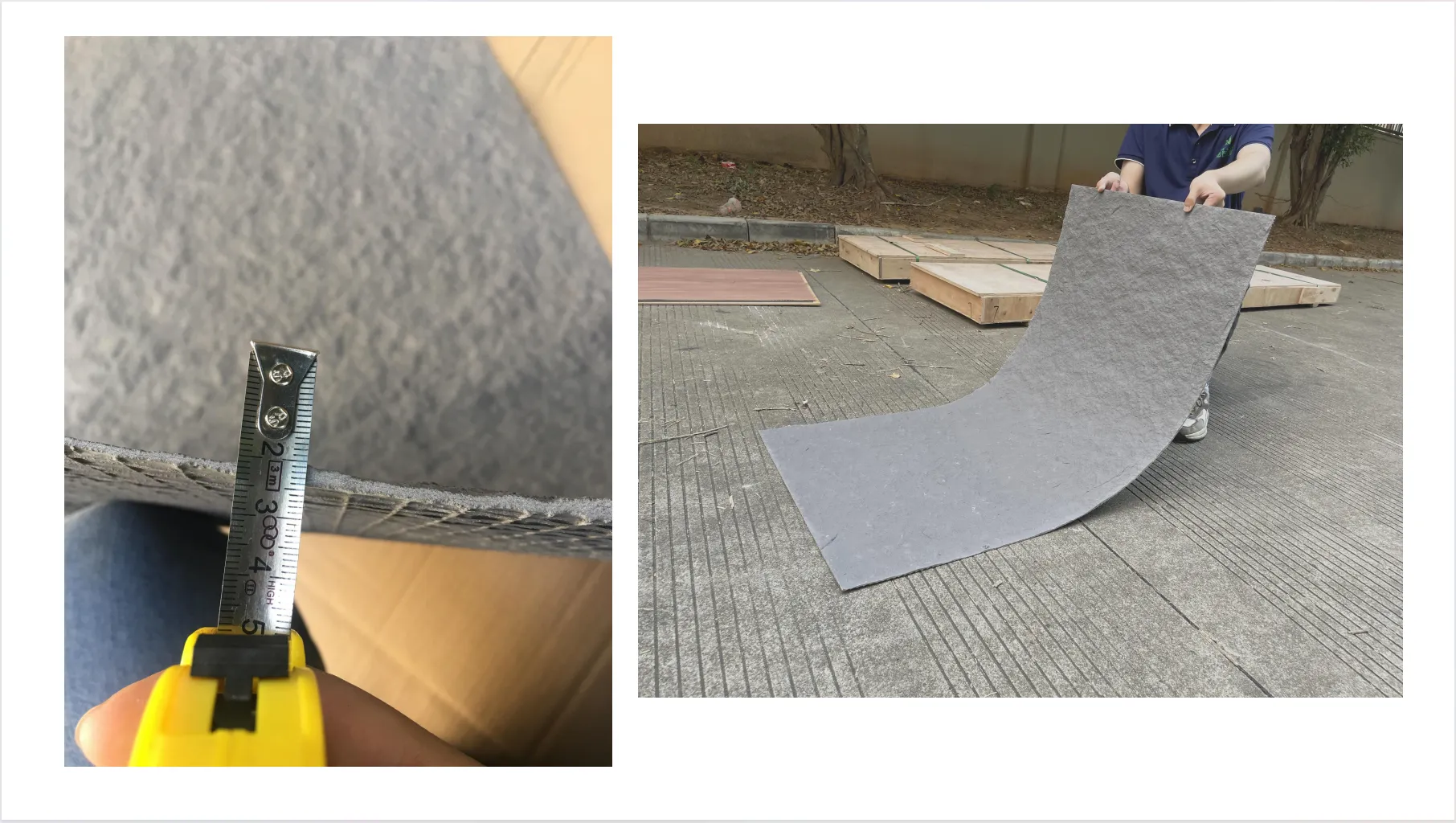
. Think of it as nature and science shaking hands: MCM takes the visual and textural DNA of natural stone (like the grain of rough granite, the veining of marble, or the warmth of wood) and wraps it in a lightweight, durable composite shell. Here's how it works: a thin layer of natural stone particles (yes, real stone dust and fragments) is bonded to a flexible, high-strength backing (often fiberglass or mineral composite). The result? A material that looks and feels like the real thing but weighs up to 70% less, bends without breaking, and laughs off stains and scratches.
For rough granite lovers, this is revolutionary. MCM doesn't just copy the texture of rough granite—it
enhances
it. The medium grey rough granite that once felt cold and industrial? Now it has a softer, almost velvety depth. The dark grey variant, which could look harsh in small spaces? MCM lets it retain its boldness while feeling more approachable. And the beige rough granite, a staple in cozy homes? Its warm undertones now pop without the fear of coffee rings ruining the vibe.
MCM Rough Granite Stone Series: Three Tones, Endless Stories
Let's zoom in on the stars of the show: MCM's
rough granite stone (medium grey)
,
rough granite stone (dark grey)
, and
rough granite stone (beige)
. These aren't just "colors"—they're characters, each with its own personality and purpose.
Rough Granite Stone (Medium Grey): The Neutral Hero
Picture a sunlit office lobby with floor-to-ceiling walls clad in medium grey rough granite. The texture here isn't overwhelming—it's a gentle hum. The stone's surface has the look of granite that's been weathered by rain and wind, with tiny pits and ridges that catch the light, creating a play of shadows throughout the day. Designers love this shade for its versatility: pair it with warm
wood grain board for a Scandinavian vibe, or with
fair-faced concrete for an industrial edge. It's the kind of material that fades into the background when you want it to, but steps up as a focal point when the moment calls—like a feature wall in a minimalist bedroom, where its subtle texture adds depth without clutter.
Rough Granite Stone (Dark Grey): Boldness with Balance
Dark grey rough granite has always been associated with strength—think ancient castles, modern skyscrapers, and everything in between. But MCM's take on it is different. Instead of feeling heavy and imposing, this dark grey variant feels
grounded
. Its texture is more pronounced than the medium grey, with deeper grooves that look like they've been carved by hand, not machines. Imagine a restaurant bar wrapped in dark grey rough granite, where the texture catches the glow of pendant lights, turning the bar into a piece of art. Or a home exterior, where the stone contrasts with white stucco, creating a look that's both modern and timeless. The best part? Because it's MCM, you could even use it on a curved awning over the entrance—something traditional dark grey granite would never allow.
Rough Granite Stone (Beige): Warmth in Every Groove
Beige rough granite is the "hug" of the stone world. Its soft, sandy tones and gentle texture make it perfect for spaces where you want to feel at ease—kitchens, bedrooms, living rooms. MCM's version takes this warmth up a notch: the texture is slightly more refined than the darker variants, with a matte finish that feels like walking on a sun-baked desert floor. A homeowner in Portland recently used beige rough granite stone on their fireplace surround, pairing it with woven (khaki) cushions and
bamboo mat board accents. The result? A space that feels like a cabin in the woods, even though it's in the heart of the city. And because MCM is stain-resistant, they don't have to panic when their kids spill hot cocoa on the hearth—just a quick wipe, and the stone looks as good as new.
Beyond Rough Granite: MCM's "Sidekicks" in Texture
MCM technology isn't a one-trick pony. While rough granite might be the star, it's supported by a cast of equally impressive characters that expand what's possible in design. Take
MCM flexible stone
, for example. This stuff is a designer's dream: thin, bendable, and available in textures that mimic everything from
travertine (starry blue) to
gobi panel. Imagine wrapping a column in flexible stone that looks like
lunar peak silvery, or creating a feature wall with a gradient of
rusty red and golden sunset—all without the weight or hassle of traditional stone.
Then there's the
MCM big slab board series
. If rough granite is about texture, big slabs are about
seamlessness
. These massive panels (some as large as 12 feet by 5 feet) come in finishes like
boulder slab (vintage silver) and
marble interstellar gray, allowing designers to create walls and countertops with zero grout lines. Pair a big slab of
epoch stone with medium grey rough granite accents, and you've got a space that feels both expansive and intimate—like standing at the edge of a cliff, with the rough stone underfoot and the endless sky above.
Traditional vs. MCM: The Numbers (and Feelings) Speak for Themselves
|
Feature
|
Traditional Rough Granite
|
MCM Rough Granite Stone
|
|
Weight
|
80-100 lbs/sq ft (requires reinforced structures)
|
12-15 lbs/sq ft (installs on drywall, wood, or metal)
|
|
Texture Retention
|
Fades over 5-7 years with wear/cleaning
|
Maintains texture for 20+ years (UV and scratch-resistant)
|
|
Design Flexibility
|
Fixed sizes; no curves or custom patterns
|
Custom cuts, curves, gradients, and even 3D-printed shapes
|
|
Installation Time
|
3-5 days for a small backsplash (requires heavy tools)
|
1 day for the same project (installs like tile, with basic tools)
|
|
Environmental Impact
|
High carbon footprint (quarrying, transportation)
|
80% recycled materials; low energy production
|
From Skyscrapers to Kitchens: MCM in the Real World
It's one thing to talk about MCM's benefits—it's another to see it in action. Let's take a tour of a few projects where MCM rough granite and its siblings have stolen the show:
-
The "Ember" Hotel, Seattle:
This boutique hotel wanted a lobby that felt like a "modern mountain lodge." The designers used dark grey rough granite stone on the reception desk, paired with foamed aluminium alloy board (vintage gold) accents and woven (jacinth) seating. The MCM stone was lightweight enough to install on the curved front of the desk, and the texture plays beautifully with the warm lighting, making guests feel like they've stepped into a cozy cabin—even in the middle of the city.
-
Oakwood Residences, Austin:
A luxury apartment complex with a focus on "biophilic design" (bringing nature indoors). Each unit features a kitchen backsplash of beige rough granite stone, complemented by
wood grain board cabinets and stream limestone (claybank) flooring. The MCM stone's stain resistance was a big selling point for renters, and the developers saved on construction costs by not needing to reinforce the walls.
-
Desert Horizon Public Library, Phoenix:
To beat the Arizona heat, the library needed a cool, durable exterior. Designers chose
MCM big slab board series in
boulder slab (vintage black) for the walls, with accents of rough granite stone (medium grey) around the windows. The big slabs reduced heat absorption, while the rough granite added texture that catches the desert breeze—proving that MCM isn't just beautiful, it's smart.
The Future of Texture: Where MCM and Nature Meet
As we look ahead, MCM technology is poised to do more than just improve natural stone—it's going to redefine how we think about texture in architecture. Imagine a world where you can have a bathroom wall that looks like
lunar peak black rough granite but feels soft to the touch (thanks to 3D printing). Or a school where the exterior is made of recycled MCM stone that changes color with the seasons, teaching kids about sustainability while inspiring them with beauty.
For rough granite, this future is bright. MCM isn't replacing the stone we love—it's freeing it from the constraints of weight, cost, and time. It's letting designers use rough granite in places we never thought possible: on ceilings, on furniture, even on mobile pop-up shops. And as we continue to prioritize eco-friendly materials, MCM's low carbon footprint and recycled content will make it a staple in green building.
At the end of the day, architecture is about more than walls and roofs—it's about how spaces make us feel. Rough granite, with its earthy texture and timeless strength, has always made us feel connected to something bigger than ourselves. MCM technology isn't taking that away; it's giving us more ways to hold onto that connection, even as our world grows faster and more complex. So the next time you run your hand over a rough granite wall—whether it's in a hotel lobby, a friend's kitchen, or a public library—take a moment to appreciate the magic: it's not just stone anymore. It's stone, reimagined.