
Picture this: You're standing in front of a building, eyes tracing its facade. Maybe it's a sleek modern office, a cozy boutique hotel, or a historic renovation. What catches your eye first? Chances are, it's the texture—the way light plays off the surface, the seams (or lack thereof), the overall harmony of the design. For architects and designers, choosing the right stone cladding isn't just about picking a color or texture; it's about size. How big should the panels be? Will they fit the vision without looking choppy? And let's not forget the practical stuff: Can the building's structure handle the weight? Will installation drag on for weeks?
If you've ever wrestled with these questions, you're not alone. For decades, standard stone sizes have been the default, but they come with a laundry list of headaches. Enter the MCM big slab board series —a game-changer that's redefining what's possible in exterior and interior cladding. Today, we're zooming in on one of its most popular offerings: rough granite. Specifically, we'll compare rough granite stone (medium grey) , rough granite stone (dark grey) , and rough granite stone (beige) in MCM big slab form against traditional standard stone sizes. By the end, you'll see why more professionals are ditching the "standard" and embracing the "big."
Stone cladding is more than just a pretty face. It's a functional choice that impacts everything from installation timelines to long-term maintenance. Standard stone sizes—think 12x24 inches, 16x32 inches—have been industry norms for years. Why? Because natural stone, in its raw form, is heavy and brittle. Quarrying and cutting larger slabs was (and still is) risky; one wrong move, and the stone cracks, wasting material and money. So, manufacturers stuck to smaller, "safer" sizes.
But here's the catch: Smaller panels mean more seams. More seams mean more grout lines, which can disrupt the visual flow of a design. Imagine a facade covered in 12x24-inch rough granite tiles—those horizontal and vertical lines start to look like a grid, not a seamless expanse. And let's talk weight: Natural rough granite can weigh 15-20 pounds per square foot. Multiply that by hundreds (or thousands) of square feet, and you're looking at structural reinforcements, heavier support systems, and higher labor costs.
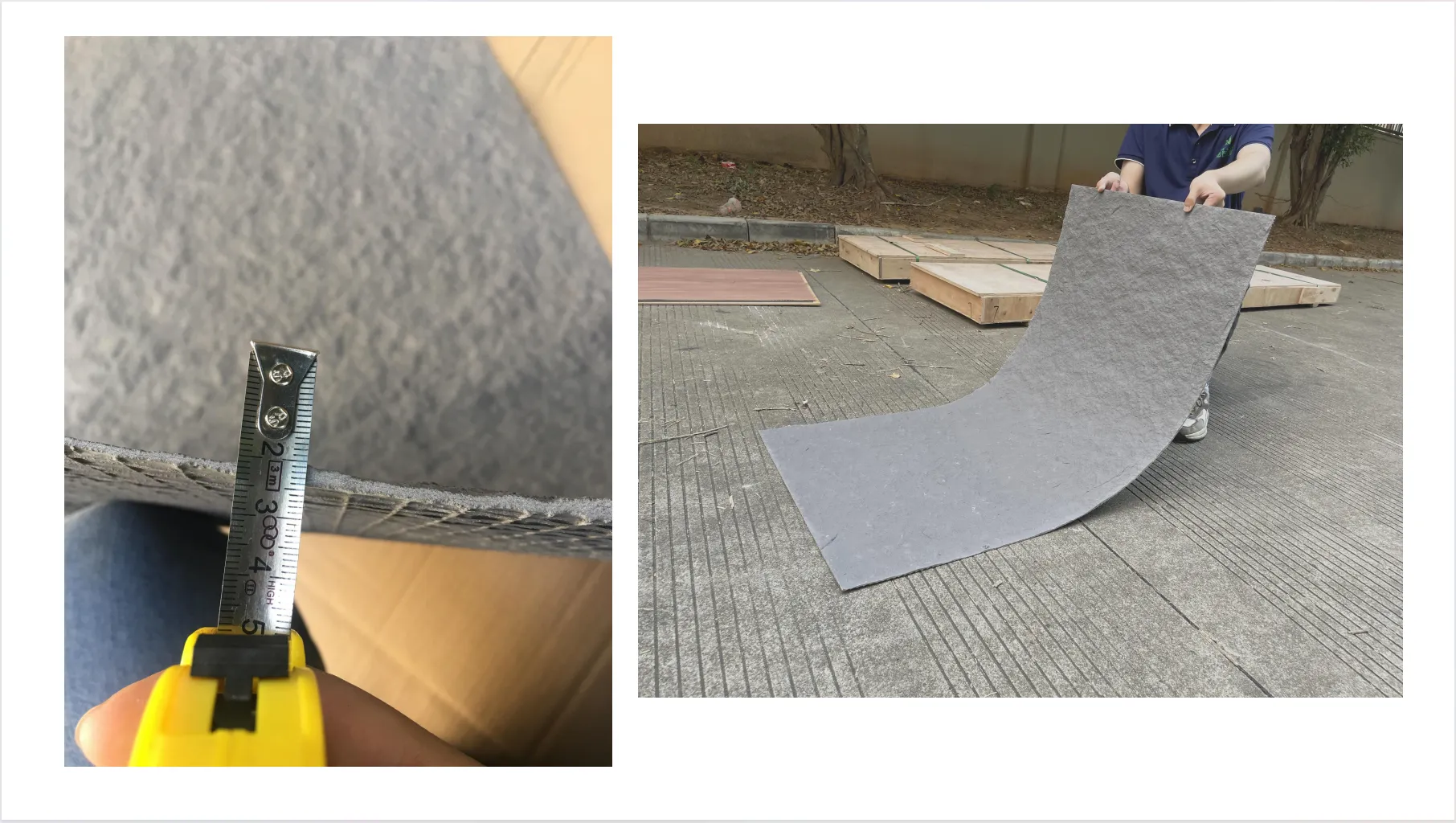
That's where MCM technology steps in. MCM flexible stone —short for Modified Composite Material—combines natural stone particles with high-performance polymers to create panels that are thin, lightweight, and yes, flexible. And when we say "big slab," we mean BIG. MCM big slabs can reach sizes up to 4x10 feet or more, all while weighing a fraction of natural stone. Suddenly, the rules of size and weight are rewritten.
Let's break down the two options. First, the MCM big slab board series rough granite variants: rough granite stone (medium grey) , rough granite stone (dark grey) , and rough granite stone (beige) . These aren't your average stone panels. They're engineered to mimic the rugged, natural texture of quarried rough granite but with the benefits of MCM: flexibility, durability, and that showstopping big slab size.
On the other side, standard stone sizes for rough granite typically max out around 2x4 feet. They're cut from solid blocks of natural stone, so each panel is dense, heavy, and prone to chipping if not handled carefully. They come in the same color families—medium grey, dark grey, beige—but with less consistency (natural stone's "character," some might say, but a headache for designers aiming for uniformity).
Pro Tip: When clients ask for "rough granite real pictures," they're not just looking for color swatches. They want to see how the texture translates at scale. A 12x24-inch sample might look great, but blow it up to a 4x10-foot MCM big slab, and suddenly the texture feels more immersive, the color more consistent, and the design more impactful.
Numbers tell the story best. Let's put MCM big slab rough granite and standard stone sizes head-to-head in key categories that matter to architects, contractors, and property owners.
| Feature | MCM Big Slab Rough Granite (Medium Grey, Dark Grey, Beige) | Standard Rough Granite Stone Sizes |
|---|---|---|
| Size Range | Up to 4x10 feet (custom sizes available) | Typically 12x24 inches to 2x4 feet (limited by quarrying) |
| Weight | 3-5 lbs per square foot (light enough for most substrates) | 15-20 lbs per square foot (requires structural reinforcement) |
| Installation Complexity | Simple: Can be installed with adhesives or mechanical fasteners; no heavy lifting equipment needed | Complex: Requires cranes, scaffolding, and teams of installers; longer labor hours |
| Seam Visibility | Minimal: Fewer panels mean fewer seams; creates a seamless, monolithic look | High: Multiple small panels result in grid-like seams that disrupt design flow |
| Design Flexibility | Exceptional: Large slabs allow for custom cuts, curves, and unique patterns; consistent color/texture across panels | Limited: Smaller sizes restrict bold designs; natural stone variations can cause color mismatches |
| Durability | High: Resistant to impact, moisture, and UV rays; flexible enough to withstand building movement without cracking | High, but brittle: Prone to cracking under stress or if dropped during installation |
| Sustainability | Eco-friendly: Uses 70-80% recycled stone particles; reduces quarrying waste; lightweight design cuts transportation emissions | Resource-intensive: Requires large stone blocks; high waste from cutting; heavy transportation increases carbon footprint |
| Cost-Effectiveness | More affordable long-term: Lower labor costs, no structural reinforcements, less waste, and easier maintenance | Higher upfront and hidden costs: Structural work, labor, transportation, and potential repairs add up |
The table gives the basics, but let's dive deeper into why MCM big slab board series rough granite is turning heads. Take rough granite stone (medium grey) , for example. In standard 12x24-inch panels, its texture might feel fragmented—like a patchwork quilt of grey. But in a 4x8-foot MCM big slab? Suddenly, the rough, pitted surface becomes a statement. Light hits it differently, creating shadows that dance across the expanse, and there's no grid of seams to break the spell. It's the difference between a mural painted in small tiles and one painted on a single canvas.
We can't overstate the weight advantage. A 4x10-foot MCM big slab of rough granite stone (dark grey) weighs around 200 pounds. A natural stone slab of the same size? Easily 800 pounds or more. That's a difference between two installers carrying a panel and needing a crane. For high-rise buildings, this isn't just a convenience—it's a safety and cost issue. No more reinforcing floors or walls to support the stone; MCM big slabs play nice with existing structures, even older ones that can't handle heavy loads.
Designers dream of seamless surfaces, and MCM big slabs deliver. Imagine a hotel lobby with a rough granite stone (beige) accent wall that stretches from floor to ceiling, unbroken by seams. Or a restaurant exterior clad in rough granite stone (dark grey) big slabs, where the only lines are the ones you choose—no random grout lines disrupting the modern vibe. Even curved surfaces? MCM's flexibility makes it possible. Standard stone? Curves mean cutting small, wedge-shaped pieces, resulting in a jigsaw puzzle look.
Natural rough granite is beautiful, but it's inconsistent. One slab might be a rich dark grey; the next, slightly lighter with random veining. That's "character," but when you're cladding a 10,000-square-foot facade, it can look messy. MCM big slabs, though, blend natural stone particles with polymers in controlled conditions, ensuring every rough granite stone (medium grey) or rough granite stone (beige) panel matches the next. No surprises, no mismatched patches—just the uniform look designers crave.
Let's look at a recent project: a 1980s office building in Chicago getting a modern upgrade. The design team wanted a rugged, industrial exterior using rough granite, but the original structure couldn't support natural stone's weight. Enter MCM big slab board series rough granite stone (dark grey) panels, 4x8 feet each.
Installation took just 10 days—half the time estimated for standard stone. The result? A facade with bold, unbroken lines that make the building look brand-new. Tenants rave about the "high-end" feel, and the property manager loves that there's no need for regular sealing (MCM is naturally moisture-resistant). Best of all, when they shared "rough granite real pictures" with stakeholders, the response was unanimous: "That's exactly what we imagined."
At the end of the day, choosing between MCM big slabs and standard stone sizes comes down to priorities. If you value seamless design, lightweight installation, cost savings, and consistency, MCM big slabs are the clear winner. And when it comes to rough granite—whether you're drawn to the neutral versatility of rough granite stone (medium grey) , the bold drama of rough granite stone (dark grey) , or the warm earthiness of rough granite stone (beige) —the MCM big slab format elevates the material from "good" to "extraordinary."
Standard stone has its place, but in a world where design demands are bolder and budgets tighter, MCM big slabs offer a smarter, more innovative solution. So the next time you're scrolling through "rough granite real pictures," ask yourself: Are those small, fragmented panels really doing the texture justice? Or could a bigger, bolder slab turn a good design into an unforgettable one?
Stone cladding isn't just about covering a surface—it's about telling a story. With MCM big slab board series rough granite, that story is one of innovation, durability, and design freedom. Whether you're an architect pushing boundaries, a contractor streamlining installation, or a property owner investing in long-term value, these big slabs deliver on every front. So go ahead—dream big. Your facade (and your budget) will thank you.
Recommend Products












