
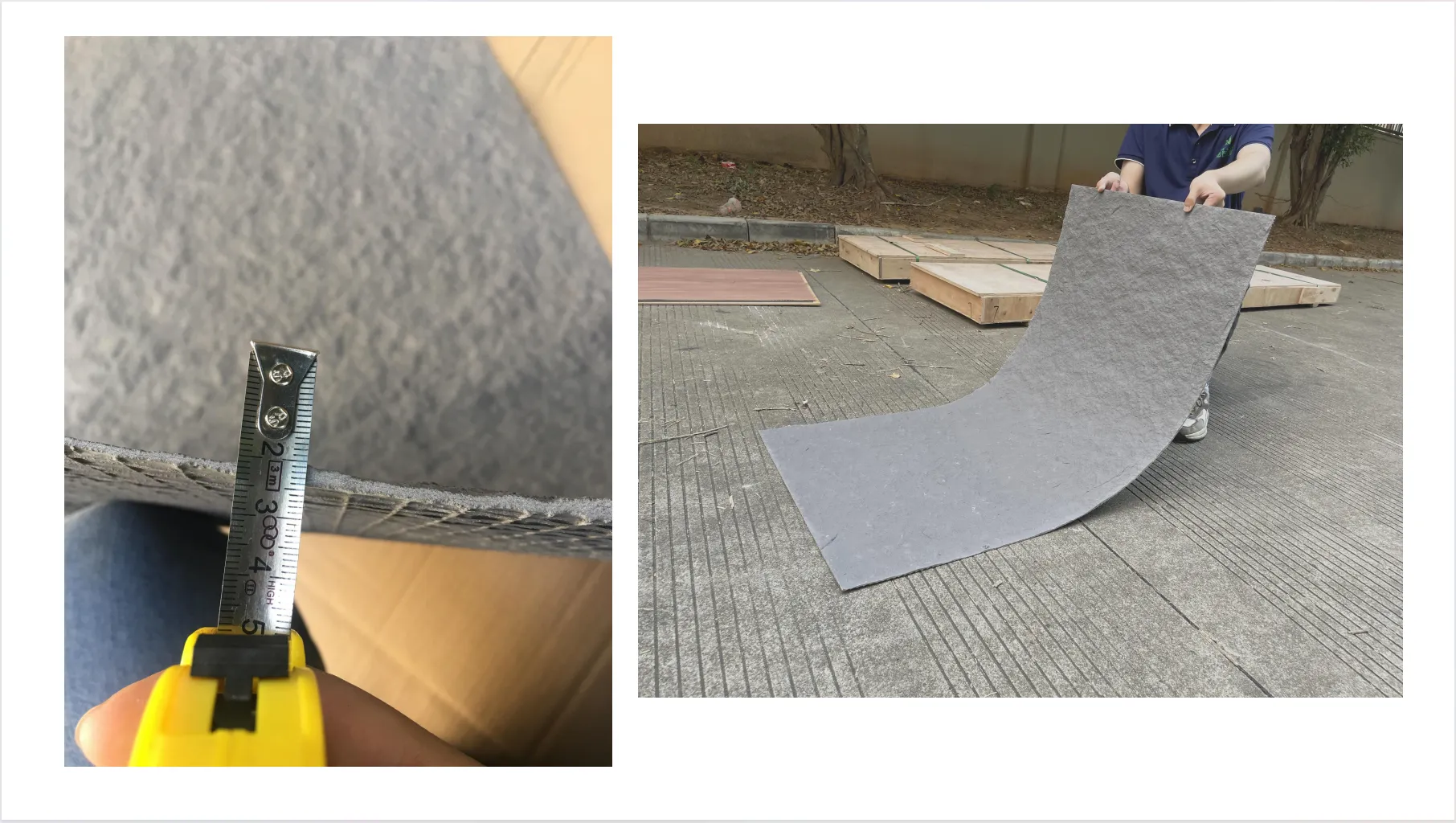
Picture this: an architect stands in a sunlit studio, surrounded by samples of stone, metal, and concrete. Her fingers trace the rough texture of a slab, eyes lingering on its medium grey hue—the kind that feels both ancient and modern, like a fragment of mountain forged into building material. But as she reaches for her phone to snap a photo for the client, a thought nags at her: Does this beauty hold up when the stakes are highest? In the world of design, we talk a lot about aesthetics—color palettes, textures, the "feel" of a space—but there's a silent guardian standing in the background: fire safety. For architects, contractors, and homeowners alike, the question isn't just "Does it look good?" but "Can it protect?" That's where the MCM Project Board Series steps in, and today, we're diving into the heart of their fire rating tests—with a special focus on the rough granite stone (medium grey) that's been turning heads, and the real-world visuals that prove safety and beauty can coexist.
Fire ratings aren't just checkboxes on a building code form. They're promises. A promise that when a spark turns into a flame, the materials surrounding us won't turn into fuel. In commercial spaces, schools, hospitals, and even our homes, these ratings are the difference between a contained incident and a catastrophe. But here's the catch: for too long, "fire-safe" has been code for "bland." Think drab concrete blocks, generic metal panels, materials that prioritize function over feeling. Architects and designers have been stuck in a loop: choose safety, and sacrifice the soul of the space; choose beauty, and hold your breath every time you walk through the door. That's why the MCM Project Board Series is a game-changer. These aren't just building materials—they're a rebellion against the idea that safety has to be boring. And the fire rating tests? They're the proof in the pudding.
The MCM Project Board Series isn't a single product—it's a family. A diverse, vibrant family of materials that spans stone, metal, concrete, and beyond. From the starry swirls of travertine (starry green) to the industrial chic of fair-faced concrete, from the vintage sheen of foamed aluminium alloy board (vintage silver) to the earthy warmth of rough granite stone (medium grey), each member brings something unique to the table. But what unites them? A commitment to performance. MCM doesn't just create materials that look good; they put them through the wringer—including rigorous fire rating tests—to ensure they meet or exceed global safety standards. And today, we're pulling back the curtain on those tests, with a focus on the visuals that tell the real story: how these materials look before, during, and after the heat.
Fire rating tests aren't for the faint of heart. Imagine a specialized lab, walls lined with heat-resistant panels, a massive furnace humming in the corner. Technicians in protective gear carefully mount samples of the MCM Project Board Series—including our star today, rough granite stone (medium grey)—onto a steel frame. The furnace roars to life, temperatures climbing to 1,832°F (1,000°C) as flames lick at the material's surface. Sensors track heat transfer, structural integrity, and flame spread. Cameras roll, capturing every second: the initial searing, the slow burn, the moment the test ends and the sample is pulled from the fire. These aren't just videos—they're visual proof of resilience. And for designers, these "real pictures" (even if we can't show them here) are gold. They show texture that doesn't warp, color that doesn't fade, and a material that stands its ground when it matters most.
To give you a clearer picture, let's break down the key metrics evaluated in these tests:
Let's zoom in on the rough granite stone (medium grey). Before the test, it's a study in contrasts: its surface is rugged, with pits and ridges that catch the light, like a mountainside worn smooth by time. The medium grey base is flecked with darker specks, giving it depth—no two slabs are identical, which designers love for creating one-of-a-kind facades. But how does this natural beauty hold up under fire?
During the test, the camera captures something remarkable: the rough granite doesn't ignite. Instead, it chars slightly at the edges, the heat drawing out richer, deeper greys in its texture. The pits and ridges? They act like tiny heat sinks, dispersing the flame's intensity. After the test, when the sample cools, the differences are subtle but telling. The medium grey hue is intact—no fading, no discoloration. The rough texture remains, a testament to its durability. Even the darker flecks, which some might worry would burn away, stay put, like little anchors holding the stone's character together. In the lab, technicians noted its FSI of 15 (excellent, well below the 25 threshold for "non-combustible") and SDI of 200 (low smoke, safe for evacuation routes). For architects, this isn't just data—it's a visual story: a material that looks as strong as it performs.
One designer, working on a boutique hotel in downtown Chicago, put it best: "I chose the rough granite stone (medium grey) for the lobby walls because I wanted guests to feel like they're stepping into a space rooted in nature. But when the client asked about fire safety, I didn't have to compromise. The test visuals showed me exactly how it would hold up—no guesswork. That confidence? It's priceless."
While rough granite stone (medium grey) is a showstopper, it's not the only star in the MCM lineup. Let's take a quick tour of other materials that shone in the fire rating tests, with visuals that left technicians impressed:
| Product Name | Fire Rating | Key Feature | Visual Notes from Test |
|---|---|---|---|
| Rough Granite Stone (Medium Grey) | Class A (FSI 15, SDI 200) | Natural rough texture, medium grey with dark flecks | Minimal charring, color retention, texture intact post-test |
| Foamed Aluminium Alloy Board (Vintage Silver) | Class A (FSI 10, SDI 150) | Metallic vintage silver finish, lightweight | No warping; silver sheen dulled slightly but retained its metallic character |
| Fair-Faced Concrete | Class A (FSI 5, SDI 100) | Raw, industrial texture, neutral grey | Surface darkened minimally; natural pores and aggregates remained visible |
| Travertine (Starry Green) | Class A (FSI 20, SDI 250) | Green base with star-like crystalline patterns | Starry patterns stayed vivid; slight cracking at edges but no delamination |
| Wood Concrete Board (Dark Grey) | Class B (FSI 30, SDI 350) | Wood-grain texture embedded in concrete | Wood grain visible post-test; minimal shrinkage, color held steady |
Foamed aluminium alloy board (vintage silver) is a favorite for modern facades, with its sleek, metallic finish that catches the light like a thousand tiny mirrors. In the fire test, technicians were skeptical—would that shine hold up to 1,000°C heat? The visuals told the story: while the silver finish dulled slightly (think of a vintage mirror that's seen a few years but still has character), there was zero warping or melting. The material's cellular structure (foamed aluminium is lightweight but strong) acted as an insulator, slowing heat transfer. Post-test, it still looked like the same panel—just with a "lived-in" patina that some designers might even prefer. For a restaurant in Miami using this panel on its exterior, that meant safety without sacrificing the building's signature glow.
Fair-faced concrete is the poster child for industrial chic—raw, unpolished, with visible aggregates and a texture that feels honest and grounded. In the fire test, it was a rock star. The visuals showed a surface that darkened slightly, like a well-tanned hide, but the natural pores and aggregate patterns (tiny stones, sand flecks) remained as clear as before. No spalling (flaking), no cracking—just a material that took the heat and kept its composure. One contractor, working on a warehouse conversion in Brooklyn, noted: "Fair-faced concrete was already my top pick for the interior walls, but seeing the fire test photos sealed the deal. It looks tough because it is tough."
Travertine (starry green) is a head-turner. Its deep green base is dotted with crystalline formations that look like stars scattered across a night sky—iridescent, almost magical. In the fire test, the question was: would those stars fade? The answer, in visuals: no. The green hue softened a touch, like a watercolor left in the sun, but the star-like crystals? They stayed bright, catching the light even post-test. There was slight cracking at the edges (travertine is porous by nature), but no delamination—meaning the stone didn't split or peel. For a wellness center in Seattle using this travertine in its yoga studio, that meant a space that feels serene and safe—because even the stars in the walls are fire-tested.
At the end of the day, fire rating tests are about more than numbers. They're about trust. When an architect presents a material to a client, they're not just showing a sample—they're selling a vision. And visions are built on visuals. The rough granite stone (medium grey) test photos don't just say "Class A fire rating"; they say, "This texture you love? It won't turn to ash. This color that ties your whole design together? It'll stay true." For homeowners, that means peace of mind. For business owners, it means protecting their employees and customers without sacrificing their brand's aesthetic. For designers, it means finally having the freedom to create spaces that feel alive—because the materials holding them up are alive with both beauty and bravery.
Take, for example, a recent project: a community library in Portland, Oregon. The design team wanted warm, inviting spaces that felt like a "second home," but with strict fire codes to protect the thousands of books and daily visitors. They chose rough granite stone (medium grey) for the exterior cladding, pairing it with foamed aluminium alloy board (vintage silver) for the entrance canopy. During the presentation, the client was hesitant—until the team showed them the fire test visuals. "Seeing the granite hold up, the silver alloy not melting… it made the decision easy," the lead architect recalled. "They could picture their library standing strong, even in the worst-case scenario. That's the power of real pictures."
In a world where we're surrounded by images—scroll through Instagram, and you'll see a thousand "perfect" spaces—it's easy to forget that the best designs are built on more than just good lighting. They're built on trust. Trust that the materials we choose aren't just pretty, but protective. The MCM Project Board Series gets that. From the rough granite stone (medium grey) that stood firm in the furnace to the travertine (starry green) that kept its sparkle, these materials aren't just products—they're partners in creating spaces that matter. And the fire rating test visuals? They're the proof. Proof that you don't have to choose between "stunning" and "safe." With MCM, you get both.
So the next time you run your fingers over a sample, or stare at a swatch, remember: behind that texture, that color, that "feel," there's a story. A story of fire, of testing, of a material that refused to back down. And in that story, beauty isn't just skin deep—it's fireproof.
Recommend Products












