
Walk into any iconic building—whether it's a centuries-old cathedral with stone walls that whisper history or a modern boutique hotel with sleek, textured facades—and you'll notice something fundamental: the materials used don't just build spaces; they define them. For decades, natural stone has reigned supreme in this role, celebrated for its raw beauty, durability, and timeless appeal. But as architects and designers push the boundaries of creativity, and homeowners demand both aesthetics and practicality, a new question has emerged: Is traditional stone still the best choice? Enter COLORIA's MCM Project Board Series—a line of modified composite materials that's quietly revolutionizing how we think about building facades, accent walls, and interior design. Today, we're diving deep into one of its most talked-about offerings: the rough granite stone (medium grey), comparing it to traditional stone, and exploring why products like the boulder slab and MCM flexible stone are becoming go-to options for creators worldwide.
Let's start with the obvious: traditional stone is stunning. There's a reason ancient civilizations used it to construct monuments meant to outlast time. Quarried from the earth, each slab carries unique veining, color variations, and textures—no two pieces are exactly alike. Take traditional rough granite, for example. Its coarse, grainy surface tells a story of geological pressure and time, adding depth and character to everything from kitchen countertops to exterior cladding. Homeowners love it for its luxury feel; architects appreciate its ability to ground a design in nature. But here's the catch: that same beauty often comes with a laundry list of headaches.
First, there's weight. Traditional rough granite can weigh upwards of 80–100 kg per square meter. That's not just a number on a spec sheet—it translates to reinforced structural support, heavier lifting equipment during installation, and higher transportation costs. Imagine a small business owner wanting to revamp their café's exterior with rough granite panels. Suddenly, what seemed like a design choice becomes a logistical nightmare: contractors need to reinforce the building's frame, delivery trucks require special permits, and installation timelines stretch from weeks to months.
Then there's fragility. While stone is durable over time, it's surprisingly prone to cracking during transport or installation. A single misstep with a crane, or a slight imbalance during fitting, and that expensive slab is ruined. And let's not forget maintenance. Natural stone is porous, meaning it absorbs moisture, stains, and even pollutants. A rainy season can leave exterior walls with water spots; a spilled glass of wine on a traditional stone accent wall might require professional sealing to fix. For busy homeowners or commercial property managers, that's a never-ending cycle of upkeep.
Design flexibility is another pain point. Traditional stone is rigid—literally. Want a curved accent wall? A custom shape for a boutique's entrance? Good luck. Cutting stone into complex forms is not only costly but also wasteful, as offcuts often end up in landfills. And if you're working on a heritage building or a high-rise, the weight and installation challenges can quickly turn a dream design into an impossible one.
It's no wonder, then, that the design world has been buzzing about MCM—Modified Composite Material. At its core, MCM is a blend of natural minerals, polymers, and reinforcing fibers, engineered to mimic the look and texture of natural stone (and even wood, metal, and concrete) while addressing its biggest flaws. Think of it as nature's beauty, reimagined with modern science. And COLORIA's MCM Project Board Series takes this concept a step further, offering a diverse range of designs that cater to everything from rustic charm to futuristic minimalism.
COLORIA isn't just selling materials; they're selling solutions. The MCM Project Board Series includes options like the rough granite stone (medium grey)—a crowd favorite thanks to its uncanny resemblance to quarried granite—and the boulder slab, which mimics the weathered, organic look of river stones. But what truly sets them apart is the flexibility of MCM flexible stone, a key feature that allows these panels to bend, curve, and adapt to even the most unconventional design visions. And yes, the rough granite real pictures you'll see in COLORIA's catalog? They're not just stock photos—they're snapshots of actual installations, showcasing textures so authentic, you'll find yourself reaching out to touch the screen.
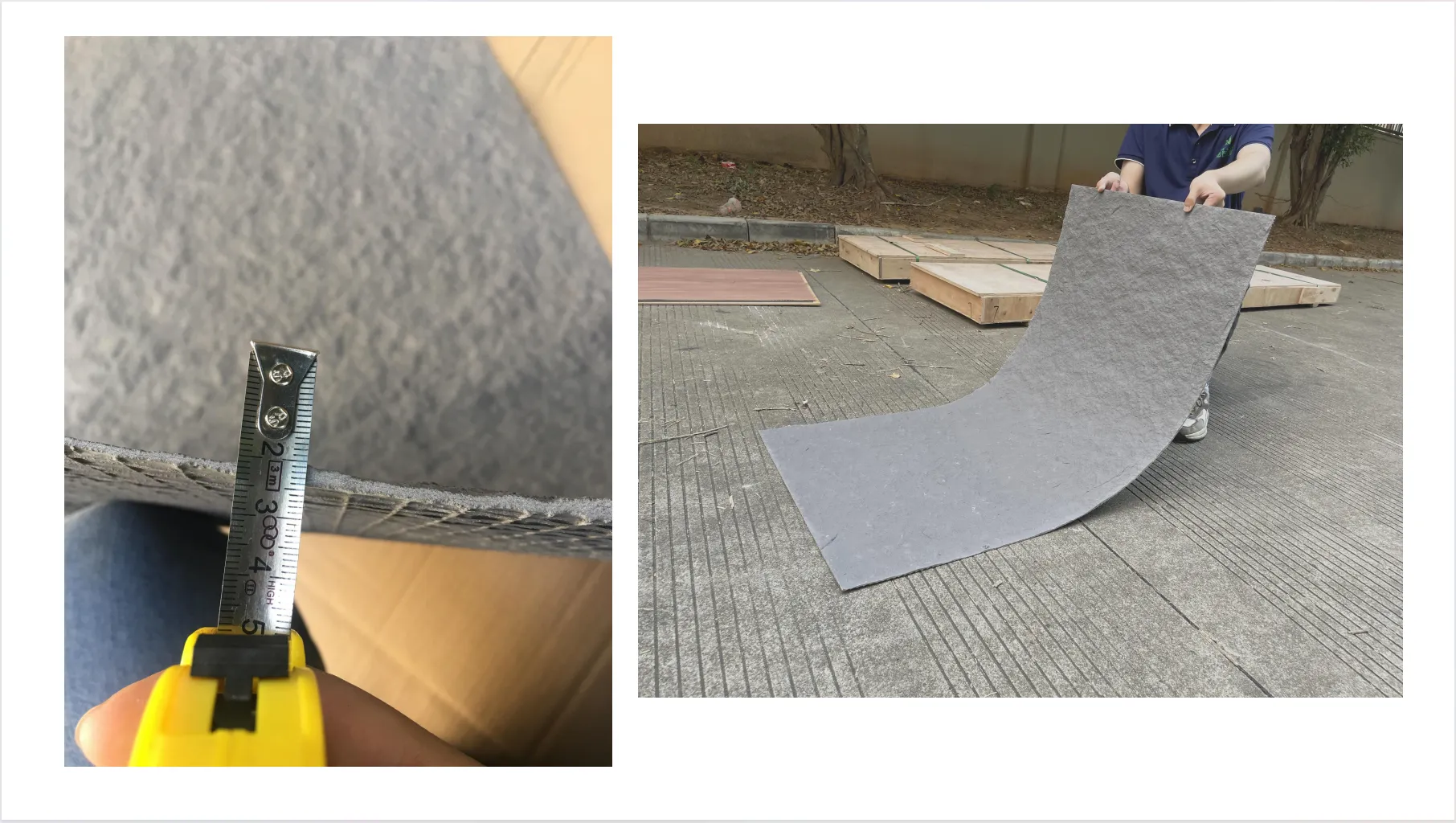
Let's zoom in on the star of the show: the rough granite stone (medium grey). If you've ever run your hand over a natural granite boulder, you know the feeling—cool, gritty, with subtle variations in tone that shift as light hits it. COLORIA's version captures that exact sensation, but in a panel that weighs a fraction of the real thing. At just 15–20 kg per square meter, it's light enough to install on standard drywall or wooden frames without extra reinforcement. For a homeowner adding an accent wall to their living room, that means no need to hire structural engineers. For a hotel chain revamping 50 rooms, that translates to lower labor costs and faster project turnarounds.
But the real magic is in the details. The rough granite real pictures don't lie: the surface features the same uneven, chiseled texture as natural granite, with flecks of white, black, and medium grey that give it depth. Unlike traditional stone, though, COLORIA's panels are consistent in thickness and size, making installation a breeze. Contractors can cut them with standard tools, drill holes for fixtures, or even shape them into custom designs—no specialized equipment required. And because MCM is non-porous, spills wipe clean with a damp cloth, and exterior panels resist fading, mold, and water damage. Imagine a beach house in Miami using rough granite stone (medium grey) for its outdoor kitchen walls—no more worrying about saltwater corrosion or sun bleaching.
The rough granite stone (medium grey) is just the tip of the iceberg. COLORIA's MCM Project Board Series is a treasure trove of options, each designed to solve specific design challenges. Let's meet a few standouts:
If rough granite is about texture, the boulder slab is about storytelling. Inspired by river-worn boulders that have been smoothed by water over millennia, these panels feature rounded edges, subtle color gradients, and a surface that looks like it was plucked straight from a mountain stream. Available in vintage silver, gold, and black, the boulder slab is a favorite for rustic-chic interiors and outdoor fireplaces. What makes it special? Unlike real boulders, which are heavy and irregularly shaped, COLORIA's boulder slabs are lightweight, uniform, and easy to stack—so you can create a 10-foot-tall accent wall that looks like it's made of natural stone, without the risk of structural collapse.
Here's where things get really exciting: MCM flexible stone. Traditional stone is rigid, but this material bends—literally. Picture a curved staircase with a stone-like cladding that wraps seamlessly around each step, or a circular lobby wall with a textured finish that flows like fabric. MCM flexible stone makes these designs possible. Thin, lightweight, and malleable, it adheres to curved surfaces without cracking, opening up a world of possibilities for architects who've long been limited by stone's inflexibility. It's also a game-changer for renovation projects, where existing structures might have uneven walls or non-standard shapes.
Words can only say so much—let's put the numbers to work. Below is a comparison table highlighting key differences between traditional stone and COLORIA's MCM products, including the rough granite stone (medium grey) and boulder slab.
| Feature | Traditional Rough Granite | COLORIA Rough Granite Stone (Medium Grey) | COLORIA Boulder Slab (Vintage Silver) | Traditional Marble | COLORIA MCM Flexible Stone |
|---|---|---|---|---|---|
| Weight (kg/m²) | 80–100 | 15–20 | 18–22 | 70–90 | 12–15 |
| Installation Ease | Requires heavy machinery; professional structural support | Can be installed with basic tools; no extra support needed | Lightweight enough for DIY projects (with basic skills) | High risk of cracking during installation | Adheres to curved surfaces; cuts like vinyl |
| Durability | High, but prone to staining and chipping | Weather-resistant, UV-stable, and scratch-proof | Resistant to moisture, mold, and fading | Soft; susceptible to etching from acids | Flexible yet tough; resists impact and bending |
| Design Flexibility | Limited to flat or slightly curved surfaces | Can be cut into custom shapes; compatible with 3D designs | Stackable; ideal for creating organic, "natural pile" looks | Requires precise cutting; minimal customization | Bends up to 90 degrees; perfect for rounded edges |
| Cost-Effectiveness | High (quarrying, transport, installation, maintenance) | 30–40% lower total cost (no structural work, low upkeep) | Similar to rough granite; long-term savings on repairs | Very high (expensive material + fragile installation) | Affordable; reduces labor costs due to easy installation |
Still not convinced? Let's look at how COLORIA's MCM Project Board Series is being used in real projects across the globe.
A family in Colorado wanted their new home to blend with the surrounding Rockies, so they opted for rough granite stone (medium grey) on the exterior. The panels mimicked the look of local granite cliffs but were light enough to install in just 3 days—compared to the 2 weeks traditional stone would have taken. Inside, they used boulder slab (vintage gold) for the fireplace surround, creating a warm, rustic focal point that's easy to clean and resistant to heat damage.
A trendy café in downtown Chicago wanted to stand out with a unique facade. They chose MCM flexible stone in a custom "wavy" design, wrapping it around the building's curved corners. The result? A modern, eye-catching exterior that's become a social media hotspot. Plus, since the panels are lightweight, the café avoided costly structural upgrades, freeing up budget for other design elements like custom lighting.
A 1920s library in Paris needed to restore its crumbling stone walls while preserving its historical charm. Traditional stone would have been too heavy for the aging structure, so architects used COLORIA's rough granite stone (medium grey) to replicate the original facade. The panels matched the color and texture of the old stone so closely that visitors can't tell the difference—yet the library now meets modern safety standards and requires zero maintenance.
We talked to Maria, an interior designer with 15 years of experience, about why she now specifies COLORIA's MCM products for most projects. "Traditional stone used to be my go-to for luxury, but clients are smarter now—they want beauty and practicality," she says. "Last year, I used the rough granite stone (medium grey) for a client's kitchen backsplash. She was worried it wouldn't look 'real,' but when she saw the rough granite real pictures, she was sold. Now, six months later, she texts me photos of how easy it is to wipe down—no more scrubbing grout lines or sealing every six months."
For architects, the appeal is even clearer. "Designing with traditional stone feels like working with one hand tied behind your back," says Raj, who specializes in sustainable building. "With COLORIA's boulder slab and MCM flexible stone, I can finally bring my sketches to life without compromising on safety or budget. And the fact that MCM is made from recycled materials? That's a win for the planet, too."
Traditional stone will always have a place in our hearts—and in our history books. But as we build for the future, we need materials that honor the past while embracing progress. COLORIA's MCM Project Board Series does just that. Whether it's the rough granite stone (medium grey) that captures nature's grit without the weight, the boulder slab that turns river rocks into design statements, or MCM flexible stone that bends to our wildest creative whims, these products aren't just alternatives to traditional stone—they're upgrades. They're proof that beauty and practicality don't have to be enemies. So the next time you're planning a project, ask yourself: Do you want a material that looks timeless, or one that works timelessly? With COLORIA's MCM, you don't have to choose.
Recommend Products












