
Exploring the stories, craftsmanship, and beauty behind the fences that shape our countryside
Last summer, I took a drive through the rolling hills of Vermont. As I passed by old farmsteads and new cottages, something caught my eye—not the red barns or wildflower meadows, but the fences. Some were weathered and gnarled, their wooden slats bowed like old friends sharing a secret. Others stood crisp and clean, their lines sharp against the green grass, as if they'd been plucked from a design magazine. In that moment, I realized: rural wood fences are more than just barriers. They're storytellers. They speak of tradition, of innovation, of the people who build them and the land they guard.
In this article, we're diving into the world of rural wood fences, comparing the time-honored charm of traditional styles with the fresh energy of modern designs. We'll explore the materials that make them unique—from hand-woven bamboo mat board to sleek wood grain board—and how these choices reflect the values and lifestyles of the communities they belong to. And yes, we'll talk about those wood fence real photos that capture not just wood and nails, but the soul of the countryside.
Traditional rural fences are like the grandparents of the countryside—wise, weathered, and full of tales. They weren't built for Instagram; they were built to last, to keep livestock in, to mark property lines, and to stand up to the elements. Walk through any historic village, and you'll find fences that have been standing for decades, their wood darkened by rain, their joints loosened by wind, but still holding strong. These fences are a testament to the ingenuity of farmers and craftsmen who worked with what the land gave them.
Traditional fences relied on local materials, and nowhere is that more evident than in the use of bamboo mat board . In regions where bamboo grows abundant—think the American South, parts of Asia, or the Mediterranean—farmers would harvest young bamboo, split it into strips, and weave it into tight mats. These mats were then attached to wooden posts, creating lightweight yet sturdy fences that let air flow through and kept small animals out. I've seen bamboo mat board fences in rural Japan that looked like works of art, their woven patterns casting dappled shadows on the ground like a natural mosaic.
Then there's the classic split-rail fence, a staple of American farmland. Made from rough-hewn logs split lengthwise into rails, these fences are simple but effective. The rails fit into notches cut into the posts, creating a zigzag pattern that's both functional and iconic. The wood here is often cedar or pine, chosen for its resistance to rot, and over time, it turns a silvery gray that blends beautifully with the landscape. I once met an 80-year-old farmer in Kentucky who told me he'd replaced only three rails in his split-rail fence in 50 years. "Wood don't lie," he said. "Treat it right, and it'll treat you right back."
Another traditional material that deserves a nod is rough granite stone —not for the fence itself, but for the posts. In rocky regions like New England, farmers would dig up granite boulders from their fields, shape them into posts, and set them deep in the ground. Wooden rails were then slotted into holes drilled into the stone, creating a fence that felt anchored to the earth. These granite posts have a rugged, timeless quality; some are so old, moss has grown over their surfaces, turning them into part of the ecosystem.
Traditional fence designs were all about practicality, but that didn't stop them from having personality. Take the snake-rail fence, for example—a variation of the split-rail that curves and winds with the contour of the land. Farmers didn't have the luxury of grading hillsides, so they built fences that followed the natural slope, resulting in a fence that looks like it's dancing across the countryside. In Appalachia, some say these fences were built to "confuse evil spirits," but the real reason was simpler: it was easier to build with the land than against it.
Or the picket fence, though not just the white-picket variety you see in suburbs. Rural picket fences were often taller, with pointed tops (to deter deer) and wider gaps (to let sunlight reach crops). The wood was rarely painted, left to weather naturally, and the pickets were sometimes uneven—no two the same length—because they were cut by hand, not machine. These fences feel lived-in, like they've seen generations of children chasing chickens, of dogs napping in their shade, of farmers leaning against them to rest after a long day.
What I love most about traditional rural fences is the craftsmanship. These weren't built by machines; they were built by hand. Each notch in a split-rail fence was cut with an axe, each bamboo strip woven by fingers that knew exactly how tight to pull. I visited a traditional fence builder in France a few years back—an 85-year-old man named Pierre who still built fences the way his grandfather did. He showed me how he measured posts by eye, how he could tell if a log was strong enough by tapping it with his knuckles. "A fence built with care will stand longer than the man who built it," he said. And he was right—some of the fences he built in the 1970s are still standing today.
These fences also carry cultural meaning. In parts of Ireland, for example, stone walls (a cousin to wooden fences) are built without mortar, each stone fitting into the next like a puzzle. They're called "dry stone walls," and they're a symbol of resilience—built by farmers who cleared their fields of stones and turned a nuisance into a resource. Wooden fences, too, have their own symbolism. In many cultures, a well-maintained fence was a sign of a hardworking family; a falling-down fence might signal hard times. They were, and still are, a way to communicate without saying a word.
Fast forward to today, and rural landscapes are changing. More people are moving to the countryside, bringing with them a love for modern design, sustainability, and functionality. And fences are changing with them. Modern rural wood fences still honor the tradition of wood—there's something primal about that connection to nature—but they're reimagining what a fence can be. They're sleeker, more versatile, and often designed to complement the clean lines of modern farmhouses and eco-friendly cottages. These fences don't just keep the cows in; they make a statement.
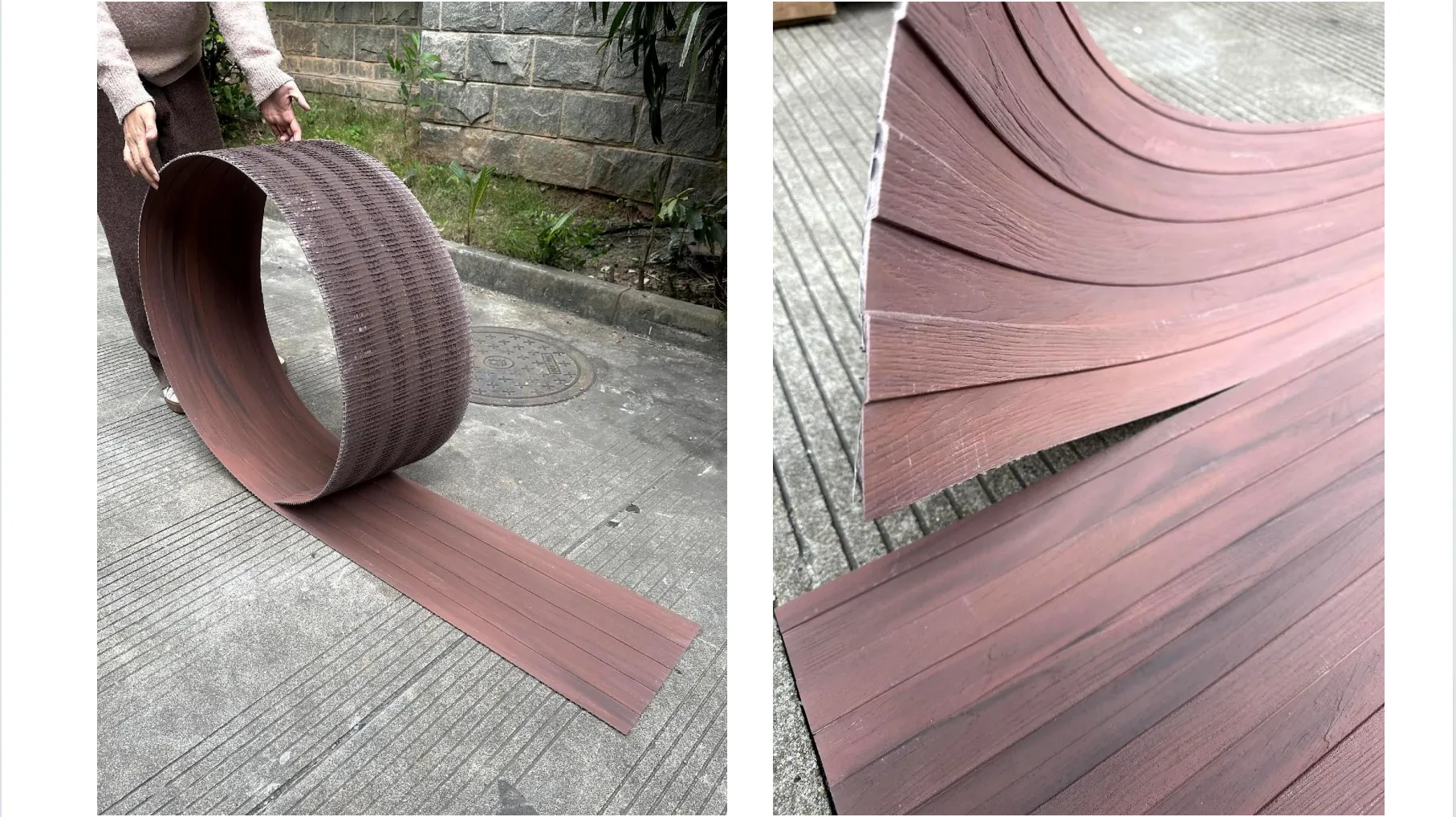
One of the biggest trends in modern rural fencing is the use of wood grain board . This isn't your granddad's rough lumber; wood grain board is a engineered material that mimics the look of real wood but with added durability. Made from a blend of wood fibers, resin, and other composites, it resists rot, insects, and warping—perfect for the harsh conditions of rural life. What I love about wood grain board is how versatile it is. You can find it in shades ranging from warm oak to cool gray, and it can be cut into sleek slats, panels, or even custom shapes. I visited a modern homestead in Oregon last year where the fence was made from vertical wood grain board slats, spaced an inch apart, creating a semi-transparent screen that let in light but still provided privacy. It looked like a work of modern art, not just a fence.
But modern fences aren't abandoning traditional materials—they're reimagining them. Take bamboo mat board , for example. Once used primarily for functional, woven fences, it's now being used in high-end designs. Designers are treating bamboo mat board with eco-friendly sealants to make it more durable, then combining it with metal frames or glass panels for a contemporary twist. I saw a stunning example in a rural retreat in Costa Rica: bamboo mat board was used as a fence around the pool area, its natural texture contrasting beautifully with the smooth concrete deck. At night, LED lights behind the mat cast a warm, woven glow—turning the fence into a focal point after dark.
Sustainability is also driving material choices. Modern rural homeowners are increasingly opting for reclaimed wood—old barn wood, salvaged timber—to build fences with character and a lower environmental footprint. These fences have the weathered look of traditional styles but with a modern edge. I spoke to a builder in Colorado who specializes in reclaimed wood fences; he told me that clients love the story behind the wood. "One fence I built was made from planks from a 1920s grain silo," he said. "Every knot and nail hole has a history. It's not just a fence—it's a piece of the past, repurposed for the future."
Modern rural fence design is all about minimalism. Clean lines, neutral colors, and simple shapes dominate. Horizontal slat fences are everywhere right now—long, flat boards mounted horizontally between posts, creating a sleek, low-profile look. These fences work especially well with modern farmhouses, their horizontal lines complementing the home's gabled roof and large windows. Unlike traditional split-rail fences, which are often tall and imposing, horizontal slat fences are usually lower (3-4 feet), making them feel more welcoming and less like a barrier.
Another trend is mixing materials. Modern fences often pair wood with metal, stone, or even glass for added interest. For example, a wood grain board fence might have steel posts for strength, or rough granite stone accents at the base to anchor it to the ground. This mix of materials adds depth and texture, turning a simple fence into a design feature. I saw a beautiful example in upstate New York: a fence made from vertical wood grain board slats, with every fifth slat replaced by a clear glass panel. The glass let in views of the surrounding forest while still providing privacy—a clever blend of function and beauty.
Functionality is also key. Modern rural homeowners want fences that do more than just mark boundaries. They want fences that provide privacy, block wind, support climbing plants, or even collect rainwater. Some fences are designed with built-in planter boxes at the base, turning the fence line into a garden. Others have slats spaced to create windbreaks, protecting gardens from strong gusts. And with the rise of home offices in rural areas, many homeowners are using fences to create private outdoor workspaces—quiet nooks shielded from the world by a beautiful wooden barrier.
In the age of social media, wood fence real photos have become a source of inspiration for rural homeowners. Platforms like Pinterest and Instagram are filled with images of stunning fences—traditional split-rails draped in ivy, modern horizontal slats painted black, reclaimed wood fences with metal accents. These photos aren't just pretty; they're a way for homeowners to visualize how a fence might look on their property. I spoke to a real estate agent in Vermont who said that a well-designed fence can increase a rural home's value by up to 5%. "Homebuyers see a beautiful fence and think, 'This place is cared for,'" she said. "It's the first impression of the property, and wood fence real photos help them imagine themselves there."
| Aspect | Traditional Style | Modern Style |
|---|---|---|
| Primary Materials | Split rails, rough-hewn wood, bamboo mat board, local stone posts | Wood grain board, reclaimed wood, bamboo mat board (treated), metal/glass accents |
| Design Philosophy | Function first; follows the land's natural contours; prioritizes durability over aesthetics | Aesthetics and function balanced; clean lines, minimalism; often designed to complement architecture |
| Maintenance Needs | Regular staining/sealing; occasional rail replacement; susceptible to rot/insects over time | Low maintenance; engineered wood resists rot/insects; reclaimed wood may need sealing |
| Aesthetic Character | Rustic, weathered, organic; tells a story of heritage and hard work | Sleek, polished, versatile; blends nature with modern design; often a focal point |
| Common Use Cases | Livestock containment, historic properties, rural homesteads with traditional architecture | Privacy screening, garden borders, modern farmhouses, eco-friendly retreats |
Whether traditional or modern, rural wood fences have an emotional pull that's hard to deny. They're not just objects—they're part of the fabric of rural life. Think about it: a fence is one of the first things you see when you approach a home. It sets the tone. A weathered split-rail fence says, "Welcome to a place with history." A sleek wood grain board fence says, "Welcome to a place that values design and innovation." Both say, "This is a home."
I've talked to homeowners who've cried when their old family fence had to be replaced, and others who've gushed about how their new wood grain board fence made them fall in love with their property all over again. Fences mark milestones: a new fence might go up when a couple buys their first rural home, or when they start a family, or when they retire to the countryside. They're part of life's journey.
And let's not forget the role of wood fence real photos in all this. These photos capture more than just wood and nails—they capture moments. A child leaning against a fence, watching fireflies. A dog napping in the shade of a bamboo mat board fence. A sunset casting golden light on a row of wood grain board slats. These photos remind us that fences are part of our lives, not just our landscapes. They're backdrops to our memories.
As I wrap up this exploration of rural wood fences, I'm struck by how much they reflect us—our values, our history, and our hopes for the future. Traditional fences remind us of the importance of resilience and connection to the land. Modern fences show us that we can honor the past while embracing the new. And whether they're made of split rails, bamboo mat board, or wood grain board, they all share one thing in common: they're built with care.
So the next time you're driving through the countryside, take a moment to look at the fences. Notice their materials, their designs, their stories. Maybe snap a wood fence real photo or two—you never know when that image might inspire you. After all, a fence isn't just a boundary. It's a statement. It's a home. It's a piece of the rural landscape that, in its own quiet way, makes us feel like we belong.
Here's to the fences—traditional, modern, and everything in between—that shape our world, one slat at a time.
Recommend Products












