

In the ever-evolving world of architecture and design, the pursuit of uniqueness has become the new standard. Gone are the days when buildings were merely functional shelters. Today, they are statements—expressions of identity, brand ethos, and artistic vision. Architects and designers are constantly on the hunt for materials that not only perform exceptionally but also tell a story. They seek textures that evoke emotion, forms that challenge convention, and solutions that are both sustainable and endlessly customizable. This quest has pushed the boundaries of material science, leading us away from the monolithic and towards the modular, the bespoke, and the deeply personal. It's in this exciting new landscape that groundbreaking innovations are not just welcome, they're essential.
The challenge, however, has always been a balancing act. How do you achieve the raw, weathered beauty of corten steel without the weight and unpredictable corrosion? How do you create the intricate, organic forms inspired by nature without the astronomical costs of traditional craftsmanship? For decades, designers have navigated a world of compromise, often sacrificing one virtue for another. But what if that compromise was no longer necessary? What if a new generation of materials could offer the best of all worlds? This is where COLORIA GROUP steps in, not just as a supplier, but as a genuine partner in innovation. With a deep-rooted expertise in building materials and a forward-thinking approach, the company is redefining what's possible. Today, we're diving deep into two of the most exciting frontiers in architectural design, both pioneered and perfected through their advanced material technology: the captivating aesthetic of rust mosaic stone and the limitless potential of MCM 3D printing .
There's a profound beauty in materials that show the passage of time. The Japanese call it "wabi-sabi"—the appreciation of imperfection and transience. In Western design, this translates to the rise of industrial chic, rustic modernism, and biophilic design, all of which celebrate textures that feel real, earthy, and lived-in. Rust, with its deep, fiery tones and unpredictable patterns, has become a symbol of this movement. It speaks of strength, resilience, and an organic transformation that is impossible to replicate with a simple coat of paint.
Traditionally, achieving this look meant using heavy corten steel panels or other metals left to weather naturally. While stunning, this approach comes with a host of practical problems. The material is incredibly heavy, putting significant strain on building structures and requiring complex, costly installation. The rusting process itself can be unpredictable, and runoff can stain adjacent surfaces, creating a maintenance headache. Natural stone, another favorite for creating textured facades, presents its own challenges: it's heavy, expensive to quarry and transport, and its patterns, while beautiful, are dictated by geology, not by the designer's vision.
This is where the paradigm shifts. COLORIA GROUP has harnessed the power of its signature MCM (Modified Cementitious Material) technology to create a solution that captures the soul of these natural materials without any of their drawbacks. Their MCM Flexible Stone series is, in a word, revolutionary. But what exactly is it?
Think of MCM as a high-tech evolution of clay and stone. It's a composite material made primarily from natural soil, sand, and stone powder, which are modified and bonded through a unique, low-temperature process. The result is a material that is surprisingly thin, lightweight, and—as the name suggests—flexible. It can be bent and shaped to clad curved walls, columns, and complex architectural features with an ease that is simply impossible for traditional stone or metal panels.
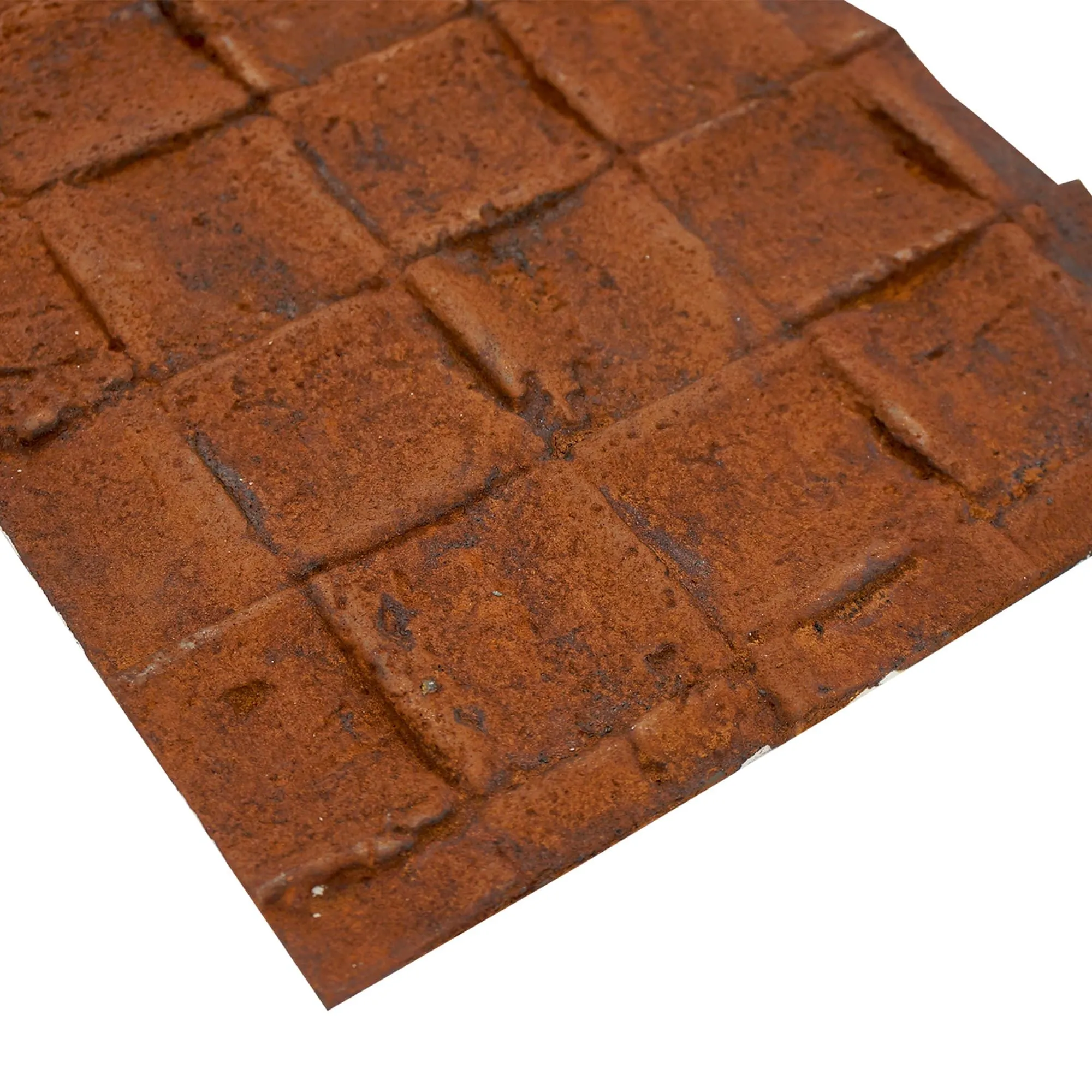
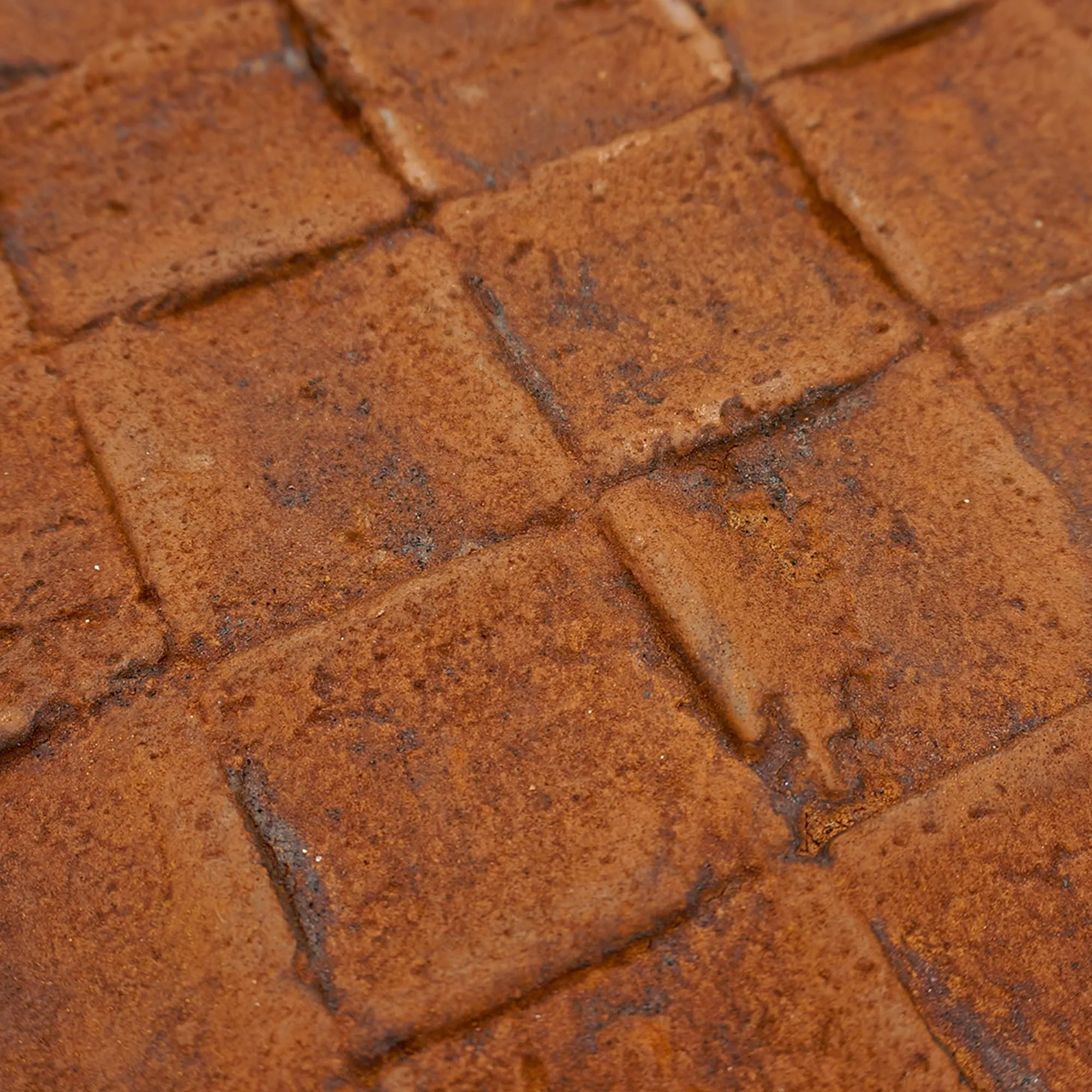
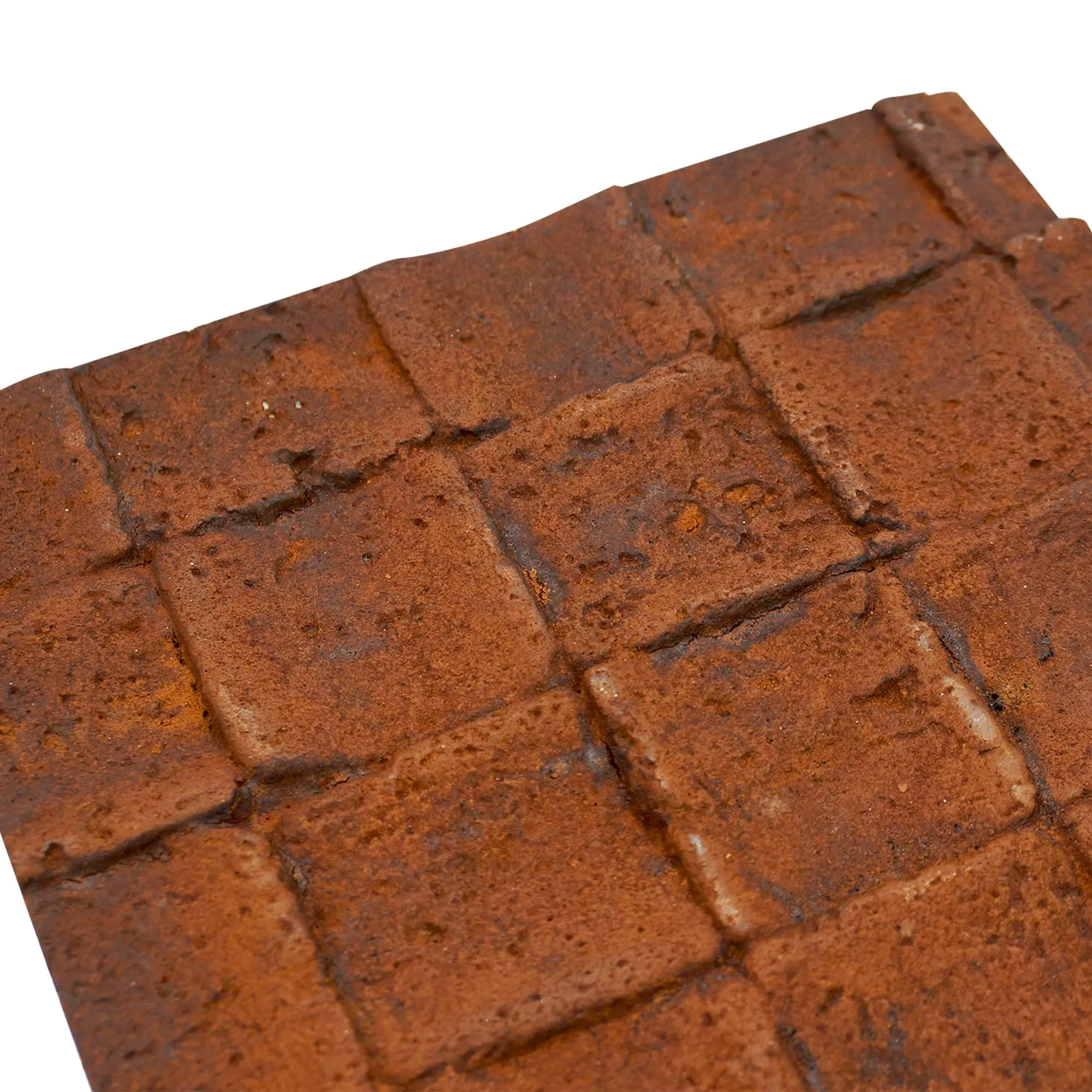
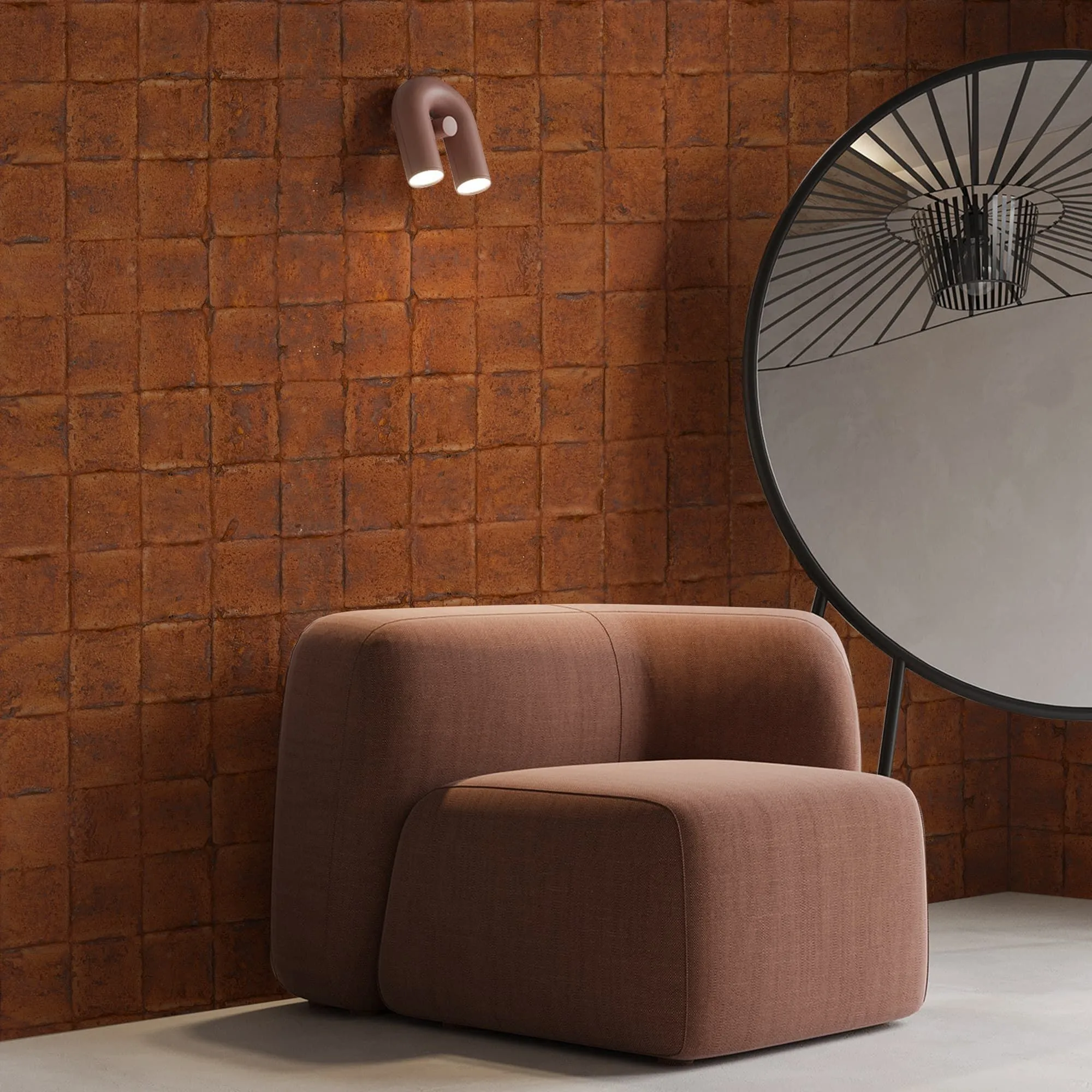
When applied to the "rust mosaic stone" aesthetic, the possibilities explode. Instead of waiting for metal to weather, designers can specify the exact color, texture, and pattern of rust they desire. From a fine, uniform patina to a bold, dramatic mosaic of deep oranges and earthy browns, the look is achieved with perfect consistency and control. This material isn't just mimicking rust; it's elevating it to a design tool. It delivers the visual impact and emotional resonance of aged metal, but in a form that is lightweight, easy to install, resistant to weathering and fading, and completely free from the risk of staining runoff. A once-problematic finish is now a versatile, reliable element in the architectural toolkit, ready to be applied to both soaring exterior facades and intimate interior feature walls.
If flexible stone redefines our relationship with texture and surface, then 3D printing redefines our relationship with form itself. For years, 3D printing in architecture was confined to small-scale models—helpful for visualization, but far from a construction-grade technology. The narrative is now changing at a breathtaking pace. Additive manufacturing is stepping out of the model shop and onto the construction site, enabling the creation of custom architectural elements that would have been unthinkably complex or expensive just a decade ago.
COLORIA GROUP is at the forefront of this movement with its MCM 3D Printing series. This isn't about printing entire buildings from the ground up. Instead, it's a far more nuanced and immediately practical application: the creation of bespoke, highly detailed architectural components. Using the same versatile MCM base material, the company employs advanced 3D printing technology to build intricate designs layer by layer. This process unlocks a level of design freedom that shatters the constraints of traditional molds, carving, and casting.
Imagine an architect designing a luxury hotel lobby. They envision a feature wall with an undulating, parametric wave pattern that flows across the surface, catching the light in a dynamic way. With traditional methods, this would require painstakingly creating a massive, complex mold, a process that is both time-consuming and astronomically expensive, with zero room for error. With MCM 3D Printing, the digital design is sent directly to the printer, and the intricate panel is built with perfect precision. The process is faster, more material-efficient, and allows for easy prototyping and design adjustments.
The applications are virtually limitless:
This technology fundamentally changes the conversation between the designer and the material. The material is no longer a limiting factor; it's an active participant in the creative process. The only real limit is the imagination.
At the heart of both the stunning rust textures and the futuristic 3D printed forms is the core MCM technology. To truly appreciate its impact, it's helpful to understand what makes it so special. Modified Cementitious Material is a testament to how we can learn from nature and improve upon it with science. Its base ingredients are natural and abundant, but the proprietary manufacturing process transforms them into something extraordinary.
One of the most significant advantages is its eco-friendly profile. Traditional ceramics and bricks must be fired in kilns at temperatures exceeding 1200°C, a process that consumes massive amounts of energy and releases significant CO2. The quarrying and processing of natural stone also have a substantial environmental footprint. MCM, by contrast, is formed at a much lower temperature, drastically reducing its embodied energy. Its lightweight nature also means lower transportation costs and emissions. In an era where sustainability is not just a buzzword but a critical requirement for responsible building, MCM stands out as a genuinely green alternative.
To put its advantages in perspective, let's compare it to some conventional materials:
| Feature | COLORIA MCM Materials (e.g., Flexible Stone) | Traditional Stone (Granite, Marble) | Traditional Ceramics / Metal Panels |
|---|---|---|---|
| Weight | Extremely lightweight (approx. 4-8 kg/m²). Reduces structural load and installation complexity. | Very heavy (50-80 kg/m² or more). Requires significant structural support and heavy machinery for installation. | Moderately heavy. Requires a robust sub-frame system. |
| Flexibility | Highly flexible. Can be bent to fit curved surfaces, columns, and arches without cracking. | Zero flexibility. Completely rigid and brittle; must be cut for any non-flat surface. | Limited flexibility. Some metal panels can be curved, but it is a specialized and costly process. |
| Installation | Fast and simple. Can be cut with a utility knife and applied with a special adhesive, reducing labor costs. | Slow, complex, and labor-intensive. Requires mechanical fixing, wet-cutting, and specialized labor. | Requires a complex grid or rail system for mounting, adding time and cost. |
| Customization | Virtually unlimited. Colors, textures, patterns, and shapes (via 3D printing) are fully customizable. | Limited to what is available from the quarry. Custom carving is extremely expensive. | Customization is typically limited to color and finish. Complex shapes are difficult. |
| Sustainability | Low-energy production process. Made from natural components. Lightweight, reducing transport emissions. | High-energy quarrying and transport. A finite resource. | High-energy firing process for ceramics. Metal smelting is energy-intensive. |
| Durability | Excellent resistance to water, fire (Class A), freeze-thaw cycles, and impact. Colorfast and durable. | Durable but can be porous, leading to staining. Brittle and can chip or crack under impact. | Durable, but can dent (metal) or be brittle (ceramics). Susceptible to scratching. |
What truly sets a company like COLORIA GROUP apart is that their contribution doesn't end with a product catalog. They embody the role of a one-stop solution provider. This philosophy is crucial for today's complex projects, which demand integration and collaboration. For an architect or developer, this means having a partner who understands the entire project lifecycle, from initial concept to final installation.
This integrated approach is evident in how their product families work together. A project might use the MCM Big Slab Board Series to create vast, seamless walls with the look of monolithic concrete or stone, providing a clean and powerful backdrop. This could be complemented by a feature wall using the highly-textured MCM Flexible Stone in a rust mosaic finish to add warmth and a focal point. And in the lobby, a custom-designed screen made with MCM 3D Printing could create a breathtaking first impression. All these elements, derived from the same core technology, ensure a consistent level of quality, performance, and aesthetic coherence throughout the project.
Furthermore, their global reach, exemplified by their established presence in markets like Saudi Arabia, demonstrates a capacity to support ambitious projects anywhere in the world. This isn't just about shipping a product; it's about providing local expertise, understanding regional building codes and climatic conditions, and offering logistical support that ensures a smooth process from start to finish. This transforms the relationship from a simple transaction to a true partnership dedicated to realizing the client's vision.
The architectural landscape is at an inflection point. The demand for personalization, sustainability, and creative freedom is higher than ever. The days of being limited by the inherent flaws of traditional materials are numbered. Innovations like those from COLORIA GROUP are paving the way for a future where design is no longer about compromise, but about possibility.
The ability to evoke the timeless beauty of a rust mosaic with a lightweight, flexible, and durable material is a game-changer. The power to transform a digital dream into a physical, three-dimensional architectural element opens up creative avenues we are only just beginning to explore. By combining the art of texture with the science of form, MCM technology offers a compelling glimpse into the future of building. It's a future that is not only more beautiful and more expressive but also smarter, more efficient, and more respectful of our planet. The next generation of iconic buildings will be defined not by the materials they use, but by the imagination they unleash.
Recommend Products











