

When embarking on a new build or a renovation, the choices can feel endless, especially when it comes to cladding and surfaces. For years, two popular contenders have dominated the conversation: the timeless, rustic charm of rust mosaic stone and the ubiquitous, practical nature of ceramic tiles. But which one is truly the champion of durability and design? Let's dive deep, compare the contenders, and uncover if there's a modern alternative that leaves them both in the dust.
Walk into almost any home or commercial space, and you're likely to find ceramic tiles. They're on kitchen backsplashes, bathroom floors, and sometimes even feature walls. Their popularity isn't accidental; it's a result of decades of mass production, making them accessible, affordable, and available in a dizzying array of styles. They are the default, the "safe" choice. But as with any default option, it's crucial to ask: is "safe" the same as "best"? Let's break down the reality of living with ceramic tiles.
On the surface, ceramic seems tough. It's hard, scratch-resistant to a degree, and a glazed ceramic tile is certainly waterproof. This is why it's a go-to for wet areas. But the story of durability is much more nuanced than that.
Proponents of ceramic tiles will point to their design versatility as a key strength, and it's true that the options are vast. Modern printing technology allows ceramic tiles to mimic wood, marble, concrete, and yes, even rust-colored stone. But how convincing is this mimicry?
The illusion often shatters upon closer inspection. The patterns are repetitive. On a large surface, you'll start to notice the same "wood grain" or "marble vein" appearing over and over. The finish is flat and lacks the depth and tactile quality of the real material. Most importantly, the grid of grout lines constantly reminds you that you're looking at a collection of small squares, not a seamless, monolithic surface. It breaks the very illusion it's trying to create.
True customization is also limited. You're largely confined to what's available off the shelf. While custom-printed tiles exist, they are prohibitively expensive and still bound by the limitations of a flat, rigid tile. And forget about applying them to anything other than a perfectly flat surface. Curved walls, columns, and organic shapes are simply out of the question, forcing architects and designers to compromise their vision.
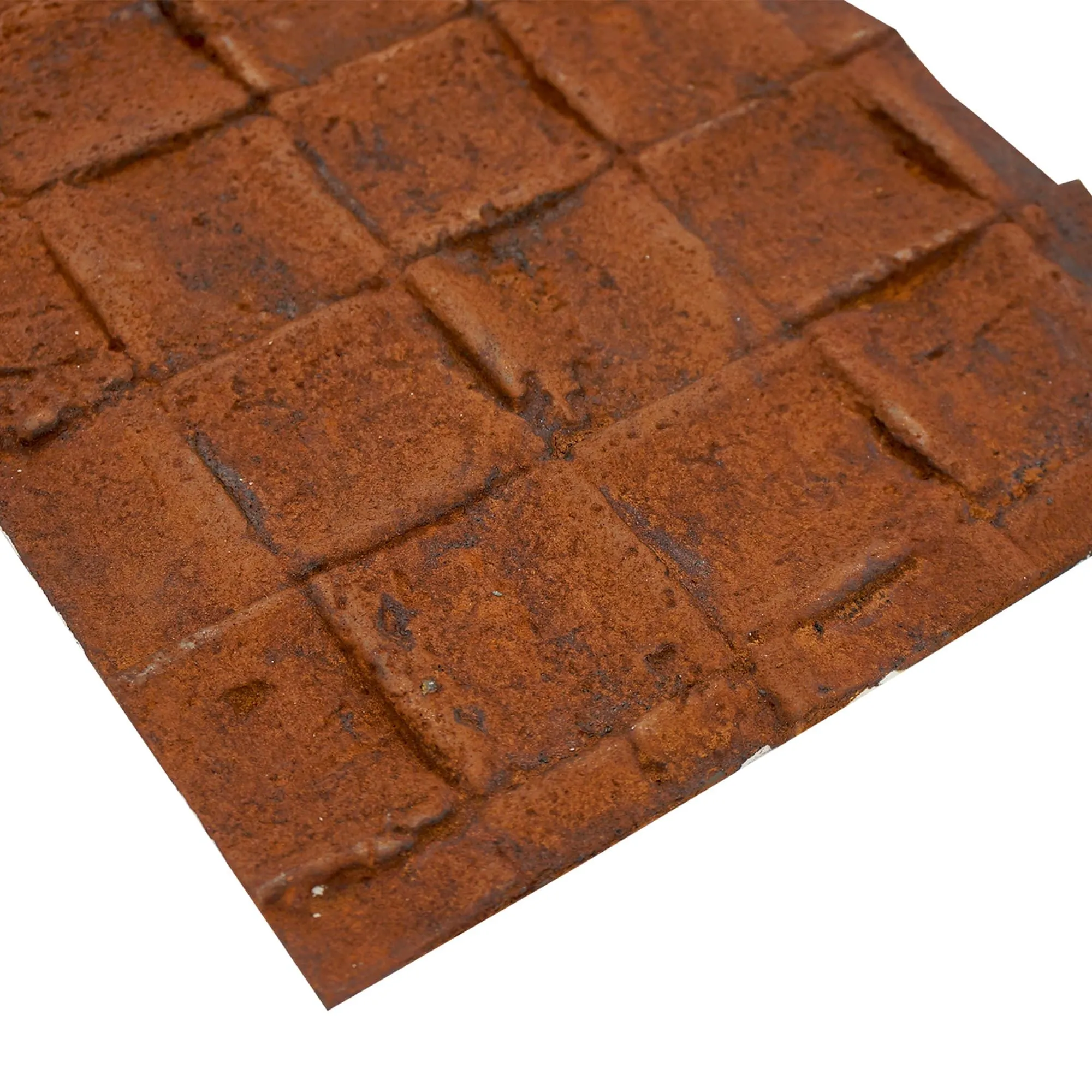
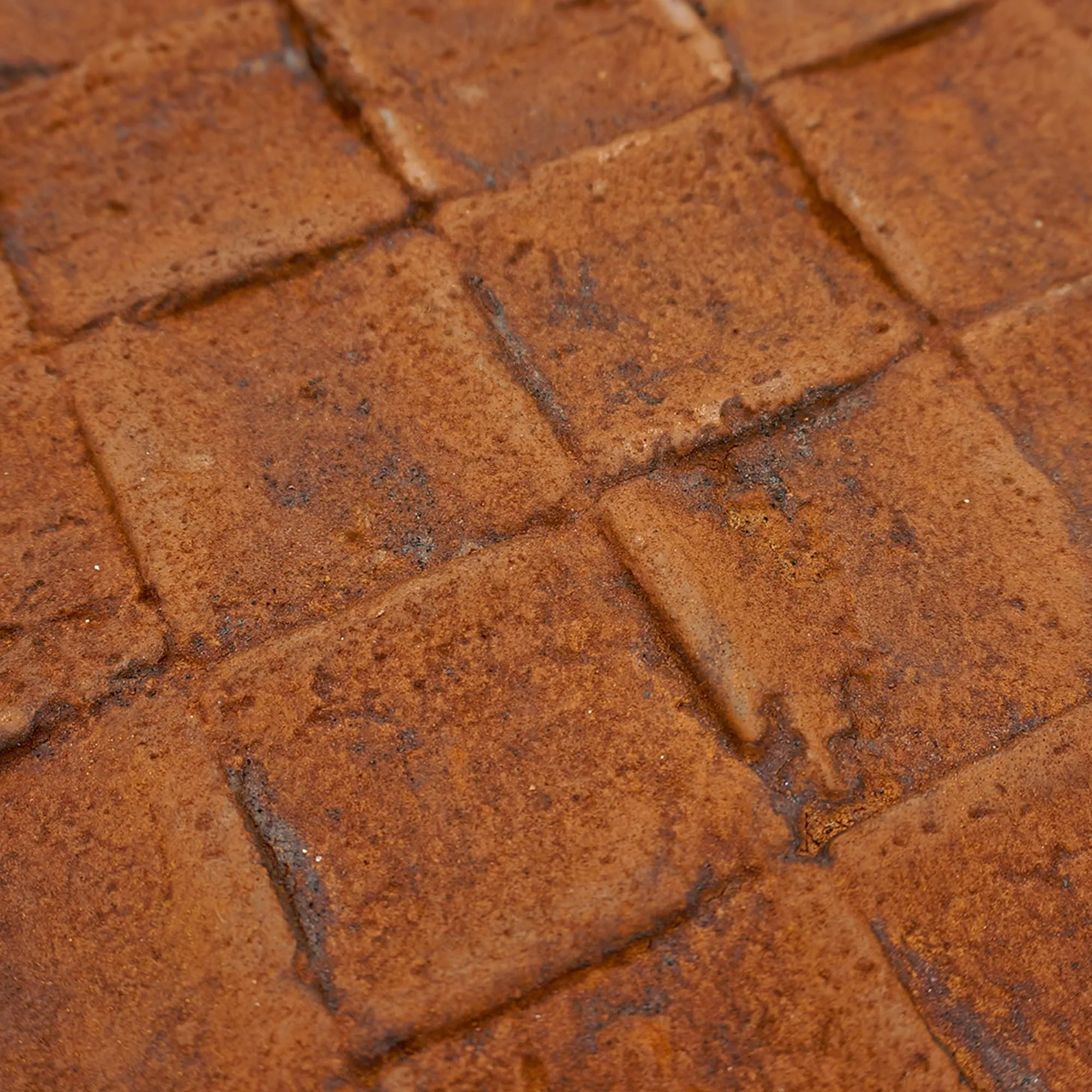
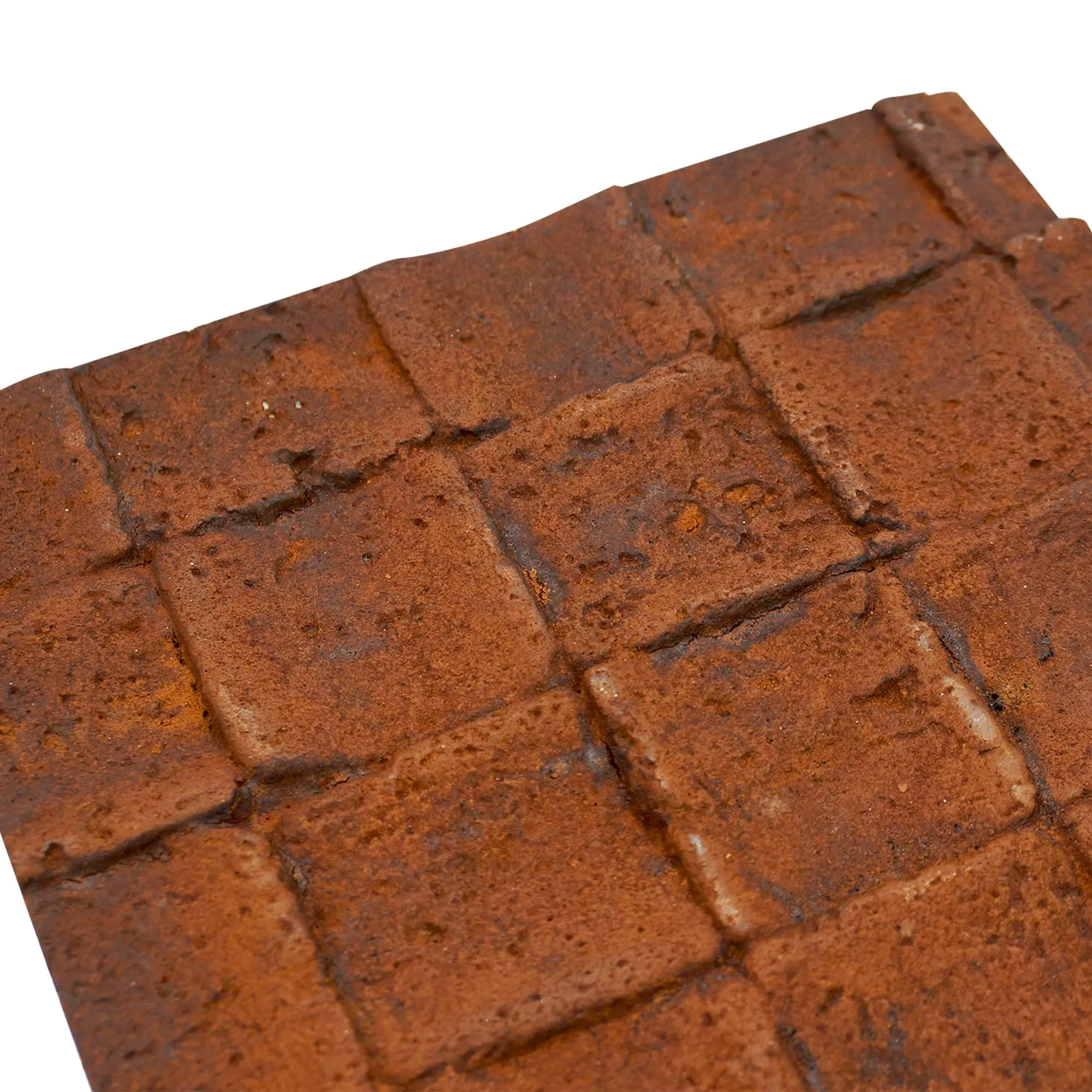
On the opposite end of the spectrum lies rust mosaic stone. This isn't a single type of stone but rather an aesthetic, typically achieved using natural slate, quartzite, or other stones with a high iron content. When exposed to the elements, this iron oxidizes—it rusts—creating stunning, earthy tones of orange, brown, red, and charcoal. Cut into small, varied pieces and arranged in a mosaic, it creates a powerful statement of raw, natural beauty.
The appeal of rust mosaic stone is its authenticity. It feels solid, permanent, and connected to the earth. It brings a unique, high-end texture to any space. However, this natural character comes with significant practical trade-offs.
The design statement of rust mosaic stone is undeniable. It's bold, unique, and luxurious. Each installation is one-of-a-kind, a testament to the random beauty of nature. But this uniqueness is also its biggest limitation.
The aesthetic is very specific. It suits rustic, industrial, or hyper-modern minimalist designs but can easily overpower more traditional or subtle interiors. The color palette is, by nature, restricted to earthy, oxidized tones. While beautiful, it doesn't offer the broad spectrum of possibilities that designers often crave.
Furthermore, you're still dealing with the constraints of stone. It's rigid, difficult to cut, and impossible to bend. Like tiles, it cannot conform to curved surfaces, forcing all designs to be linear and angular. The mosaic format, while a core part of its look, also means you're dealing with countless joints that need to be filled, a process that can either enhance or detract from the final look depending on the skill of the installer.
| Feature | Ceramic Tiles | Rust Mosaic Stone |
|---|---|---|
| Impact Resistance | Poor. Brittle and prone to chipping or cracking upon impact. | Fair to Poor. Strong but can flake, and individual mosaic pieces can dislodge. |
| Water/Stain Resistance | Good (tile surface), Poor (grout). Grout is highly susceptible to staining and mold. | Poor. Highly porous and requires constant, meticulous sealing to prevent permanent stains. |
| Maintenance | High. Constant grout scrubbing and eventual re-grouting or sealing. | Very High. Difficult to clean textured surface and requires frequent re-sealing. |
| Weight | Heavy. Requires standard structural considerations. | Extremely Heavy. Often requires reinforced structures, increasing cost. |
| Design Flexibility | Good range of printed patterns, but repetitive and flat. Grid lines are unavoidable. | Limited to a specific rustic aesthetic and color palette. |
| Application on Curves | Impossible. Limited to flat surfaces only. | Impossible. The material is rigid and cannot be bent. |
| Eco-Friendliness | High energy consumption due to firing in high-temperature kilns. | High environmental impact from quarrying, processing, and heavy transport. |
After comparing the two, a clear dilemma emerges. Do you choose the flawed practicality of ceramic or the impractical beauty of natural stone? It feels like a compromise either way. But what if you didn't have to compromise? What if there was a third option, born from innovation, that could deliver the stunning aesthetics of natural materials without any of their inherent weaknesses?
This is where the next generation of building materials comes in. At COLORIA GROUP, we've dedicated ourselves to perfecting this very solution. We call it MCM, or Modified Cementitious Material. It's not just a new product; it's a fundamental rethinking of what a surface material can and should be.
Imagine having the exact texture and visual depth of a rust mosaic stone wall, but it's lightweight, flexible, water-resistant, and requires virtually no maintenance. This isn't science fiction; it's the reality of MCM technology.
Forget everything you know about traditional cladding. MCM is not fired in a kiln like ceramic, nor is it quarried from a mountain. It's crafted from a sustainable blend of natural minerals, clay, and reinforcing fibers. Through a low-temperature, low-energy process, this compound is transformed into a material that is both incredibly durable and remarkably versatile. As a leading one-stop solution provider in the architectural materials space, we've seen firsthand how this technology transforms projects from good to extraordinary.
This green, eco-friendly production process is just the beginning. The true magic of MCM lies in its performance and design capabilities.
MCM solves the durability puzzle that plagues both ceramic and natural stone. It's tough, but it's not brittle. Thanks to its unique composition, it has a slight flex. This means it can absorb impacts that would shatter a ceramic tile. It resists cracking from thermal expansion or minor building settlement. The days of worrying about chips and cracks are over.
It is also astonishingly lightweight—a fraction of the weight of tile or stone. This has massive implications. Shipping costs are lower. Handling on the job site is easier and safer. And most importantly, it can be installed on almost any substrate without needing expensive structural reinforcement. Installation is a breeze; it can be cut simply with a utility knife and applied with a specialist adhesive, drastically reducing labor time and complexity.
This is where MCM truly distances itself from the competition. It offers a level of design versatility that traditional materials can only dream of.
Do you love the look of rust mosaic stone? We can replicate it perfectly. But we can do it better. We can create that rich, textured, multi-toned finish in a large, seamless panel, eliminating the busy grout lines that detract from the stone itself. Or, we can provide it in a flexible format. This brings us to one of our most innovative product lines: the **MCM Flexible Stone**. Imagine wrapping a sinuous curved wall, a reception desk, or a massive concrete column in a continuous, textured skin of "stone." This is an architectural feat that is simply impossible with tile or real stone, but it's effortless with MCM. It empowers architects to create the organic, flowing spaces they've always envisioned.
Tired of the grid? Our **MCM Big Slab Board Series** is the answer. These are large-format panels that create truly monolithic, seamless surfaces. Picture an entire bathroom wall or a grand hotel lobby clad in what appears to be a single, massive slab of travertine, concrete, or a custom-designed texture, with no grout lines to clean or interrupt the visual flow. It's a clean, modern, and luxurious look that elevates any space.
But why stop at mimicking existing materials? The true potential of MCM is realized in its capacity for total customization. With our **MCM 3D Printing Series**, we can move beyond imitation and into creation. We can emboss the material with any pattern imaginable—from subtle geometric textures and delicate woven patterns to bold, sculptural bas-relief designs. Your wall is no longer just a wall; it becomes a bespoke work of art, tailored precisely to your vision. This level of customization allows for true brand expression in commercial spaces and unparalleled personalization in residential projects.
The debate between rust mosaic stone and ceramic tiles is a debate of the past. It's a choice between the high-maintenance beauty of natural stone and the compromised practicality of ceramic tiles. Both force you to accept significant drawbacks.
The future of surface design lies in a solution that refuses to compromise. COLORIA GROUP's MCM product series represents this future. It's a material that delivers the authentic texture and soul of natural materials with a level of durability, lightness, and flexibility that surpasses any traditional option. It combines the design freedom of a painter's canvas with the resilience needed for the most demanding environments, from private homes to large-scale international projects.
So, as you plan your next project, ask yourself: Why choose between beauty and performance? Why settle for the limitations of yesterday's materials? It's time to embrace the innovation that allows you to have it all.
Recommend Products











