

In the dynamic world of architecture and construction, the quest for the perfect material is a perpetual journey. Architects, designers, and developers are constantly searching for that elusive sweet spot: a material that captivates with its beauty, endures through time and weather, champions environmental sustainability, and simplifies the complex process of construction. It's a tall order, one that has driven innovation for centuries. Today, we're not just building structures; we're crafting experiences and shaping environments. This demands more than just conventional solutions. This demands a revolution.
Enter the world of advanced building materials, a realm where science and art converge. In this landscape of innovation, we're taking a closer look at a specific product that is quietly but powerfully redefining what's possible for building facades and interior spaces: the Rust Square Line Stone. This isn't just another tile or panel. It's a flagship offering from the MCM Project Board Series by COLORIA GROUP, a company that has positioned itself at the forefront of this material revolution. This article will serve as a deep dive, exploring not just the aesthetics of this remarkable product, but the groundbreaking technology that underpins it, its vast range of applications, and why it represents a significant leap forward for the construction industry.
To truly appreciate the innovation of a new material, we must first understand the limitations of what came before. For decades, the palette for exterior wall decoration has been dominated by a few key players. Each has its merits, but each also carries a set of compromises that modern construction increasingly finds difficult to accept.
There is no denying the majestic, timeless appeal of natural stone. It speaks of permanence, luxury, and a deep connection to the earth. However, this beauty comes at a significant cost, and not just a financial one. Natural stone is incredibly heavy, which has a cascade of consequences. The building's foundational structure must be engineered to support this immense weight, adding to material and engineering costs. Transporting heavy slabs from quarries—often located in remote areas—results in a substantial carbon footprint. The installation process is labor-intensive, slow, and requires specialized equipment and highly skilled masons. Furthermore, stone is rigid and brittle. It's prone to cracking under structural stress or thermal shock, and creating curved or complex shapes is an expensive and difficult milling process. The environmental cost of quarrying, which can scar landscapes permanently, is another growing concern for a world moving towards sustainability.
A more common and accessible choice, ceramic and porcelain tiles offer a vast array of colors and finishes. They are durable and relatively easy to clean. However, like stone, they are heavy and brittle. A common issue with exterior tiling is the risk of detachment, especially in climates with significant temperature fluctuations (freeze-thaw cycles), posing a safety hazard. The installation is a wet process involving mortar and grout, with grout lines being susceptible to staining, mildew, and cracking over time, requiring regular maintenance. The production of ceramic tiles is also highly energy-intensive, requiring firing in kilns at temperatures exceeding 1200°C, which contributes significantly to CO2 emissions.
The most cost-effective option initially, paint and traditional stucco finishes provide a clean, monolithic look. Their primary drawback is longevity. They are susceptible to cracking, peeling, and fading due to UV exposure and weathering. They offer minimal textural or aesthetic depth compared to stone or tile. More importantly, they require frequent reapplication every 5-10 years, leading to significant long-term maintenance costs and a recurring cycle of resource consumption. While simple to apply initially, their lifecycle cost and environmental impact from volatile organic compounds (VOCs) in many paints make them a less-than-ideal long-term solution. The need for a material that combines the aesthetic richness of stone, the versatility of tile, and better-than-paint longevity, all while being lightweight and eco-friendly, has never been more apparent.
In response to the challenges posed by traditional building materials, a new generation of companies has emerged, driven by research and a commitment to a better way of building. COLORIA GROUP stands out in this new wave as more than just a manufacturer; they are a visionary one-stop solution provider for the architectural materials industry. With a business philosophy rooted in decades of industry experience, COLORIA GROUP has built a global reputation for quality, reliability, and innovation.
Their mission is clear: to provide high-quality, sustainable, and technologically advanced interior and exterior (decoration materials) for both residential and commercial projects worldwide. This isn't just about selling a product off a shelf. It's about partnering with clients, understanding the unique demands of each project—from the scorching sun of Saudi Arabia, where they have an established presence, to the humid climates of Southeast Asia—and delivering a comprehensive solution that works. Their expertise isn't confined to a single product but extends across an entire ecosystem of materials designed to work in harmony.
At the heart of COLORIA's innovative offerings is the MCM series. MCM stands for Modified Cementitious Material, a groundbreaking technology that forms the basis of their core product lines, which include the MCM Big Slab Board Series, MCM 3D Printing Series, MCM Flexible Stone, and the focus of our discussion, the MCM Project Board Series. Each series is engineered to solve specific architectural challenges, but they all share the same DNA of being lightweight, durable, flexible, and environmentally conscious. This portfolio demonstrates a deep understanding of market needs, from large-scale seamless finishes to intricate custom designs and flexible claddings for curved surfaces.
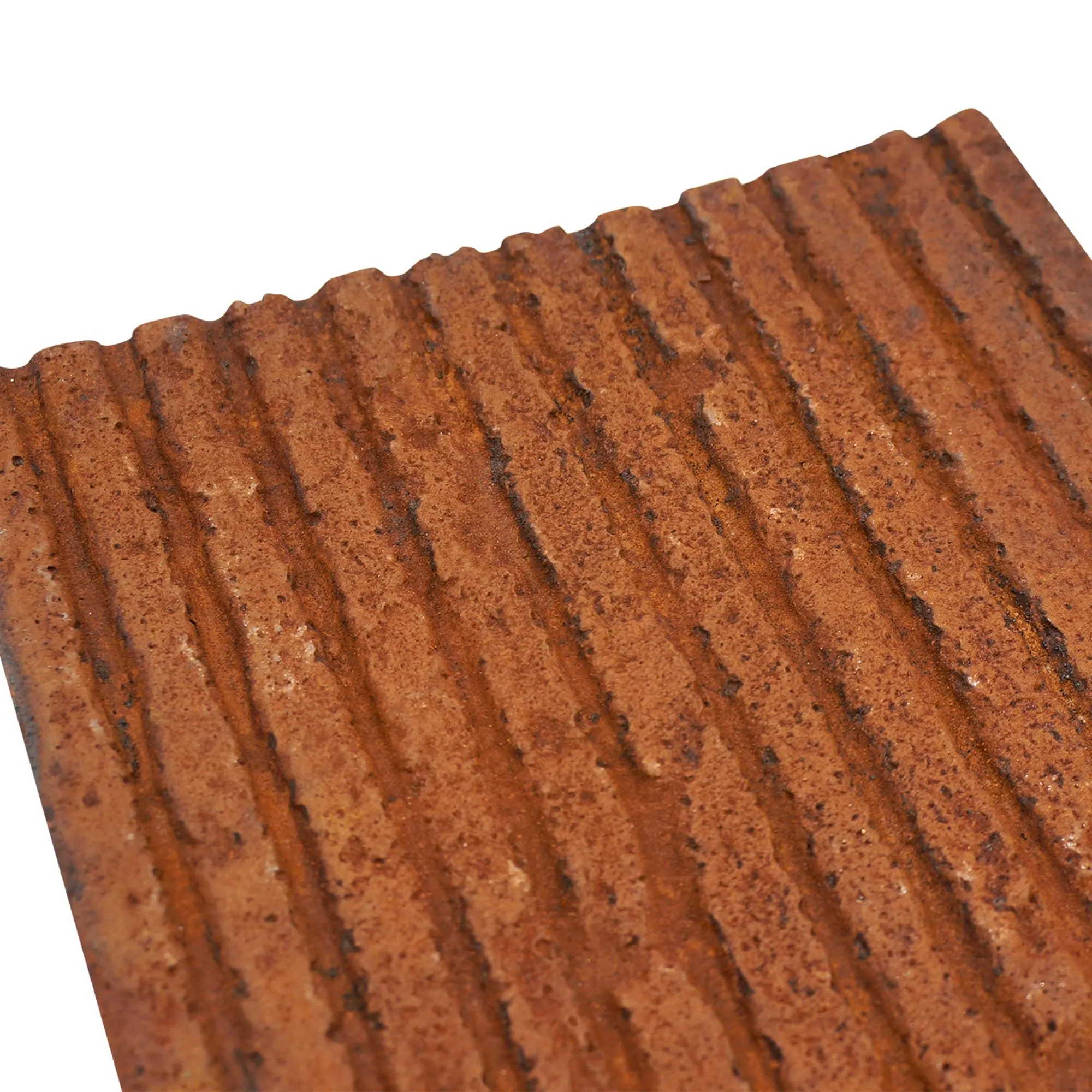
Now, let's zoom in on the star of our story: the Rust Square Line Stone from the MCM Project Board Series. The name itself evokes a powerful image, blending the organic and the industrial, the ancient and the modern.
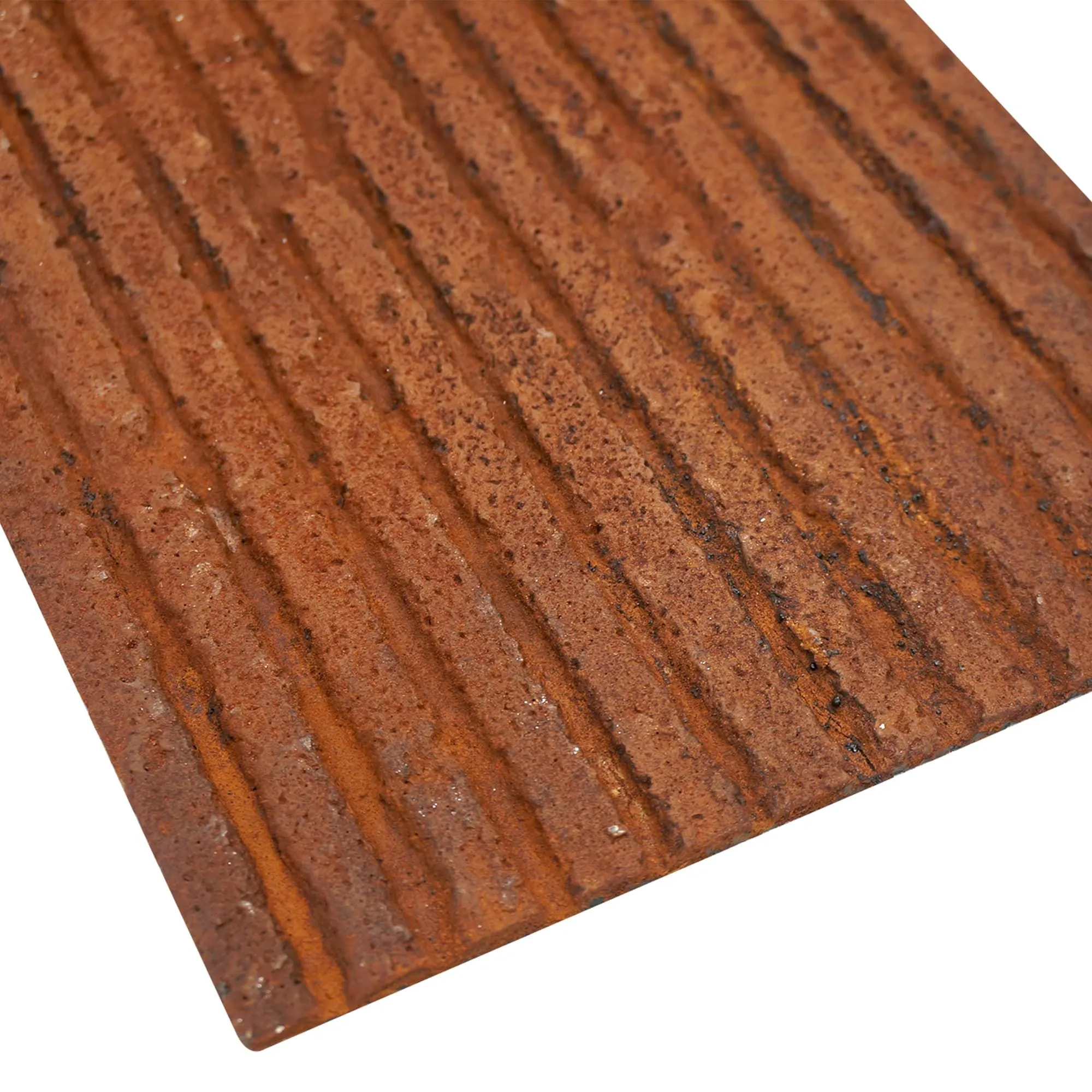
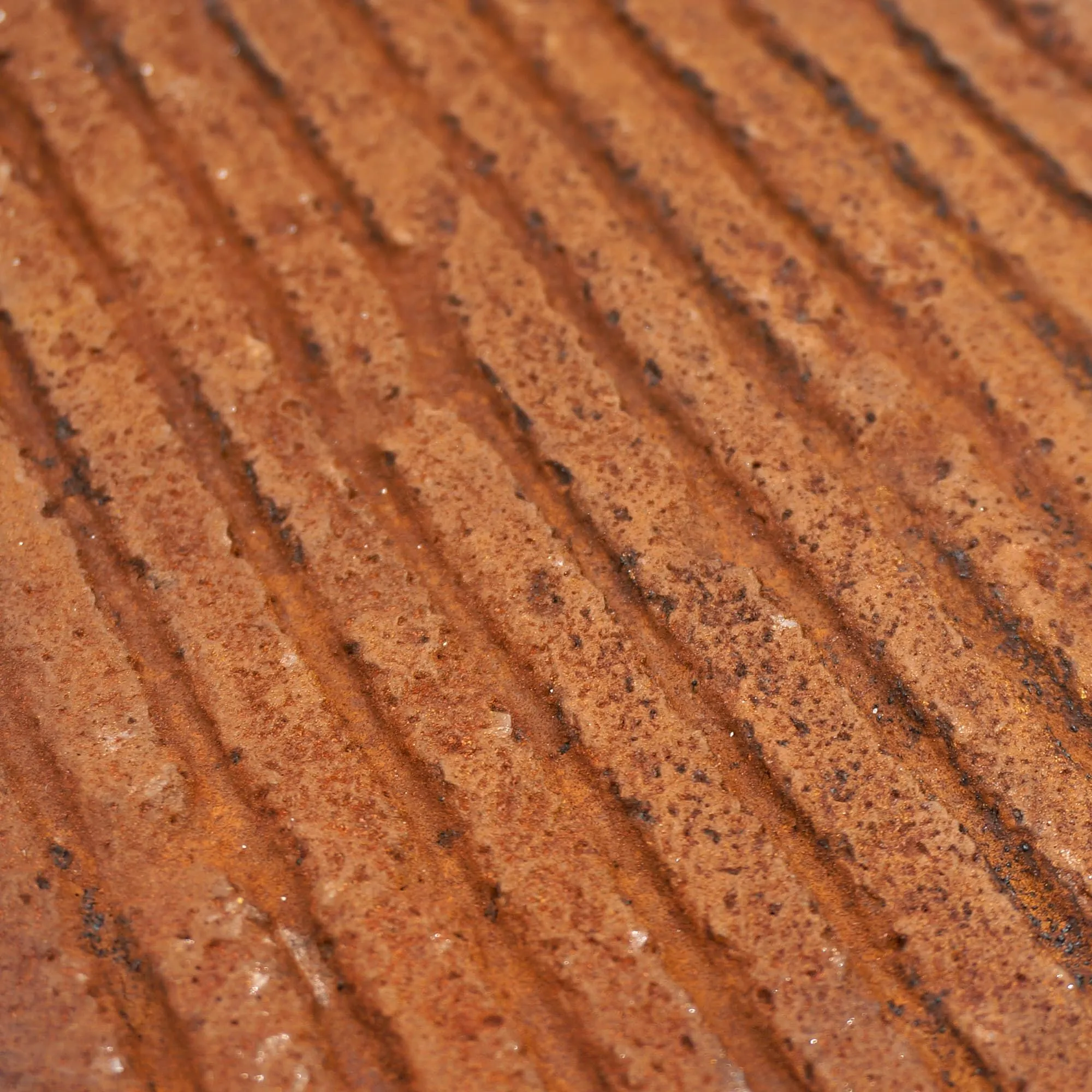
Imagine a surface that captures the essence of natural rusted slate or Corten steel, but with a refined, controlled elegance. The "Rust" aspect of the product refers to its stunning color palette—a rich tapestry of earthy reds, deep oranges, and warm brown tones, interwoven with darker, subtler variations. It's not a flat, printed color; it has depth and a natural, non-repeating pattern that mimics the beautiful, slow process of oxidation in nature. This organic warmth is then juxtaposed with the "Square Line" element. This refers to the product's form factor—precise, clean-edged panels—and a subtle, ingrained linear texture. These lines can be horizontal or vertical, creating a sense of order, rhythm, and modernity. The interplay between the chaotic beauty of the rust coloration and the disciplined structure of the lines creates a finish that is visually dynamic and sophisticated. It can make a building façade feel grounded and earthy, yet sharp and contemporary, a rare and highly sought-after combination.
The Rust Square Line Stone's beauty is more than skin deep. Its performance comes from its core composition as a Modified Cementitious Material. In simple terms, MCM is a technologically advanced composite material created from a base of natural inorganic materials. Think common earth elements like soil, sand, stone powder, and cement powder, which are modified through a proprietary process, mixed with water-based polymers, and then shaped and cured at a relatively low temperature (around 100-120°C). This low-energy curing process is a key differentiator from the high-temperature firing required for ceramics, making it a far more eco-friendly production method. The result is a material that is technically a type of "earth" or "stone" but has been re-engineered to possess properties far superior to its raw components. It's a prime example of using science to enhance nature, creating one of the most versatile building materials available today.
The benefits of this unique composition are numerous and significant:
The impressive list of features of the Rust Square Line Stone is not magic; it's the result of sophisticated material science. The term "Modified Cementitious Material" hints at the core process, but the innovation lies in the details of that modification. Let's explore the key technological principles that give COLORIA's MCM Project Board its unique character.
The process begins with the careful selection and proportioning of raw materials. This isn't just a random mix of dirt and cement. It's a precise recipe where different types of inorganic powders are chosen for their specific properties—color, texture, and chemical stability. These are then combined with water and a special blend of water-soluble polymers and cross-linking agents. This proprietary blend is the "secret sauce" of the modification process.
The innovation is not in creating a new element, but in reorganizing existing elements in a revolutionary way. This is the essence of MCM technology—transforming common earth into an uncommon building material.
Once mixed into a slurry, the material is cast into molds. These molds are what give the product its final texture and shape, whether it's the linear grooves of the Rust Square Line Stone or the intricate patterns of the MCM 3D Printing Series. The next step is the crucial curing phase. Instead of a high-temperature furnace, the cast material undergoes a controlled process involving photocatalytic reactions and low-heat curing. Light and a modest amount of heat act as catalysts, triggering the cross-linking agents. This causes the polymer chains to link with each other and with the inorganic particles, forming a strong, stable, and flexible three-dimensional network. This is fundamentally different from the simple evaporation of water in concrete or the vitrification in ceramics. This cross-linked molecular structure is what imparts both flexibility and strength to the final product. It's what allows a "stone" panel to be bent around a corner.
This scientific approach offers unprecedented control over the final product's characteristics. By slightly altering the polymer blend, the curing time, or the composition of the inorganic powders, COLORIA can fine-tune the material's properties—adjusting its flexibility, texture, color, and even its translucency. This opens the door to a level of customization that traditional materials can only dream of, allowing for the creation of truly unique building materials tailored to a specific architectural vision.
A material's true worth is proven in its application. The unique combination of aesthetics and performance in COLORIA's Rust Square Line Stone makes it an incredibly versatile solution for a wide range of projects, a true multi-tool for the modern architect.
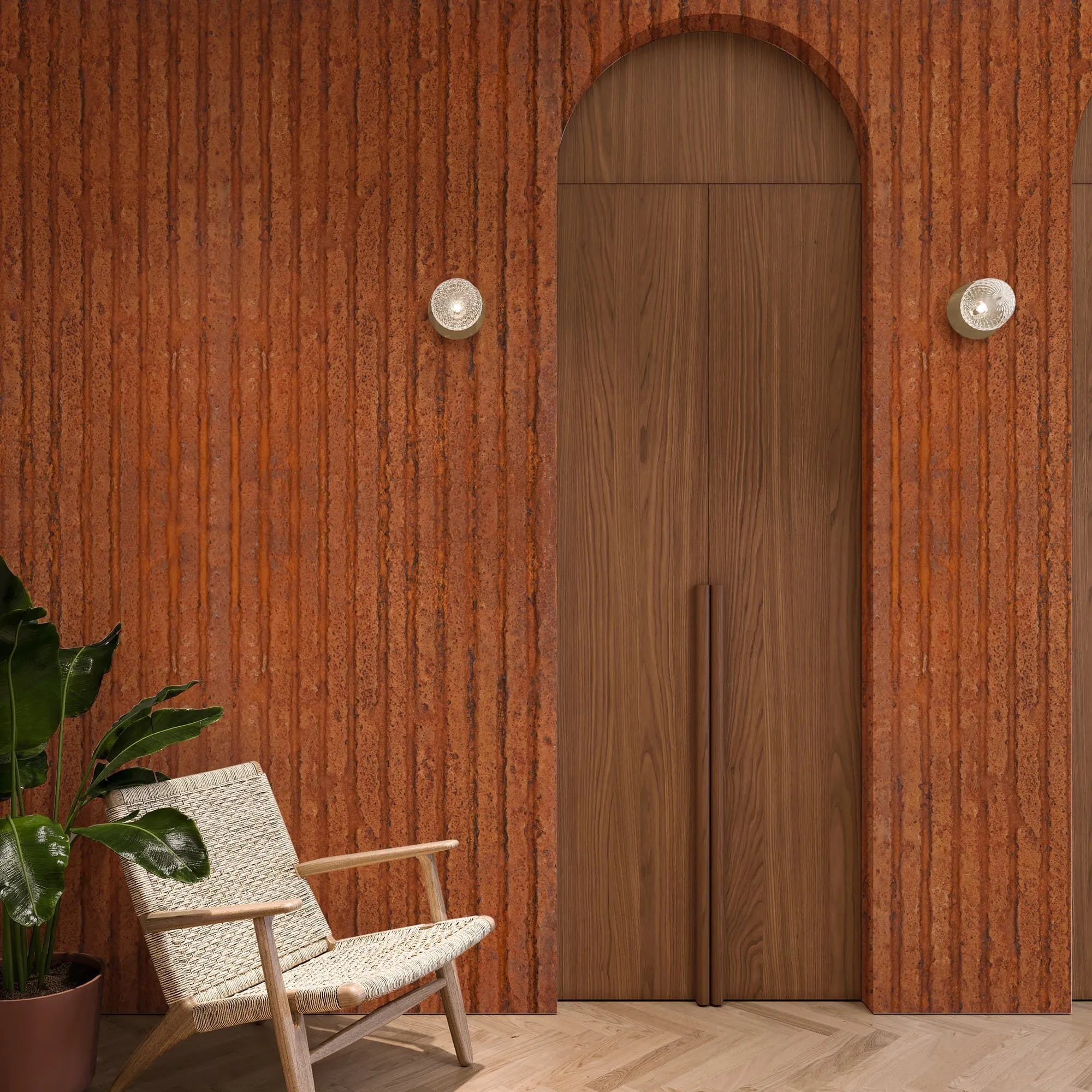
For office buildings, hotels, and retail centers, the exterior is the brand's first handshake. The Rust Square Line Stone provides a high-end, contemporary finish that commands attention. Its large panel format creates a clean, sophisticated look with fewer grout lines than tile, while its rust and line texture adds depth and character that paint cannot match. More practically, its light weight is a massive advantage in high-rise construction, reducing structural load and allowing for faster, safer installation with smaller crews and less heavy machinery. Its durability ensures the building will maintain its premium look for decades with minimal maintenance, a critical factor for commercial property owners focused on lifecycle costs.
From luxury villas to modern apartment complexes, the material offers a way to add distinctive character. It can be used to clad an entire building for a bold, monolithic statement or as a feature element to highlight specific architectural details like entryways, balconies, or foundational plinths. Inside the home, it makes for a stunning feature wall in a living room or a dramatic backsplash in a kitchen, bringing an industrial-chic or rustic-modern vibe. The fact that it is a green building material also appeals to the growing number of environmentally conscious homeowners.
Perhaps the most impactful application of MCM is in renovation and retrofitting projects. Older buildings often have facades made of tired brick, faded paint, or dated tiles. Tearing these off is a costly, noisy, dusty, and wasteful process. Because the Rust Square Line Stone is so thin and light, in many cases it can be installed directly over the top of the old façade. This is a game-changer. It dramatically reduces project timelines, minimizes disruption to occupants, and eliminates tons of demolition waste from landfills. It allows for the complete aesthetic transformation of a building, improving its curb appeal, value, and thermal performance (when used with an insulation layer) in a fraction of the time and cost of a traditional renovation. This is a perfect example of smart, sustainable urban renewal. The MCM Project Board series truly shines in this area.
Where traditional materials say "no," MCM often says "yes." Architects are no longer constrained by the rigidity of stone or the flatness of panels. The flexibility of MCM products like the Rust Square Line Stone and its sibling, the even more pliable MCM Flexible Stone, allows for the cladding of sweeping curves, rounded columns, and complex, organic shapes. This empowers architects to design more fluid and dynamic buildings, pushing the boundaries of what is structurally and financially feasible.
To put the advantages of COLORIA's MCM Rust Square Line Stone into perspective, a direct comparison with conventional materials is essential. The following table breaks down key performance indicators, illustrating where this innovative material truly stands apart.
| Feature | COLORIA MCM Rust Square Line Stone | Natural Stone (e.g., Granite) | Ceramic / Porcelain Tile | Exterior Paint / Stucco |
|---|---|---|---|---|
| Weight (per m²) | Very Low (4-6 kg) | Very High (50-80 kg) | High (15-25 kg) | Negligible |
| Thickness | Very Thin (2.5-5 mm) | Thick (20-30 mm) | Moderate (8-12 mm) | Very Thin (microns) |
| Flexibility | Yes (Can clad curved surfaces) | No (Rigid and brittle) | No (Rigid and brittle) | N/A (Surface coating) |
| Installation | Fast, simple adhesive application. Can be installed over existing surfaces. | Slow, complex, requires heavy machinery and mechanical fixing. | Moderate complexity, wet process with mortar and grout. | Relatively simple, but requires surface prep. |
| Durability & Weather Resistance | Excellent (Waterproof, Frost-proof, UV-resistant) | Excellent (But can be porous and stain without sealant) | Good (But grout is a weak point, risk of detachment) | Low (Prone to fading, cracking, peeling) |
| Fire Safety | Class A (Non-combustible) | Class A (Non-combustible) | Class A (Non-combustible) | Varies (Can be combustible) |
| Maintenance | Very Low (Self-cleaning properties, easy to wash) | Moderate (Requires periodic sealing) | Moderate (Grout cleaning and repair) | High (Requires repainting every 5-10 years) |
| Environmental Impact | Low (Low-energy production, lightweight transport, recyclable) | High (Destructive quarrying, heavy transport) | High (High-energy production) | Moderate (VOCs, repeat consumption) |
Purchasing a product like the Rust Square Line Stone from COLORIA GROUP is not a simple transaction; it's an entry into a partnership. The company's philosophy as a "one-stop solution provider" is a core part of its value proposition. They understand that a great product is only as good as its application and the support behind it. This is where their decades of experience in the global market for building materials truly come into play.
This comprehensive approach means providing expert consultation from the early design stages, helping architects and developers navigate the possibilities of the MCM portfolio. It means leveraging their advanced technology to offer unparalleled customization. While the Rust Square Line Stone is a stunning standard product, the underlying MCM technology allows for the creation of bespoke colors, textures, and forms. If an architect can envision it, chances are COLORIA GROUP can find a way to produce it, as evidenced by their highly advanced MCM 3D Printing Series, which takes customization to a whole new level.
Furthermore, their global reach, with dedicated agencies in key markets like Saudi Arabia, demonstrates a commitment to understanding local conditions. A façade material for a skyscraper in Riyadh faces different challenges than one for a boutique hotel in a coastal region. COLORIA's team provides that localized expertise, ensuring the right product and installation methodology are chosen for optimal long-term performance. They are not just selling panels; they are delivering confidence, quality, and a commitment to seeing a project through to its successful, beautiful completion.
The Rust Square Line Stone from COLORIA's MCM Project Board Series is far more than an attractive option for exterior wall decoration. It is a symbol of a paradigm shift in the construction industry—a shift towards smarter, lighter, more sustainable, and more creatively liberating building materials. It elegantly solves the age-old trilemma of aesthetics, performance, and cost, proving that you no longer have to compromise.
By harnessing the power of material science, COLORIA GROUP has transformed common, humble earth into a high-performance architectural finish that is as durable as it is beautiful. It represents a solution that respects our planet's resources, simplifies the complexities of construction, and empowers architects to build the bold and imaginative structures of tomorrow. For those who are designing and constructing our future skylines, materials like MCM are not just a novel alternative; they are an essential part of the modern toolkit, paving the way for a new era of architecture.
Recommend Products











