
Architects have long dreamed of buildings that twist, curve, and flow like natural forms – structures that feel less like machines and more like living organisms. But for years, those dreams hit a hard reality: traditional building materials, while strong, are stubbornly rigid. Brick, concrete, and even steel have their limits, forcing designers to simplify their visions, to trade organic curves for straight lines. That is, until now. Enter Rusty Red 3D Printing MCM – a material that's not just changing how buildings are built, but how they're imagined. This innovative blend of modified composite material (MCM) and 3D printing technology is giving architects the freedom to create shapes once thought impossible, all while wrapping them in the warm, earthy allure of rusty red. Let's dive into how this material is reshaping the future of architecture.
Before we get to the 3D printing magic, let's start with the foundation: MCM, or Modified Composite Material. Think of MCM as the Swiss Army knife of building materials – versatile, adaptable, and surprisingly tough. At its core, MCM is a blend of fiberglass, mineral composites, and high-performance polymers, engineered to be lightweight yet durable. Traditional building materials like concrete or natural stone are heavy and inflexible; MCM, by contrast, feels almost revolutionary. A standard MCM panel weighs in at just 8-12 kilograms per square meter, compared to 50-80 kg for traditional stone. That lightness alone opens doors, but when paired with 3D printing and a unique color variant like Rusty Red, it becomes a game-changer for complex design.
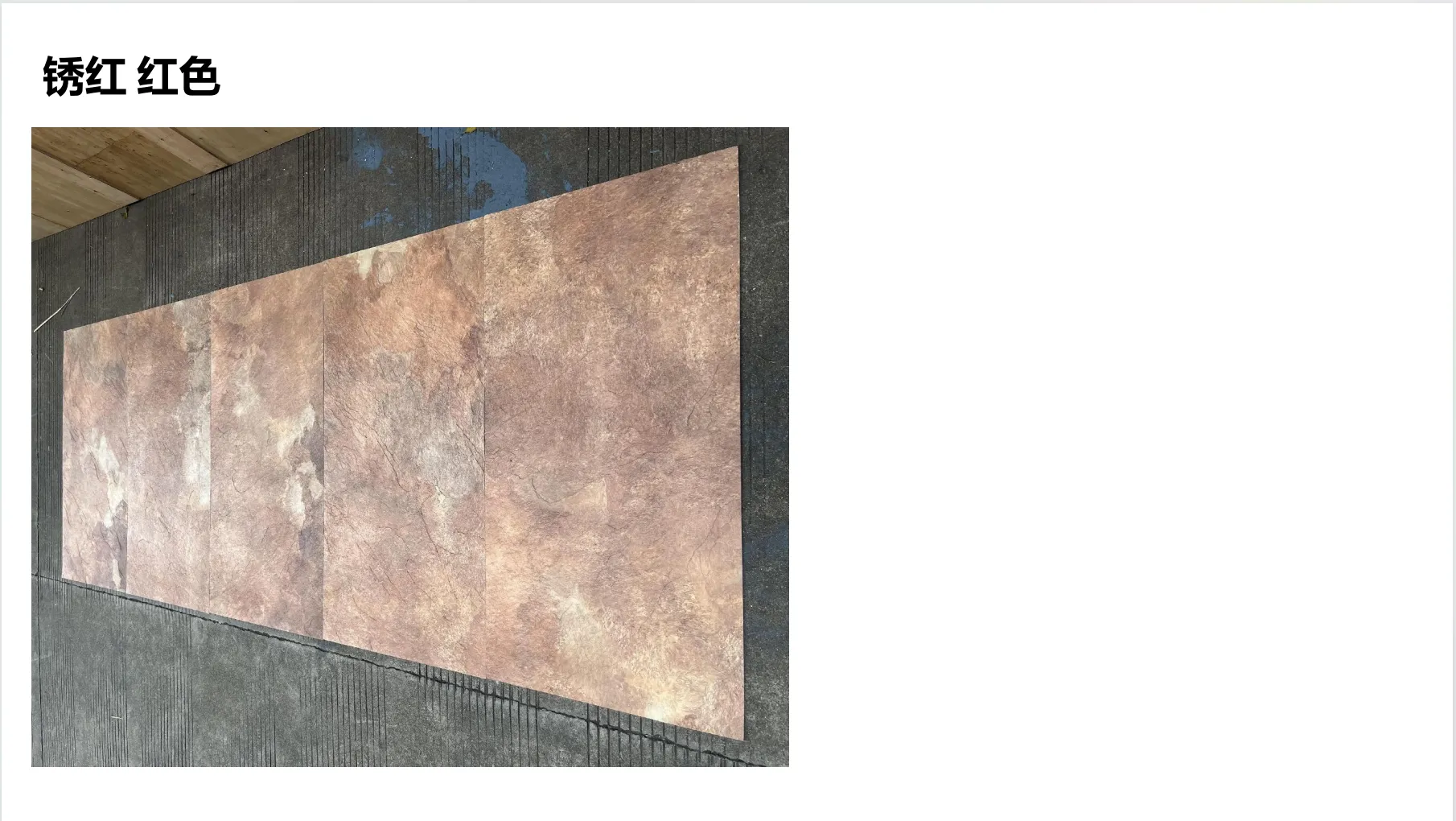
MCM isn't new – it's been used in cladding and facades for years – but the latest evolution combines it with 3D printing technology, unlocking a level of design freedom previously unheard of. And among the many color options (from muted grays to bold golds), Rusty Red stands out. It's not just a color; it's a statement. Warm, earthy, and slightly weathered-looking, it evokes the texture of aged terracotta or sun-baked clay, adding a touch of organic warmth to even the most modern structures. But its beauty isn't skin-deep – the Rusty Red variant is engineered to be as tough as it is attractive, making it ideal for projects that demand both form and function.
3D printing has been a buzzword in manufacturing for over a decade, but in construction, its impact has been slower to take hold – until now. Traditional 3D printing with concrete or metal is limited by the material's thickness and rigidity; you can print a wall, but printing a curved, textured facade panel? That's where MCM steps in. 3D printing MCM is like drawing with a material that bends to your will. The process starts with a digital model – a 3D scan of the architect's design, whether it's a sinuous facade, a sculptural interior accent, or even a custom boulder slab for landscaping. The 3D printer then extrudes layers of MCM composite, infused with Rusty Red pigment, building up the shape with pinpoint accuracy, layer by layer.
What makes this process so revolutionary is its precision and flexibility. Unlike traditional molding, which requires expensive, one-off forms for complex shapes, 3D printing lets designers tweak a digital model and hit "print" – no molds, no waste, no limits. Want a facade with 500 unique, curved panels? No problem. Need a interior feature wall with undulating waves? The printer can handle it. And because MCM is so lightweight, even large panels can be printed in one piece, reducing assembly time and structural stress on the building. It's a marriage of technology and material science that's finally giving architects the tools to turn their boldest blueprints into reality.
Let's talk about the star of the show: the Rusty Red color. In a world of sleek glass and cold steel, Rusty Red adds a welcome dose of warmth. It's not a bright, artificial red; it's a muted, earthy tone, with subtle variations in hue that mimic the look of weathered metal or natural stone. Imagine a building facade that glows softly at sunset, its Rusty Red panels catching the light and shifting from deep amber to warm terracotta. Or an interior wall where the color deepens in the creases of a 3D-printed curve, creating shadow and depth that flat, painted surfaces can't match. It's a color that feels both modern and timeless, bridging the gap between industrial design and organic beauty.
But Rusty Red isn't just about looks. The pigment is integrated into the MCM composite during manufacturing, meaning it won't fade or chip over time. Unlike paint, which can peel or wear thin, the color is part of the material itself. UV-resistant and weatherproof, it holds up against rain, snow, and harsh sunlight, maintaining its rich tone for decades. That durability means it's just as suitable for exterior facades as it is for interior accents – a rare combination of beauty and brawn.
Beauty aside, the Rusty Red 3D Printing MCM is a technical powerhouse. Let's break down its key specs:
So, where is Rusty Red 3D Printing MCM making its mark? The answer is everywhere – from skyscrapers to small-scale interiors. Let's explore a few standout applications:
One of the most exciting uses is in curved building facades. Traditional materials like brick or precast concrete can be curved, but they require custom molds (expensive) and heavy structural support (even more expensive). Rusty Red 3D Printing MCM panels, by contrast, are printed to exact specifications, with curves that flow seamlessly into one another. Take the Riverbend Arts Center in Austin, Texas – a 10,000-square-foot gallery with a facade that mimics the bend of the nearby Colorado River. The architects used 3D-printed Rusty Red MCM panels, each curved to follow the river's natural path. The result? A building that looks like it's been shaped by wind and water, not just human hands.
It's not just exteriors – Rusty Red MCM is transforming interiors, too. Imagine a hotel lobby with a feature wall made of 3D-printed, undulating Rusty Red panels. The texture and color add warmth, turning a sterile space into something inviting. Or a restaurant bar front, where the material is shaped into gentle waves, catching the light and creating a dynamic, immersive atmosphere. Even residential spaces are getting in on the trend: homeowners are using small 3D-printed Rusty Red MCM panels as backsplashes or fireplace surrounds, adding a touch of industrial-chic warmth.
Architecture doesn't end at the building's walls – it extends into the landscape. Rusty Red 3D Printing MCM is perfect for outdoor elements like garden paths, retaining walls, or custom boulder slabs. Unlike natural stone, which is heavy and hard to shape, 3D-printed boulder slabs in Rusty Red are lightweight and customizable. Imagine a backyard with a winding path lined with these slabs, their texture mimicking weathered rock but their color tying back to the home's facade. It's a way to create cohesion between indoor and outdoor spaces, making the entire property feel like a unified design.
| Feature | Traditional Stone (Granite/Marble) | Traditional Metal Panels | Rusty Red 3D Printing MCM |
|---|---|---|---|
| Weight (kg/m²) | 50-80 | 15-25 | 8-12 |
| Flexibility | None – cracks under bending | Limited (small bends only) | High – bends up to 120° |
| Custom Shape Capability | Expensive, mold-dependent | Limited by metal thickness | Unlimited – 3D-printed to design |
| Durability (Lifespan) | 50+ years (but heavy) | 30-40 years (prone to rust/scratches) | 50+ years (UV/weather resistant) |
| Installation Cost | High (requires heavy machinery) | Medium (needs skilled labor) | Low (lightweight, easy to handle) |
| Aesthetic Warmth | Cool, natural (varies by stone) | Industrial, sleek | Warm, earthy (Rusty Red hue) |
To see Rusty Red 3D Printing MCM in action, look no further than the Azure Wave Tower in Portland, Oregon. Designed by Lumin Architecture, the 22-story mixed-use building was inspired by the Pacific Northwest's coastal waves – a vision that seemed impossible with traditional materials. Early plans called for glass curtain walls, but the budget and structural constraints (glass is heavy and inflexible) forced the team back to the drawing board.
Enter Rusty Red 3D Printing MCM. The architects partnered with a local manufacturer to 3D-print over 500 custom facade panels, each curved to mimic the swell of a wave. The Rusty Red color was chosen to complement Portland's lush greenery and rainy skies, adding warmth to the city's gray winters. The panels were printed off-site, transported to the construction site, and installed in just 12 weeks – half the time of a traditional stone facade.
The result? A building that looks like it's rippling in the wind, with a facade that changes color with the light – deepening to a rich burgundy at dawn, softening to terracotta at noon, and glowing amber at sunset. Tenants love the natural light filtering through the textured panels, and the building has become a local landmark. "We never thought we'd actually build the wave," says lead architect Mia Chen. "Rusty Red MCM didn't just make it possible – it made it affordable."
The future looks bright – and red – for this innovative material. As 3D printing technology advances, we can expect even larger panels, faster printing times, and more intricate designs. Imagine printers that can produce 10-meter-tall curved panels in a single print, or integrate smart features like embedded sensors (to monitor temperature or structural stress) directly into the MCM composite. Sustainability will also play a bigger role; manufacturers are already experimenting with recycled polymers in the MCM mix, making the material even more eco-friendly.
And it's not just about buildings. Designers are exploring Rusty Red MCM for furniture, art installations, and even wearable architecture (think temporary pavilions or pop-up structures). The material's flexibility and light weight make it ideal for temporary projects that demand quick setup and teardown, without sacrificing durability.
Architecture has always been a balance of art and engineering – of what we imagine and what we can build. For too long, engineering has limited the imagination, forcing designers to choose between beauty and practicality. Rusty Red 3D Printing MCM changes that. It's a material that speaks to both the artist and the engineer: flexible enough to bend to a dream, strong enough to stand the test of time, and beautiful enough to make even the most modern building feel like a part of nature.
Whether it's wrapping a skyscraper in waves, adding warmth to an interior wall, or shaping a garden path, Rusty Red 3D Printing MCM isn't just building structures – it's building a new language of design. And in that language, the only limit is the imagination.
Recommend Products












