
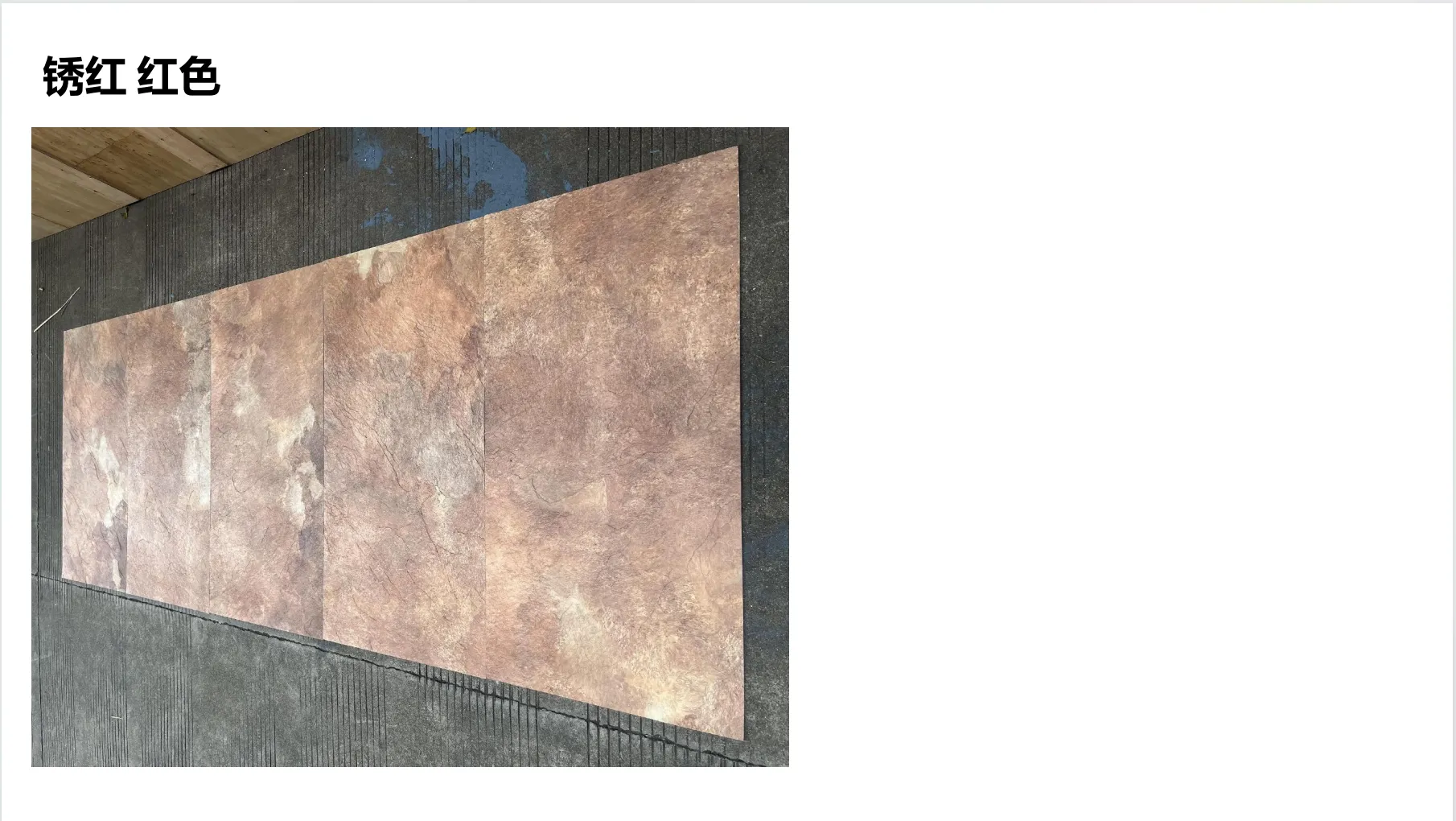
In the world of luxury hospitality, design is more than just aesthetics—it's a language. It speaks to guests before they utter a word, shaping their first impressions, setting the tone for their stay, and lingering in their memories long after check-out. Today's high-end hotels aren't just places to sleep; they're immersive experiences, and every detail, from the lobby chandelier to the texture of the walls, plays a role in crafting that narrative. For designers and hoteliers alike, the challenge lies in finding materials that don't just "fit" a space but elevate it—materials that are as unique as the brand itself, as durable as the demands of hospitality, and as flexible as the creative vision behind the project. Enter Rusty Red MCM 3D Printing: a fusion of cutting-edge technology, artisanal (texture), and timeless color that's redefining how luxury hotels tell their stories.
Before diving into the technology, let's talk about the star of the show: rusty red. It's a color that defies simplicity. Not quite terracotta, not purely brick, and far more nuanced than a flat "red," rusty red carries with it a sense of history and warmth. It evokes the weathered charm of ancient European villages, where sun-baked clay roofs fade into soft, earthy hues; the industrial elegance of repurposed warehouses, where metal beams develop a rich, patinaed glow over time; and the organic depth of desert landscapes at sunset, where sand and stone blush under the fading light. In luxury hospitality, this versatility is gold. Rusty red isn't just a backdrop—it's a character. It adds warmth to minimalist spaces, depth to modern designs, and a touch of nostalgia to contemporary settings without feeling outdated.
What makes rusty red particularly compelling for hotels is its emotional resonance. Unlike stark whites or cool grays, which can feel clinical if overused, rusty red wraps guests in a sense of comfort. It's inviting, like a well-worn leather armchair in a boutique library, or a cozy fireplace in a mountain lodge. Yet it's also sophisticated—capable of elevating a space from "nice" to "unforgettable." Imagine walking into a hotel lobby where a sweeping feature wall, rendered in soft rusty red, greets you. The color catches the light differently throughout the day: warm and golden at dawn, deep and moody at dusk, and richly textured under evening lighting. It's not just a wall anymore; it's a focal point, a conversation starter, and a visual anchor that ties the entire room together.
Of course, a stunning color alone isn't enough. To truly make an impact in luxury design, a material must offer more: customization. Hotels don't want cookie-cutter solutions—they want designs that reflect their unique identity, whether that's a boutique property in Paris with a focus on art deco, a beachfront resort in Bali aiming for tropical minimalism, or a urban hotel in New York that blends industrial grit with modern luxury. This is where MCM 3D Printing steps in, turning the vision of "one-of-a-kind" into reality.
MCM, or Modified Composite Material, is already celebrated in the construction world for its durability, flexibility, and sustainability. But when paired with 3D printing technology, it becomes something extraordinary. Traditional materials like natural stone or ceramic tiles are limited by their rigidity—you're constrained by the shapes they can be cut into, the textures they naturally have, or the molds that mass-produce them. 3D printing shatters those limitations. With MCM 3D Printing, designers can create intricate patterns, organic textures, and custom geometries that would be impossible (or prohibitively expensive) with conventional methods. Want a wall that mimics the ripples of sand dunes? A reception desk with the look of stacked, weathered stone? A ceiling panel that replicates the grain of reclaimed wood, but in rusty red? It's all possible.
The magic lies in the precision of 3D printing. Layer by layer, the MCM material is deposited, allowing for micro-level control over texture and depth. This means rusty red surfaces can have varying degrees of "roughness"—from a smooth, almost polished finish that reflects light gently, to a deeply textured, tactile surface that invites guests to reach out and touch. For hotels, this level of detail is transformative. A restaurant wall with a subtle, wave-like texture in rusty red isn't just a wall; it's a sensory experience, adding dimension to the space and making it feel more alive. A lobby floor with a custom geometric pattern in varying shades of rusty red (from pale terracotta to deep brick) guides guests through the space, creating a visual journey that feels intentional and immersive.
At the heart of Rusty Red MCM 3D Printing is MCM Flexible Stone, a material that's as practical as it is beautiful. Luxury hotels demand materials that can keep up with the chaos of daily life: high foot traffic, spills, humidity, and the occasional scuff from luggage or furniture. MCM Flexible Stone delivers on all fronts. Unlike natural stone, which is heavy and prone to cracking, or traditional ceramics, which can chip, MCM is lightweight (up to 80% lighter than natural stone), flexible, and incredibly strong. It's resistant to water, fire, and UV rays, making it suitable for both indoor and outdoor use—from a hotel's poolside cabanas to its rooftop bar facade.
The flexibility of MCM is a game-changer for installation, too. Traditional materials often require specialized labor and extensive structural support, especially for large or curved surfaces. MCM Flexible Stone, however, can be cut, bent, and shaped on-site, adapting to the unique contours of a space. Imagine a hotel with a curved lobby wall that wraps around the reception area—with MCM, that wall can be clad in rusty red 3D-printed panels that follow every curve seamlessly, creating a fluid, organic look that would be nearly impossible with rigid materials. For designers, this means fewer compromises: the vision doesn't have to be scaled back because the material can't keep up.
Sustainability is another key advantage. In an era where guests and brands alike prioritize eco-conscious choices, MCM Flexible Stone stands out. It's made from recycled materials (including stone powder and polymers), reducing waste and minimizing the environmental impact of extraction. Its lightweight nature also cuts down on transportation costs and carbon emissions during installation. For luxury hotels aiming to align their design with their sustainability goals, Rusty Red MCM 3D Printing offers a way to be both beautiful and responsible—a win-win that resonates with today's discerning travelers.
Let's move from theory to practice. How are hotels actually using Rusty Red MCM 3D Printing to create unforgettable spaces? The possibilities are as diverse as the hotels themselves, but here are a few examples that showcase its versatility:
The Boutique Urban Hotel: Feature Walls with Personality – Picture a 100-room boutique hotel in the heart of a bustling city, aiming to stand out from the glass-and-steel towers around it. The design brief calls for a lobby that feels "intimate yet grand," a space that makes guests feel like they've stepped into a private club rather than a generic hotel. The solution? A 20-foot-tall feature wall behind the reception desk, clad in Rusty Red MCM 3D-printed panels with a custom "thread" texture—think fine, interwoven lines that mimic the look of handwoven textiles, but in stone. The texture catches the light from the overhead pendant lights, creating soft shadows that shift throughout the day. The rusty red hue warms up the otherwise monochromatic lobby (black marble floors, white ceilings), adding depth without overwhelming the space. It's a statement piece that guests can't help but photograph—and share on social media.
The Beachfront Resort: Outdoor Spaces That Blend In (and Stand Out) – For a luxury resort on a tropical island, the goal is to connect guests with nature while maintaining a sense of elegance. The challenge? Creating outdoor spaces that can withstand saltwater, intense sun, and heavy rain, without sacrificing beauty. Enter Rusty Red MCM 3D-printed "gobi panels" for the poolside bar facade. The panels are printed with a rough, sand-like texture that echoes the nearby beach, and the rusty red color complements the warm tones of the sand and sunset. Unlike natural stone, which would absorb heat and become too hot to touch, MCM stays cool in the sun, making it safe and comfortable for guests leaning against the bar. The panels are also resistant to saltwater corrosion, ensuring they'll look as vibrant in five years as they did on day one.
The Historic Renovation: Blending Past and Present – A 1920s-era hotel in a European capital is undergoing a renovation, aiming to preserve its historic charm while updating its amenities. The design team wants to honor the building's heritage but avoid making it feel like a museum. In the hotel's signature restaurant, they use Rusty Red MCM 3D-printed panels to replicate the look of the original brick walls, which had deteriorated beyond repair. Using 3D scanning, they captured the exact texture of the old bricks—complete with chips, cracks, and variations in color—and recreated it in MCM. The result? Walls that look and feel historic, but are actually brand-new, durable, and easy to maintain. The rusty red hue matches the original brick color perfectly, ensuring the restaurant retains its cozy, vintage atmosphere while meeting modern safety and performance standards.
Great design is about balance—and Rusty Red MCM 3D Printing shines brightest when paired with complementary materials. One natural partner is the MCM Big Slab Board Series, which offers large-format panels in neutral tones like beige, gray, and white. The contrast between the bold rusty red and the understated elegance of the big slabs creates a harmonious, layered look that feels intentional and polished.
For example, imagine a hotel lobby where the lower half of the walls is clad in MCM Big Slab Boards in "lime stone (beige)" —a soft, warm neutral that feels grounding. The upper half features Rusty Red MCM 3D-printed panels with a subtle "wave panel" texture, adding movement and color. The two materials flow into each other seamlessly, creating a wall that's both sophisticated and dynamic. The beige slabs provide a calm backdrop, allowing the rusty red to take center stage without overwhelming the space. This pairing works equally well in guest rooms: a headboard wall in rusty red 3D-printed MCM, flanked by big slab boards in "slate veil white" for a crisp, modern look that feels luxurious and serene.
The MCM Big Slab Board Series also offers versatility in size, with slabs up to 1200x2400mm, making them ideal for creating seamless, uninterrupted surfaces. When combined with Rusty Red MCM 3D Printing, this means designers can play with scale—using large, smooth slabs to create a sense of openness, and smaller, textured rusty red panels to add intimacy and detail. In a hotel ballroom, for instance, big slab boards in "fair-faced concrete" could form the main walls, while rusty red 3D-printed panels with a "mosaic travertine" texture frame the stage, adding a touch of drama to the space.
Today's luxury travelers aren't just looking for opulence—they're looking for purpose. They want to stay in hotels that align with their values, from reducing carbon footprints to supporting ethical sourcing. Rusty Red MCM 3D Printing checks the sustainability box without compromising on luxury, making it a smart choice for forward-thinking brands.
As mentioned earlier, MCM Flexible Stone is made from recycled materials, which reduces the need for extracting new resources. Its lightweight composition also lowers transportation emissions, and its durability means less frequent replacement—all of which contribute to a lower lifecycle environmental impact. Additionally, the 3D printing process itself is efficient, with minimal waste compared to traditional cutting or molding methods. Designers can print only what they need, reducing excess material and lowering costs.
For hotels aiming to achieve green building certifications (like LEED or BREEAM), these factors are significant. But sustainability isn't just about certifications—it's about storytelling. A hotel that uses Rusty Red MCM 3D Printing can highlight its commitment to eco-friendly design in marketing materials, guest communications, and even on-site displays, turning sustainability into a selling point. Imagine a plaque in the lobby explaining how the feature wall was created using recycled materials and 3D printing technology—it adds a layer of transparency and authenticity that resonates with conscious travelers.
At the end of the day, the true measure of any hotel design material is its impact on guests. Does it make them feel welcome? Inspired? Special? Rusty Red MCM 3D Printing does more than that—it creates moments. A guest walking through the lobby might pause to admire the way the light hits the textured rusty red wall, pulling out their phone to snap a photo. A couple dining in a restaurant with a rusty red 3D-printed backdrop might comment on how "warm" and "inviting" the space feels, making their anniversary dinner even more memorable. A business traveler staying in a guest room with a rusty red accent wall might find the color so comforting that they request the same room on their next visit.
These moments add up to a stronger brand identity. In a crowded luxury market, hotels need to differentiate themselves, and design is a powerful tool. A hotel that embraces Rusty Red MCM 3D Printing isn't just offering a place to stay—it's offering an experience that's uniquely its own. Guests don't just remember the service or the amenities; they remember the feeling of the space, and that feeling becomes tied to the brand. Over time, this translates to loyalty, word-of-mouth referrals, and a reputation as a "design destination."
Rusty Red MCM 3D Printing isn't just a material—it's a movement. It represents a shift in luxury hospitality design, away from generic, one-size-fits-all solutions and toward custom, creative expressions that reflect a hotel's unique identity. With its stunning color, endless customization options, durable MCM Flexible Stone base, and compatibility with materials like the MCM Big Slab Board Series, it's a tool that empowers designers to dream bigger and hoteliers to connect deeper with their guests.
As technology advances and guest expectations evolve, the demand for unique, sustainable, and emotionally resonant design will only grow. Rusty Red MCM 3D Printing is at the forefront of this evolution, proving that luxury doesn't have to be cold or cookie-cutter. It can be warm, tactile, and deeply human—just like the best hotels themselves. So whether you're designing a boutique urban escape, a beachfront paradise, or a historic renovation, consider the story Rusty Red MCM 3D Printing can help you tell. Your guests will thank you for it—and they'll remember it for years to come.
Recommend Products












