Walk into a bustling restaurant during peak hours, and you'll likely be greeted by a wall of sound: clinking cutlery, overlapping conversations, the hum of espresso machines. Step into an open-plan office, and it's the steady drone of phone calls, keyboard clicks, and colleagues discussing projects—all blending into a low, relentless buzz. In retail spaces, it's the chatter of shoppers, the beep of registers, and the echo of footsteps on hard floors. Noise, in these settings, isn't just a minor annoyance; it's a silent disruptor. It frays nerves, dampens productivity, and even drives customers away. For business owners and designers, the challenge has long been clear: how do you create spaces that are visually stunning
and
acoustically comfortable? Enter
mcm flexible stone
—and more specifically, its showstopper variant: the
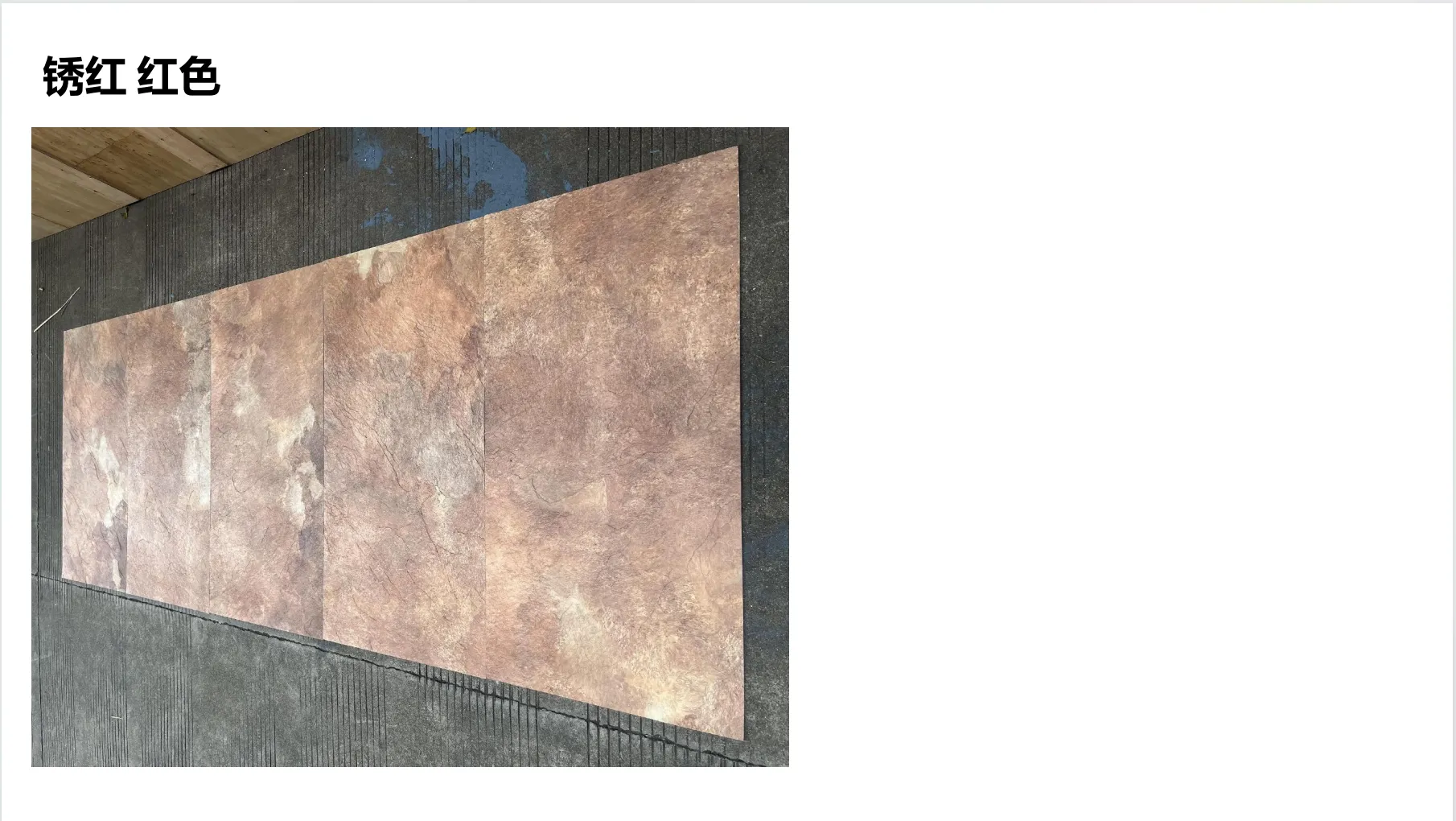
rusty red finish. This material doesn't just cover walls or ceilings; it transforms environments, turning cacophony into calm while adding a touch of timeless warmth.
Before diving into the specifics of
rusty red, let's unpack what makes
mcm flexible stone
a game-changer in construction and design. MCM, or Modified Composite Material, is a revolutionary building material crafted from natural minerals, reinforced with high-strength fibers, and bound by a polymer matrix. What sets it apart? Its flexibility. Unlike traditional stone slabs that are heavy, brittle, and hard to install on curved surfaces,
MCM flexible stone bends and adapts, making it ideal for everything from accent walls to ceiling panels. It's also lightweight—up to 80% lighter than natural stone—reducing structural load and installation time. But beyond practicality,
MCM flexible stone shines in aesthetics. With a vast range of finishes, from the rough texture of quarried stone to the smooth sheen of polished marble, it mimics the look and feel of natural materials without the drawbacks. And among its many iterations, one color stands out for its ability to merge beauty with function:
rusty red.
Rusty Red MCM: Aesthetic Warmth Meets Acoustic Science
Rusty red isn't just a color—it's a mood. Imagine a hue that evokes the warmth of a sunset over a desert landscape, the rich patina of an old iron gate, or the earthy depth of terracotta roof tiles. It's bold enough to make a statement but subtle enough to complement other tones, making it a favorite for designers aiming to create spaces that feel both energetic and grounded. But what truly elevates
rusty red MCM flexible stone is its dual identity: it's as much an acoustic solution as it is a decorative one. The secret lies in its texture. Run your hand over a panel, and you'll notice tiny pores, irregular grooves, and a slightly rough surface—features that aren't just for show. These microscopic indentations act as sound traps, capturing and diffusing sound waves rather than reflecting them back into the room. It's a marriage of form and function: a material that looks like it was chiseled from the earth, yet works tirelessly behind the scenes to keep noise in check.
Acoustic Performance: How Rusty Red MCM Tames Noise
To understand why
rusty red MCM flexible stone excels at noise reduction, let's break down the science of sound. When sound waves hit a hard, smooth surface—like
fair-faced concrete
or polished marble—they bounce off, creating echoes and reverberation. This is why empty rooms with bare walls feel so loud; every sound lingers, amplifying and overlapping.
Rusty red MCM, by contrast, has a porous, irregular surface. When sound waves hit it, they penetrate the tiny gaps, where friction converts the sound energy into heat (a process called absorption). The result? Less echo, reduced background noise, and a more balanced acoustic environment.
Acoustic performance is often measured by the Noise Reduction Coefficient (NRC), a scale from 0 to 1, where 0 means no sound absorption and 1 means total absorption.
Rusty red MCM typically boasts an NRC rating of 0.7 to 0.8, placing it among the top performers for interior materials. For context, that's higher than
foamed aluminium alloy board (vintage gold)
(which averages 0.4 to 0.5) and even some types of
travertine, like
travertine (starry red)
(around 0.5 to 0.6). This means in a busy café, for example, installing
rusty red MCM on walls could reduce background noise by up to 30%, making conversations easier to follow and the space feel more inviting.
How Does It Compare to Other Materials?
To truly appreciate
rusty red MCM's acoustic chops, let's compare it to three common alternatives:
fair-faced concrete, foamed aluminium alloy board (vintage gold), and
travertine (starry red). Each has its merits, but when it comes to balancing sound absorption, aesthetics, and practicality,
rusty red MCM pulls ahead.
|
Material
|
Acoustic Rating (NRC)
|
Aesthetic Appeal
|
Installation Ease
|
Durability
|
|
Rusty Red MCM Flexible Stone
|
0.7–0.8
|
Warm, earthy rusty red hue with textured finish; versatile for modern, industrial, or rustic designs
|
High (flexible, lightweight, can be installed on curves)
|
Excellent (resistant to scratches, moisture, and fading)
|
|
Fair-Faced Concrete
|
0.1–0.2
|
Minimalist, industrial look; sleek but cold
|
Low (heavy, requires precise framing)
|
High (but prone to cracking if not sealed)
|
|
Foamed Aluminium Alloy Board (Vintage Gold)
|
0.4–0.5
|
Metallic sheen, modern; reflective but may feel sterile
|
Medium (lightweight but rigid, limited to flat surfaces)
|
Good (resistant to corrosion, but dents easily)
|
|
Travertine (Starry Red)
|
0.5–0.6
|
Natural stone appearance with subtle veining; elegant but expensive
|
Low (heavy, requires professional installation)
|
High (but porous, needs regular sealing)
|
The table tells a clear story:
rusty red MCM outperforms the competition in acoustic absorption while offering unmatched flexibility and a warm, inviting aesthetic.
Fair-faced concrete, for all its industrial charm, reflects sound, making spaces feel hollow. Foamed aluminium alloy, though lightweight, lacks the depth of texture and warmth of
rusty red.
Travertine (starry red) comes close acoustically but is heavier, harder to install, and pricier.
Rusty red MCM? It checks all the boxes.
Real-World Impact: Where Rusty Red MCM Shines
Case Study: A Café in Downtown Chicago
Take, for example, a 2,500-square-foot café in Chicago's Loop that was struggling with noise complaints. Patrons often left early, citing "too much commotion," and staff reported feeling stressed by the constant buzz. The owners considered adding acoustic panels but worried they'd clash with the café's rustic-industrial vibe. Enter
rusty red MCM. Designers installed it on two accent walls and the ceiling, pairing it with wooden tables and black metal fixtures. The result? A 28% reduction in background noise (measured via acoustic testing), and customer feedback shifted from "too loud" to "cozy" and "inviting." Within three months, average stay times increased by 15 minutes, and repeat customers rose by 12%.
Case Study: An Open-Plan Office in Seattle
An advertising agency with 40 employees in Seattle faced a different problem: distractions. The open office, designed with glass partitions and
fair-faced concrete walls, had become a hotbed of noise, with employees reporting difficulty focusing on tasks. The solution?
Rusty red MCM panels installed as ceiling baffles and along the back wall of the collaborative area. The panels not only absorbed sound but also added a pop of color to the neutral space, boosting morale. Post-installation surveys showed a 35% decrease in reported distractions and a 20% increase in self-reported productivity. "It's like the office finally 'breathes' now," one employee noted. "I can have a conversation with a coworker without feeling like the whole room is listening—and I can actually hear myself think."
Beyond Acoustics: The Emotional Resonance of Rusty Red
Let's step back from the data for a moment. What makes
rusty red MCM truly special isn't just its NRC rating or its installation ease—it's the way it makes people
feel
. Color psychology tells us that red evokes energy, passion, and warmth, but
rusty red—with its earthy undertones—softens that intensity, leaning into comfort and nostalgia. It's the color of autumn leaves, of aged brick, of a well-loved leather chair. In a restaurant, it makes the space feel welcoming, like a gathering spot for friends. In an office, it adds personality without overwhelming, turning a sterile workspace into a place people want to be. And when paired with its acoustic benefits, this emotional impact is amplified. A quiet, warm space doesn't just function better—it fosters connection. Customers relax, employees collaborate, and everyone feels more at ease.
Conclusion: More Than a Material—A Solution for Better Spaces
In a world where we're constantly bombarded by noise,
rusty red MCM flexible stone emerges as more than a building material. It's a bridge between design and well-being, a reminder that spaces should serve both our eyes and our ears. Whether you're designing a café, an office, a hotel lobby, or a retail store, this material offers something rare: the ability to create a space that's visually striking
and
acoustically harmonious. It's
rusty red hue brings warmth; its texture adds depth; its acoustic performance brings peace. And in doing so, it transforms buildings into environments where people don't just exist—they thrive.
So the next time you walk into a space that feels effortlessly comfortable—where conversation flows, work gets done, and stress melts away—take a closer look at the walls. Chances are, you might be looking at
rusty red MCM flexible stone. And if not, maybe it's time you were.