
Walk into any hospital corridor, and you'll notice something that rarely gets the spotlight but plays a critical role in patient safety: the surfaces. From the walls of an ICU to the countertop in a pediatric ward, every surface is a silent battleground against invisible threats. Nurses wipe them down with disinfectants multiple times a day, engineers design them to withstand endless scrubbing, and administrators lose sleep over whether they're doing enough to keep germs at bay. In healthcare, where a single bacterial colony can mean the difference between recovery and complication, the materials we choose for these surfaces aren't just about durability or cost—they're about saving lives.
For decades, healthcare facilities have relied on traditional materials like stainless steel, ceramic tiles, or fair-faced concrete. These options check some boxes: stainless steel is sleek and easy to wipe, concrete is tough, tiles are water-resistant. But they all have a hidden flaw: they're not inherently antimicrobial. Even with rigorous cleaning, microscopic crevices in grout lines, porous concrete, or scratched steel can become safe havens for bacteria like Staphylococcus aureus or E. coli . By the time the next cleaning cycle rolls around, those germs have already multiplied, waiting for the next hand, tool, or patient to come into contact.
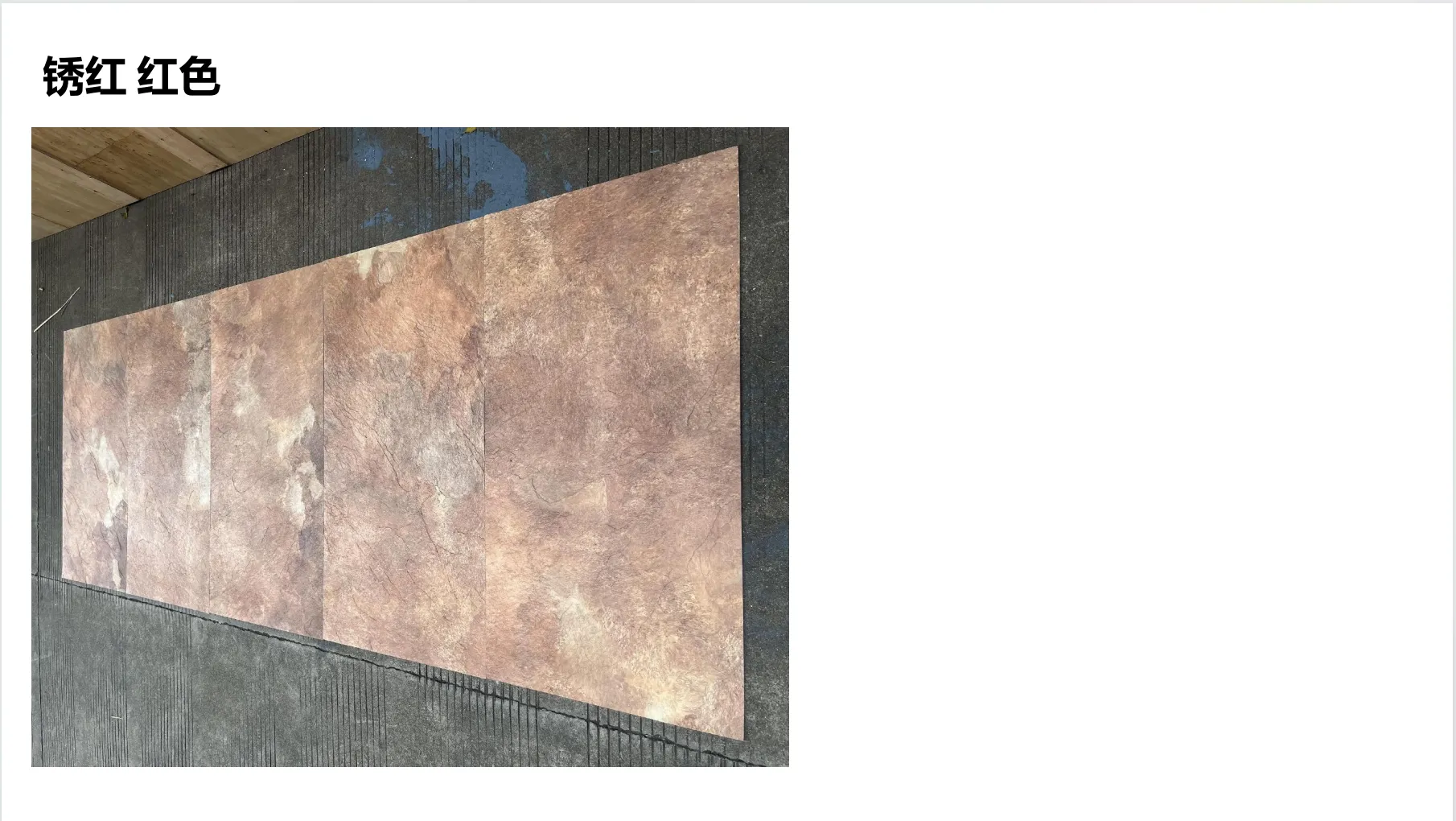
This is where MCM flexible stone steps in—and specifically, its Rusty Red variant. MCM, or Modified Composite Material, isn't your average building material. Think of it as nature's resilience meets modern engineering: a lightweight, flexible panel made from a blend of natural minerals, polymers, and specialized additives. It's been turning heads in architecture for years, thanks to its ability to mimic the look of stone, wood, or concrete while being easier to install and more durable than traditional options. But in healthcare, it's the antimicrobial properties of Rusty Red MCM that are making it a game-changer.
Let's start with the basics: what makes Rusty Red MCM different? Unlike stainless steel or fair-faced concrete, which are passive surfaces (relying entirely on cleaning to stay germ-free), MCM is engineered to be actively antimicrobial. During production, microscopic antimicrobial agents—often silver ions, known for their natural ability to disrupt bacterial cell membranes—are integrated directly into the material's matrix. This isn't a coating that wears off after a few months; it's part of the panel itself, meaning it keeps working 24/7, even in hard-to-reach corners or after years of heavy use.
Testing tells the story: independent labs have found that Rusty Red MCM inhibits the growth of common healthcare-associated pathogens by over 99% within 24 hours. That includes MRSA , a drug-resistant superbug that plagues hospitals, and C. difficile , which causes life-threatening infections. For context, standard ceramic tiles, even when cleaned daily, can see bacterial colonies rebound to pre-cleaning levels within hours. Stainless steel? It's better, but scratches create niches where germs can hide. MCM's non-porous surface and embedded antimicrobial agents eliminate that risk entirely.
Of course, in healthcare, "antimicrobial" is just one item on a long list of must-haves. Let's break down why Rusty Red MCM isn't just a safer choice—it's a smarter one.
Hospitals are tough environments. Stretchers scrape against walls, IV poles bump into corners, and cleaning crews use harsh chemicals daily. A material that chips, stains, or degrades under this kind of stress isn't just a maintenance headache—it's a safety risk. Cracked tiles or peeling paint can trap germs, and replacing damaged surfaces means downtime (and cost) that healthcare facilities can't afford.
Rusty Red MCM is built to withstand this chaos. Its composite structure makes it resistant to impacts, scratches, and chemical corrosion. Unlike fair-faced concrete, which can absorb moisture and crack over time, MCM is water-resistant, making it ideal for high-humidity areas like operating rooms or rehabilitation pools. And because it's flexible (hence "flexible stone"), it can bend slightly without breaking—perfect for curved walls or uneven surfaces, which are common in modern healthcare design.
Healthcare design has come a long way from the sterile, all-white rooms of the past. Today, architects and clinicians know that environment matters for patient recovery: warm colors, natural textures, and calming aesthetics can reduce anxiety, lower blood pressure, and even speed up healing. But traditional antimicrobial materials often force a trade-off: you can have safety, or you can have beauty—not both.
Rusty Red MCM refuses that trade-off. Its Rusty Red hue is warm and earthy, evoking the comfort of natural stone without the weight or porosity. Imagine a pediatric ward where the walls aren't stark white, but a soft rust color that feels like a cozy cabin instead of a clinic. Or an oncology unit where the calming texture of MCM panels helps patients feel more at ease during treatment. Because MCM can be custom-cut into any shape or size, it also adapts to unique design needs—whether it's wrapping around a nurses' station, covering a ceiling, or even cladding medical equipment. It's not just a surface; it's a design tool that lets healthcare spaces feel human again.
Anyone who's worked in hospital construction knows: time is money, and downtime is dangerous. Traditional stone or concrete panels are heavy, requiring specialized labor and structural support to install. That means longer construction timelines, higher labor costs, and more disruption to patient care. MCM flexible stone, by contrast, weighs a fraction of natural stone—around 3-5 kg per square meter, compared to 20-30 kg for marble or concrete. This makes it easier to transport, handle, and install, cutting down on construction time by up to 50%.
For existing hospitals undergoing renovations, this is a lifesaver. Imagine upgrading the walls in a busy emergency department without shutting it down for weeks. MCM panels can be installed quickly, often over existing surfaces, minimizing disruption. And because they're lightweight, they don't require extra structural reinforcement, which saves on material and engineering costs. It's a win-win: facilities get a safer, better-looking surface, and patients and staff barely notice the upgrade process.
Curious how Rusty Red MCM compares to the materials healthcare facilities have relied on for years? Let's take a closer look:
| Material | Antimicrobial Activity | Durability | Maintenance | Aesthetic Appeal | Sustainability |
|---|---|---|---|---|---|
| Rusty Red MCM Flexible Stone | 99% inhibition of bacteria (24-hour test); built-in silver ions | Impact-resistant, scratch-proof, chemical-resistant; 20+ year lifespan | Non-porous; easy to clean with standard disinfectants; no grout lines | Warm, earthy Rusty Red hue; customizable textures; flexible for curved surfaces | Low VOC emissions; recyclable; made from natural minerals |
| Fair-Faced Concrete | None; porous surface harbors bacteria | Durable but prone to cracking/moisture damage | Requires sealing; hard to clean deep pores; stains easily | Cold, industrial look; limited color options | High embodied carbon; not recyclable |
| Stainless Steel | Passive; relies on cleaning; scratches trap germs | Durable but prone to fingerprints/scratches | Needs frequent polishing; shows smudges easily | Sleek but sterile; clinical appearance | Recyclable but energy-intensive to produce |
| Ceramic Tile | None; grout lines harbor bacteria | Prone to chipping; grout cracks over time | Grout requires sealing; hard to clean mold in crevices | Variety of colors but limited texture; cold feel | High water usage in production; limited recyclability |
The takeaway? Rusty Red MCM outperforms traditional materials in nearly every category that matters for healthcare: it's safer, more durable, easier to maintain, more aesthetically versatile, and more sustainable. It's not just an upgrade—it's a reimagining of what a healthcare surface can be.
Still skeptical? Let's look at a real example. In 2023, a 300-bed hospital in Chicago renovated its neonatal intensive care unit (NICU) using Rusty Red MCM panels. The goal was twofold: reduce the risk of infection in premature babies (who have underdeveloped immune systems) and create a warmer, less stressful environment for families. Within six months, the hospital reported a 40% drop in surface-related infections in the NICU. Nurses noted that the panels were easier to clean than the old ceramic tiles, and parents commented that the Rusty Red color made the space feel "less like a hospital and more like a home."
Another example: a rehabilitation center in Portland replaced its fair-faced concrete walls with Rusty Red MCM in patient therapy rooms. Therapists had long complained that the concrete absorbed sweat and moisture, leading to unpleasant odors and mold growth. After installing MCM, the rooms stayed dry, odors disappeared, and the flexible panels even held up to patients leaning or falling against them during physical therapy sessions. "It's like night and day," one therapist told the center's administrator. "I don't worry about germs anymore, and the patients seem more relaxed here now."
Sustainability isn't just a buzzword in healthcare—it's a responsibility. Hospitals are energy and resource-intensive, and every decision, from lighting to building materials, impacts the environment. Rusty Red MCM aligns with this mission, making it a top choice for facilities aiming for LEED certification or other green building standards.
First, MCM is made from natural materials: a mix of stone powder, mineral oxides, and recycled polymers. This reduces reliance on virgin resources and lowers the material's carbon footprint compared to concrete or steel. Second, its lightweight nature cuts down on transportation emissions—trucks can carry more panels per trip, reducing fuel use. Third, MCM is 100% recyclable at the end of its lifespan, so old panels don't end up in landfills. And finally, its durability means less frequent replacement, which reduces waste over time.
For healthcare facilities, this isn't just good for the planet—it's good for the bottom line. Green building materials often qualify for tax incentives or grants, and sustainable design can improve patient outcomes (studies show that access to natural light and eco-friendly materials reduces stress and speeds recovery). It's a circular benefit: a material that protects patients, saves money, and helps the environment.
At the end of the day, healthcare is about people: patients fighting to get better, families waiting anxiously, staff working tirelessly to care for others. The surfaces around them shouldn't be an afterthought—they should support that mission. Rusty Red MCM does exactly that: it's a surface that protects, heals, and comforts, all at once.
Imagine a world where every hospital wall, countertop, and cabinet is actively working to keep germs away. Where nurses don't have to spend extra time scrubbing grout lines. Where patients walk into a room and feel calm, not clinical. That's the future Rusty Red MCM is helping to build—a future where healthcare surfaces are as compassionate as the people who use them.
So the next time you walk into a hospital, take a closer look at the walls. If they're warm, earthy, and quietly working to keep you safe, chances are they're made of Rusty Red MCM flexible stone. And that's a sign that the facility cares—not just about fighting germs, but about creating spaces where healing can truly happen.
Recommend Products












