
Walk down any city street, and you'll notice how buildings talk. Some whisper, blending into the background with muted tones and safe choices. Others shout, their facades bold and unapologetic, demanding a second glance. But the ones that truly linger in our minds? They don't just speak—they connect . They bridge the gap between architecture and emotion, turning concrete and steel into stories. That's the magic of a well-crafted facade. And in a world where design often gets bogged down by technical constraints, MCM's Big Slab Board Series is rewriting the rules—especially with its showstopper: Rusty Red. This isn't just a cladding material; it's a tool for architects and dreamers to create facades that feel less like structures and more like living, breathing parts of our environment.
For decades, building facades have been stuck in a pattern—smaller cladding tiles, endless grout lines, and a look that often feels fragmented. Think of it like a puzzle with too many pieces: even if each tile is beautiful, the joints between them break the flow, creating a busy, disjointed surface. Enter MCM's Big Slab Board Series. As the name suggests, these aren't your average cladding panels. We're talking about expansive sheets that stretch farther, wider, and more seamlessly than traditional options. And when you pair that size with a color as rich and evocative as Rusty Red? You get a facade that doesn't just cover a building—it transforms it.
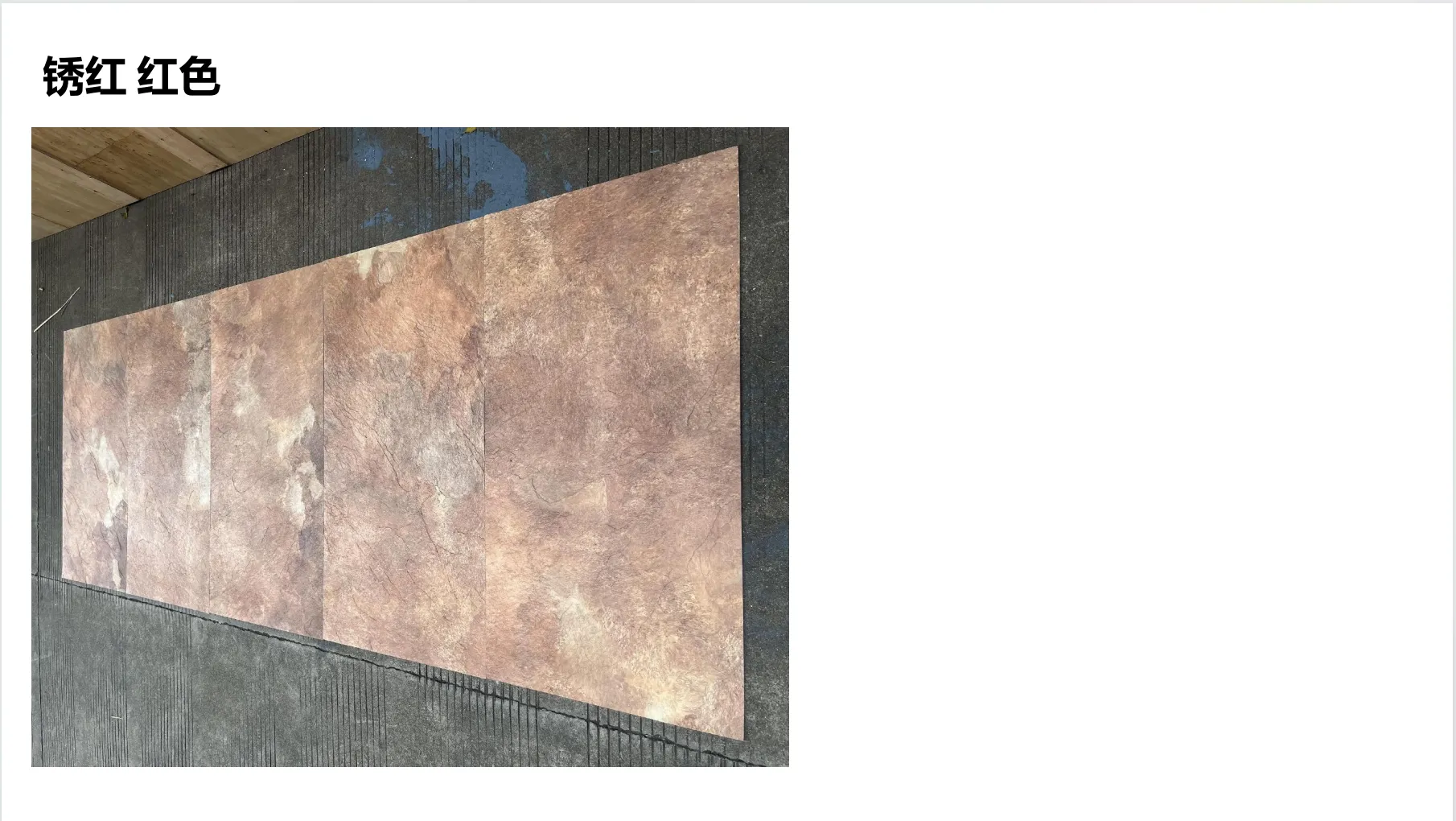
But what makes Big Slab so game-changing? It's simple: fewer joints. When each panel spans larger surface areas, there's less need for the gaps that disrupt visual flow. Imagine a wall covered in small, 12x12 inch tiles versus one wrapped in 4x8 foot slabs. The difference is night and day. The small tiles create a grid-like pattern, busy and distracting. The big slabs? They read as a single, cohesive canvas, letting the material's color and texture take center stage. For Rusty Red, this means the hue can unfold like a sunset across the facade—deepening in some areas, softening in others—without being chopped up by lines. It's the difference between a painting and a mosaic; both can be art, but one feels more intentional, more whole .
Let's talk about that color. Rusty Red isn't just "red with a hint of brown." It's a shade with history. It's the color of a weathered barn door that's seen decades of sun and rain, the hue of desert sand at dusk when the sky bleeds into the earth, the warmth of aged copper that's turned from bright metal to something softer, more lived-in. When you run your hand over a Rusty Red MCM Big Slab, you'll feel texture that mimics natural stone—subtle grooves and pits that catch the light, creating depth that flat paint or smooth tiles can never replicate. It's a material that invites touch, that makes you want to pause and appreciate the details.
Architects and designers often talk about "biophilic design"—the idea that connecting buildings to nature improves well-being. Rusty Red leans into that. It's not a cold, artificial color; it's grounded, organic, and familiar. Picture a community center in a neighborhood that's seen better days. Swap its cracked, gray concrete facade for Rusty Red Big Slabs, and suddenly, the building feels like it belongs. It's warm, approachable, and full of character—exactly the kind of space that brings people together. Or imagine a modern office building in a downtown district dominated by glass and steel. Adding Rusty Red accents (or even a full facade) breaks up the sterility, adding a touch of humanity to an otherwise impersonal streetscape. It's a color that says, "This building wasn't just built—it was crafted with care."
We've touched on the aesthetics of fewer joints, but the benefits go beyond looks. Let's start with functionality. Joints are weak points. They're where water can seep in, where dirt and grime collect, where mold might grow. With MCM Big Slab's reduced joint count, there are fewer places for problems to start. That means less maintenance over time—no more scrubbing grout lines or replacing cracked tiles. For building owners, that translates to lower costs and less hassle. For occupants, it means a facade that stays looking fresh for years, not just months.
Then there's sustainability. MCM materials, including flexible stone, are engineered to be lightweight. That might not sound like a big deal, but when you're transporting and installing large slabs, every pound counts. Lighter materials mean less fuel used in shipping, less strain on a building's structural system, and easier installation (which cuts down on labor time and energy). And because MCM Big Slabs are durable—resistant to fading, scratching, and weathering—they don't need to be replaced as often as other cladding options. That reduces waste and keeps more materials out of landfills. It's a small choice that adds up to a big impact for the planet.
But perhaps the most underrated benefit is the emotional one. A sleek, joint-free facade feels intentional. It sends a message that the people who designed and built the space cared about how it makes others feel. Think about walking into a school with a Rusty Red Big Slab facade. The kids might not know why, but they'll sense that this isn't just any building—it's a place that's special, that's worth paying attention to. That feeling of care can shape how we interact with our environment, making us more likely to engage with the space and the community around it.
None of this would be possible without MCM's commitment to material science. At the heart of Big Slab Board Series is flexible stone—a revolutionary material that marries the best of natural stone and modern engineering. Natural stone is beautiful, but it's heavy, brittle, and hard to work with in large pieces. Flexible stone, on the other hand, is lightweight (up to 70% lighter than natural stone), bendable, and durable. It can be cut into massive slabs without cracking, making it perfect for Big Slab applications.
How does it work? Flexible stone starts with natural stone aggregates—crushed marble, travertine, or granite—mixed with a polymer binder that adds flexibility without sacrificing strength. The result is a material that looks and feels like natural stone but can be curved, bent, or installed on uneven surfaces with ease. For Rusty Red, the aggregates are tinted to that signature hue, then pressed into slabs that capture the texture of weathered rock. It's a process that balances art and science, ensuring each panel is both beautiful and built to last.
And let's not forget other standout products in the MCM lineup that complement Big Slab Board Series. Take boulder slab, for example—rough-hewn and rugged, it adds a bold, natural contrast when paired with Rusty Red's smooth warmth. Or travertine (starry red), with its subtle sparkle that mimics a night sky, adding depth to facades that need a touch of magic. These products aren't just alternatives; they're partners, letting designers mix and match textures and colors to create truly unique spaces. But even among this diverse range, Rusty Red Big Slab stands out for its versatility. It plays well with others, but it also holds its own as a star.
One of the most surprising things about Rusty Red MCM Big Slab is how well it adapts to different architectural styles. You might think a bold red hue would only work in modern or industrial designs, but that couldn't be further from the truth. Let's break it down:
Indoors, too, Rusty Red Big Slab makes a statement. Imagine a restaurant with a feature wall of these slabs behind the bar, the color warming up the space and creating a cozy, intimate atmosphere. Or a retail store using it as a backdrop for clothing displays, the texture adding visual interest that draws customers in. It's a material that transitions effortlessly from exterior to interior, creating a cohesive design language throughout a building.
Still not convinced that Rusty Red MCM Big Slab is the right choice for your next project? Let's see how it compares to traditional cladding materials. The table below breaks down key factors like joint count, installation time, weight, and durability—so you can make an informed decision.
| Material | Joints (per 100 sq ft) | Installation Time | Weight (per sq ft) | Durability |
|---|---|---|---|---|
| Rusty Red MCM Big Slab | 2-3 joints | Fast (large panels = fewer cuts) | 2-3 lbs | High (resistant to fading, water, impact) |
| Natural Stone Slabs | 5-7 joints | Slow (heavy, requires specialized labor) | 15-20 lbs | High (but prone to cracking if dropped) |
| Ceramic Tiles (12x12 in) | 80+ joints | Slow (many tiles, grouting required) | 5-6 lbs | Medium (can chip, grout stains) |
| Vinyl Siding | 15-20 joints | Medium (lightweight but lots of pieces) | 0.5-1 lb | Low (fades, warps in extreme weather) |
As you can see, MCM Big Slab outperforms traditional options in almost every category. Fewer joints mean a cleaner look and less maintenance. Lighter weight reduces structural stress and installation costs. And durability ensures your facade will look great for years to come. When you factor in the emotional impact of Rusty Red's warm, inviting color, it's clear this isn't just a building material—it's an investment in creating spaces that matter.
At the end of the day, buildings are more than just walls and roofs. They're the backdrops to our lives—where we work, learn, play, and connect. A facade that's cold, generic, or poorly designed fades into the background. But one that's crafted with care, using materials like Rusty Red MCM Big Slab? It becomes part of the community's identity. It's the building that kids point to and say, "Wow, that's cool." It's the one that makes passersby stop and take photos. It's the one that turns a street into a neighborhood.
MCM's Big Slab Board Series, with its focus on fewer joints and richer materials, is changing the way we think about facades. It's not just about covering a building—it's about creating something that resonates. And Rusty Red? It's the perfect ambassador for that mission. It's a color with heart, a material with purpose, and a choice that says, "This space deserves to be noticed."
So the next time you're planning a project—whether it's a small café or a towering office building—think about the story you want to tell. Think about the feeling you want to evoke. And then ask yourself: Could Rusty Red MCM Big Slab be the voice that helps you tell that story? We think the answer is yes. Because great architecture isn't just about what you build—it's about how you make people feel.
Recommend Products












