
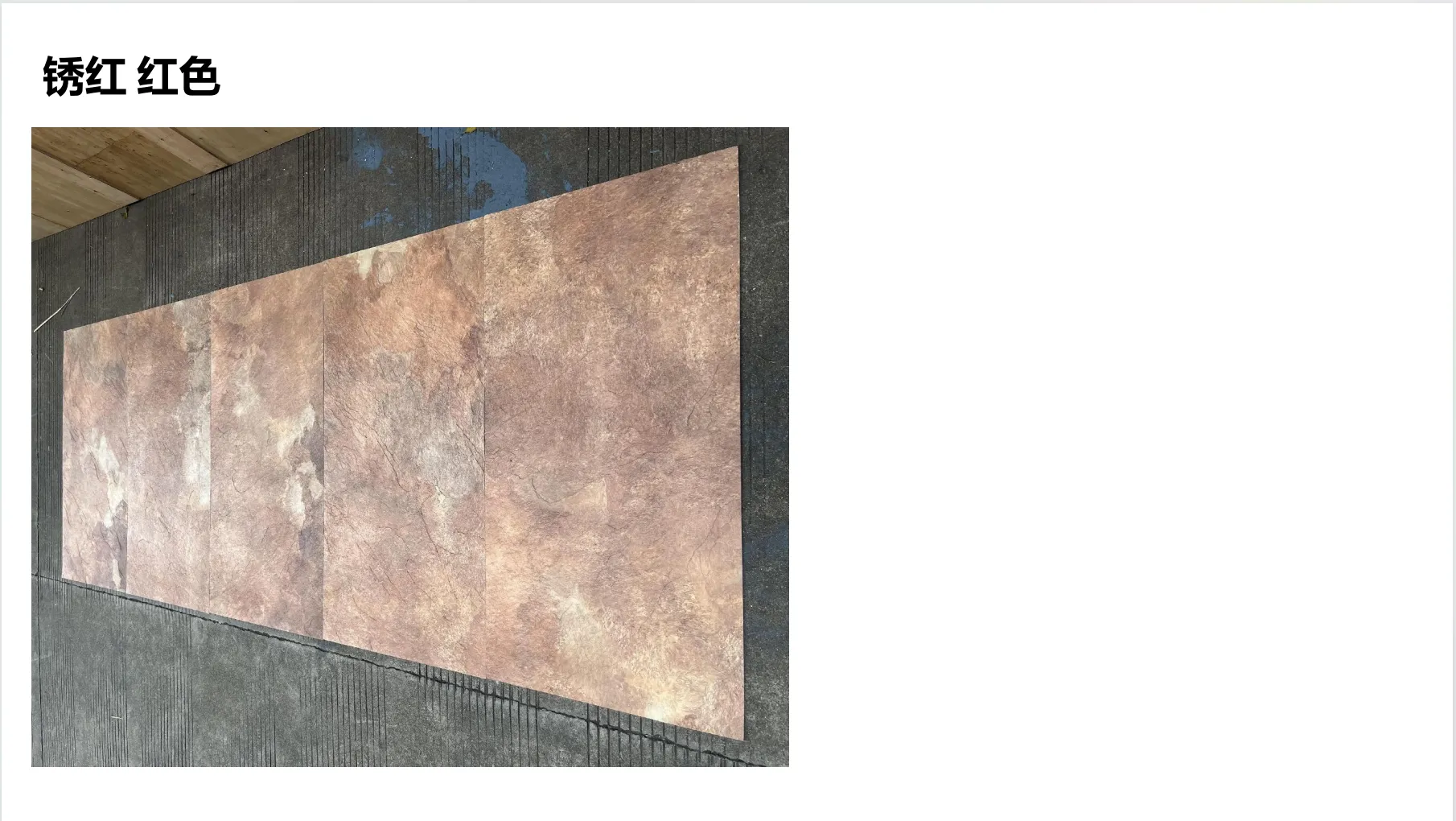
In the world of architecture and construction, every material tells a story. It's not just about bricks and mortar—or in this case, innovative cladding and panels—it's about trust. Trust that the surfaces we walk on, the walls that shelter us, and the facades that define our cities will stand strong against time, weather, and the demands of modern life. For Rusty Red MCM, that trust is built on something tangible: rigorous certification. Today, we're diving into how their products, from the flexible elegance of MCM flexible stone to the industrial chic of fair-faced concrete , meet and exceed two of the most respected global standards: CE and ASTM. Because when it comes to building, peace of mind isn't a luxury—it's a necessity.
Certifications aren't just stamps on a piece of paper. They're promises. For builders, they're a guarantee that a product has been tested, scrutinized, and proven to meet strict criteria for safety, durability, and performance. For architects, they're a tool to balance creativity with responsibility—knowing that the stunning lunar-inspired textures of lunar peak black or the rustic charm of rust square line stone won't compromise on structural integrity. And for homeowners and occupants? They're the quiet assurance that the spaces they love are built with materials that prioritize their well-being.
CE marking, a requirement for products sold in the European union, isn't just about compliance—it's a declaration that a product meets the EU's strict health, safety, and environmental protection standards. ASTM International, on the other hand, is a globally recognized leader in developing voluntary consensus standards, trusted by industries worldwide for their rigor and relevance. Together, these certifications act as a universal language, ensuring that whether a project is in Paris, New York, or Tokyo, the materials used speak the same language of quality.
Earning the CE mark is no small feat. It starts long before a product hits the market, with exhaustive testing across multiple categories. For Rusty Red MCM's MCM flexible stone , for example, this means evaluating everything from fire resistance to thermal expansion. Imagine a material that can bend without breaking, mimic the look of natural stone, and still meet the EU's strict fire safety standards—all while being lighter and easier to install than traditional stone. That's the magic of MCM flexible stone, and the CE mark is proof that its beauty isn't just skin deep.
Take lunar peak black , a product that captures the dramatic, otherworldly texture of a moonlit mountain range. To earn CE certification, it undergoes tests for water absorption (critical for preventing mold and decay in humid climates), impact resistance (to withstand everything from hailstorms to accidental bumps), and even slip resistance (because safety shouldn't take a backseat to aesthetics). For architects designing public spaces—think busy train stations or bustling shopping malls—these tests aren't just boxes to check; they're the difference between a design that works in theory and one that thrives in practice.
While CE is focused on the EU market, ASTM standards have a global reach, influencing everything from aerospace materials to construction products. For Rusty Red MCM, complying with ASTM standards means going above and beyond basic requirements. Let's take fair-faced concrete , a material celebrated for its raw, industrial beauty. ASTM C172, a standard for sampling fresh concrete, ensures that every batch of fair-faced concrete from Rusty Red MCM has consistent strength and workability. ASTM C42, which covers sampling and testing concrete masonry units, guarantees that the finished panels will hold up under the weight of a building, resist cracking, and maintain their structural integrity for decades.
Then there's rust square line stone , a product that blends the warmth of rusted metal with the durability of stone. ASTM G102, a standard for estimating the corrosion rate of metals, ensures that the "rust" finish isn't just for show—it's stable, non-toxic, and won't flake or degrade over time. For homeowners who want that perfect blend of industrial edge and low maintenance, this is game-changing. It means they can enjoy the aesthetic without worrying about constant upkeep or safety hazards.
To truly understand the impact of these certifications, let's take a closer look at some of Rusty Red MCM's most popular products and how they measure up to CE and ASTM standards. The table below breaks down key features, certifications, and why they matter for real-world projects:
| Product Name | Certifications Met | Key Features Tested | Why It Matters |
|---|---|---|---|
| MCM Flexible Stone | CE, ASTM C1185 (Standard for Fiber-Reinforced Cementitious Panels) | Flexural strength, impact resistance, water absorption | Ideal for curved surfaces and high-traffic areas; ensures durability without sacrificing design flexibility. |
| Fair-Faced Concrete | CE, ASTM C172 (Sampling Fresh Concrete), ASTM C42 (Testing Masonry Units) | Compressive strength, workability, surface finish consistency | Guarantees structural stability and uniform appearance, critical for large-scale commercial projects. |
| Rust Square Line Stone | CE, ASTM G102 (Corrosion Rate Estimation) | Corrosion resistance, color retention, scratch resistance | Maintains its rustic aesthetic over time, perfect for outdoor facades and landscape design. |
| Lunar Peak Black | CE, ASTM E119 (Fire Resistance of Building Construction) | Fire resistance, thermal conductivity, slip resistance | Safe for use in high-rise buildings and public spaces; adds dramatic texture without compromising fire safety. |
Certifications are impressive on paper, but their true value shines in the spaces they help create. Take the recent renovation of a historic theater in Barcelona, where architects chose MCM flexible stone for the curved auditorium walls. The material's CE certification for fire resistance (EN 13501-1, part of the CE marking process) was non-negotiable, as historic buildings often have strict fire safety codes. The result? A space that honors the theater's past with modern durability, where every curve and contour tells a story of old and new coexisting.
In Chicago, a boutique hotel opted for fair-faced concrete panels for its exterior, drawn to the material's minimalist elegance. Thanks to ASTM certifications, the construction team knew the panels would withstand the city's harsh winters—freezing temperatures, snow, and ice—without cracking or losing their finish. Today, the hotel stands as a testament to how certified materials can turn design vision into reality, even in the most challenging climates.
And in Tokyo, a residential complex used lunar peak black for its facade, wanting to evoke the city's blend of futuristic innovation and natural beauty. The product's CE and ASTM certifications gave the developers confidence that the panels would resist Japan's humid summers and typhoon-force winds, ensuring the building remains a striking landmark for years to come. For the residents inside, it's more than just a pretty face—it's a home they can trust.
As the construction industry evolves, so too do the demands on building materials. Today's architects and builders aren't just looking for durability—they want sustainability, versatility, and beauty. Rusty Red MCM's commitment to CE and ASTM certifications positions them at the forefront of this evolution. Take MCM flexible stone , for example. Its lightweight composition reduces transportation costs and carbon footprint, while its flexibility allows for innovative designs that minimize waste. By certifying these eco-friendly features, Rusty Red MCM isn't just meeting standards—they're redefining what's possible.
Looking ahead, we can expect even more integration between certification and innovation. Imagine a world where building materials aren't just certified for safety and durability, but for their ability to purify air, generate energy, or adapt to changing temperatures. With companies like Rusty Red MCM leading the way—investing in research, testing, and certification—this future is closer than we think. And when that day comes, we'll know that the materials shaping our world are backed by the same rigorous standards that have made CE and ASTM synonymous with trust.
At the end of the day, certifications like CE and ASTM aren't just about technical specifications—they're about people. They're about the architect who stays up late refining a design, knowing the materials will perform as promised. They're about the builder who walks a construction site, confident that the panels they're installing will protect the families who will one day call that building home. They're about the parent pushing a stroller down a sidewalk lined with rust square line stone , not worrying about cracks or sharp edges. They're about the traveler admiring a skyscraper clad in lunar peak black , unaware of the certifications that make its beauty possible—but benefiting from them all the same.
Rusty Red MCM's dedication to meeting global standards like CE and ASTM is a reminder that in construction, as in life, the best things are built on a foundation of trust. It's a trust that turns blueprints into buildings, ideas into realities, and materials into memories. So the next time you walk into a space that takes your breath away—whether it's a sleek modern office with fair-faced concrete walls or a cozy café with MCM flexible stone accents—take a moment to appreciate the certifications that make it all possible. They may not be visible to the eye, but they're the invisible hand shaping the world we live in.
In the end, it's not just about building materials. It's about building trust. And with Rusty Red MCM, that trust is certified.
Recommend Products












