


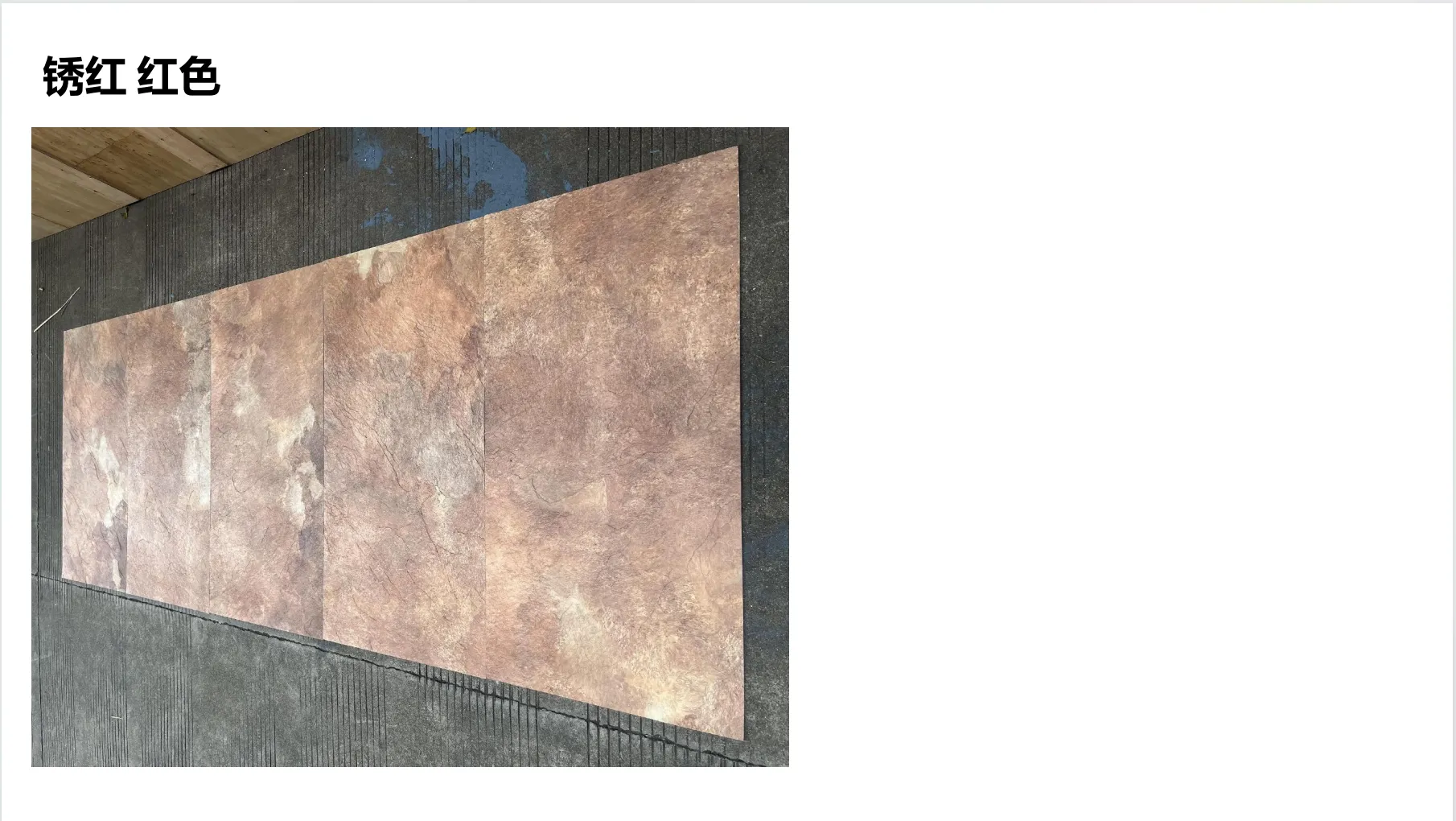
In the world of architecture, color is more than just a visual choice—it's a language. It speaks to emotion, tells stories, and shapes how we experience space. Lately, one hue has been quietly stealing the spotlight, bridging the gap between modern boldness and timeless warmth: rusty red . Not the bright crimson of a fire engine or the muted brick of old factories, but a nuanced, earthy tone that feels both weathered and alive. And at the heart of this trend lies MCM (Modified Composite Material) products—innovative, versatile, and designed to turn this color into something tangible, durable, and deeply human.
Walk through any design district today, and you'll spot it: a café facade glowing with rusty red panels that catch the afternoon light, a hotel lobby with a mosaic wall in varying shades of amber and terracotta, a community center where rust square line stone adds texture to clean, modern lines. Designers and architects aren't just choosing rusty red for its aesthetics—they're drawn to its ability to create spaces that feel lived-in , even when brand-new. It's a color that doesn't shout; it invites. And when paired with MCM's flexibility and strength, it becomes a tool to reimagine how buildings interact with their environments.
This article dives into why rusty red MCM is becoming a global phenomenon. We'll explore the allure of MCM flexible stone, the specific products driving the trend, the cultural and historical threads that make this color so resonant, and how it's transforming spaces from Parisian bistros to Tokyo boutiques. Let's start with the material itself: MCM, the unsung hero behind rusty red's rise.










