
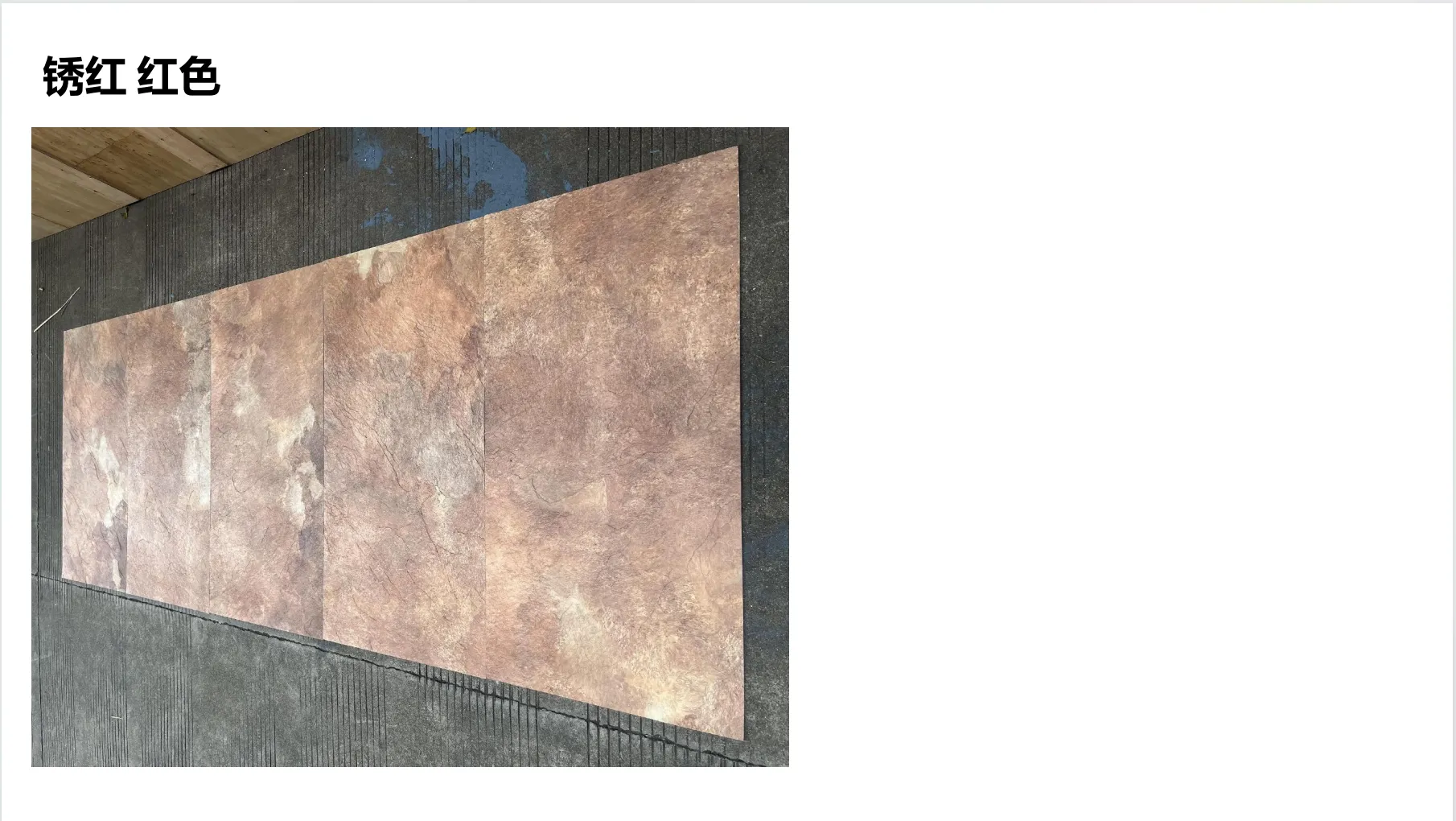
In the world of commercial architecture and design, every decision carries weight—from aesthetics that draw customers in to budgets that keep projects viable. For years, designers and developers have grappled with a familiar trade-off: choosing materials that look stunning and stand the test of time without breaking the bank. Enter Modified Composite Material (MCM), a game-changer that's redefining what's possible. Among its many iterations, Rusty Red MCM has emerged as a standout, blending industrial charm with practicality. But beyond its visual appeal lies a deeper question: Does investing in Rusty Red MCM make financial sense over the long haul? This article dives into the numbers, exploring initial costs, hidden savings, and real-world applications to show why Rusty Red MCM isn't just a design choice—it's a strategic investment.
Commercial spaces—whether bustling retail hubs, sleek office buildings, or cozy hospitality venues—demand materials that can keep up with heavy foot traffic, harsh weather, and evolving style trends. Rusty Red MCM, part of the broader MCM flexible stone family, offers a unique combination of durability, flexibility, and visual intrigue. Unlike natural stone, which is heavy and prone to cracking, or painted concrete, which fades and chips, MCM is engineered to be lightweight yet tough, making it ideal for both interior and exterior use. And with the MCM big slab board series available, large-scale installations become faster and more cost-effective, reducing labor hours and minimizing seams for a seamless look.
MCM, or Modified Composite Material, is a revolutionary cladding solution crafted from a blend of mineral aggregates, polymers, and reinforcing fibers. The result? A material that's 70% lighter than natural stone but just as strong, with the added bonus of flexibility. This flexibility means it can be curved, cut, or shaped to fit even the most intricate architectural designs—think wave panels, semicircle boards, or custom geometric patterns—without compromising structural integrity. For commercial projects, this adaptability translates to creative freedom without the usual headaches of working with rigid materials.
Take the MCM flexible stone line, for example. Designed to mimic the texture of natural stone—from rough-hewn granite to smooth travertine—these panels offer the best of both worlds: the beauty of natural materials with the durability of modern engineering. And then there's the MCM big slab board series , which features larger-than-standard panels (often up to 4 feet by 8 feet). This not only speeds up installation but also reduces the number of seams, creating a cleaner, more polished finish that's perfect for high-end commercial spaces where aesthetics matter as much as functionality.
With a keyword list boasting over 100 MCM variants—from lunar peak silvery to travertine (starry blue) —why does Rusty Red deserve special attention? For starters, it's a color that tells a story. Rusty Red evokes warmth and character, blending industrial ruggedness with a hint of vintage charm. It pairs beautifully with modern elements like foamed aluminium alloy board (vintage silver) for a sleek contrast or with wood grain textures for a cozy, rustic vibe. In commercial settings, this versatility is gold: a coffee shop might use Rusty Red MCM for accent walls to create a welcoming, artisanal feel, while a tech startup could incorporate it into their office lobby to balance edgy design with approachable warmth.
But Rusty Red isn't just about looks. Unlike lighter MCM colors that might show scuffs or stains, its rich, earthy tone hides wear and tear, making it ideal for high-traffic areas like retail storefronts or restaurant exteriors. It also ages gracefully—rather than fading into a dull shade, Rusty Red develops a subtle patina over time that enhances its character, much like a well-loved leather jacket. This "living" quality means spaces stay visually interesting for years, reducing the need for frequent updates or renovations.
Let's get down to brass tacks: What does Rusty Red MCM cost initially? Like any building material, the price tag depends on several factors, including panel size, customization, and installation complexity. To provide clarity, we'll break down the typical costs for a mid-sized commercial project (say, a 2,000 square foot exterior cladding job) and compare it to two common alternatives: natural rust stone and fair-faced concrete .
| Cost Component | Rusty Red MCM | Natural Rust Stone | Fair-Faced Concrete |
|---|---|---|---|
| Material Cost (per sq ft) | $12–$18 | $25–$40 | $8–$12 |
| Installation Labor (per sq ft) | $5–$8 | $10–$15 | $6–$10 |
| Structural Support | Minimal (lightweight panels) | Significant (requires reinforced framing) | Moderate (formwork and curing time) |
| Customization Fees | $0.50–$2/sq ft (cutting/shaping) | $5–$10/sq ft (specialty cuts) | $3–$7/sq ft (stamping/coloring) |
| Total Initial Cost (2,000 sq ft) | $35,000–$52,000 | $80,000–$110,000 | $28,000–$42,000 |
At first glance, fair-faced concrete seems cheaper than Rusty Red MCM, while natural rust stone is significantly pricier. But initial cost alone tells only part of the story. Let's unpack the numbers: Rusty Red MCM's material cost ($12–$18/sq ft) is higher than concrete but far lower than natural stone. Its lightweight nature also slashes structural support costs—no need for reinforced steel framing, which can add tens of thousands to a stone installation. Installation labor is another win: MCM panels are easy to handle, so crews can cover more area in less time, reducing hourly labor fees. And when it comes to customization, Rusty Red MCM's flexibility means unique shapes or patterns cost a fraction of what they would with natural stone, which is brittle and hard to cut without cracking.
For example, if a project requires curved panels to follow an architectural arch, Rusty Red MCM can be bent on-site with minimal effort, while natural stone would need to be custom-carved by a specialist—driving up costs and delaying timelines. Even fair-faced concrete, while initially cheaper, often requires expensive additives or staining to achieve a consistent, attractive finish, eroding its cost advantage. When you factor in these hidden expenses, Rusty Red MCM's initial price tag starts to look much more competitive.
Commercial materials don't just need to look good on day one—they need to survive the chaos of daily life. Rusty Red MCM excels here, thanks to its engineered composition. Unlike natural stone, which can absorb water and crack in freezing temperatures, or painted concrete, which chips when hit by debris, MCM panels are water-resistant, UV-stable, and impact-resistant. In coastal areas, where saltwater and humidity wreak havoc on buildings, Rusty Red MCM holds up without rusting (despite its name) or corroding. In urban environments, it resists graffiti and pollution buildup, maintaining its color even in smoggy cities.
Consider a retail storefront in a busy downtown area. Foot traffic, delivery trucks, and the occasional stray shopping cart can take a toll on exterior cladding. With Rusty Red MCM, scratches or dents are rare, and if they do occur, individual panels can be replaced in hours—no need to redo the entire wall. Compare that to natural stone, where a single chip might require grinding down the surrounding area and re-sealing, a process that's both time-consuming and costly. Over 10 years, these small repairs add up, making Rusty Red MCM's durability a major money-saver.
Maintenance is the silent budget killer for commercial spaces. Natural stone often requires annual sealing to prevent staining, a service that costs $1–$3 per square foot. Fair-faced concrete may need power washing every few months and re-painting every 3–5 years, adding up to thousands in upkeep. Rusty Red MCM? It's virtually maintenance-free. A simple wipe with soap and water is enough to remove dirt or spills, and there's no need for sealing, painting, or specialized treatments. For a 2,000 square foot installation, that's a savings of $2,000–$6,000 per year compared to natural stone, and $1,000–$3,000 per year compared to concrete.
Take a restaurant with Rusty Red MCM accent walls in the dining area. Spills are inevitable—red wine, coffee, grease—but the material's non-porous surface means stains wipe away easily with a damp cloth. No need for harsh chemicals or professional cleaning services. Over five years, that's $5,000–$15,000 saved, money that can be reinvested in better menu items or customer experiences. For property managers, this low-maintenance factor also reduces tenant complaints and turnover, keeping spaces occupied and profitable.
In an era of rising energy costs, building materials that improve insulation are worth their weight in gold. Rusty Red MCM, with its composite structure, acts as a natural thermal barrier, reducing heat transfer between the interior and exterior of a building. In summer, it reflects sunlight, keeping interiors cooler and lowering AC usage; in winter, it traps heat, reducing heating bills. While the exact savings depend on climate and building size, studies show MCM-clad buildings can cut energy costs by 10–15% compared to those with traditional cladding.
For a 10,000 square foot office building, that's $2,000–$5,000 in annual energy savings. Over 20 years—the typical lifespan of MCM—that adds up to $40,000–$100,000. And with growing demand for sustainable, LEED-certified buildings, Rusty Red MCM can also help projects qualify for green building incentives or tax breaks, further boosting long-term ROI. It's a win-win: better for the planet and better for the bottom line.
The average lifespan of Rusty Red MCM is 20–30 years, far exceeding that of painted concrete (10–15 years) or even some natural stones (15–20 years with proper care). This longevity means fewer replacements over the life of a building, a critical factor for commercial properties with 50+ year lifespans. Let's crunch the numbers: If a building uses fair-faced concrete and needs to be re-clad every 12 years, that's two replacements (and two rounds of labor and material costs) over 30 years. With Rusty Red MCM, it's just one installation, saving tens of thousands in repeat expenses.
Consider a retail chain with 50 locations. If each store uses 1,000 square feet of cladding, switching to Rusty Red MCM could save $500,000–$1 million over 30 years in replacement costs alone. For developers, this longevity also adds value to the property, making it more attractive to buyers or tenants who want to avoid costly renovations down the line.
Foamed aluminium alloy board (vintage silver) is a popular choice for modern, industrial designs, prized for its metallic sheen and lightweight properties. However, it comes with a steep price tag: $18–$25 per square foot for materials alone, plus higher installation costs due to its rigidity. While it's durable, it lacks the warmth of Rusty Red MCM, making it less versatile for spaces aiming for a welcoming vibe. Over 20 years, the higher initial cost and limited aesthetic appeal make Rusty Red MCM a better value for most commercial projects.
Natural travertine, with its classic, porous texture, is a timeless choice, but it's expensive ($20–$35 per square foot) and high-maintenance. It scratches easily, absorbs stains, and requires frequent sealing. For a luxury hotel or high-end boutique, the aesthetic may justify the cost, but for most commercial spaces, Rusty Red MCM offers a similar earthy texture at half the price and with none of the upkeep headaches.
Fair-faced concrete is often hailed as a budget-friendly option, but its low initial cost masks long-term expenses. It fades, cracks, and requires regular maintenance, and its monochromatic look can feel cold and sterile. Rusty Red MCM, while slightly pricier upfront, offers better durability, lower upkeep, and a warmer aesthetic—making it the smarter choice for projects focused on long-term value.
A boutique hotel in Chicago's West Loop neighborhood wanted to stand out in a crowded market. They chose Rusty Red MCM for their exterior cladding and lobby accent walls, pairing it with foamed aluminium alloy board (vintage silver) for a modern-industrial look. Initially, the hotel's owners hesitated at the $45,000 price tag for 3,000 square feet of MCM, but they were won over by the material's durability and unique aesthetic. Five years later, the cladding looks as vibrant as day one, with zero maintenance costs beyond occasional cleaning. The hotel reports higher occupancy rates than competitors with traditional stone exteriors, attributing part of their success to the eye-catching Rusty Red design. When asked, the general manager noted, "We've saved at least $10,000 in maintenance alone, and guests constantly comment on how the lobby feels warm and inviting—something we never got with the concrete we originally considered."
A regional coffee chain with 20 locations decided to refresh their brand with a new store design. They chose Rusty Red MCM for their interior feature walls, replacing outdated wood paneling that required frequent staining and repairs. The initial cost per location was $8,000 for 500 square feet of MCM, but the chain estimates saving $2,000 per store annually in maintenance. Over five years, that's $200,000 in total savings, plus a more consistent, on-brand look across locations. Customers have responded positively, with social media mentions of the "cozy, industrial vibe" increasing by 35% since the renovation.
A 1980s office building in Denver needed a facade update to attract tech tenants. The developers chose the MCM big slab board series in Rusty Red, covering 10,000 square feet of exterior. The project cost $150,000, but the building's energy bills dropped by 12% post-renovation, saving $8,000 annually. Within three years, the energy savings alone offset the premium over concrete, and the building now commands 15% higher rents due to its modern, stylish design. "Tenants love the look, and we love the lower utility costs," said the property manager. "It was a no-brainer."
At the end of the day, commercial design is about balance—between aesthetics and affordability, creativity and practicality. Rusty Red MCM strikes that balance masterfully. While its initial cost may be slightly higher than fair-faced concrete, its durability, low maintenance, energy efficiency, and longevity make it a far smarter investment over time. For businesses and developers looking to create spaces that stand out, last longer, and save money in the long run, Rusty Red MCM isn't just a material choice—it's a strategic advantage.
Whether you're designing a cozy café, a sleek office, or a bustling retail space, Rusty Red MCM brings warmth, character, and resilience to the table. It's a material that works as hard as you do, adapting to your needs while keeping costs in check. In a world where every dollar counts, Rusty Red MCM proves that you don't have to sacrifice style for savings—or vice versa. It's the future of commercial cladding, and it's here now.
Recommend Products












