
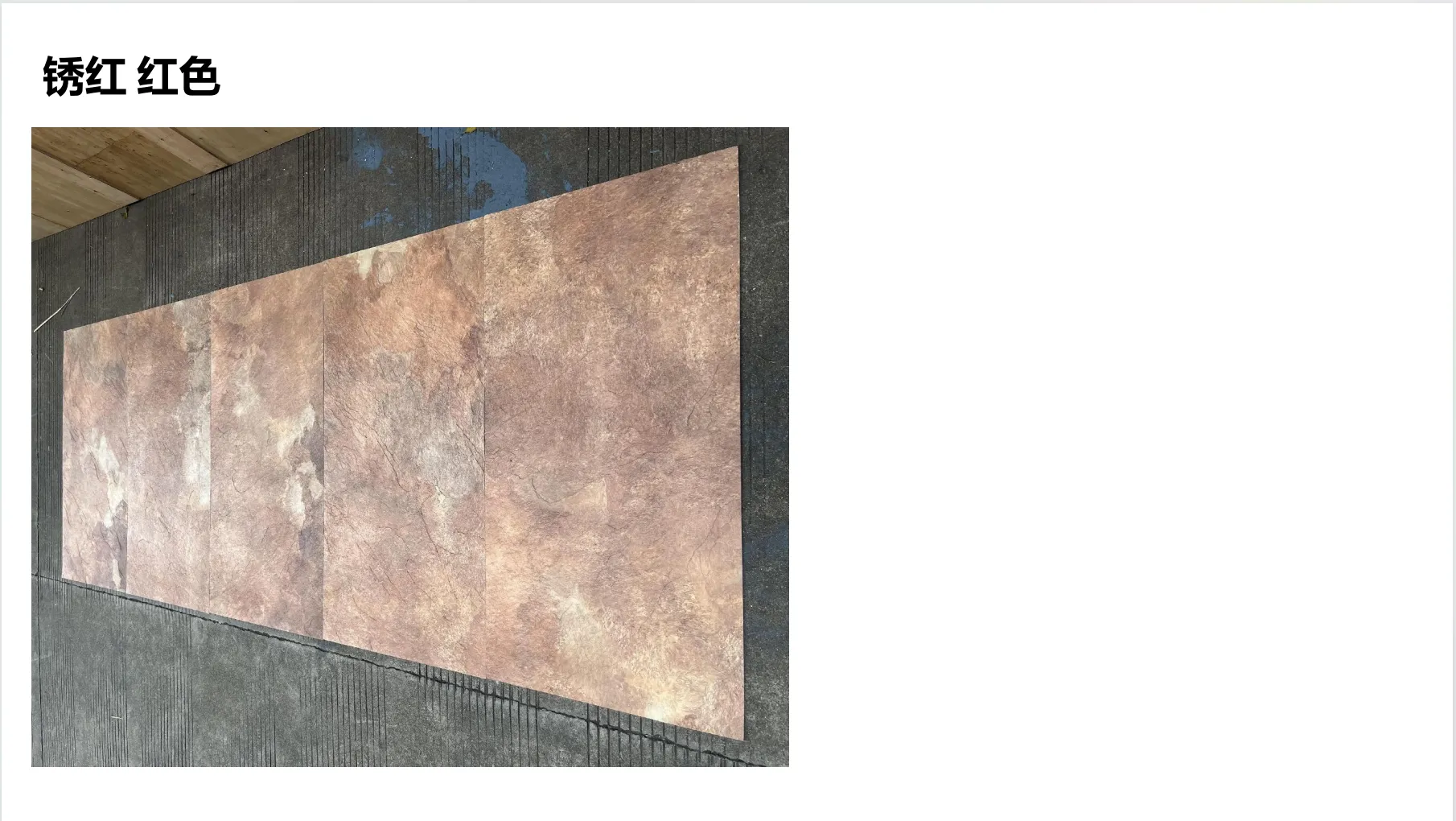
Industrial chic has always been about balancing raw edge with cozy warmth—think exposed brick, weathered wood, and metal accents that feel less like a factory and more like a lived-in story. But in recent years, there's one color that's quietly stolen the spotlight, turning utilitarian spaces into soulful retreats: rusty red. Not the bright, flashy hue of a fire engine, but a deep, earthy tone—rich with terracotta undertones, kissed by orange, and grounded in brown. It's the kind of color that feels both timeless and alive, like a well-worn leather jacket or a sunset over a desert plain. Today, we're diving into how to weave this warm, rugged palette into industrial chic interiors using MCM's stunning material lineup—because great design isn't just about looks; it's about feeling.
Industrial design often leans on neutrals—grays, blacks, whites—to keep that "cool" factor. But without warmth, those spaces can feel sterile, like walking through a museum exhibit instead of a home. Rusty red changes that. It's the bridge between industrial ruggedness and residential comfort. Imagine a living room with exposed steel beams: cold, right? Now drape a rusty red throw over the sofa, hang a rammed earth board (rusty red) accent wall, and suddenly, the steel feels less like machinery and more like a frame for something alive. Rusty red isn't just a color; it's a mood. It says, "This space has history. It's been loved. It's here to wrap you up."
But to make rusty red sing, you need the right supporting cast—materials that enhance its warmth, add texture, and keep the industrial vibe from tipping into chaos. Let's break down the MVPs of this palette, starting with the star itself.
At the center of it all is rusty red—deep, dimensional, and surprisingly versatile. Unlike flat, one-note reds, this shade has depth: think of old barn metal that's weathered into a patina, or clay bricks baked under a hot sun. It's not "loud"; it's "present." When used on large surfaces—like a rammed earth board (rusty red) feature wall—it creates a backdrop that feels both solid and soft. Run your hand over it, and you'll feel the texture of the rammed earth: gritty, organic, like holding a handful of soil from a ancient path. It's tactile, which matters in industrial design—spaces that invite touch feel more human.
Travertine is a classic for a reason—it's porous, veiny, and full of character. But travertine (starry red) takes it up a notch. Picture a slab where the base is a warm rusty red, and the veins are thin, silvery streaks that look like starlight caught in stone. It's subtle—you won't notice the "stars" at first glance—but when the light hits it, they shimmer, adding depth without overwhelming. Use it for a kitchen backsplash: the porous texture softens the red, while the starry veins add a touch of whimsy. Suddenly, washing dishes doesn't feel like a chore; it feels like staring at a night sky painted in earth tones.
Every warm palette needs a counterweight, and rough granite stone (dark grey) is the perfect anchor. This isn't your polished, shiny granite—it's rough-hewn, with a matte finish that feels like it was chiseled straight from a mountain. The dark grey is deep, almost charcoal, with flecks of black and white that add movement. Pair it with rusty red, and you get magic: the red warms the grey, and the grey cools the red, creating a balance that's both dynamic and calm. Use it for a coffee table top: set a rusty red ceramic vase on it, and suddenly, the table isn't just furniture—it's a conversation between earth and stone.
If rusty red is the color, rammed earth board (rusty red) is the texture. Made by compressing layers of soil, clay, and natural pigments, each board has a unique, marbled pattern—no two are alike. Run your fingers over it, and you'll feel the ridges and valleys, like the surface of a riverbed dried in the sun. It's organic, artisanal, and unapologetically imperfect. Hang it as a headboard in a bedroom: the rusty red hue will make the space feel like a desert oasis, while the texture adds a tactile element that makes you want to lean against it. It's not just a wall; it's a piece of the earth, brought inside.
You can't talk industrial chic without concrete, but fair-faced concrete is the refined cousin of the rough stuff. It's smooth, with a subtle matte finish and tiny air bubbles that give it character—no harsh chemicals or glossy sealants here. Its neutral, off-white tone is the perfect canvas for rusty red. Paint your walls fair-faced concrete, then add rusty red curtains and a travertine (starry red) side table, and the space feels open but not empty. Concrete keeps the palette from feeling too "busy," letting the rusty red and starry travertine take center stage. It's the quiet friend who makes everyone else shine.
The key to nailing this palette is balance—too much rusty red, and the space feels overwhelming; too little, and you lose that warm heartbeat. Here's a cheat sheet for combining these materials:
| Material | Role in the Palette | Best Pairings | Pro Tip |
|---|---|---|---|
| Rusty Red (Base) | Warmth anchor | Fair-faced concrete, rough granite (dark grey) | Use 30-40% of the space (walls, large furniture) |
| Travertine (Starry Red) | Depth & sparkle | Rusty red, fair-faced concrete | Accent pieces (backsplashes, side tables, art) |
| Rough Granite Stone (Dark Grey) | Contrast & grounding | Rusty red, rammed earth board (rusty red) | Countertops, flooring, or statement furniture |
| Rammed Earth Board (Rusty Red) | Tactile texture | Fair-faced concrete, rough granite (dark grey) | Accent walls or headboards—let the texture breathe |
| Fair-Faced Concrete | Neutral balance | All! It softens bold tones | Walls, floors, or large surfaces to "reset" the eye |
For example, a kitchen could feature fair-faced concrete countertops, a travertine (starry red) backsplash, and rusty red cabinet handles. The living room might have a rammed earth board (rusty red) accent wall, rough granite (dark grey) coffee table, and a fair-faced concrete floor. The reds and greys dance, while the concrete keeps everything from feeling cluttered.
At the end of the day, industrial chic isn't about being "on-trend"—it's about creating spaces that feel authentic. Rusty red, travertine (starry red), rough granite, rammed earth, and fair-faced concrete aren't just materials; they're storytellers. They say, "This space isn't perfect, but it's real." They invite you to touch, to linger, to make memories. Imagine a winter evening: the fire crackles, the rough granite coffee table holds a mug of tea, and the rammed earth wall glows under a soft lamp. The rusty red throw on the couch feels like a hug. That's the magic of this palette—it turns "industrial" into "home."
Design is about feeling, not just seeing. Rusty red MCM materials—with their earthy tones, tactile textures, and rich histories—don't just look good; they make you feel something. They turn cold industrial spaces into warm, welcoming retreats where every corner has a story. So the next time you're designing, don't just pick colors—pick feelings. And let rusty red be the first chapter.
Recommend Products












