
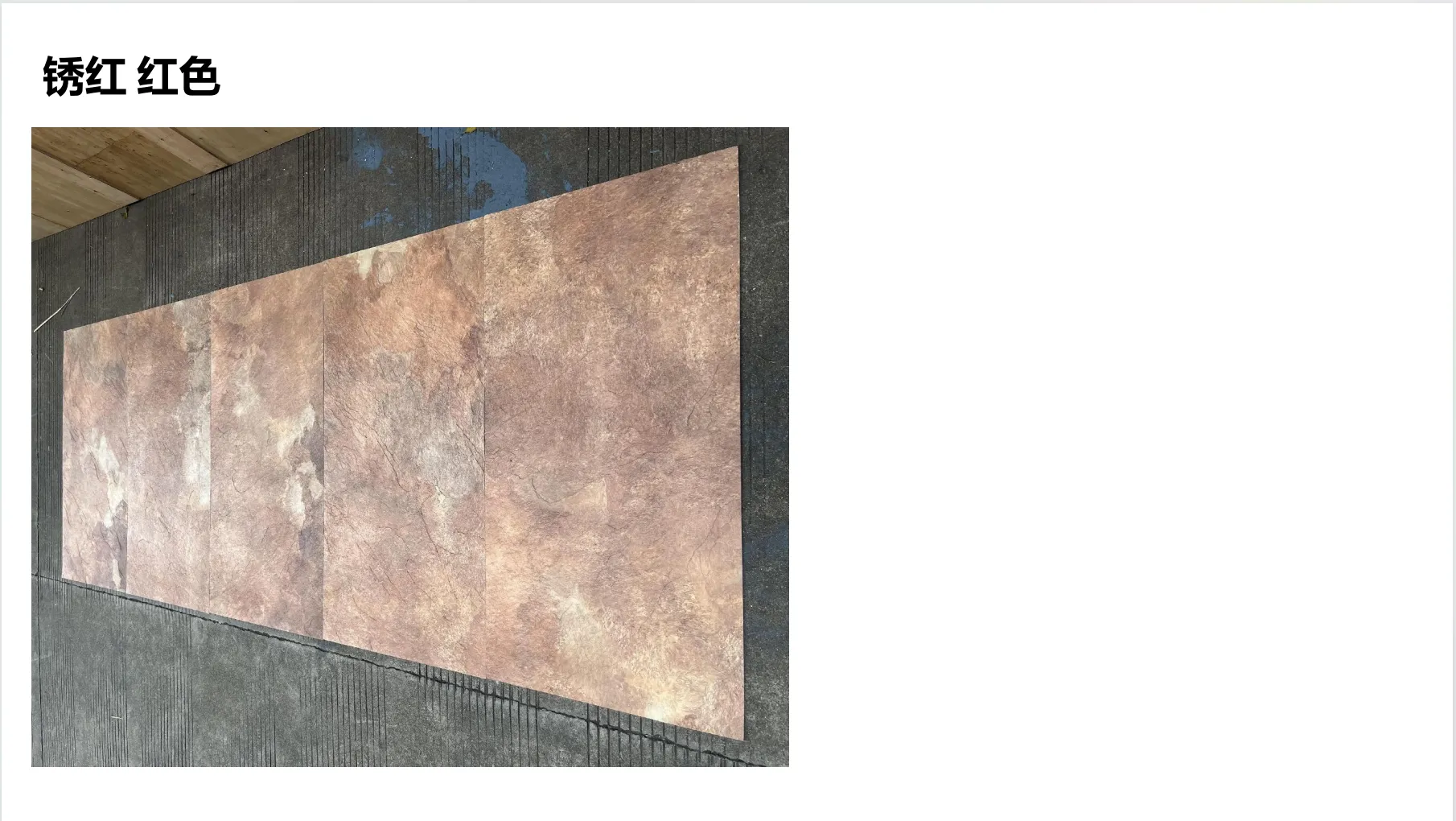
Walk through any major city skyline, and you'll notice a common thread: high-rises piercing the clouds, symbols of progress and ambition. But behind their gleaming facades lies a critical concern that architects, builders, and safety experts grapple with daily: fire safety. When seconds count in an emergency, the materials used to clothe these towering structures can mean the difference between containment and catastrophe. Enter Rusty Red MCM —a material that's quietly revolutionizing high-rise construction by blending uncompromising fire resistance with striking aesthetics. Let's dive into why this humble composite material is becoming a go-to choice for safety-conscious designers.
High-rises are engineering marvels, but their height creates unique fire risks. Traditional building materials often fall short: wood panels, while warm and inviting, are highly combustible. Even some concrete variants, though sturdy, can crack under extreme heat, releasing toxic fumes. Add to that the challenge of evacuating hundreds (or thousands) of people from 50+ floors, and it's clear: the materials wrapping a high-rise aren't just about looks—they're lifelines .
Enter Modified Composite Material (MCM), a category that includes stars like MCM flexible stone and MCM big slab board series . These materials are engineered to be lightweight, durable, and—crucially—resistant to fire. But among them, Rusty Red MCM stands out, not just for its safety credentials, but for how it redefines what "fire-resistant" can look like.
First things first: MCM isn't your average building material. Short for Modified Composite Material, it's a blend of mineral fibers, resin binders, and natural aggregates, pressed into thin, flexible sheets. Think of it as the "Swiss Army knife" of cladding: lightweight enough to reduce structural load (a big win for high-rises), flexible enough to curve around architectural details, and tough enough to withstand harsh weather. And Rusty Red MCM? It's a variant infused with iron oxide pigments, giving it that warm, earthy hue that mimics aged terracotta or weathered steel—without the fire risks of either.
But here's the kicker: that rich, rusty color isn't just for show. Underneath the surface, Rusty Red MCM is built to battle flames. Let's break down its fire resistance credentials.
Fire resistance isn't a buzzword—it's a science, measured by rigorous testing standards. Rusty Red MCM doesn't just meet these standards; it crushes them. Most variants boast a Class A1 fire rating (per GB 8624-2012, China's strict fire safety standard) and an ASTM E136 rating of "non-combustible." What does that mean in plain English? Even when exposed to temperatures exceeding 1,000°C (1,832°F)—hot enough to melt aluminum—Rusty Red MCM won't ignite, spread flames, or release toxic smoke. It simply chars slightly, acting as a barrier that slows fire progression and buys precious time for evacuation.
To put that in perspective: A Class A1 rating means Rusty Red MCM is in the same league as materials like steel and stone—non-combustible, with zero contribution to fire growth. Compare that to wood cladding (Class D, highly combustible) or even some PVC panels (Class B, which can melt and spread flames), and the difference is stark.
Curious how Rusty Red MCM compares to other popular high-rise cladding options? Let's take a look at real-world fire ratings and key features:
| Material | Fire Rating (GB 8624) | Key Features | Best For |
|---|---|---|---|
| Rusty Red MCM | Class A1 (Non-combustible) | Lightweight (6-8 kg/m²), flexible, rusty red aesthetic, low smoke emission | Exterior cladding, accent walls, high-rise facades |
| MCM Big Slab Board Series | Class A1 (Non-combustible) | Large format (up to 3m x 1.5m), seamless installation, scratch-resistant | Uniform facade designs, commercial high-rises |
| Fair-Faced Concrete | Class A2 (Limited combustibility) | Raw, industrial look, high compressive strength | Structural elements, interior walls |
| Foamed Aluminium Alloy Board (Vintage Silver) | Class A2 (Limited combustibility) | Metallic finish, lightweight, good thermal insulation | Modern, sleek exteriors (but higher cost) |
| Wood Line (Traditional Wood Cladding) | Class D (Combustible) | Warm, natural look, high aesthetic appeal | Low-rise buildings, interior accents (not recommended for high-rises) |
Notice a pattern? Rusty Red MCM and the MCM Big Slab Board Series (both Class A1) outperform materials like foamed aluminium (Class A2) and wood (Class D) when it comes to fire safety. And unlike fair-faced concrete—another Class A2 option—Rusty Red MCM adds a pop of color that transforms cold, sterile high-rise exteriors into something warm and inviting.
Let's be honest: Fire resistance is non-negotiable, but architects don't design buildings in a vacuum. They also care about beauty, functionality, and practicality. And here's where Rusty Red MCM shines: it doesn't force designers to choose between safety and style.
Take its flexibility, for example. Unlike rigid stone slabs or heavy concrete panels, Rusty Red MCM bends without breaking—perfect for high-rises with curved facades or unique architectural details. Want a undulating wave panel or a semicircular accent wall? MCM's flexibility makes it possible, without compromising fire safety. That's a game-changer for architects tired of "boxy" high-rise designs.
Then there's the weight. At just 6-8 kg per square meter, Rusty Red MCM is up to 70% lighter than traditional stone cladding. For high-rises, where every kilogram adds stress to the foundation and structure, this lightweight nature reduces construction costs and improves safety during installation. Imagine hoisting heavy marble slabs 50 floors vs. handling thin, flexible MCM sheets—no contest.
And let's not forget that color. Rusty Red isn't just a name—it's a statement. In a world of glass and steel monoliths, that warm, earthy tone adds depth and character. It's why projects like the "Skyline Tower" in Dubai (which used Rusty Red MCM for its lower facade) turned heads: it proved fire-resistant cladding could be beautiful , not just utilitarian.
Let's zoom in on a recent example: the "Harbor View Residences," a 42-story high-rise in Singapore. When developers set out to build it, they had two non-negotiables: top-tier fire safety and a design that stood out from the city's glass-dominated skyline. After testing 12 cladding materials, they chose Rusty Red MCM for the exterior.
Why? For starters, it met Singapore's strict Fire Code requirements (Class A1 rating). But equally important, the rusty red panels complemented the building's tropical landscaping, creating a "vertical garden" effect without using flammable wood. Post-construction, the project's lead architect, Maya Chen, noted: "We didn't want to sacrifice aesthetics for safety. Rusty Red MCM let us have both—a material that protects residents and makes them proud to call this building home."
Fire resistance is the star, but Rusty Red MCM brings more to the table:
You might be thinking: "Why not just use fair-faced concrete or foamed aluminium?" Both are fire-resistant, after all. Let's break it down:
Fair-Faced Concrete:
A solid choice for fire resistance (Class A2), but it's heavy (20-25 kg/m²), inflexible, and prone to cracking over time. Plus, that "raw" look isn't for every design.
Foamed Aluminium Alloy Board:
Lightweight and modern-looking, but it's pricier (up to 3x the cost of MCM) and can dent easily. Its Class A2 rating is good, but not as strong as Rusty Red's A1.
In short: Rusty Red MCM hits the sweet spot—better fire ratings than foamed aluminium, more flexible than concrete, and friendlier to both budgets and design dreams.
High-rise construction is at a crossroads. As cities grow taller, the demand for materials that balance safety, sustainability, and beauty has never been higher. Rusty Red MCM isn't just a cladding option—it's a symbol of that balance. It proves fire-resistant doesn't have to mean boring, and beautiful doesn't have to mean risky.
So the next time you gaze up at a high-rise, take a closer look at its facade. If you spot warm, rusty red panels, chances are it's Rusty Red MCM—quietly standing guard, keeping residents safe, and making the skyline a little more interesting. And in the world of construction, that's a win-win we can all get behind.
Recommend Products












