
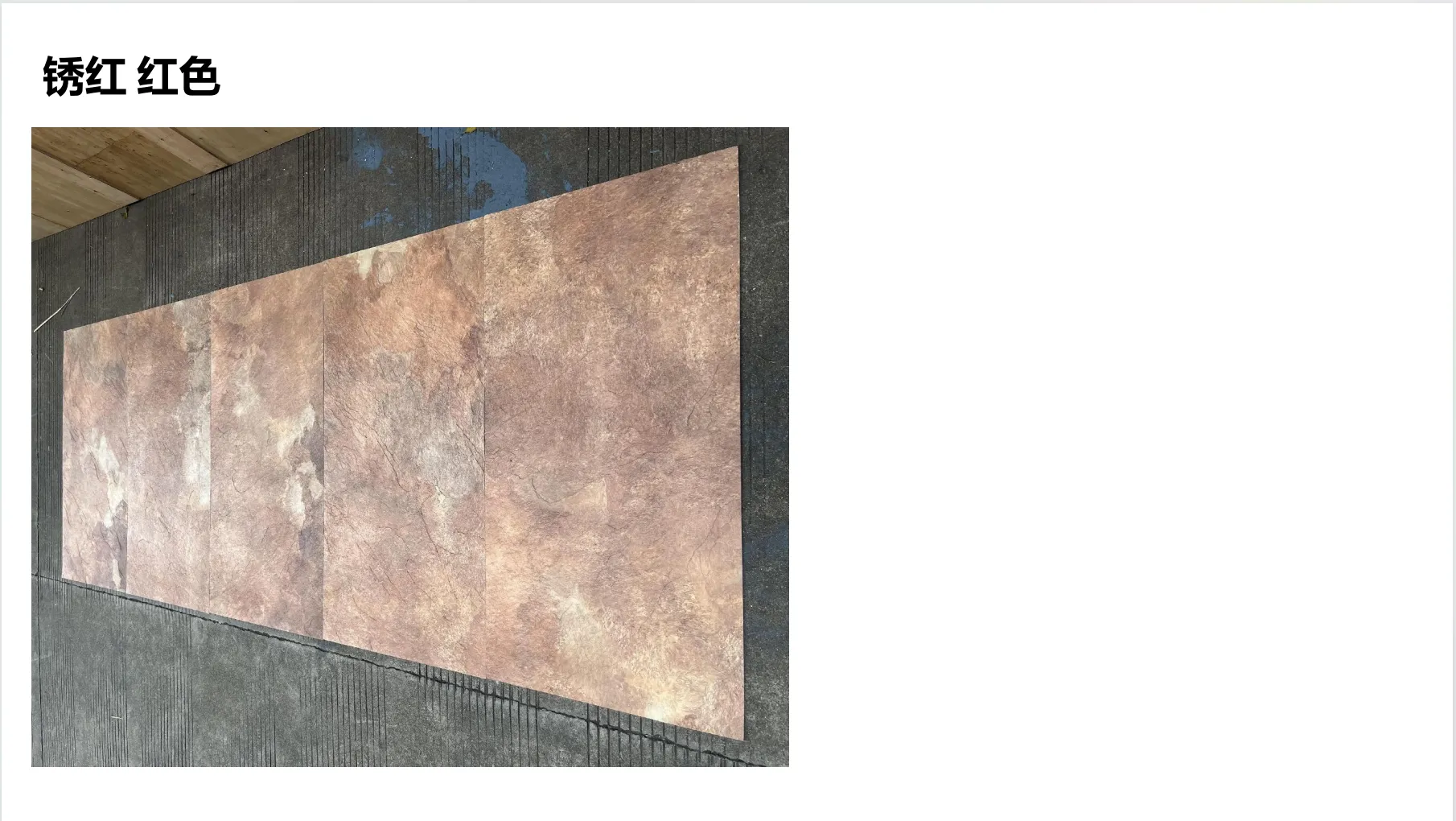
Walk through any modern city, and you'll notice a quiet revolution unfolding in architecture: rigid lines are softening into curves. From the sweeping arcs of museum facades to the gentle bends of boutique storefronts, curved structures have become a language of innovation, blending artistry with functionality. Yet for decades, architects and designers faced a stubborn challenge: how to clothe these organic forms in materials that feel both luxurious and durable. Traditional stone—heavy, brittle, and unforgiving—often forced compromises, limiting the boldness of curves or sacrificing longevity for aesthetics. Enter MCM flexible stone , a material that's not just changing the rules but rewriting them entirely. And among its most captivating expressions? The warm, earthy allure of rusty red MCM, a finish that marries the timeless charm of weathered iron with the adaptability of modern engineering.
In this article, we'll explore why rusty red MCM has become the go-to choice for curved structures, diving into its unique properties, real-world applications, and how it compares to other materials. We'll also touch on complementary products like the MCM big slab board series and even peek at color cousins like travertine (starry red) , showing how this versatile material family is reshaping the future of architectural design.
To appreciate the breakthrough of MCM flexible stone, it helps to first understand the problem it solves. Imagine designing a building with a facade that curves like a wave—gentle, continuous, and free of harsh edges. Now, try covering that curve with natural stone. Marble, granite, or even limestone, while stunning, are dense and rigid. A standard slab of natural stone might weigh 50–80 kg per square meter; when you try to bend it even slightly, it cracks. To work around this, architects often resorted to small, segmented tiles, creating a patchwork effect that disrupts the curve's fluidity. Alternatively, they'd use lighter materials like vinyl or fiber cement, but these lack the depth and texture of real stone, leaving the design feeling flat or cheap.
The issues don't stop at aesthetics. Heavy stone requires reinforced structural support, driving up construction costs and limiting where curves can be placed. Installation is labor-intensive, too: each slab needs careful cutting, and any miscalculation during fitting can lead to breakage. Over time, natural stone is also prone to weathering—freeze-thaw cycles, rain, and UV rays can fade colors or erode surfaces, especially on exposed curved facades where water might pool in crevices.
For designers dreaming of bold, sweeping curves, the message was clear: traditional materials were holding them back. What they needed was a material that offered the beauty of stone, the flexibility of a sheet, and the durability to stand the test of time. That's exactly what MCM flexible stone delivers.
MCM, or Modified Composite Material, is a hybrid innovation: a blend of natural stone aggregates (up to 70% of its composition) and a polymer matrix that binds them into a thin, flexible sheet. Think of it as stone reimagined—retained for its color, texture, and depth, but stripped of its weight and rigidity. The result? A material that weighs just 7–12 kg per square meter (about 1/6th the weight of natural stone) and can bend to a radius as tight as 30 cm without cracking. That's the difference between a material that fights curves and one that embraces them.
But flexibility is just the start. MCM flexible stone is also surprisingly tough. It resists water absorption (critical for curved surfaces, which shed rain differently than flat ones), stands up to UV radiation without fading, and meets strict fire safety standards. It's easy to cut, too—installers can trim it on-site with standard tools, reducing waste and ensuring a perfect fit for even the most complex curves. And because it's lightweight, it reduces the load on a building's structure, opening up possibilities for curves in high-rise buildings, cantilevered designs, or retrofits where structural reinforcement isn't feasible.
So, where does rusty red come into play? Color is more than just decoration in architecture—it's a tool for storytelling. Rusty red, with its warm, terracotta undertones and hints of amber, evokes a sense of history and resilience. It's the color of weathered barns, ancient clay pots, and desert landscapes at sunset. Yet it also feels modern, pairing beautifully with glass, steel, and concrete. On a curved surface, this color becomes dynamic: morning light brings out its orangey highlights, while evening shadows deepen it into a rich, coppery hue. Unlike flat surfaces, where color can feel static, curves make rusty red MCM move , changing with the sun and creating a facade that feels alive.
What sets rusty red MCM apart isn't just its hue; it's the texture. Run your hand over a panel, and you'll feel the subtle granularity of natural stone aggregates—tiny fragments of quartz, feldspar, and iron oxides that mimic the look of weathered sandstone or oxidized metal. This texture isn't just for show: it plays with light, creating depth that flat paints or laminates can't match. On a curved surface, this effect is amplified. The curve catches light at different angles, making some areas appear brighter and others softer, as if the material itself is breathing.
Take, for example, a recent project in Lisbon: a boutique hotel with a curved lobby wall designed to evoke the city's historic tilework but with a modern twist. The designer chose rusty red MCM for its ability to replicate the warm, aged look of traditional Portuguese azulejos without the weight or fragility of ceramic tiles. The result? A wall that curves gently from floor to ceiling, its rusty red surface shifting in tone as sunlight streams through floor-to-ceiling windows, creating a cozy, inviting atmosphere that guests often describe as "like stepping into a sunset."
Another standout feature of rusty red MCM is its versatility in finishes. Some variants have a matte, powdery texture that mimics dried clay, perfect for earthy, organic designs. Others lean into the "rust" in their name, with metallic flecks that glint when hit by light—reminiscent of old iron gates that have developed a patina over time. This adaptability makes it easy to pair with other materials: imagine rusty red MCM curves alongside warm wood accents, cool glass, or even sleek foamed aluminium alloy board (vintage gold) for a bold, industrial-chic contrast.
While standard MCM flexible stone panels (typically 1220x2440mm) work beautifully for most curved applications, larger projects—think stadiums, convention centers, or skyscraper facades—demand bigger solutions. That's where the MCM big slab board series shines. These panels, which can reach sizes up to 3000x1500mm, are game-changers for large-scale curved structures, reducing the number of seams and creating a more seamless, uninterrupted flow.
What's remarkable about the big slab series is that despite their size, they retain the same flexibility as smaller panels. This is thanks to MCM's unique composite structure: the polymer matrix distributes stress evenly across the slab, preventing cracking even when bent. For architects, this means being able to design massive, sweeping curves—like the 120-meter-long curved facade of a performing arts center in Seoul—that look like a single, continuous surface rather than a patchwork of tiles.
Installation is also faster with big slabs. Fewer panels mean fewer cuts, less labor, and reduced waste. On a recent project in Dubai, a team installing a rusty red MCM big slab facade on a curved office tower reported cutting installation time by 40% compared to using traditional stone tiles. "It's like covering a curved wall with giant, flexible stickers," one installer joked. "But stickers that look and feel like stone."
To truly understand why rusty red MCM is revolutionizing curved architecture, let's compare it side-by-side with other common cladding materials. The table below breaks down key factors like weight, flexibility, and durability, with a special focus on how each performs on curved surfaces.
| Material | Weight (kg/m²) | Minimum Bend Radius | Weather Resistance | Best For |
|---|---|---|---|---|
| Natural Rusty Red Sandstone | 60–75 | Not bendable (brittle) | Good, but prone to fading/erosion | Small, flat surfaces; low curves with segmentation |
| Rusty Red MCM Flexible Stone | 7–12 | 30 cm (tight curves) | Excellent (UV, moisture, freeze-thaw resistant) | Detailed curves, interior/exterior walls, furniture |
| MCM Big Slab Board Series (Rusty Red) | 10–15 | 50 cm (gentle, large curves) | Excellent (same as flexible stone) | Large-scale curved facades, stadiums, convention centers |
| Travertine (Starry Red) | 12–18 | 40 cm (moderate curves) | Very good (with sealant) | Accent walls, feature curves with metallic flecks |
| Fiber Cement Panels (Rustic Red) | 18–25 | 80 cm (shallow curves only) | Good, but prone to chipping | Budget projects, low-rise exteriors |
The data speaks for itself: rusty red MCM flexible stone and the big slab series outperform traditional materials in weight, flexibility, and weather resistance—critical factors for curved structures. Even travertine (starry red) , a close cousin with a similar color palette, can't match MCM's tight bend radius, making it better suited for shallower curves or accent features rather than the centerpiece of a bold, sweeping design.
Theory is one thing, but seeing rusty red MCM in action is where its magic truly comes to life. Let's explore a few standout projects that showcase its versatility across different scales and uses.
Nestled along the Willamette River, this cultural hub features a curved facade that mimics the river's flow. The design team chose rusty red MCM flexible stone for its ability to wrap around the building's 270-degree curve without visible seams. The material's weathered texture complements the center's mission of celebrating local history, while its durability stands up to Portland's rainy climate. "We wanted the building to feel like it's been part of the riverbank for decades," says lead architect Maria Gonzalez. "Rusty red MCM gave us that aged look, but with the performance of a modern material."
In Tokyo's bustling Shibuya district, The Curve Hotel stands out with its sinuous, 12-story curved exterior clad in rusty red MCM big slabs. The large panels (2400x1200mm) minimize joints, creating a smooth, ribbon-like effect that catches the city's neon lights at night. Inside, the theme continues: the lobby features a curved reception desk wrapped in the same rusty red MCM, blurring the line between interior and exterior design. "In a city of straight lines and glass boxes, curves make a statement," explains hotel designer Kenji Tanaka. "MCM let us go big with those curves without worrying about weight or cost."
For a museum dedicated to desert ecosystems, the goal was to blend into the landscape while standing out as a landmark. The solution? A series of low, interconnected buildings with curved roofs and walls clad in rusty red MCM, which mirrors the color of the surrounding Sonoran Desert soil. The material's UV resistance ensures it won't fade under Arizona's harsh sun, and its lightweight nature allowed the roofs to cantilever over outdoor patios, creating shaded areas for visitors. "We tested samples of natural stone, but they were too heavy for the roof's curved design," says project engineer James Reed. "Rusty red MCM was the only material that checked all the boxes."
One of the unsung benefits of rusty red MCM is how easy it is to work with—both during installation and long-term maintenance. Unlike natural stone, which requires specialized cutting tools and skilled masons, MCM flexible stone can be cut with standard circular saws or even utility knives on-site. This flexibility is a boon for curved projects, where measurements often need (fine-tuning) as the installation progresses.
Installation typically involves mounting the panels to a substrate—plywood, metal framing, or even concrete—using a high-strength adhesive. For curved surfaces, installers often use a "bend as you go" approach: starting at one end of the curve, they gently flex the panel to match the substrate's shape, securing it with adhesive and temporary fasteners until the glue sets. The process is far less labor-intensive than installing natural stone, which often requires mortar, grout, and careful alignment to avoid gaps.
Maintenance is equally straightforward. Rusty red MCM is resistant to mold, mildew, and stains, so a simple rinse with water (or mild soap for stubborn dirt) is usually enough to keep it looking fresh. Unlike natural stone, it doesn't require sealing, and its color is inherent to the material—no topcoat to chip or fade. In coastal areas, where salt spray can damage traditional stone, MCM's polymer matrix acts as a barrier, preventing corrosion and discoloration.
While rusty red is a star in its own right, MCM's color palette offers plenty of options for designers who want to complement or contrast it. Travertine (starry red) is a particularly striking cousin: it shares rusty red's warmth but adds metallic "stars"—tiny flecks of copper or bronze that sparkle in sunlight. This makes it ideal for accent walls or curved features where a bit of glamour is desired, like a hotel's ballroom or a high-end retail store's facade.
For a more understated look, there's also travertine (starry orange) or travertine (starry blue) , which pair beautifully with rusty red in gradient designs. Imagine a curved facade that transitions from deep rusty red at the base to soft starry orange at the top, mimicking a sunset. Or a restaurant interior with rusty red MCM banquettes and a starry blue accent wall, creating a cozy, celestial vibe.
And let's not forget neutrals. The MCM big slab board series includes shades like lime stone(beige) and fair-faced concrete , which can serve as a calming backdrop for rusty red accents. In a recent project in Chicago, a residential tower used rusty red MCM for its curved balconies, paired with fair-faced concrete big slabs for the main facade—a combination that balances warmth with industrial chic.
In an era where sustainability is a top priority, rusty red MCM has another ace up its sleeve: it's an eco-friendly choice. MCM flexible stone is made using up to 70% recycled stone aggregates—waste from quarries that would otherwise end up in landfills. Its lightweight nature also reduces transportation emissions: a single truck can carry 10 times more MCM panels than natural stone slabs, cutting fuel use and carbon footprint.
On the building site, MCM generates less waste, too. Because it's easy to cut and shape, installers can minimize offcuts, and any scraps can often be recycled. Its durability means buildings clad in MCM require fewer repairs or replacements over time, reducing the need for new materials. And since it doesn't require sealing or harsh cleaning chemicals, it's gentler on the environment throughout its lifecycle.
For developers aiming for LEED or BREEAM certifications, these factors are more than just bonuses—they're requirements. "Sustainability isn't optional anymore," says green building consultant Lisa Chen. "Materials like rusty red MCM help projects earn points for recycled content, reduced waste, and energy efficiency—all while delivering the aesthetic clients want."
As architects continue to push the boundaries of what's possible, MCM flexible stone is evolving right alongside them. Manufacturers are experimenting with new textures—think 3D-printed patterns that mimic the look of hand-chiseled stone or even custom designs created using digital printing. Imagine a curved facade clad in rusty red MCM with a subtle geometric pattern embedded in the surface, visible only when light hits it at certain angles.
Another exciting trend is the integration of smart technology. Researchers are exploring MCM panels embedded with sensors that can monitor temperature, humidity, or structural stress, turning buildings into "living" systems that adapt to their environment. And as 3D modeling software becomes more advanced, designers can now simulate how rusty red MCM will look on a curved surface under different lighting conditions, ensuring the final result matches their vision.
Perhaps most importantly, MCM is becoming more accessible. As production scales, costs have come down, making it a viable option for not just high-end projects but also community centers, schools, and affordable housing. "Curved architecture shouldn't be a luxury," says architect David Lin. "MCM is democratizing design, letting more people experience the beauty of organic, flowing spaces."
Curved structures have always held a special place in architecture, symbolizing innovation, fluidity, and the rejection of rigid norms. But for too long, the materials available limited their potential—until MCM flexible stone arrived. With its unbeatable combination of flexibility, durability, and beauty, rusty red MCM has become the material of choice for designers who refuse to compromise on their vision.
Whether it's wrapping a museum in a river-like curve, cladding a skyscraper in seamless big slabs, or adding warmth to a boutique hotel lobby, rusty red MCM proves that great design doesn't have to sacrifice performance. And with complementary products like the MCM big slab board series and color variants like travertine (starry red) , the possibilities are only growing.
So the next time you pass a building with a curved facade that seems to glow in the sunlight, take a closer look—it might just be rusty red MCM, quietly revolutionizing architecture one bend at a time.
Recommend Products












