
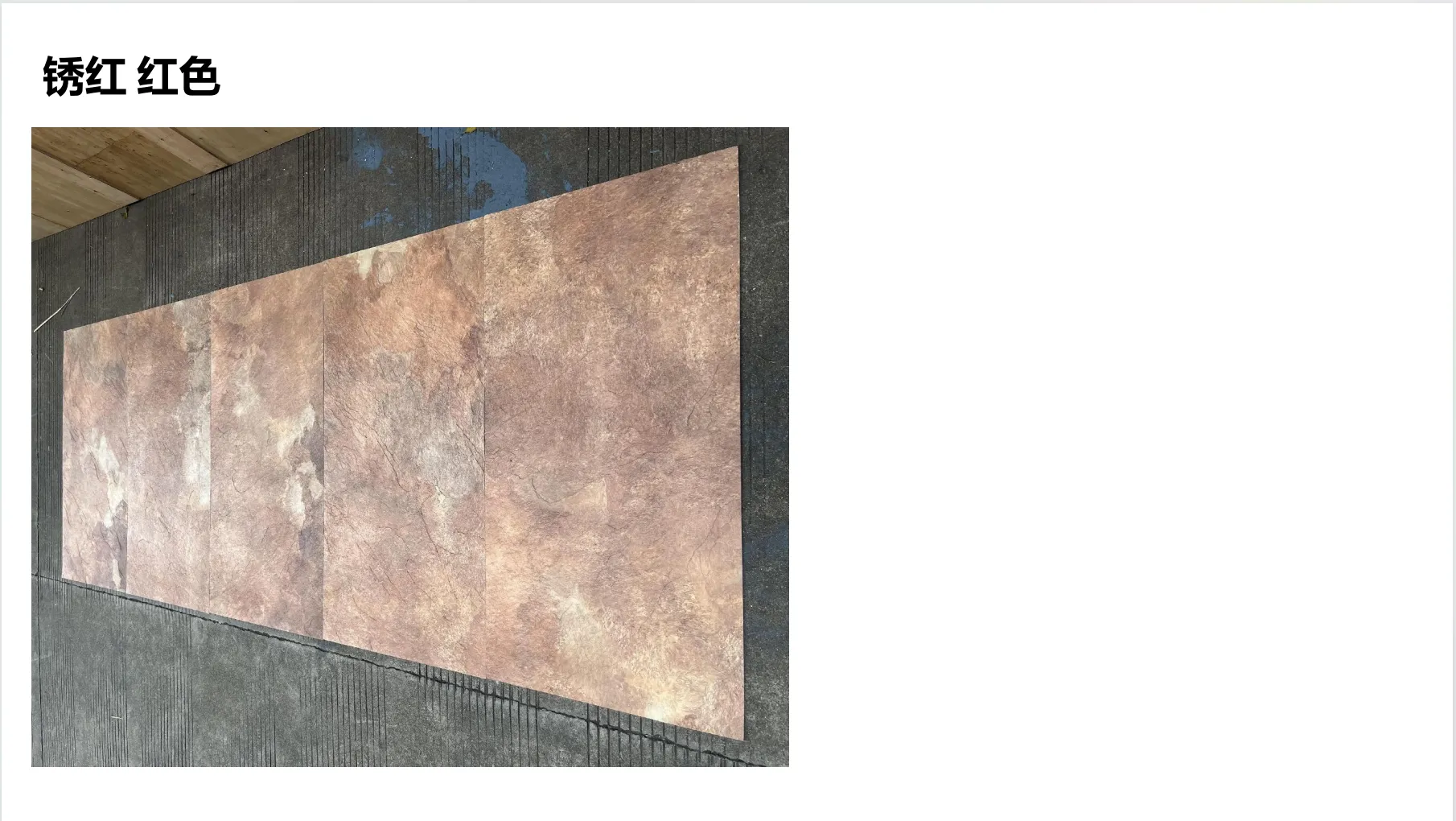
Walk through the doors of any school, and you'll immediately sense it—the hum of energy, the rustle of notebooks, the laughter of students discovering something new. These spaces are more than just structures; they're incubators of curiosity, where every wall, floor, and corner contributes to how young minds learn and grow. For educators and architects alike, the choice of building materials isn't just a practical decision—it's a commitment to creating environments that feel safe, inspiring, and built to last. In recent years, one material has emerged as a standout in this mission: MCM flexible stone, with its rich, earthy "rusty red" variant leading the charge. Blending durability with warmth, and functionality with beauty, Rusty Red MCM isn't just cladding—it's a partner in shaping the future of education.
Educational facilities face unique challenges. They must withstand the daily wear and tear of active students—scuffs from backpacks, spills from science experiments, the occasional game of tag gone awry. They need to be safe above all else: non-toxic, fire-resistant, and free from sharp edges. And perhaps most importantly, they need to inspire. A sterile, cold classroom can stifle creativity, while a space with warmth and character can spark curiosity and collaboration. Cladding, as the "skin" of these buildings, plays a pivotal role in meeting these needs. It's the first layer of protection, the first impression, and the silent storyteller of a school's values.
For schools, safety isn't negotiable. Parents trust that their children will return home unharmed, and educators rely on environments that minimize risk. Traditional cladding materials—like some natural stones or vinyl panels—can fall short here. Heavy stones risk structural strain, while low-quality vinyl may off-gas harmful chemicals. MCM flexible stone, however, is engineered with safety at its core. Made from a blend of mineral composites and reinforced fibers, it's lightweight (reducing structural load) and free from volatile organic compounds (VOCs), ensuring indoor air quality stays fresh. Its fire-resistant properties, rated Class A in most regions, add an extra layer of security—critical in spaces with large gatherings of children.
A school's walls don't just separate rooms—they stand witness to decades of learning. From kindergarten finger-paints to high school drama club sets, cladding must endure it all. Rusty Red MCM flexible stone excels here. Its flexible composition resists cracks from temperature fluctuations, while its surface is scratch- and stain-resistant. Unlike natural travertine or limestone, which can etch or discolor with exposure to acids (think spilled juice or cleaning products), MCM's protective top layer wipes clean with a damp cloth. This durability isn't just about longevity; it's about reducing maintenance costs over time—freeing up school budgets for textbooks, technology, and teacher training instead of constant repairs.
Among MCM's vast color palette—from the silvery sheen of Lunar Peak Silvery to the earthy tones of Historical Pathfinders Stone—rusty red stands out as a favorite for educational spaces. Its rich, terracotta-inspired hue evokes warmth and energy, striking a balance between boldness and comfort. Unlike harsh reds that can feel overwhelming, rusty red has depth: hints of brown and orange that mimic the natural patina of aged metal or the warm glow of autumn leaves. It's a color that feels alive, yet grounded—a perfect metaphor for the dynamic, rooted nature of learning.
Color psychology isn't just for marketing; it shapes how students engage with their environment. Studies show that warm tones like rusty red can boost energy and focus, making them ideal for active spaces like art rooms or science labs. In contrast, cool tones like Lunar Peak Black might suit quiet zones like libraries, but rusty red shines in areas where collaboration and creativity thrive. Imagine a middle school makerspace, where students build robots and design projects: walls clad in rusty red MCM would mirror the energy of their ideas, creating a space that feels as dynamic as the work happening inside.
"Flexible" isn't just a buzzword for MCM—it's a game-changer in design. Unlike rigid fair-faced concrete or heavy boulder slabs, MCM flexible stone bends to fit curved walls, archways, or even custom 3D installations. This opens up endless possibilities for educational spaces. A kindergarten might wrap a reading nook in a rusty red curved wall, creating a cozy "cave" for storytime. A high school might use it to clad a spiral staircase, turning a utilitarian structure into a focal point. Even better, its lightweight nature makes installation faster than traditional stone, minimizing disruption during school renovations—a huge plus for facilities that can't afford long closures.
| Feature | Rusty Red MCM Flexible Stone | Traditional Natural Stone (e.g., Travertine) | Fair-Faced Concrete |
|---|---|---|---|
| Safety | VOC-free, Class A fire rating, lightweight | Heavy (structural risk), may require sealants with VOCs | Fire-resistant, but heavy; porous (risk of mold if unsealed) |
| Durability | Scratch/stain-resistant, flexible (resists cracking) | Prone to etching, cracks under stress | Strong but brittle; stains easily without sealant |
| Installation | Lightweight, easy to cut/bend; suitable for curved surfaces | Requires heavy machinery; rigid (limited design options) | Requires formwork; long curing time |
| Aesthetics | Rich, consistent color; customizable textures | Natural variation (can be uneven); limited color range | Minimalist, but lacks warmth; prone to discoloration over time |
| Sustainability | Recycled materials, low carbon footprint | High extraction/transportation emissions | High cement production emissions; limited recyclability |
Great school design isn't about a single material—it's about harmony. Rusty Red MCM flexible stone plays well with others, complementing a range of textures and tones to create layered, meaningful spaces. Pair it with fair-faced concrete for a modern, industrial vibe in a STEM lab, or with wood grain board for a warm, rustic feel in a history classroom. For schools aiming to honor local heritage, combining rusty red with Historical Pathfinders Stone (a textured, weathered MCM variant) can evoke the look of ancient pathways, connecting students to the past as they walk toward the future.
Case Example: Riverview Elementary School
When Riverview Elementary in Colorado wanted to renovate its aging corridors, architects chose Rusty Red MCM paired with Lunar Peak Silvery accents. The rusty red walls line the main hallway, where student artwork is displayed in sleek frames, while the silvery panels highlight bulletin boards and reading corners. Teachers reported that students seemed more engaged in the space: "The red feels energetic, but not overwhelming," said 4th-grade teacher Ms. Lopez. "Kids linger after class to look at the art—they're proud of their work, and the walls make it feel special."
MCM's durability isn't limited to indoor use. Rusty Red MCM flexible stone holds up beautifully outdoors, making it ideal for school exteriors, playground borders, or covered walkways. Unlike natural slate or granite, which can become slippery when wet, MCM's textured surface offers grip—critical for rainy-day recess. Its resistance to UV fading ensures that the vibrant rusty red hue stays true, even after years of sun exposure. For schools with outdoor learning spaces—gardens, amphitheaters, or nature trails—rusty red MCM can blur the line between indoors and out, creating a cohesive environment that encourages exploration.
Today's students are acutely aware of environmental issues, and schools are under pressure to lead by example. Rusty Red MCM flexible stone aligns with this mission. Its production process uses recycled minerals and reduces water consumption compared to quarrying natural stone. Its lightweight design also cuts down on transportation emissions—less fuel is needed to ship panels to construction sites. And because MCM lasts decades, it reduces the need for frequent replacements, lowering the overall carbon footprint of a school building. For institutions aiming for LEED certification or green building labels, MCM is often a key contributor to earning points in materials and resources categories.
In the end, Rusty Red MCM flexible stone is more than a building material. It's a tool for creating spaces that nurture, protect, and inspire. It's the quiet confidence of a wall that stands strong through years of learning. It's the warm glow that makes a classroom feel like home. It's the sustainability commitment that teaches students, by example, to care for the planet. For educational facilities, choosing cladding is choosing the backdrop of a child's journey—and with Rusty Red MCM, that backdrop is safe, durable, and full of life. Because when schools invest in their walls, they're not just building buildings—they're building futures.
Recommend Products












