


In the world of hospitality, we often talk about "stays"—but what guests truly seek are experiences . A hotel room, a restaurant table, or a lobby isn't just a space; it's a canvas where memories are painted. The best hospitality spaces don't just serve a function—they tell stories. And like any good story, they rely on details that stick: the way light filters through a window, the scent of fresh linen, the texture of a wall that makes you pause and reach out to touch it. These details, often rooted in the materials chosen, are the quiet architects of connection. Today, we're exploring one such material that's redefining how hospitality spaces create lasting impressions: Rusty Red MCM.
The Balancing Act: Why Materials Matter More Than You Think
Designing a hospitality space is a tightrope walk. On one side, there's the need for beauty—spaces that feel unique, inviting, and Instagram-worthy (because let's be honest, guests share what moves them). On the other side, there's practicality: durability to withstand daily wear, ease of installation to keep projects on schedule, and maintenance that doesn't drain budgets. And then there's the invisible third element: emotion. A space can be stunning and functional, but if it feels cold or generic, it fades from memory as quickly as yesterday's news.
Traditional materials often fall short here. Natural stone, for example, is undeniably beautiful, but it's heavy, hard to shape, and prone to cracking. Solid wood brings warmth, but it warps with moisture and requires constant upkeep. Concrete, while durable, can feel sterile, like a blank page waiting for a story. What if there was a material that could bridge these gaps—something that's as tough as it is tender, as versatile as it is visually striking? That's where Rusty Red MCM enters the scene.
Rusty Red MCM: A Material with Heart
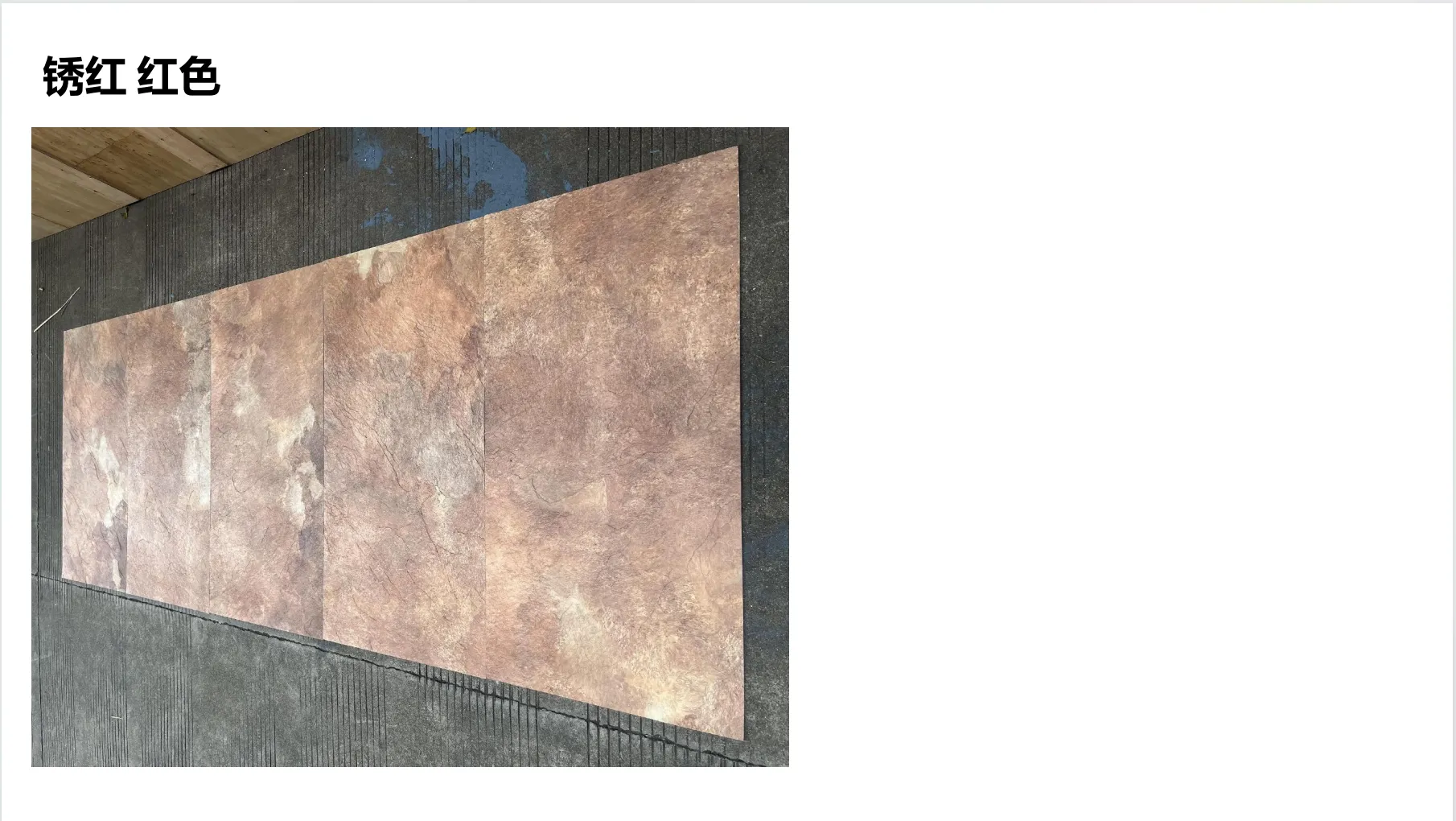
Let's start with the obvious: that color. Rusty Red isn't just a hue—it's a feeling. Imagine the warm glow of a sunset over an old barn, the rich tones of aged terracotta tiles in a Mediterranean village, or the soft patina of iron that's weathered decades of rain and sun. It's a color that whispers of history without feeling outdated, of warmth without being overwhelming. When you step into a space clad in Rusty Red MCM, you don't just see a wall—you sense a narrative. It's the difference between a room that says "stay here" and one that says "remember this."
But Rusty Red MCM is more than just a pretty face. Part of the mcm flexible stone family, it's engineered to be both strong and supple. Unlike rigid natural stone, it bends and curves, adapting to the unique contours of a space—whether that's a sweeping lobby arch, a custom-built bar front, or a curved accent wall in a boutique hotel room. This flexibility isn't just about design freedom; it's about creating spaces that feel organic, like they've grown into their shape rather than been forced into it.
The Sensory Story: Why Texture and Light Matter
Great design engages all the senses, and Rusty Red MCM is a masterclass in this. Run your hand along its surface: it's not perfectly smooth, nor is it rough. There's a subtle, tactile quality—like the bark of a tree that's been polished by time, or the edge of a well-loved book. This texture invites interaction. Guests don't just look at it; they touch it. They lean against it. They notice how it changes throughout the day.
Light plays a starring role here, too. In the morning, soft sunlight turns Rusty Red MCM into a canvas of amber and gold, casting warm pools across the floor. At dusk, under warm overhead lights, it deepens into richer, earthier tones—like a campfire glowing in the corner of the room. Even under harsh fluorescent lighting (the bane of many hospitality spaces), it retains its warmth, never feeling flat or lifeless. This chameleon-like quality ensures the space feels different at every hour, keeping the experience fresh and dynamic.
Beyond Beauty: The Practical Perks of MCM Flexible Stone
Let's get down to brass tacks: hospitality spaces take a beating. Lobbies see hundreds of footsteps daily. Restaurant walls endure spills, scuffs, and the occasional errant chair. Guest rooms are subject to the wear and tear of travelers from all walks of life. A material that looks good but can't keep up is just a pretty problem.
Rusty Red MCM checks the durability box with ease. Made from modified composite materials, it's resistant to scratches, stains, and moisture—no more panicking over a spilled glass of red wine in the restaurant or a damp towel left on the wall in a guest bathroom. It's also UV-stable, so that rich red hue won't fade even in sun-drenched spaces like rooftop bars or poolside cabanas. And because it's lightweight (up to 70% lighter than natural stone), installation is faster and more cost-effective, meaning projects stay on track and budgets stay intact.
But here's the real win: it's low-maintenance. Unlike wood, which needs refinishing, or natural stone, which requires sealing, Rusty Red MCM simply needs a wipe-down with a damp cloth to look as good as new. For busy hospitality teams, that's not just a convenience—it's a game-changer.
From Lobby to Terrace: Where Rusty Red MCM Shines
Let's paint a picture of how Rusty Red MCM transforms different hospitality spaces. Imagine walking into a boutique hotel lobby. To your left, a grand staircase with wrought-iron railings leads to the upper floors. To your right, a reception desk made of fair-faced concrete —raw, industrial, and cool. But dominating the back wall? A sweeping expanse of Rusty Red MCM, curved gently to follow the arc of the ceiling. The contrast is electric: the concrete's sharp edges softened by the MCM's warmth, the industrial vibe grounded by the material's earthy tones. A guest pauses, takes a photo, and texts it to a friend: "You have to see this place." That's the power of a well-placed material.
Now, step into the hotel's restaurant—a farm-to-table spot with an open kitchen. The walls here are a mix of reclaimed wood and Rusty Red MCM panels, arranged in a herringbone pattern. The wood brings in the scent of nature; the MCM brings in the color. Together, they create a space that feels both rustic and refined, like dining in a countryside barn that's been elevated with a touch of modern elegance. The hostess leads you to a table, and as you sit, you notice the MCM panel behind your chair—cool to the touch but radiating warmth, like a silent companion to the meal.
Upstairs, in a guest room: the headboard wall is clad in Rusty Red MCM, paired with soft linen bedding and a woven rug in earthy tones. The room isn't just a place to sleep; it's a retreat. You run your hand along the MCM as you settle in, and suddenly, the stresses of travel melt away. This isn't just a hotel room—it's a space that feels lived-in , like it was designed with you in mind.
Even outdoors, Rusty Red MCM holds its own. Picture a rooftop terrace with lounge chairs, string lights, and a bar wrapped in Rusty Red MCM. By day, it blends with the city skyline, its red tones echoing the bricks of nearby historic buildings. By night, under the stars, it glows under warm pendant lights, turning the terrace into an intimate gathering spot. And because it's weather-resistant, you never have to worry about rain or snow dulling its shine.
Why Rusty Red MCM Stands Out: A Quick Comparison
| Material | Aesthetic Warmth | Durability | Installation Flexibility | Maintenance Needs |
|---|---|---|---|---|
| Rusty Red MCM | High (earthy reds, warm undertones) | Excellent (scratch, moisture, UV-resistant) | High (bends to curves, lightweight) | Low (wipe with damp cloth) |
| Natural Rustic Stone | High (authentic texture) | Good (prone to cracking, staining) | Low (heavy, rigid) | High (needs sealing, regular cleaning) |
| Solid Wood | High (warm, organic) | Medium (warps with moisture, scratches easily) | Medium (can be cut, but not curved easily) | High (refinishing, polishing) |
| Standard Concrete | Low (cool, industrial) | Excellent (durable, long-lasting) | Low (heavy, rigid) | Medium (sealing needed for stains) |
Creating Memories Without Costing the Earth
In today's world, sustainability isn't just a buzzword—it's a priority for guests and hoteliers alike. Travelers want to support businesses that care about the planet, and hoteliers want materials that align with their green goals. Rusty Red MCM delivers here, too. As part of the MCM family, it's made with eco-friendly manufacturing processes that minimize waste and reduce energy consumption. Unlike natural stone, which requires heavy mining and transportation, MCM is lightweight, cutting down on carbon emissions during shipping. And because it's so durable, it lasts for decades, reducing the need for frequent replacements—a win for both your budget and the environment.
Pair it with other sustainable materials, like bamboo mat board for accent walls or reclaimed wood for furniture, and you've got a space that feels good in more ways than one. Guests notice these details. They feel proud to stay in a place that values both beauty and the planet, and that pride turns into loyalty.
The Legacy of a Well-Choosen Material
At the end of the day, hospitality is about people. It's about the business traveler who feels less lonely in a warm lobby, the couple who celebrates an anniversary in a restaurant that feels like a hug, the family that laughs together on a rooftop terrace under string lights. These moments aren't just created by good service—they're shaped by the spaces themselves. And the materials in those spaces? They're the quiet storytellers, the ones that turn "just a stay" into "the best trip ever."
Rusty Red MCM isn't just a material. It's a tool for creating connection. It's the texture that makes a guest smile, the color that makes a space feel like home, the durability that ensures those memories last for years to come. In a world where so much feels disposable, it's a reminder that the best hospitality spaces are built to be remembered. And isn't that the point?










