
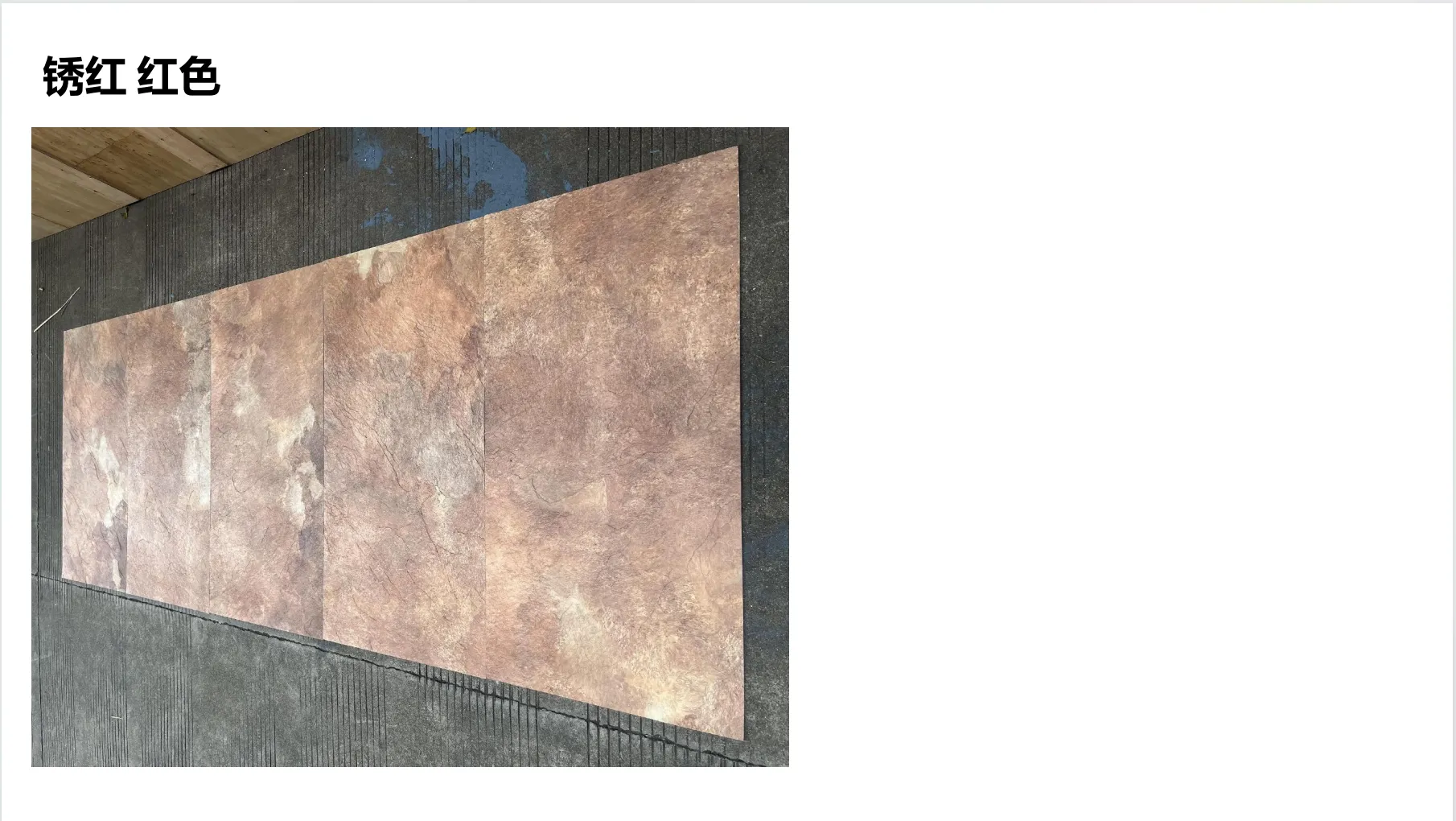
There's something deeply comforting about a home that feels like it has a story to tell. In a world where sleek glass and steel often dominate modern architecture, many of us find ourselves craving spaces that balance contemporary convenience with the warmth of the past—the kind of rustic charm that makes a house feel like a sanctuary, not just a structure. But here's the challenge: how do you capture that timeless, weathered allure without sacrificing durability, sustainability, or the clean lines we love in modern design? Enter Rusty Red MCM, a material that's quietly revolutionizing residential exteriors by blending the best of both worlds.
If you've ever driven past a centuries-old barn, its wood faded to a rich, earthy red by sun and rain, or wandered through a desert ghost town where clay bricks glow like embers at sunset, you know the color we're talking about. Rusty Red isn't just a hue—it's a feeling. It's the color of history, of resilience, of spaces that have stood the test of time. And when crafted into Modified Composite Material (MCM), it becomes something even more remarkable: a flexible, lightweight, and incredibly durable cladding option that brings that same warmth to your home's exterior, without the high maintenance or structural headaches of traditional materials.
First, let's break down what MCM actually is. Short for Modified Composite Material, MCM is a cutting-edge cladding solution designed to mimic the look and texture of natural stone, brick, or wood—but with a few key upgrades. Unlike heavy natural stone slabs that require reinforced walls and specialized installation, MCM is lightweight, thanks to its core of aluminum or mineral fiber sandwiched between layers of high-performance polymers. This makes it easier to handle, cheaper to transport, and suitable for a wider range of buildings, from small bungalows to multi-story homes.
But the real star here is MCM flexible stone —a variant that takes the material's versatility to the next level. As the name suggests, it's flexible enough to conform to curved surfaces, add texture to accent walls, or even wrap around architectural details like columns or eaves. Imagine wanting a rounded exterior feature wall that feels organic, not boxy: MCM flexible stone can bend to that shape without cracking, unlike rigid natural stone. And when that flexibility is paired with the rich, variegated tones of Rusty Red? You get a material that doesn't just cover your home—it transforms it into a work of art.
Rusty Red MCM, in particular, is a masterclass in texture and depth. Run your hand over a panel, and you'll notice subtle variations: tiny "veins" that mimic iron oxide deposits in natural stone, slight shifts in color intensity that recall the way sunlight plays on weathered clay, and a matte finish that softens the hue, keeping it from feeling too bold or artificial. It's not a flat, uniform red; it's a living color, with depth that changes throughout the day. At dawn, it might lean more terracotta, warm and inviting. By midday, the sun brings out hints of orange and gold, like rusted metal catching light. And as evening falls? It deepens into a rich, earthy crimson, making your home glow against the twilight.
One of the joys of designing with Rusty Red MCM is how well it plays with other materials, allowing you to create layered, visually engaging exteriors. For those who want to double down on the "timeless rustic" vibe, pairing it with historical pathfinders stone is a match made in design heaven. Historical pathfinders stone, as its name implies, is engineered to look like it's been unearthed from an ancient trail—think weathered flagstones, pitted and textured, with edges softened by decades of foot traffic. Its muted, earthy tones (think soft grays, warm beiges, and hints of mossy green) complement Rusty Red's warmth, creating a palette that feels grounded and cohesive. Imagine using Rusty Red MCM for the main exterior walls, then adding accents of historical pathfinders stone around your front door or along the base of the house. It's like telling a story: the Rusty Red is the "new chapter," while the historical pathfinders stone is the "old book" it's built upon.
On the flip side, if you want to balance that rustic warmth with a touch of modern edge, fair-faced concrete is the perfect partner. Fair-faced concrete—also known as "architectural concrete"—is valued for its raw, unadorned beauty. It's poured and finished to expose its natural texture, with subtle variations in color and tiny air bubbles that add character without feeling fussy. When paired with Rusty Red MCM, the cool, industrial vibe of fair-faced concrete creates a striking contrast: the warm red feels organic and alive, while the concrete adds structure and modernity. Picture this: a home with Rusty Red MCM cladding on the upper floors, balanced by fair-faced concrete panels on the lower level, with large windows that let in natural light. It's rustic meets contemporary, and the result is surprisingly harmonious.
To help you visualize how these materials work together, here's a quick breakdown of their key features:
| Material | Color Palette | Texture | Durability | Best For |
|---|---|---|---|---|
| Rusty Red MCM | Warm, earthy red with orange and brown undertones | Subtle variations mimicking iron oxide deposits; matte finish | Weather-resistant, fade-proof, impact-resistant | Main exterior walls, accent features, outdoor kitchens |
| Historical Pathfinders Stone | Soft grays, beiges, mossy greens (weathered appearance) | Rough, pitted surface with rounded edges | Highly durable; resistant to cracking and erosion | Base trim, entryway accents, garden walls |
| Fair-Faced Concrete | Cool grays, off-whites, with subtle color variations | Smooth yet textured, with tiny air bubbles and natural grain | Extremely durable; resistant to fire, moisture, and pests | Lower exterior walls, patio floors, accent panels |
Rusty Red MCM isn't limited to cladding entire exterior walls—though it certainly shines there. Its flexibility and lightweight nature make it ideal for a variety of creative applications that can elevate your home's curb appeal. Let's start with the obvious: full exterior cladding. If you have a simple, rectangular home, covering the main walls in Rusty Red MCM instantly adds depth and personality. It pairs beautifully with greenery, so if you have trees or shrubs in your yard, the red will pop against the foliage, making your home stand out in the neighborhood (in the best way).
For smaller homes or those who prefer a more understated look, Rusty Red MCM works wonders as an accent material. Imagine using it to clad just the gable end of your roof, creating a focal point that draws the eye upward. Or, use it to frame your front door: a Rusty Red accent wall around your entryway makes guests feel welcome before they even step inside. Outdoor spaces are another great spot—think exterior kitchen backsplashes, fire pit surrounds, or even the walls of a covered patio. There's something about the color red that feels cozy and inviting, making these areas perfect for evening gatherings with friends and family.
One of the most exciting things about Rusty Red MCM is how it ages. Unlike some synthetic materials that fade or peel over time, MCM is designed to develop a richer patina. As it's exposed to sun, rain, and wind, the color deepens slightly, and the texture becomes more pronounced—just like natural stone. This means your home's exterior will look even better in 10 years than it does today, evolving from "new" to "loved" without losing its charm. It's the opposite of disposable design; it's built to grow with you.
Let's be real: as much as we love the look of rustic materials, we also need them to hold up to the elements. No one wants to spend weekends repainting faded wood or replacing cracked stone. That's where Rusty Red MCM truly shines. Thanks to its composite construction, it's resistant to just about everything Mother Nature can throw at it: rain, snow, UV rays, even extreme temperatures. It won't rot, warp, or attract pests like termites, and it's surprisingly impact-resistant—good news if you live in an area with hailstorms or rowdy kids (or both).
Sustainability is another big plus. MCM is typically made with recycled materials, and its lightweight nature reduces transportation emissions compared to heavy natural stone. It also requires minimal maintenance: a quick hose-down with water once or twice a year is all it takes to keep it looking fresh. No power washing, no special cleaners, no repainting. This not only saves you time and money but also reduces your home's environmental footprint—always a win.
Installation is a breeze, too. Because MCM is lightweight and flexible, it can be installed over most existing surfaces, including wood, concrete, or metal. This means you don't have to tear down your current exterior to upgrade—saving on demolition costs and reducing waste. Professional installers can typically clad an average-sized home in just a few days, so you won't be stuck living in a construction zone for months. And because it's so lightweight, it doesn't require the heavy structural support that natural stone does, making it a great option for older homes or buildings with weight restrictions.
Trends come and go, but some things never go out of style. Rusty Red MCM falls into that latter category, and here's why: it's rooted in nature. The color red has been used in architecture for millennia—from the terracotta roofs of ancient Rome to the red-brick townhouses of colonial America—because it's a color that feels inherently "right" in the natural world. It complements greenery, contrasts with blue skies, and harmonizes with earth tones. Unlike trendy colors that feel dated after a few years, Rusty Red is classic; it's the color of the land, and the land never goes out of style.
But it's not just the color. It's the texture, the flexibility, the way it balances nostalgia with innovation. Rusty Red MCM doesn't just look like it has history—it acts like it, too, growing more beautiful with time. It's a material that respects the past while embracing the future, and that's a rare and valuable thing in today's design landscape.
So, if you're dreaming of a home that feels warm, welcoming, and full of character—one that turns heads but also feels like "yours"—Rusty Red MCM might just be the missing piece. It's rustic without being old-fashioned, durable without being boring, and timeless without being stuck in the past. In a world that's always rushing forward, there's something wonderful about choosing a material that encourages you to slow down, appreciate the beauty of imperfection, and build a home that feels like it's been there all along.
After all, the best homes aren't just built—they're lived in, loved, and remembered. And with Rusty Red MCM, yours will be all three.
Recommend Products












