
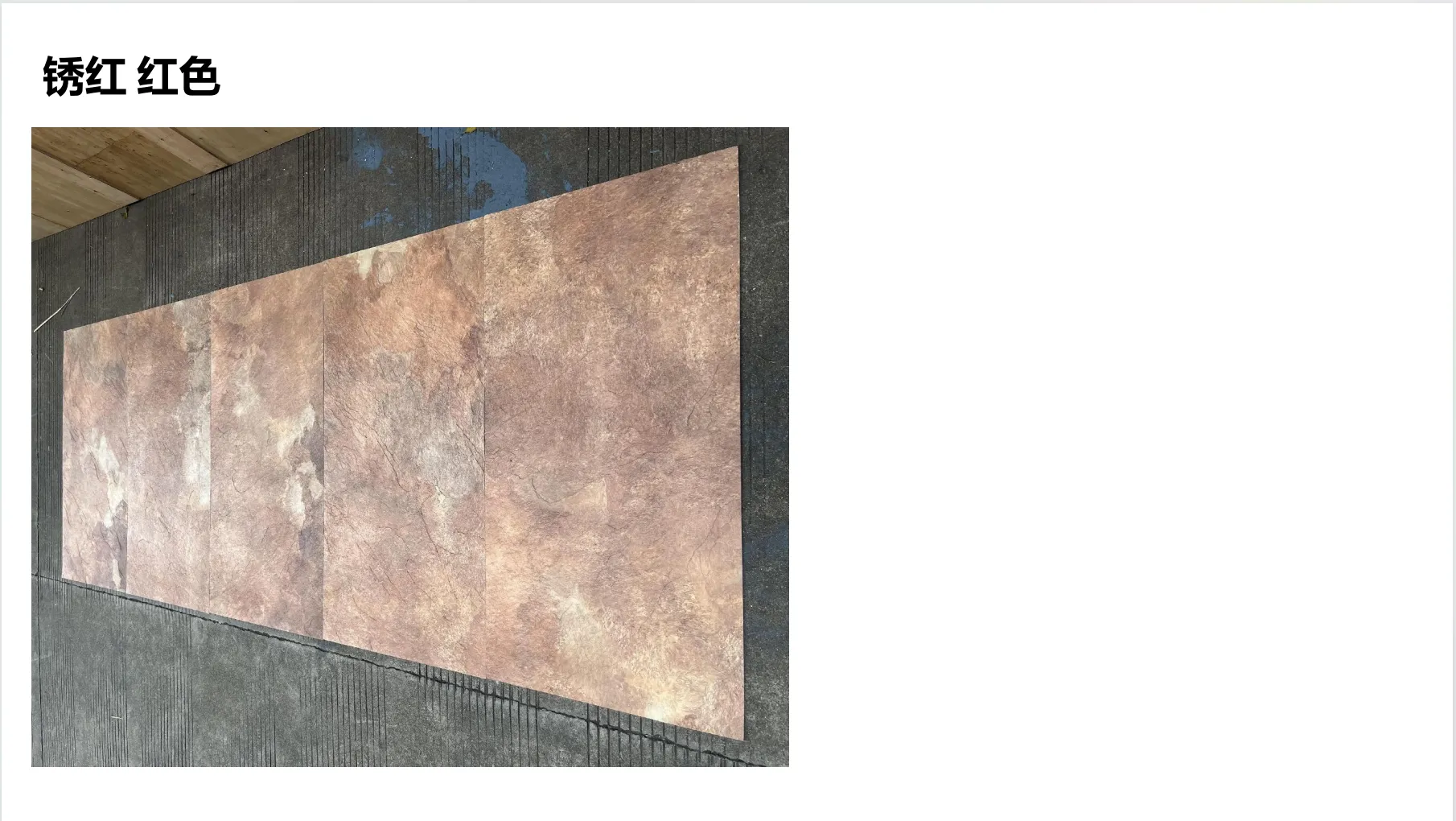
In the world of retail, first impressions are everything. A store's facade is more than just a wall—it's a silent storyteller, a visual handshake that greets customers before they step through the door. In a landscape flooded with generic glass-and-steel buildings, brands are increasingly turning to innovative materials to stand out. Enter Rusty Red MCM (Modified Composite Material), a game-changer in facade design that doesn't just cover a building but crafts an identity. This earthy, textured material has become a favorite among retailers aiming to blend warmth, authenticity, and durability into their brand image. Let's explore how Rusty Red MCM transforms retail facades from forgettable to unforgettable.
Retail is as much about emotion as it is about commerce. Shoppers don't just buy products—they buy experiences, and the journey starts the moment they lay eyes on a store. A facade sets the tone: a sleek, minimalist design might signal modern luxury, while a rustic, weathered look could evoke nostalgia or artisanal craftsmanship. In crowded markets, a distinctive facade acts as a beacon, drawing customers in and making the brand memorable long after they've left. It's no surprise, then, that retailers are investing in materials that do more than protect—they communicate .
This is where MCM comes into play. Short for Modified Composite Material, MCM is a lightweight, flexible cladding solution made by bonding natural minerals (like stone or wood fibers) with a polymer core. Its versatility—from mimicking the look of aged brick to replicating the texture of rough-hewn stone—has made it a staple in contemporary architecture. And among its many variants, Rusty Red MCM stands out for its ability to balance visual impact with practicality. It's not just a color; it's a feeling—one that resonates with brands eager to connect with customers on a deeper level.
Rusty Red MCM isn't your average building material. At first glance, it might remind you of aged terracotta, vintage leather, or the warm hue of a desert sunset. Its surface is rich with texture—subtle variations in tone and grain that give it a lived-in, organic quality, as if the panels have been shaped by time rather than machinery. But don't let its rustic charm fool you: beneath that earthy exterior lies cutting-edge engineering.
One of MCM's greatest strengths is its flexibility. Unlike heavy natural stone or rigid concrete, Rusty Red MCM panels are thin (typically 3-5mm thick) and lightweight, making them easy to install on almost any surface—curved walls, irregular facades, even existing structures. This flexibility opens up a world of design possibilities for retailers. Want to create a wave-like facade that mimics the movement of fabric? Or perhaps a series of semicircle boards that add depth to a flat wall? MCM can do it all, without the need for complex structural support. For boutique owners working with limited space or historic buildings, this adaptability is a game-changer.
Durability is another key selling point. Retail facades face constant wear and tear—rain, wind, UV rays, and even the occasional scuff from delivery trucks. Rusty Red MCM is built to withstand it all. Its mineral-rich surface resists fading, scratching, and moisture, ensuring the facade retains its warm red hue for decades. Unlike natural travertine or wood, which can crack, warp, or rot over time, MCM requires minimal maintenance—no sealing, painting, or frequent repairs. For busy retailers, this means more time focusing on customers and less on upkeep.
Color is a silent language, and in retail, it speaks volumes. Red, for instance, is often associated with energy and excitement—think of fast-food chains using bright red to stimulate appetite. But Rusty Red is different. It's a muted, earthy shade—more terracotta than fire engine—that feels grounded and approachable. Psychologists link this tone to warmth, trust, and nostalgia. It's the color of heritage, of stories passed down, of brands that feel like old friends rather than corporate entities.
For retailers targeting conscious consumers—those who value authenticity and sustainability—Rusty Red MCM aligns perfectly with their values. It evokes images of natural materials, of craftsmanship that respects the earth. Compare that to stark white concrete or glossy metal, which can feel cold or impersonal. A Rusty Red facade says, "We care about quality, and we care about how you feel." It's no wonder brands in sectors like artisanal food, vintage fashion, and wellness are drawn to this hue.
Take, for example, a small café in a trendy neighborhood. Its Rusty Red MCM facade, paired with wooden accents and potted greenery, feels like an extension of a cozy living room. Customers don't just stop for coffee—they linger, take photos, and share their experience online. The color becomes part of the brand's identity, so much so that locals start referring to it as "the red café" without needing to mention the name. That's the power of color in action.
In a digital age dominated by screens, tactile experiences have become rare—and precious. Retailers are increasingly using texture to create multisensory environments that engage customers beyond sight. Rusty Red MCM excels here. Run a hand over its surface, and you'll feel the subtle ridges and valleys, the interplay of smooth and rough patches that mimic natural stone. It's a texture that invites touch, turning a passive glance into an active interaction.
This tactile quality is especially impactful in brands that emphasize craftsmanship. A boutique selling handmade jewelry, for instance, might use Rusty Red MCM panels with a hammered finish, mirroring the texture of the metalwork inside. A bakery could pair the material with warm lighting, making the facade feel like a giant, inviting loaf of bread. Even online-first brands opening physical stores are using texture to bridge the digital-physical divide: customers who've only seen products on a screen now have something tangible to connect with—the feel of the brand's "home."
Rusty Red MCM also plays with light in fascinating ways. At dawn, its panels glow softly, catching the first rays of sunlight; at dusk, they absorb the golden hour light, creating a warm, inviting aura. Unlike flat, matte surfaces that look dull in low light, MCM's texture reflects light unevenly, adding depth and dynamism to the facade throughout the day. For retailers open late, this means the store remains visually striking even after dark—no small advantage in a world where night owls and evening shoppers are a key demographic.
One of the most exciting aspects of Rusty Red MCM is its versatility. It doesn't box retailers into a single aesthetic—instead, it adapts to the brand's personality. Whether you're going for industrial chic, bohemian warmth, or minimalist elegance, Rusty Red MCM can be tailored to fit.
For a classic, timeless look, retailers might opt for large, smooth panels arranged in clean lines, paired with black metal fixtures and large windows. This approach works well for heritage brands or those aiming for a "forever modern" vibe. On the flip side, a more eclectic brand could mix Rusty Red MCM with other materials: think wave panels for a dynamic, sculptural effect, or semicircle boards arranged in a pattern that mimics a mosaic. The material even pairs beautifully with wood grain board or bamboo mat board, creating a fusion of earthy tones that feels both natural and intentional.
Consider a hypothetical outdoor gear store targeting adventure enthusiasts. Its facade, clad in Rusty Red MCM, could feature custom 3D-printed panels shaped like mountain peaks, with the material's texture mimicking the rough surface of rock. Nearby, a children's toy shop might use the same Rusty Red hue but in playful, curved panels, evoking the warmth of a storybook cottage. The color ties them both to authenticity, but the design ensures their brand identities remain distinct.
Of course, Rusty Red MCM isn't the only material vying for retail facades. Let's see how it stacks up against other popular options, from natural stone to modern composites:
| Material | Durability | Weight | Design Flexibility | Sustainability | Cost (Installation & Upkeep) |
|---|---|---|---|---|---|
| Rusty Red MCM | High (resists fading, moisture, scratches) | Light (3-5kg/m²) | Excellent (can be curved, cut, or 3D-printed) | High (recyclable core, low carbon footprint) | Moderate (low maintenance offsets initial cost) |
| Travertine (Starry Red) | Medium (prone to staining without sealing) | Heavy (20-30kg/m²) | Limited (rigid, hard to shape) | Medium (natural but requires mining) | High (expensive material + structural support) |
| Wood Grain Board | Low (susceptible to rot, warping, pests) | Medium (8-12kg/m²) | Moderate (can be cut but not curved easily) | Variable (depends on sourcing and treatment) | Medium-High (regular sealing/painting needed) |
| Fair-Faced Concrete | High (durable but prone to cracking) | Very Heavy (25-40kg/m²) | Low (limited texture/color options) | Low (high carbon emissions in production) | High (requires skilled labor, hard to repair) |
As the table shows, Rusty Red MCM outperforms competitors in key areas: it's lighter than natural stone, more durable than wood, and more flexible than concrete. Its sustainability credentials—thanks to a recyclable polymer core and low transportation costs (due to its light weight)—also align with the growing demand for eco-friendly retail practices. For brands balancing budget, design, and responsibility, Rusty Red MCM is hard to beat.
For busy retailers, time is money—and Rusty Red MCM delivers on both fronts. Its lightweight nature means installation is faster and more cost-effective than traditional stone or concrete. Crews can cover large areas in days rather than weeks, minimizing disruption to business operations. And because MCM panels are prefabricated, there's less waste on-site, keeping projects on budget and reducing environmental impact.
Once installed, Rusty Red MCM requires little maintenance. Unlike wood, which needs regular staining, or natural travertine, which must be sealed to prevent water damage, MCM panels can be cleaned with nothing more than soap and water. Their resistance to fading (even in harsh sunlight) ensures the facade retains its warm red hue for decades, so the brand's visual identity remains consistent over time. For retailers with multiple locations, this consistency is key—customers will recognize the brand at a glance, whether they're in New York, London, or Tokyo.
Today's consumers don't just care about how a brand looks—they care about how it acts. Sustainability has become a core part of brand identity, and Rusty Red MCM aligns with this values-driven approach. MCM production uses up to 70% recycled materials, including post-consumer plastics and industrial byproducts, reducing reliance on virgin resources. Its light weight also lowers transportation emissions, and its long lifespan means fewer replacements (and less waste) over time.
Brands that prioritize sustainability can leverage their Rusty Red MCM facades as a marketing tool. Imagine a coffee shop with a sign near its entrance: "Our facade is made from 100% recycled MCM—because great taste shouldn't cost the Earth." It's a simple message, but it resonates with eco-conscious customers, turning the building itself into a statement of the brand's values.
To see Rusty Red MCM in action, look no further than Heritage & Co. , a small clothing boutique in Portland, Oregon, that specializes in vintage-inspired apparel. When owner Mia Chen opened the store in 2022, she wanted a facade that felt "timeless but not old-fashioned"—a reflection of her brand's ethos of blending retro styles with modern comfort.
After considering options like reclaimed brick and wood siding, Mia settled on Rusty Red MCM. "I loved the texture—it looked like something that had been weathered by time, but I knew it would hold up better than real brick," she says. The panels were custom-cut to create a subtle pattern of overlapping "shingles," and Mia paired them with (brass) fixtures and large, arched windows. "From the day we opened, people commented on the facade," she recalls. "Customers would say, 'I walked past three times before coming in, but I couldn't stop thinking about how warm it felt.'"
Six months later, Heritage & Co. has become a local landmark. Mia attributes much of her success to that first impression. "The facade isn't just a wall—it's part of the brand story. People associate us with that rusty red color now. They'll text their friends, 'Meet me at the red boutique on Oak Street.' It's become our shorthand."
As retail continues to evolve, so too will the materials that shape its spaces. The rise of experiential shopping—where stores double as social hubs, art galleries, or community centers—demands facades that are more than functional; they need to be immersive . Rusty Red MCM is well-positioned to meet this demand, thanks to its adaptability and sensory appeal.
Looking ahead, we can expect to see even more innovation in MCM design. Brands may experiment with 3D-printed panels that mimic organic forms, or integrate technology like embedded LED lights that make the facade interactive (imagine a Rusty Red MCM wall that changes hue subtly to match the time of day or a store's latest collection). And as sustainability becomes non-negotiable, MCM manufacturers are exploring even more eco-friendly cores, including bioplastics and plant-based composites.
In the end, retail is about connection. A brand's identity isn't just in its logo or products; it's in the way it makes people feel. Rusty Red MCM doesn't just build facades—it builds relationships. Its warm, textured surface invites customers in, its durability ensures the brand's story endures, and its sustainability lets shoppers feel good about where they spend their money. For retailers willing to invest in design that speaks to the heart, Rusty Red MCM isn't just a material choice—it's a legacy in the making.
So the next time you walk down a busy street, take a moment to notice the buildings around you. The ones that stand out—the ones you remember—are the ones with soul. And more often than not, they're wearing Rusty Red MCM. Because in retail, as in life, it's the ones with character that leave a lasting impression.
Recommend Products












