
How a Warm, Bold Hue and Innovative Materials Are Transforming Shopping Experiences
Walk down any shopping street, and you'll notice a pattern: too many stores blend into the background. White walls, generic tiles, and muted colors—they're safe, but they're forgettable. For brands competing for attention, this sameness is a silent killer. Customers don't just buy products; they buy feelings, memories, and a sense of belonging. And in a world of endless choices, the spaces that make them feel something are the ones that stick.
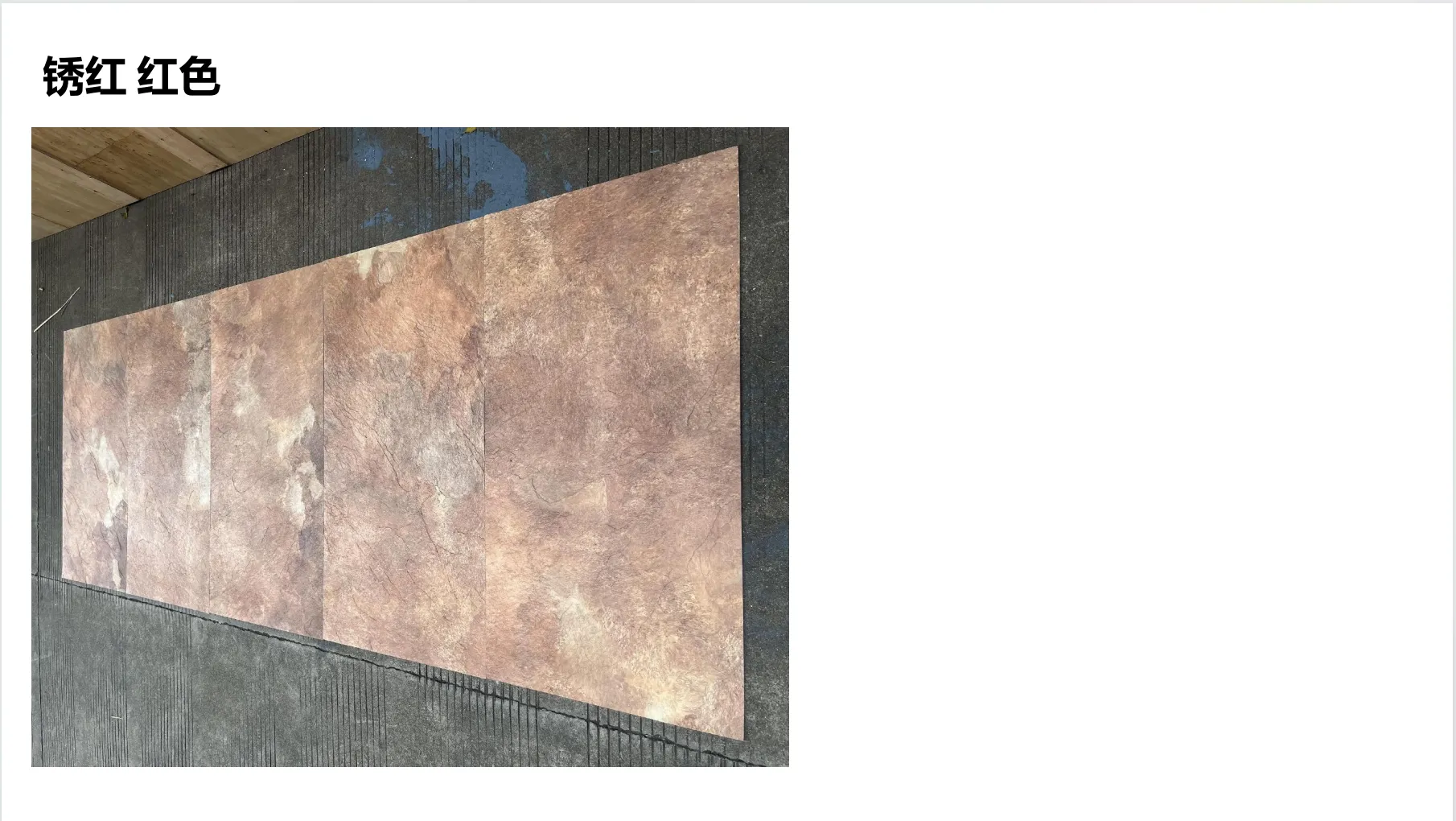
So, how do you break free from the generic? It starts with color. Color isn't just decoration—it's a language. It speaks to emotions, triggers memories, and communicates your brand's personality before a single word is spoken. And in recent years, one hue has been quietly stealing the spotlight in retail design: rusty red. Warm, earthy, and unapologetically bold, rusty red isn't just a color—it's a statement. But to truly make that statement sing, you need the right material. Enter MCM flexible stone.
Think about the last time a color made you pause. Maybe it was the rich terracotta of a sunbaked Italian village, or the warm rust of an old leather jacket that feels like a trusted friend. Rusty red taps into that same nostalgia—a sense of comfort and authenticity—while adding a modern edge. It's not as harsh as fire engine red, nor as muted as brick; it's a hue that balances warmth and boldness, making it perfect for retail spaces that want to feel welcoming but not forgettable.
For brands aiming to project reliability, warmth, or a connection to heritage, rusty red is a secret weapon. A coffee shop using rusty red walls feels cozy, like a place where you'll linger over a latte. A boutique clothing store with rusty red accents feels curated and intentional, like the clothes inside. Even tech brands, often stuck in sterile whites and grays, can use rusty red to soften their edges and feel more human.
But here's the catch: not all materials can do rusty red justice. Paint fades, traditional stone is heavy and rigid, and cheap vinyl feels fake. To make rusty red work in retail, you need a material that's as dynamic and durable as the color itself. That's where MCM flexible stone comes in.
MCM (Modified Composite Material) flexible stone isn't your average building material. Imagine a stone-like surface that's thin enough to bend around curves, light enough to install on any wall, and tough enough to handle the chaos of daily foot traffic—all while looking and feeling like natural stone. That's MCM flexible stone. And when it's infused with that rich rusty red hue? It becomes a transformative element for retail design.
But don't just take our word for it. Let's compare MCM flexible stone to other common retail materials to see how it stacks up—especially when it comes to showcasing rusty red:
| Feature | Rusty Red MCM Flexible Stone | Traditional Paint | Natural Rusty Red Stone |
|---|---|---|---|
| Flexibility | Can bend to curves and custom shapes | Only works on flat surfaces | Rigid; cannot be shaped |
| Durability | Scratch, water, and fade-resistant | Prone to chipping, fading, and staining | Durable but heavy; may crack under stress |
| Aesthetics | Authentic stone texture with rich, even color | Flat, uniform color; no texture | Natural texture but limited color consistency |
| Installation | Lightweight; easy to cut and install on any surface | Requires priming and multiple coats; time-consuming | Heavy; requires structural support and specialized labor |
It's clear: MCM flexible stone isn't just a material—it's a partner in bringing rusty red to life in retail. But even the most stunning color needs balance. To create a space that feels cohesive, rusty red works best when paired with complementary materials that enhance its warmth without overwhelming it.
Rusty red is bold, but it doesn't have to stand alone. The best retail spaces use a mix of materials to create contrast, depth, and balance. Here are two materials that pair beautifully with rusty red MCM flexible stone, elevating your design from "nice" to "unforgettable":
Fair-faced concrete—with its raw, industrial vibe—might seem like an unlikely partner for rusty red, but that's what makes the pairing so striking. The cool, gray tones of fair-faced concrete create a neutral backdrop that lets rusty red pop, while its smooth, minimalist texture balances the warmth of the MCM stone. Imagine a café with rusty red MCM booth backs and fair-faced concrete walls: the space feels modern but inviting, like a warehouse converted into a cozy spot to grab a pastry.
Fair-faced concrete also adds a sense of authenticity, which aligns perfectly with rusty red's nostalgic charm. Together, they create a space that feels both grounded and forward-thinking—ideal for brands that want to project heritage with a modern twist.
For brands that want to double down on warmth, wood grain board is the perfect complement to rusty red MCM flexible stone. The natural patterns of wood—whether light oak or rich walnut—add a soft, organic layer that balances the boldness of rusty red. A clothing store with rusty red MCM display walls and wood grain board shelving feels like a stylish cabin in the woods: rugged yet refined, and impossible to ignore.
Wood grain board also adds tactile variety. While the rusty red MCM stone offers a rough, stone-like texture, wood grain board feels smooth and familiar—encouraging customers to reach out and touch, creating a more interactive experience. It's the difference between a space that looks good and one that feels good.
Let's bring this all to life with a hypothetical example (but one that could easily be real). Meet "Heritage & Co.," a small-batch coffee brand that prides itself on sourcing beans from family-owned farms and roasting them using traditional methods. Their mission? To create a coffee shop that feels like a home away from home—warm, welcoming, and unapologetically authentic.
Their designer, Maria, knew that generic white walls and chrome accents wouldn't cut it. She wanted the space to reflect the brand's values: heritage, warmth, and craftsmanship. That's when she landed on rusty red. "It's the color of old barns, of terracotta pots, of the soil where their coffee grows," she says. "It feels honest."
To bring that vision to life, Maria chose rusty red MCM flexible stone for the main accent wall behind the counter. She curved the panels to create a gentle wave, mimicking the rolling hills of the coffee farms. For the rest of the walls, she opted for fair-faced concrete to keep the space feeling modern, then added wood grain board for the tables and shelving to soften the look. The result? A space that feels both timeless and fresh.
"Customers walk in and immediately say, 'Wow, this feels different,'" says the owner, Carlos. "They linger longer, take photos, and talk about us on social media. The rusty red wall has become our 'mood wall'—people pose in front of it, and it's become part of our brand identity. We didn't just build a coffee shop; we built a feeling."
In a world where retail spaces often feel like carbon copies, standing out isn't just a luxury—it's a necessity. Rusty red MCM flexible stone offers a way to do just that: by combining the emotional power of color with the practical benefits of a cutting-edge material. It's not just about making walls look good; it's about creating spaces that tell a story, evoke emotion, and make customers feel seen.
Whether you're designing a boutique, a café, or a flagship store, remember this: color is your first chance to connect with customers. And with rusty red MCM flexible stone, that connection can be bold, authentic, and unforgettable. So why blend in when you can rustically stand out?
Your retail space isn't just a place to sell products—it's a place to sell feelings. Let rusty red and MCM flexible stone help you tell that story.
Recommend Products












