
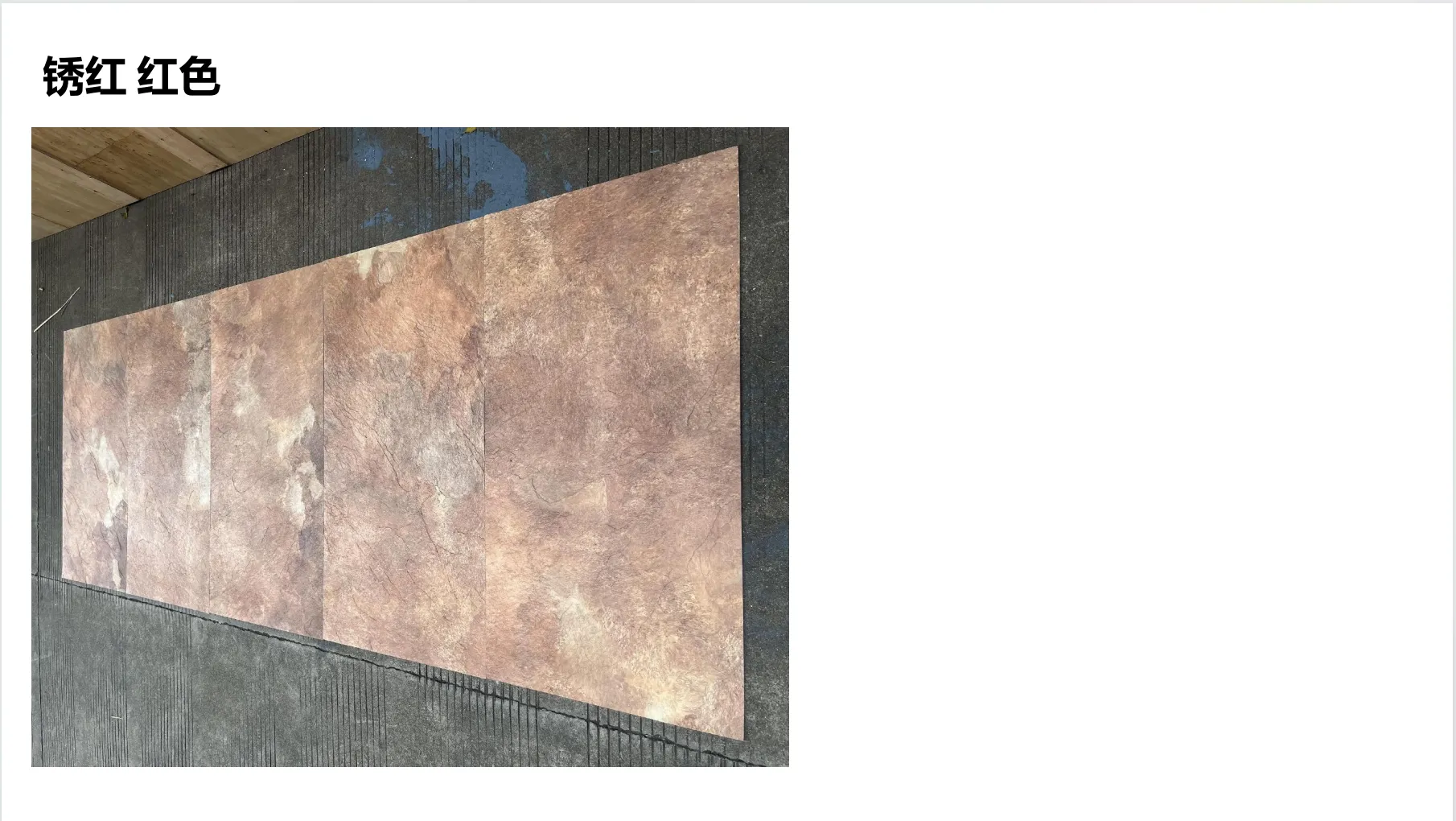
In the world of architecture, materials are more than just building blocks—they're storytellers. They whisper of eras past, shout of innovation, and cradle the emotions of those who inhabit the spaces they shape. In 2025, one material has risen above the rest to become the voice of modern design: Rusty Red MCM. This isn't just a color or a texture; it's a feeling—a warm, lived-in embrace that bridges industrial edge with organic softness. As architects and designers across the globe seek to create spaces that feel both timeless and forward-thinking, Rusty Red MCM has emerged as the unexpected hero, proving that sometimes the most impactful trends are the ones that feel like they've been around forever, just waiting to be rediscovered.
Let's start with the basics: MCM stands for Modified Composite Material, a category of building materials designed to mimic the look and feel of natural stone, wood, or metal—without the weight, cost, or environmental impact. At its core, MCM is a lightweight, flexible cladding solution that combines mineral aggregates, polymers, and reinforcing fibers. Think of it as nature's best qualities, reimagined for the demands of modern construction. And within this family, the Rusty Red variant has become a standout, thanks to its unique colorway: a rich, earthy hue that evokes aged iron, desert sunsets, and the patina of well-loved tools.
But Rusty Red MCM isn't just about aesthetics. It's part of the broader MCM flexible stone movement, which prioritizes versatility. Unlike traditional red travertine or heavy rusty metal panels, Rusty Red MCM sheets can bend, curve, and adapt to almost any surface—whether it's a sweeping facade, a curved accent wall, or a custom furniture piece. This flexibility has made it a favorite for projects where design ambition outpaces the limitations of rigid materials. And when paired with the MCM big slab board series, which offers sheets up to 12 feet long, it becomes possible to create seamless, monolithic surfaces that feel both grand and intimate.
Why Rusty Red, and why now? To understand, we need to look at the shifting priorities of 2025's design landscape. After years of minimalist whites and cold grays, there's a growing hunger for warmth—spaces that feel human, not clinical. Rusty Red MCM delivers that warmth in spades, with its depth of color and subtle texture variations (no two panels are exactly alike, thanks to its composite composition). It's a material that ages gracefully, too; unlike painted surfaces that chip or fade, its color is intrinsic, developing a richer character over time.
Sustainability is another key driver. In an era where "green building" has moved from buzzword to mandate, Rusty Red MCM checks all the boxes. Its lightweight nature reduces transportation emissions (a single truck can carry 10 times more MCM panels than traditional stone slabs). It often incorporates recycled materials, and its durability means less frequent replacement—lowering long-term environmental impact. Compare that to, say, foamed aluminium alloy board (vintage gold), which, while sleek, lacks the same eco-credentials and can feel overly industrial in residential settings. Rusty Red MCM, by contrast, feels grounded, like it belongs to the earth it came from—even as it pushes the boundaries of what's possible in construction.
Then there's the "nostalgia with a twist" factor. In a world dominated by screens and digital interactions, people crave tactile, authentic experiences. Rusty Red MCM delivers that by channeling the comfort of old barns, weathered bridges, and industrial warehouses—spaces where time leaves its mark. But it's not stuck in the past. When paired with modern elements like fair-faced concrete or polished concrete floors, it creates a juxtaposition that feels fresh: old and new, rough and smooth, warm and cool. It's this balance that makes it so versatile, fitting into everything from rural farmhouses to urban lofts.
To truly grasp Rusty Red MCM's impact, let's dive into how it's being used around the globe. In Dubai, a new boutique hotel in the Alserkal Avenue arts district has clad its entire exterior in Rusty Red MCM panels from the MCM big slab board series. The result? A building that glows like a desert campfire at sunset, standing out against the city's glass and steel skyline. Inside, the lobby features curved walls wrapped in the same material, paired with travertine (starry red) flooring—a nod to the region's natural stone heritage, but with a lighter, more approachable feel.
In Tokyo, a residential complex designed for young families has embraced Rusty Red MCM for its balconies and common areas. Here, the material's flexibility allowed architects to create undulating railings that mimic the flow of nearby rivers, while its durability ensures it can withstand Japan's humid summers and snowy winters. Parents love that it doesn't get too hot to the touch in the sun (unlike metal), and kids adore running their hands over its subtle texture—a small detail that turns everyday moments into sensory experiences.
Closer to home, in Portland, Oregon, a community library renovation used Rusty Red MCM to transform a drab 1970s exterior into a neighborhood landmark. The material was chosen for its ability to complement the area's Pacific Northwest aesthetic—think evergreen forests and rainy days—without feeling out of place. The library's reading nooks now feature Rusty Red accent walls that feel like a cozy cabin retreat, encouraging visitors to stay a little longer, turn another page. It's a reminder that building materials don't just shape spaces; they shape behavior, too.
In homes, Rusty Red MCM is breaking free from the "exterior only" mold. Designers are using it for interior accent walls in living rooms, adding warmth to open-concept spaces. In kitchens, it's being paired with wood grain board cabinetry for a rustic-modern look, or with sleek marble concrete board countertops for contrast. Even bathrooms are getting in on the trend—imagine a shower surround clad in Rusty Red MCM, where the material's moisture resistance and easy maintenance shine. It's a bold choice, but one that turns a functional space into a spa-like retreat.
For businesses, Rusty Red MCM is a branding tool. A coffee shop in Berlin used it to line its walls, creating an atmosphere that feels like a vintage workshop—perfect for attracting customers looking for "authenticity." A tech startup in Austin opted for Rusty Red MCM in its office breakout areas, balancing the company's innovative vibe with a sense of groundedness. Even retail stores are using it: luxury fashion brands, in particular, are drawn to its ability to elevate products without overshadowing them. It's a material that says, "We care about quality—both in our products and in the space we invite you into."
Curious how Rusty Red MCM compares to other popular materials? Let's break it down:
| Material | Aesthetic Character | Durability | Sustainability | Best Use Cases |
|---|---|---|---|---|
| Rusty Red MCM | Warm, earthy, industrial-organic hybrid; subtle texture variations | High (resistant to fading, chipping, moisture) | Excellent (lightweight, often recycled content, low maintenance) | Facades, accent walls, interior/exterior cladding, furniture |
| Fair-Faced Concrete | Minimalist, cool, monochromatic; smooth or lightly textured | Very high (fire-resistant, long-lasting) | Good (recyclable, but heavy; higher transportation emissions) | Structural elements, large-scale walls, industrial-style spaces |
| Travertine (Starry Red) | Natural, porous, veined; classic stone look | Moderate (prone to staining without sealing) | Moderate (quarried stone; heavy, limited flexibility) | Flooring, countertops, traditional or luxury interiors |
| Foamed Aluminium Alloy Board (Vintage Gold) | Sleek, metallic, modern; reflective surface | High (corrosion-resistant, lightweight) | Fair (recyclable, but energy-intensive to produce) | Accent panels, high-end exteriors, futuristic designs |
The takeaway? Rusty Red MCM isn't trying to replace these materials—it's here to complement them. Pair it with fair-faced concrete for a balanced industrial look, or use it alongside travertine (starry red) for a layered stone effect. The key is its adaptability: it plays well with others, making it a designer's dream.
Rusty Red MCM's rise isn't limited to one region. It's a global phenomenon, popping up in unexpected corners of the world and redefining local architectural languages. In Marrakech, a riad renovation used Rusty Red MCM to replace traditional clay brick, preserving the building's historic silhouette while adding a modern twist. In Sydney, a coastal home used it to clad its exterior, where its resistance to saltwater and harsh sun makes it a practical choice—proving that beauty and functionality can coexist.
Perhaps most telling is its adoption in the Middle East, a region known for pushing architectural boundaries. In Riyadh, a new cultural center designed by a Pritzker Prize-winning architect features a facade composed of Rusty Red MCM panels arranged in a wave-like pattern, inspired by the desert's sand dunes. The material's ability to be cut into custom shapes made this design possible—a feat that would have been cost-prohibitive with natural stone. It's a powerful example of how Rusty Red MCM is enabling architects to dream bigger, without compromising on vision or budget.
So, what does the future hold for Rusty Red MCM? If 2025 is any indication, it's not going anywhere. Designers are already experimenting with new applications: 3D-printed MCM accents (part of the MCM 3D printing series), where Rusty Red panels are shaped into intricate geometric patterns, or mixed with other MCM variants like lunar peak black for bold, graphic designs. There's also talk of integrating smart technology—imagine Rusty Red MCM panels that change color subtly with temperature, or that incorporate LED lighting for dynamic facades. The possibilities are endless, but at its core, Rusty Red MCM will always be about that human connection—the way a space feels when it's wrapped in something that feels alive.
As we look ahead, it's clear that Rusty Red MCM isn't just a trend. It's a shift in how we think about building materials. It's a reminder that the best design isn't about being flashy or new for new's sake—it's about creating spaces that make us feel something. Whether you're walking into a home, a hotel, or a library, Rusty Red MCM doesn't just catch your eye; it catches your heart. And in a world that often feels disconnected, that's a trend worth holding onto.
So here's to 2025—and to the warm, wonderful, rusty red future of design. It's not just a color. It's a movement. And it's only just getting started.
Recommend Products












