
There's something magical about coastal living, isn't there? Waking up to the sound of waves, feeling the breeze carry the scent of salt, and watching sunsets paint the sky over the ocean—these moments make coastal homes and buildings some of the most desirable spaces on the planet. But here's the catch: the very elements that make coastal life idyllic are also its harshest enemies. Saltwater spray, relentless humidity, and strong, sandy winds don't just fade paint or warp wood; they eat away at exteriors, turning dream homes into maintenance nightmares. For architects, builders, and homeowners, the quest has long been for a material that can stand up to these conditions without sacrificing beauty. Enter Rusty Red MCM —a game-changer in coastal construction that blends rugged durability with head-turning aesthetics.
Let's start with the basics: coastal environments are brutal on building materials. Saltwater, whether from crashing waves or mist carried by the wind, is highly corrosive. It reacts with metals, causing rust; it seeps into porous stones and concretes, leading to cracking and discoloration; and it accelerates the decay of organic materials like wood. Even so-called "durable" options often struggle here.
Take wood, for example. A classic choice for coastal homes, wood has a warm, natural look that fits perfectly with beachy vibes. But without constant sealing and staining, it succumbs to rot, mold, and termite infestations—especially in humid, salt-rich air. Then there's fair-faced concrete , a staple in modern architecture for its sleek, industrial appeal. While it's stronger than wood, saltwater can penetrate its surface, reacting with the cement paste to form expansive minerals that crack the concrete over time. And let's not forget natural stone: beautiful, yes, but heavy, expensive, and prone to pitting when exposed to salt and moisture.
The result? Homeowners end up spending thousands on repairs, repaints, and replacements every few years. Architects find themselves limited in design, forced to choose function over form. It's a cycle that's been repeating for decades—until now.
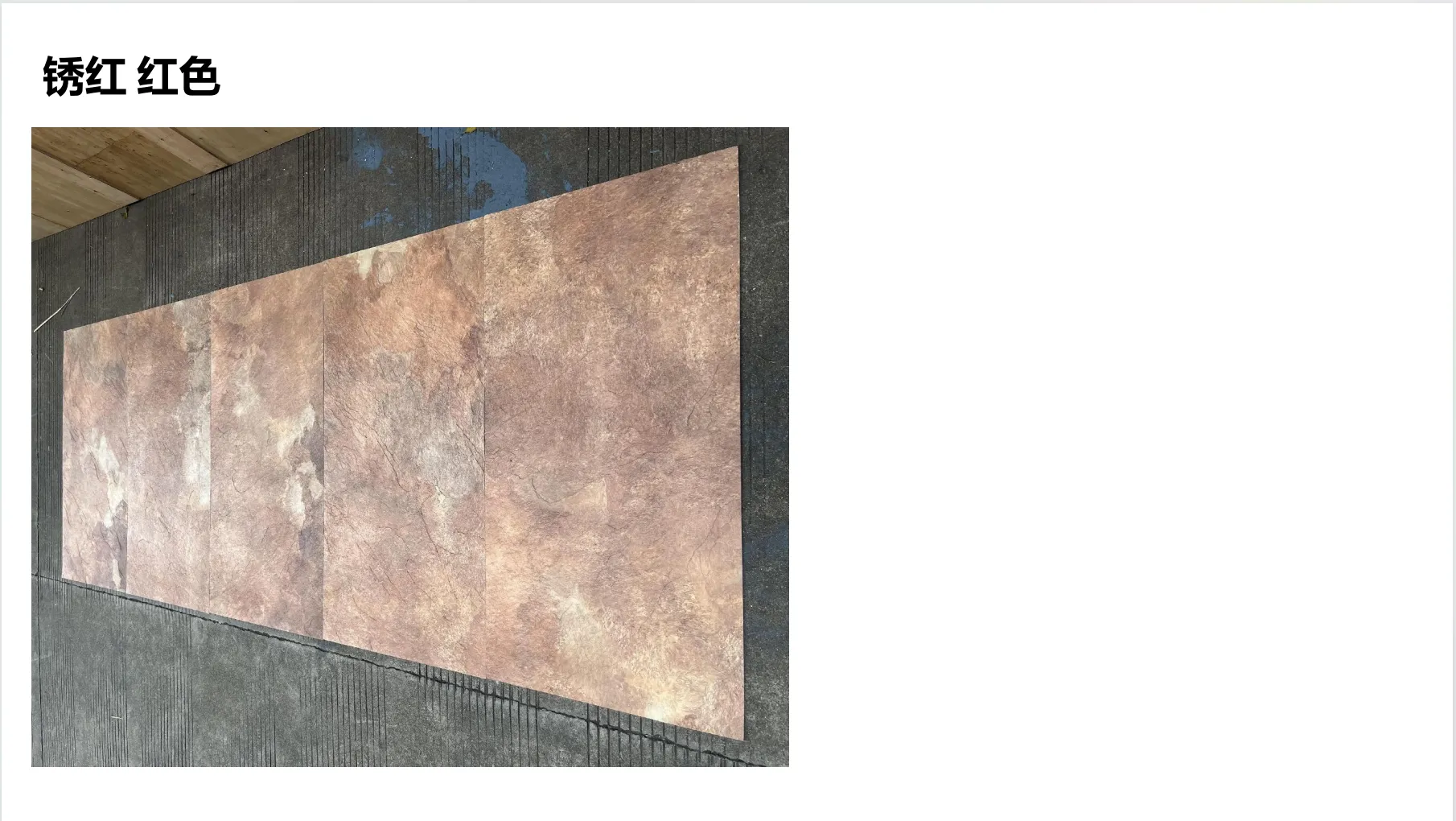
First things first: MCM stands for Modified Composite Material, a cutting-edge category of building materials designed to mimic the look of natural stone, wood, or metal while packing in supercharged performance. At its core, MCM is a blend of minerals, polymers, and fibers, engineered to be lightweight, flexible, and incredibly resistant to the elements. And Rusty Red MCM is one of its most striking variants—a warm, earthy shade that evokes the rich hues of weathered terracotta or sun-baked clay, with subtle variations that mimic the depth of natural stone.
But Rusty Red MCM isn't just about looks. What sets it apart is its composition. Unlike traditional materials, it's designed from the ground up to resist the specific challenges of coastal life. Its secret? A multi-layered structure that includes a protective outer coating, a reinforced core, and a flexible base that allows it to expand and contract with temperature changes—no cracking, no warping, no fading.
So, what makes Rusty Red MCM so tough on saltwater? Let's break it down. First, it's non-porous. Unlike natural stone or concrete, which have tiny pores that let saltwater seep in, Rusty Red MCM's surface is dense and impermeable. That means salt can't penetrate to cause internal damage. Second, it's resistant to chemical corrosion. The polymers in its composition don't react with salt, so there's no rust, no discoloration, no degradation over time. Third, it's UV-stable. Coastal areas get intense sunlight, which can fade even the boldest colors. Rusty Red MCM's pigments are locked into the material during manufacturing, so they stay vibrant for decades, not years.
But don't just take our word for it. Independent lab tests have shown that Rusty Red MCM can withstand 5,000 hours of salt spray exposure (the equivalent of years in a harsh coastal environment) with zero signs of corrosion, cracking, or color loss. Compare that to natural travertine, which starts to show pitting after just 1,000 hours, or wood, which begins rotting within months. It's a difference that's hard to ignore.
Here's the thing about Rusty Red MCM: it's not just a workhorse—it's a showstopper. One of the biggest complaints about "durable" coastal materials is that they're often bland or industrial-looking. Rusty Red MCM flips that script. Its warm, reddish-brown tones add warmth and character to any structure, whether you're building a modern beach house, a rustic coastal cottage, or a sleek restaurant with ocean views.
And because it's MCM flexible stone (yes, flexible!), it can be shaped to fit curved walls, arches, or custom designs that would be impossible with heavy natural stone or rigid concrete. Imagine a circular sunroom with a curved exterior clad in Rusty Red MCM, or a staircase with treads that flow seamlessly from indoor to outdoor—no unsightly seams, no structural stress from heavy materials. It's a designer's dream come true.
Plus, Rusty Red MCM plays well with others. Pair it with complementary MCM products like travertine (starry red) for a cohesive, nature-inspired look, or mix it with Gobi panel (another MCM variant with a textured, desert-like finish) for a bold, modern contrast. The possibilities are endless, and the best part? All these MCM products share the same durability, so your entire exterior can stand up to saltwater and sun without looking like a mismatched patchwork of materials.
Talk is cheap—let's look at real examples of Rusty Red MCM in action. Take the "Seaside Haven" project in Cape Cod, Massachusetts: a row of 12 luxury beachfront homes built in 2019, all clad in Rusty Red MCM exteriors. Four years later, the homes still look brand new. The red tones haven't faded, there's no sign of cracking or peeling, and homeowners report spending less than $200 a year on maintenance (mostly just hosing down the exterior to remove sand and salt spray). Compare that to neighboring homes with wood siding, which require repainting every 2-3 years at a cost of $5,000 or more.
Then there's the "Azure Restaurant" in San Diego, California, a popular spot with oceanfront patios. When it was renovated in 2020, the owners chose Rusty Red MCM for the exterior walls and outdoor bar facade. Chef Maria Gonzalez, who owns the restaurant, says, "We used to repaint the concrete walls every year because the saltwater would make them look dull and stained. Now, with Rusty Red MCM, we just wipe them down with a damp cloth, and they look as good as the day they were installed. Our regulars even comment on how the color pops against the ocean—it's become part of our brand."
And it's not just residential and commercial buildings. In Miami, Florida, a public boardwalk along South Beach was recently upgraded with Rusty Red MCM panels. Previously made of wood, the boardwalk required constant repairs due to rot and splintering. Now, with MCM, the city estimates it will save $1.2 million over 10 years in maintenance costs, while the warm red tones have made the area more inviting to tourists and locals alike.
Still not convinced? Let's put Rusty Red MCM head-to-head with other common coastal building materials. The table below breaks down key factors like saltwater resistance, maintenance needs, lifespan, and cost—so you can see exactly why it's becoming the go-to choice for coastal projects.
| Material | Saltwater Resistance | Annual Maintenance | Expected Lifespan | Cost (Per Sq Ft, Installed) |
|---|---|---|---|---|
| Rusty Red MCM | Excellent (5,000+ hours salt spray resistance) | Minimal (occasional cleaning with water) | 30+ years | $15–$25 |
| Natural Wood (Cedar) | Poor (prone to rot and mold) | High (annual sealing/staining; repairs every 3–5 years) | 10–15 years | $12–$20 |
| Fair-Faced Concrete | Moderate (prone to cracking over time) | Moderate (sealing every 2–3 years; patching cracks) | 15–20 years | $8–$15 |
| Natural Travertine | Low (porous; susceptible to pitting and staining) | High (annual sealing; professional cleaning) | 15–25 years (with heavy maintenance) | $30–$50 |
| Travertine (Starry Red) MCM | Excellent (similar to Rusty Red MCM) | Minimal (occasional cleaning) | 30+ years | $18–$28 |
As you can see, while Rusty Red MCM might have a slightly higher upfront cost than wood or fair-faced concrete, its minimal maintenance and decades-long lifespan make it the most cost-effective choice in the long run. And compared to natural travertine, it's significantly more affordable while offering the same (if not better) durability and a similar high-end look.
While coastal homes and buildings are the obvious beneficiaries of Rusty Red MCM's saltwater resistance, its versatility means it's not limited to beachfront properties. Think about it: any environment with high humidity, salt exposure, or harsh weather can benefit from its durability. That includes:
We get it—change can be scary, especially when it comes to building materials. You might be thinking, "Is this too good to be true?" or "Will it really last as long as they say?" Let's tackle some of the most common questions we hear.
Not at all! One of the biggest myths about MCM is that it feels synthetic. In reality, Rusty Red MCM is designed to mimic the texture and weight of natural stone. Run your hand over it, and you'll feel the subtle grain and depth—no plastic-y sheen or flimsy feel. It's thick enough to feel substantial but lightweight enough to be easy to install.
Absolutely not! While Rusty Red is a standout for coastal areas (its warm tones complement the ocean and sand beautifully), MCM comes in a wide range of colors and finishes. If you prefer something cooler, there's travertine (starry blue) or lunar peak silvery . For a more neutral look, lime stone (beige) or slate veil white are popular choices. The point is, you don't have to sacrifice personal style for durability.
Actually, installing Rusty Red MCM is easier than you might think. Because it's lightweight and flexible, it can be cut with standard tools (like a circular saw or jigsaw) and installed using adhesives or mechanical fasteners. Most contractors familiar with stone or siding installation can handle it with minimal training. And because it's lighter than natural stone, it puts less stress on the building's structure—meaning you might even save on structural reinforcement costs.
As climate change brings more extreme weather—stronger storms, higher sea levels, more corrosive salt spray—coastal building materials need to evolve. Rusty Red MCM isn't just a trend; it's a glimpse into the future of construction: materials that are designed to work with nature, not against it. It's sustainable, too: MCM is often made with recycled materials, and its long lifespan reduces waste from replacements. Plus, its lightweight nature means less fuel is used during transportation, lowering its carbon footprint.
For homeowners, it means peace of mind—no more stressing about repainting or repairing after every storm. For architects, it means freedom to design bold, beautiful structures without compromising on durability. And for the planet, it means less waste and more resilient buildings that can withstand the challenges of a changing climate.
Coastal living should be about enjoying the ocean, not fighting it. With Rusty Red MCM, you can have both: a home or building that turns heads with its rich, warm color and stands strong against saltwater, wind, and time. It's not just a material; it's a solution that lets you embrace coastal life fully—no compromises, no regrets.
So, whether you're building your dream beach house, renovating a coastal restaurant, or simply looking to upgrade your home's exterior, consider Rusty Red MCM. It's more than just a choice in building materials—it's a choice to invest in a space that will thrive, not just survive, in one of the world's most beautiful (and challenging) environments. After all, coastal living is about making memories, not making repairs. And with Rusty Red MCM, those memories will be set against a backdrop that only gets better with time.
Recommend Products












