
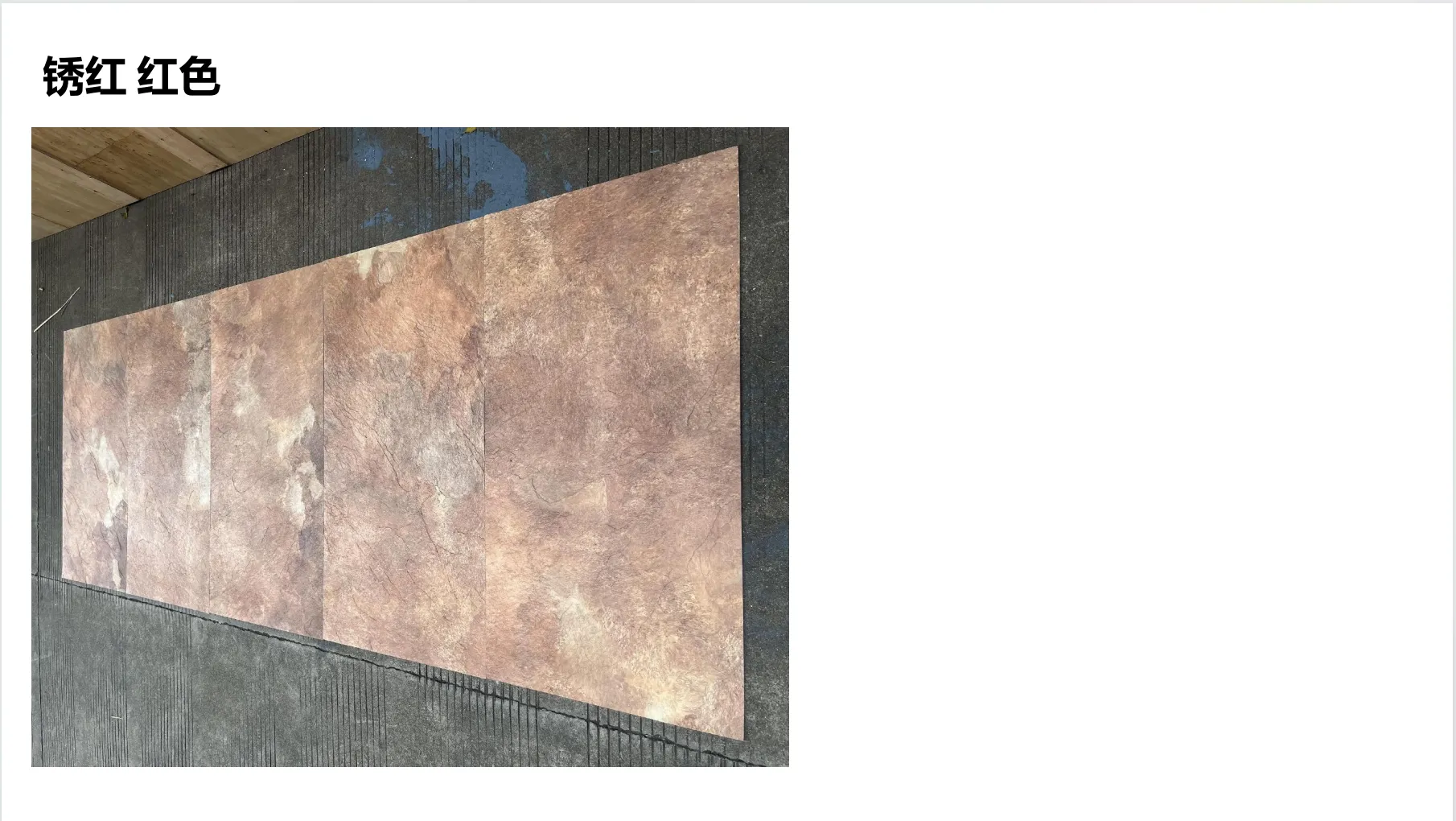
Walk through any school hallway, and you'll feel it immediately—the buzz of students rushing to class, backpacks swinging, lockers slamming shut. Cafeterias hum with chatter, auditoriums echo with presentations, and libraries balance quiet focus with the soft shuffle of books. These spaces aren't just buildings; they're living, breathing ecosystems where learning, growth, and connection happen daily. But with all that activity comes a hidden challenge: how do we build spaces that keep up? High-traffic areas demand materials that can take a beating—scratches, spills, constant footfall—without losing their charm. Enter Rusty Red MCM , a material that doesn't just endure the chaos of school life; it enhances it.
Educational facilities face a unique set of wear-and-tear challenges. In elementary schools, tiny feet and sticky fingers test surfaces daily; in high schools, hallway traffic rivals a busy city sidewalk. Add in cafeteria spills (ketchup, milk, the occasional science experiment gone wrong), auditorium chair scrapes, and even the enthusiastic artwork of students decorating bulletin boards, and it's clear: traditional materials often fall short. Ceramic tiles crack, hardwood warps, and painted walls fade or chip, leading to endless repair cycles that drain budgets and disrupt learning.
Worse, uninspired spaces can subtly dampen mood. Dull, chipped walls or stained floors don't exactly spark creativity—or pride—in students. As educators know, environment shapes experience. A space that feels fresh, intentional, and cared for tells students, "You matter." So why settle for materials that only last a few years?
Modified Composite Material (MCM) has revolutionized how we build for high-traffic areas, and Rusty Red MCM stands out as a star player. Blending the ruggedness of stone with the flexibility of modern composites, it's designed to thrive where other materials falter. But what truly sets it apart is its soul: that warm, earthy rust hue, reminiscent of aged brick or sunbaked clay, adds a sense of warmth and history to spaces without feeling outdated. It's not just a surface—it's a backdrop for memories.
Think of it this way: A hallway lined with Rusty Red MCM doesn't just resist scuffs from backpacks; it turns that hallway into a journey. The rich color softens harsh fluorescent lights, making early-morning rushes feel less stressful. In a library, it pairs beautifully with wooden bookshelves, creating a cozy, cabin-like atmosphere that invites students to linger. And in a cafeteria? It hides the inevitable spills (we see you, pizza day) while still looking intentional, not "industrial."
Curious how Rusty Red MCM compares to traditional options? Let's break it down. Below is a snapshot of how it measures up against common high-traffic materials, plus a few complementary MCM variants like boulder slab and fair-faced concrete that schools are increasingly pairing with it.
| Material | Durability (1-10) | Maintenance Needs | Aesthetic Appeal | Cost Over 10 Years* |
|---|---|---|---|---|
| Ceramic Tile | 6 | High (grout cleaning, chip repairs) | Basic; prone to fading | $8-12/sq ft (including replacements) |
| Hardwood | 5 | Very High (refinishing every 2-3 years) | Warm but easily scratched | $15-20/sq ft (refinishing + repairs) |
| Fair-Faced Concrete | 8 | Low (seal yearly) | Industrial; lacks warmth | $6-9/sq ft |
| Boulder Slab (Vintage Red) | 9 | Low (occasional wipe-down) | Rugged, textured; great for accents | $7-10/sq ft |
| Rusty Red MCM | 9.5 | Very Low (soap + water cleaning) | Warm, earthy; fade-resistant | $5-8/sq ft (no replacements needed) |
*Estimated costs include initial installation and maintenance/repairs over a decade.
Rusty Red MCM isn't just tough—it's versatile. Its flexible stone composition means it can be shaped, curved, or cut into custom designs, turning ordinary spaces into extraordinary ones. Imagine a middle school entryway with a curved accent wall clad in Rusty Red MCM, welcoming students with a gentle arch that feels both grand and approachable. Or a high school art wing where panels are cut into geometric patterns, doubling as a canvas for student murals (no fear of paint seeping in—MCM's non-porous surface wipes clean in minutes).
For schools looking to add a touch of magic, pair Rusty Red MCM with travertine (starry red) . This variant adds subtle, star-like flecks that catch the light, turning hallway walls into something resembling a night sky. "Students started calling it the 'Galaxy Hall' after we installed it," says Maria Gonzalez, principal of Lincoln Middle School in Colorado. "Now they linger there, pointing out 'constellations'—and suddenly, hallway transitions are less chaotic. Who knew a wall could spark that kind of joy?"
In 2019, Oakwood High School faced a problem: their main hallway, used daily by 1,200 students, was crumbling. Ceramic tiles were cracked, paint was peeling, and repairs ate up $15,000 annually. They opted for Rusty Red MCM, installing it on walls and flooring. Five years later, the results are clear:
"We thought we were just fixing a hallway," says facilities manager Tom Reeves. "But it became something more. Kids take better care of it now—they notice when something's out of place. It's like the space itself taught them responsibility."
Today's students care deeply about the planet—and schools are taking note. Green initiatives, from solar panels to recycling programs, are becoming standard, and building materials are no exception. Rusty Red MCM aligns with this mission: many variants are made from recycled stone and mineral composites, reducing reliance on quarried materials. They also emit low VOCs (volatile organic compounds), ensuring better indoor air quality—a win for allergy-prone students and teachers alike.
Compare that to traditional concrete, which has a heavy carbon footprint, or hardwood, which often comes from unsustainable logging. Even fair-faced concrete , while durable, lacks the warmth of Rusty Red MCM, making it feel cold in spaces where connection matters. For schools aiming to teach environmental stewardship, choosing eco-friendly materials isn't just a choice—it's a lesson.
Let's get specific: where does Rusty Red MCM work best in schools? The answer might surprise you—it's versatile enough to excel in nearly every space:
Food stains are a fact of cafeteria life, but Rusty Red MCM laughs them off. Its non-porous surface repels liquids, so a spilled carton of milk wipes up in seconds, and tomato sauce doesn't leave a permanent mark. Pair it with boulder slab (vintage red) for countertops—its textured finish hides minor scratches, and the rich color makes even plastic trays look a little nicer.
Auditoriums need to balance functionality with drama. Rusty Red MCM panels on the stage backdrop add warmth to performances, while its lightweight nature means it can be installed on acoustic panels without adding bulk. For a touch of elegance, pair it with travertine (starry red) accents around the proscenium—those subtle sparkles catch stage lights, turning every play or speech into a memorable event.
Libraries thrive on calm, and Rusty Red MCM's earthy tone creates a cozy, cabin-like vibe that encourages focus. Use it on built-in bookshelves or accent walls; its durability means even the heaviest textbooks won't scratch the surface. Plus, its matte finish reduces glare, making it easier on the eyes during long study sessions.
At first glance, MCM might seem pricier than standard drywall or tile. But here's the truth: it pays for itself. Traditional materials require frequent replacement—tiles every 5-7 years, paint every 2-3 years. Rusty Red MCM? With minimal care, it lasts 20+ years. For a school district working with tight budgets, that's not just a saving—it's a game-changer.
Installation is another plus. Unlike heavy stone or concrete, MCM is lightweight, so it can be installed on existing walls without reinforcing structures. This cuts down on labor costs and disruption—no need to close off half the school for weeks. And because it's flexible, it can follow curved walls or custom designs, turning architectural challenges into opportunities.
When you walk into a school with Rusty Red MCM, you don't just see a wall or a floor—you feel a sense of intention. It says, "We care enough to build something that lasts, something that makes you feel welcome." In a world where so much feels temporary, that stability matters. For students, it's a silent message: You belong here, and this space is built for you.
So let's stop building schools that just "get by." Let's build spaces that grow with our students, that turn chaos into character, and that remind us all: the best learning happens when the environment works as hard as the people in it. With Rusty Red MCM, we're not just building walls—we're building legacies.
Recommend Products












