
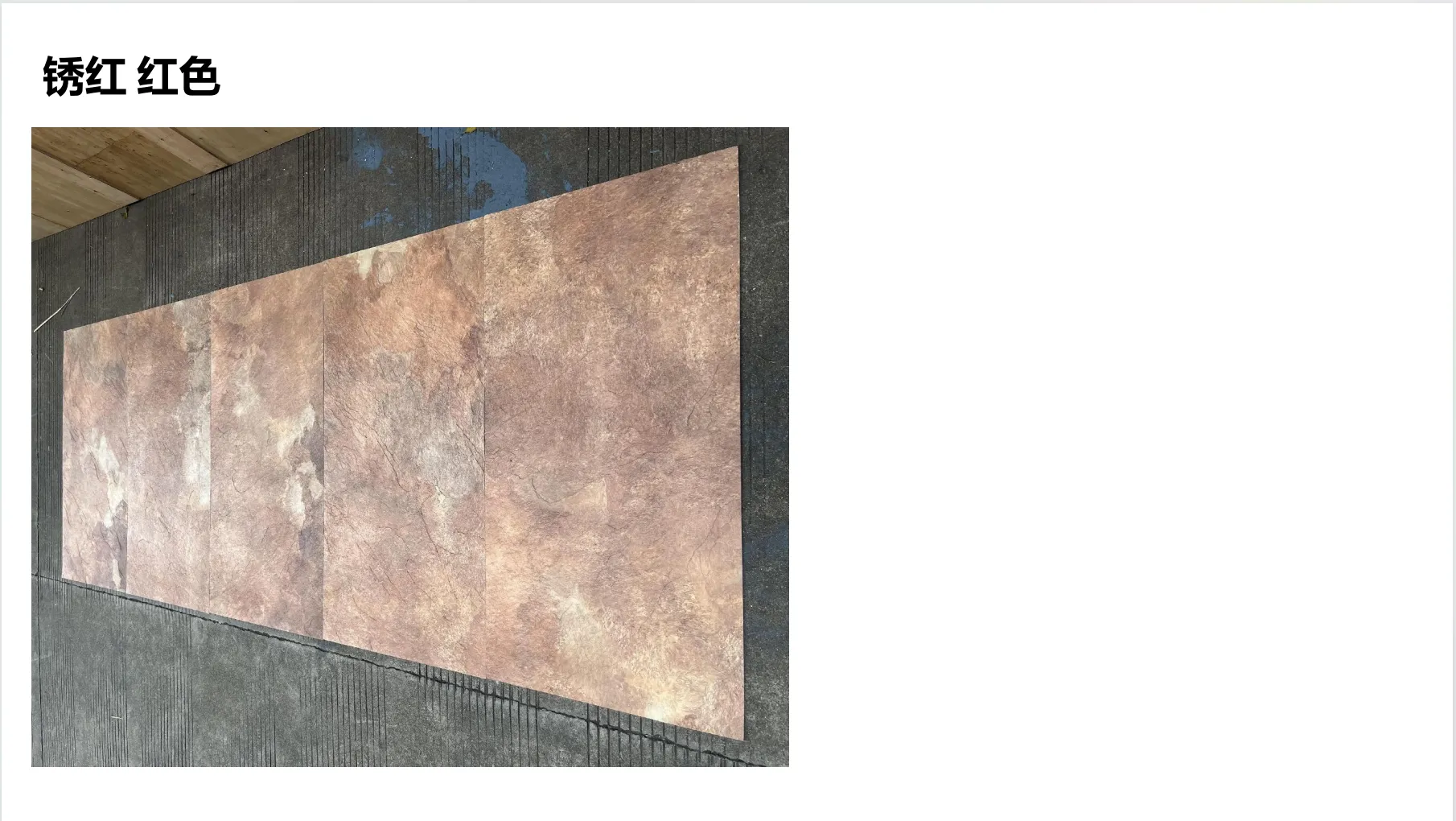
Living in a humid climate has its perks—lush greenery, mild winters, and that fresh, dewy morning air. But for anyone who's ever tackled a mold outbreak on their home's walls or watched a beautiful stone facade turn blotchy with mildew, the downsides hit hard. Traditional building materials like travertine or limestone, with their porous surfaces, often become breeding grounds for mold in high humidity, turning once-stunning spaces into maintenance headaches. That's where Rusty Red MCM steps in—a standout from the MCM project board series that doesn't just bring warmth and character to your space, but fights back against the silent enemy of humid environments: mold.
Mold and mildew thrive in moisture, and in humid regions, that moisture is everywhere—in the air, on surfaces, even seeping into the tiniest cracks of building materials. Porous stones like travertine (starry red) or limestone (beige) are classic culprits. Their natural pores act like sponges, absorbing water vapor and creating the perfect damp environment for mold spores to settle and grow. Over time, this isn't just an aesthetic issue; mold can weaken materials, trigger allergies, and even devalue properties. Homeowners and designers have long searched for a material that marries beauty with resilience—and that's exactly what Rusty Red MCM delivers.
Part of the innovative MCM project board series, Rusty Red MCM isn't your average building material. Crafted as a type of mcm flexible stone, it's engineered to address the unique challenges of humid climates without sacrificing style. Unlike traditional stone or even some modern composites, it combines three key strengths: flexibility, durability, and a non-porous surface that mold simply can't cling to. Let's break down why that matters.
At the heart of Rusty Red MCM's resistance is its modified composite core. Unlike porous travertine or limestone, which absorb moisture like a sponge, this material is designed to repel water. Its dense, non-porous surface leaves no room for mold spores to take root—even in steamy bathrooms, coastal exteriors, or kitchens where humidity runs high. But it doesn't stop there:
Curious how Rusty Red MCM stacks up against other popular materials? Let's take a closer look:
| Material | Porosity | Mold Resistance | Flexibility | Best For |
|---|---|---|---|---|
| Rusty Red MCM (MCM Project Board Series) | Non-porous | Excellent (resistant to mold growth) | High (flexible stone design) | Humid exteriors, bathrooms, kitchens, coastal areas |
| Travertine (Starry Red) | Highly porous | Low (requires frequent sealing) | Low (rigid, prone to cracking) | Dry, indoor spaces with minimal moisture |
| Limestone (Beige) | Moderately porous | Moderate (needs sealing every 1-2 years) | Low (rigid) | Dry climates, low-humidity interiors |
| Fair-Faced Concrete | Slightly porous | Moderate (can develop mold if not sealed) | Low (brittle when thin) | Industrial-style interiors, dry exteriors |
From beachfront bungalows in Florida to rainforest retreats in Costa Rica, Rusty Red MCM is making waves in humid regions. Take, for example, a boutique hotel in Bali that recently renovated its outdoor patios. Previously lined with traditional travertine, the patios were constantly dotted with mold spots, requiring monthly pressure washing. After switching to Rusty Red MCM panels, the maintenance team reports zero mold growth—even during the monsoon season. Guests love the warm, rusty hue that complements the tropical greenery, and the hotel saved hours of upkeep time.
Indoors, it's equally impressive. A family in New Orleans transformed their basement bathroom—long plagued by mildew on the walls—with Rusty Red MCM. The space now feels bright and fresh, with the material standing up to hot showers and the city's year-round humidity. "We used to scrub mold off the tiles every other week," says homeowner Maria. "Now, a quick wipe with a damp cloth is all it takes. And it looks so much nicer than the old, faded tiles!"
What truly sets Rusty Red MCM apart is that it doesn't force you to choose between function and beauty. Its rich, terracotta-inspired color adds depth to any design—whether you're going for a modern industrial look, a cozy cabin vibe, or a sleek coastal aesthetic. Unlike some mold-resistant materials that feel cold or sterile, it has a tactile, stone-like texture that invites touch, making spaces feel warm and inviting. And because it's part of the MCM project board series, it's available in various sizes and formats, from large slabs for feature walls to smaller tiles for backsplashes, giving designers endless creative freedom.
Mold and mildew in humid climates don't have to be a fact of life—not when materials like Rusty Red MCM exist. As a star of the MCM project board series, this mcm flexible stone blends the best of durability, style, and practicality, proving that you can have a beautiful, low-maintenance space even in the stickiest conditions. Whether you're building a new home, renovating a bathroom, or designing a commercial space, Rusty Red MCM isn't just a material choice—it's a solution that lets you enjoy your space without the stress of constant upkeep. After all, in humid climates, peace of mind should be as beautiful as the walls around you.
Recommend Products












