
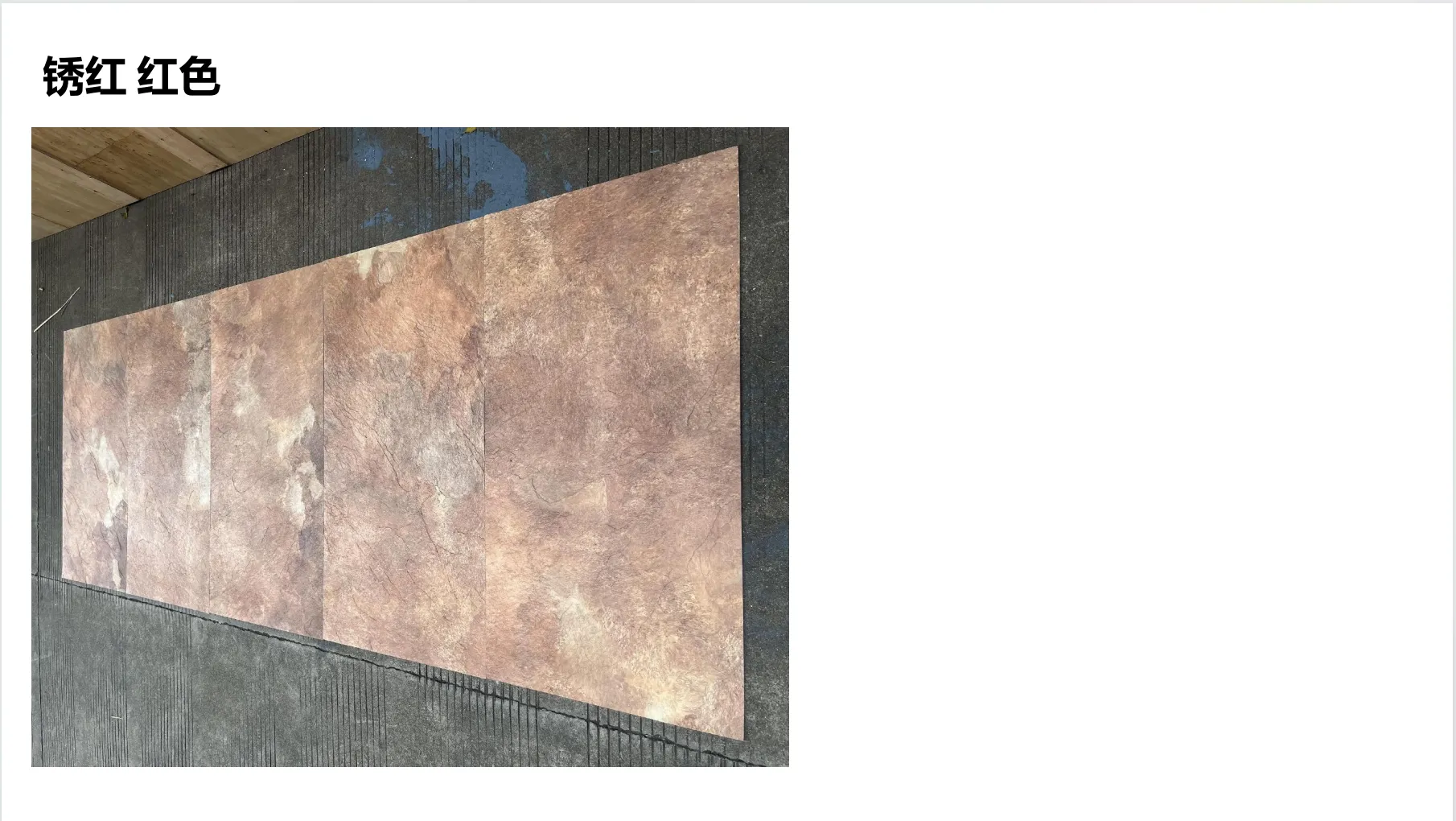
Let's be real—when you're picking materials for a home, office, or commercial space, the first thing that catches your eye is usually the look. But here's the thing no one talks about enough: that stunning stone facade or sleek concrete wall might end up costing you a fortune in upkeep down the line. Today, we're diving into a material that's been turning heads for both its aesthetic and its wallet-friendly long-term appeal: Rusty Red MCM. We'll break down why its maintenance costs are a game-changer, compare it to other popular materials, and show you how choosing it could mean more money in your pocket over the years.
First off, let's get clear on what we're talking about. MCM stands for Modified Composite Material, and it's exactly what it sounds like: a blend of natural minerals and high-performance polymers designed to mimic the look of natural stone, wood, or metal—without the hassle. Rusty Red MCM, in particular, is a warm, earthy shade that leans into that rich, oxidized iron hue we all associate with rustic charm. Think of it as the cozy, lived-in cousin of traditional red brick or rusted metal, but with a modern twist.
Part of the MCM flexible stone family, this material is lightweight, durable, and surprisingly versatile. Unlike solid stone slabs that require heavy machinery to install, Rusty Red MCM comes in thin, flexible panels that can be cut, shaped, and applied to almost any surface—walls, facades, backsplashes, even furniture. And because it's made with modified composite material panels , it's resistant to the usual suspects that ruin other materials: moisture, UV rays, scratches, and even mold. But enough about the "what"—let's get to the "why" that matters most: cost.
Here's a little secret: the initial cost of a material is just the tip of the iceberg. What really hurts is the ongoing maintenance. Let's say you're choosing between Rusty Red MCM and, say, fair-faced concrete or travertine (starry red) for your home's exterior. The concrete might be cheaper upfront, and the travertine might have that luxurious, natural look—but how much will you spend keeping them looking good over 10, 20, or 30 years?
To make this concrete (pun intended), let's compare Rusty Red MCM to three common alternatives: fair-faced concrete, travertine (starry red) (a porous stone with a similar reddish tone), and natural rusted metal. We'll break down annual maintenance tasks, how often they're needed, and what they cost. Spoiler: the numbers might surprise you.
| Material | Annual Maintenance Tasks | Frequency | Average Cost per Year | 10-Year Total Maintenance Cost |
|---|---|---|---|---|
| Rusty Red MCM | Light cleaning (mild soap + water), inspect for loose panels | Cleaning: 2x/year; Inspection: 1x/year | $50–$100 | $500–$1,000 |
| Fair-Faced Concrete | Power washing, sealing (to prevent staining), crack repairs | Washing: 4x/year; Sealing: 1x/2 years; Repairs: As needed | $200–$400 | $2,000–$4,000 |
| Travertine (Starry Red) | Deep cleaning, sealing (porous surface), grout repairs | Cleaning: 3x/year; Sealing: 1x/year; Grout repair: 1x/3 years | $300–$600 | $3,000–$6,000 |
| Natural Rusted Metal | Rust inhibitor application, patching holes, repainting | Inhibitor: 1x/year; Repairs: 1x/2–3 years; Repainting: 1x/5 years | $400–$800 | $4,000–$8,000 |
Let that sink in. Over a decade, Rusty Red MCM could cost you as little as $500 in maintenance, while travertine or natural metal might hit $6,000 or more. And that's not even counting the time and hassle—imagine spending a weekend every year power-washing concrete or sealing travertine, versus a quick hose-down for MCM. For busy homeowners or commercial property managers, that time is money too.
You might be wondering: What makes Rusty Red MCM so low-maintenance? It all comes down to how it's made. Unlike natural stone like travertine (starry red) , which has tiny pores that trap dirt, moisture, and stains, MCM is non-porous. That means spills—whether it's rain, coffee, or even oil—wipe right off without seeping in. No more scrubbing stubborn stains or paying for professional deep cleans.
And forget about sealing. Natural stones like travertine or dolomitic travertine (dark grey) need annual sealing to protect against water damage, but Rusty Red MCM comes pre-sealed and ready to go. Even after years of sun, rain, or snow, its color stays vibrant—no fading, no chipping, no need for touch-up paint. It's like the "set it and forget it" of building materials.
Another win? Its flexibility. Traditional materials like concrete or brick can crack when the ground shifts or temperatures fluctuate. But MCM panels are designed to flex slightly, so they're far less likely to crack or warp. That means fewer repairs—no hiring a mason to patch holes or replace broken tiles. For example, a restaurant in Denver used Rusty Red MCM on its outdoor patio, and even after a harsh winter with freeze-thaw cycles, the panels looked as good as new. The owner told me they hadn't spent a dime on repairs in five years.
Maintenance costs are just the start. Rusty Red MCM offers other sneaky savings that add up over time. Let's talk about installation first. Since it's lightweight (about 1/5 the weight of natural stone), you don't need heavy-duty structural support or expensive equipment to install it. A small crew can put up MCM panels in a fraction of the time it takes to lay brick or stone, which cuts down on labor costs. One contractor I spoke to estimated that installing Rusty Red MCM on a 1,000 sq ft facade cost 30% less in labor than installing natural travertine.
Then there's durability. MCM isn't just low-maintenance—it's long-lasting. Most manufacturers back it with a 15–20 year warranty, but in real-world use, it can last 30 years or more. Compare that to painted metal, which might need repainting every 5 years, or wood siding that rots after a decade. When you factor in replacement costs, Rusty Red MCM starts to look even better. For example, replacing wood siding on a 2,000 sq ft house can cost $10,000–$20,000. With MCM, you might never need to replace it.
And let's not overlook energy efficiency. MCM panels have built-in insulation properties, which can help keep your space cooler in summer and warmer in winter. While it's not a substitute for proper insulation, every little bit helps. A homeowner in Arizona reported that their energy bills dropped by 10% after installing Rusty Red MCM on their west-facing walls, thanks to its heat-resistant properties. Over 10 years, that's hundreds (or even thousands) of dollars in savings.
Let's hear from people who've actually walked the walk. Take Maria, a small business owner in Portland who runs a cozy café called "Rust & Roast." When she was renovating the exterior, she debated between fair-faced concrete and Rusty Red MCM. The concrete was $5,000 cheaper upfront, but after seeing our maintenance cost table, she went with MCM. "Three years later, I'm so glad I did," she told me. "My old concrete patio used to get stained by coffee spills and rain, and I was power-washing it every month. Now, I just hose down the MCM walls once a season, and they still look brand new. I've saved at least $2,000 in cleaning alone, not to mention the time I used to spend scrubbing."
Then there's the team behind a boutique hotel in Austin. They wanted a rustic, desert-inspired look, so they paired Rusty Red MCM with travertine (starry red) accents on the lobby floors. "We loved the travertine's look, but we knew it would be high-maintenance for high-traffic areas," said the architect, Jake. "So we used MCM for the walls and outdoor walkways—places that get rained on, stepped on, and exposed to the sun. Five years in, the MCM still looks perfect, while the travertine floors need quarterly sealing. If we'd used travertine everywhere, we'd be spending an extra $3,000 a year on upkeep."
Of course, no material is one-size-fits-all. If you're obsessed with the look of 100% natural stone and don't mind the upkeep, travertine (starry red) or red travertine might still be your jam. But if you want that same warm, earthy vibe without the endless maintenance bills, Rusty Red MCM is hard to beat.
It's especially ideal for:
– Busy homeowners who don't have time for weekend maintenance projects.
– Commercial spaces (restaurants, hotels, offices) where downtime for repairs is costly.
– Areas with harsh weather (hot sun, heavy rain, freeze-thaw cycles) where durability matters.
– Anyone who wants to invest in their property's long-term value without overspending on upkeep.
At the end of the day, choosing building materials is about more than just aesthetics—it's about investing in your space's future. Rusty Red MCM might cost a bit more upfront than, say, basic concrete, but its rock-bottom maintenance costs and long lifespan make it a smarter financial choice over time. Think of it as paying a little extra now to save a lot later—both in money and sanity.
So, whether you're building a new home, renovating a storefront, or just sprucing up your backyard, don't sleep on maintenance costs. Take it from Maria, Jake, and countless others: Rusty Red MCM isn't just a pretty face—it's a budget-friendly, low-hassle material that keeps on giving. And in a world where every dollar counts, that's a win worth celebrating.
Recommend Products












