
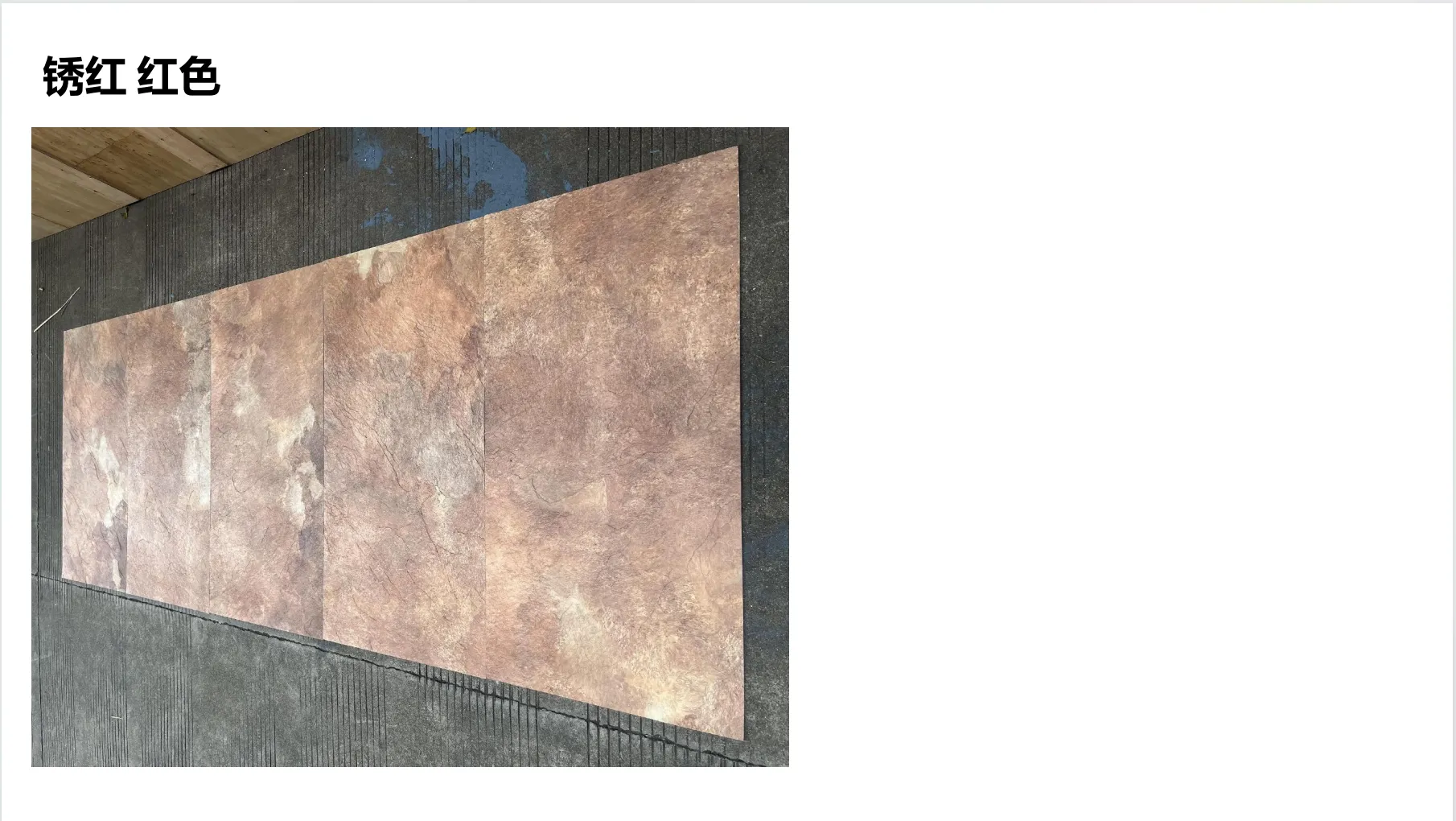
Picture this: You're standing on a bustling construction site, hard hat in hand, staring up at the skeleton of what will soon be a community hub—a mix of offices, cafes, and green spaces. The architect's renderings show a facade that's warm, rugged, and full of character, like something that's been part of the landscape for decades. But here's the problem: The client wants that "lived-in" look without the hassle of maintaining real rusted metal or porous stone. They need something tough enough to withstand harsh weather, light enough to keep installation costs down, and versatile enough to fit the project's tight deadlines. Sound familiar? If you've ever wrestled with balancing durability, aesthetics, and practicality in construction, you know the struggle. Enter the Rusty Red MCM Project Board —a material that doesn't just meet those demands, but redefines what's possible for heavy-duty builds.
In a world where construction materials often force you to choose between beauty and brawn, Rusty Red MCM (Modified Composite Material) Project Board is the rare exception. It's the kind of material that makes architects nod in approval, contractors breathe easier, and clients light up when they see the final result. Let's dive into why this unassuming board is quickly becoming a go-to for builders, designers, and dreamers alike.
First things first: Let's break down the name. MCM stands for Modified Composite Material, a cutting-edge category of building materials designed to blend the best of natural elements and engineered performance. Think of it as the "Swiss Army knife" of construction panels—lightweight but tough, flexible yet rigid, and available in textures and colors that mimic everything from weathered stone to aged metal. And the "Rusty Red" variant? It's a love letter to the warm, earthy tones of naturally oxidized metal and sun-baked clay, with a finish that feels both timeless and modern.
Unlike traditional materials that often come with trade-offs—like the weight of natural stone or the maintenance of real wood— MCM flexible stone (as the broader category is sometimes called) is crafted by bonding layers of mineral aggregates, resins, and reinforcing fibers under high pressure. The result? A panel that's roughly 70% lighter than natural stone but just as durable, and flexible enough to curve around architectural details without cracking. For Rusty Red specifically, the color is integrated throughout the material, not just painted on, so it won't fade or chip even after years of exposure to rain, sun, or snow.
But what really sets Rusty Red MCM apart is its texture. Run your hand over it, and you'll feel the subtle ridges and valleys that mimic the look of rusted steel that's been weathered by time—no actual rust, of course, which means zero risk of corrosion. It's the kind of detail that makes a building feel "lived-in" from day one, like it's been part of the neighborhood for decades, even if it's brand new.
Heavy-duty construction demands materials that can take a beating, and Rusty Red MCM doesn't back down. It's fire-resistant (rated Class A for non-combustibility), water-resistant (no swelling or warping in humidity), and UV-stable, so that rich red hue won't fade to pink under the sun. We're talking a lifespan of 50+ years with minimal upkeep—perfect for commercial buildings, high-traffic public spaces, or coastal homes where salt air would eat away at lesser materials.
Here's a stat that'll make contractors smile: Rusty Red MCM panels weigh in at just 4-6 kg per square meter. Compare that to natural stone, which can hit 20+ kg/sqm, or even fair-faced concrete at 15+ kg/sqm. That light weight means you can install it without reinforcing your building's structure, saving on steel beams and labor costs. Plus, it's easy to cut, drill, and shape on-site, so even complex architectural designs—like curved walls or custom cutouts—are a breeze. No heavy machinery required; a small crew can handle installation in a fraction of the time it takes to lay traditional stone.
Let's be real: No one wants to spend weekends scrubbing mold off their building's facade or repainting faded panels. Rusty Red MCM solves that. It's resistant to mold, mildew, and stains, so a quick hose-down with water once a year is all it takes to keep it looking fresh. Unlike wood, it won't rot or attract pests. Unlike natural travertine, it won't etch from acid rain. For busy property managers or homeowners who value their free time, this is a game-changer.
Sustainability isn't just a buzzword anymore—it's a priority. Rusty Red MCM checks that box, too. Many manufacturers use recycled mineral aggregates in the composite mix, and the production process emits far fewer greenhouse gases than quarrying natural stone or firing clay bricks. Plus, because it's lightweight, transporting it to job sites uses less fuel. And when the time eventually comes to replace it (decades from now), the panels are fully recyclable. For LEED-certified projects or clients who care about their carbon footprint, this is a major selling point.
Rusty Red isn't just a color—it's a mood. It pairs beautifully with cool grays (think dolomitic travertine (dark grey) accents), warm woods, or even bold blacks for a modern contrast. Whether you're designing a rustic mountain lodge, a sleek urban café, or a coastal home with a industrial-chic vibe, this panel adapts. And because it's available in large formats (up to 1200x2400mm), you can minimize visible seams for a clean, uninterrupted look. Want to mix textures? Combine it with wood grain board for a cozy, cabin-like feel, or with smooth metal panels for an edgy, contemporary twist. The possibilities are endless.
Don't just take our word for it—let's look at how Rusty Red MCM is transforming real-world projects. Here are a few examples that showcase its versatility:
A small but beloved coffee shop in downtown Portland wanted to stand out from the sea of sleek, minimalist cafes. Their solution? Cladding the exterior in Rusty Red MCM panels, paired with reclaimed wood accents and large windows. The result? A facade that feels like a weathered barn meets urban cool, drawing in customers with its warm, inviting vibe. "We get compliments every day on the 'rusty metal' look," says owner Maria Gonzalez. "People can't believe it's not real steel—and we love that we'll never have to sand or repaint it."
This mid-rise apartment complex along the Chicago River needed a material that could withstand harsh winters, salt spray, and the occasional flood. The architects chose Rusty Red MCM for the building's lower levels, reasoning that its water resistance and durability would protect against the elements. Today, the rusty red panels complement the river's earthy tones, and residents love the way the color glows at sunset. "We've had zero issues with peeling or fading, even after three brutal winters," says project manager James Lee. "And the install was so fast, we finished a month ahead of schedule."
When the Santa Fe Heritage Museum decided to expand, they faced a challenge: blending the new wing with the original adobe-style building, which dates back to the 1920s. The design team opted for Rusty Red MCM panels with a textured finish that mimics the look of aged terracotta, paired with traditional stucco. The result is a seamless transition between old and new, honoring the museum's history while embracing modern durability. "The color matches the desert landscape perfectly," says lead architect Elena Torres. "And because MCM is so lightweight, we didn't have to reinforce the existing structure—saving the museum thousands in renovation costs."
Still on the fence? Let's put Rusty Red MCM head-to-head with some common alternatives. This table breaks down the key factors that matter most to builders, designers, and homeowners:
| Material | Durability | Weight (kg/sqm) | Installation Time | Maintenance Needs | Sustainability | Aesthetic Appeal |
|---|---|---|---|---|---|---|
| Rusty Red MCM Project Board | 50+ years; fire, water, UV-resistant | 4-6 | Fast (small crew, minimal tools) | Low (hose down annually) | High (recycled materials, low emissions) | Warm, rustic, weathered look; color throughout |
| Natural Rusty Metal (Steel/Copper) | 30-40 years (prone to corrosion) | 15-20 | Slow (requires welding, sealing) | High (regular sealing to prevent rust spread) | Medium (mining impact, recyclable) | Authentic, but fades/chips over time |
| Fair-Faced Concrete | 50+ years (prone to cracking, staining) | 15-25 | Slow (formwork, curing time) | Medium (sealing every 2-3 years) | Medium (high carbon footprint in production) | Industrial, minimalist; limited color options |
| Travertine (Starry Red) | 20-30 years (porous, etches easily) | 20-25 | Slow (heavy, requires skilled masons) | High (sealing every 1-2 years; stains easily) | Low (quarrying impacts ecosystems) | Natural, unique veining; but color fades |
| Wood Grain Board (Natural) | 10-15 years (rot, pests, warping) | 8-12 | Medium (needs weatherproofing during install) | Very High (painting/staining every year) | Medium (depends on sourcing; FSC-certified options) | Warm, organic; but limited color range |
*Data based on industry averages and manufacturer specifications.
We talked to a few architects and designers to get their take on why Rusty Red MCM has become a staple in their toolkits. Here's what they had to say:
"Clients often want that 'old-world charm' but don't want to deal with the upkeep of real stone or metal. Rusty Red MCM gives them the best of both worlds—authentic texture, rich color, and zero maintenance. I used it on a recent winery project, and the owners were blown away by how it complemented the vineyards. It's like the building grew out of the land."
"As someone who specializes in sustainable design, I'm always looking for materials that reduce a project's carbon footprint. Rusty Red MCM checks that box, and it's also incredibly versatile. I've used it for everything from a tiny backyard studio to a 10-story office building. The lightweight nature means we can reduce foundation costs, and the durability means less waste over time. It's a win-win."
We get it—some people hear "composite material" and think "cheap imitation." But Rusty Red MCM couldn't be further from that. Let's debunk a few common myths:
False. Thanks to advanced manufacturing techniques, the texture of Rusty Red MCM is incredibly realistic—you'd swear it's real weathered stone or metal until you pick one up (and realize how light it is). The color runs through the entire panel, not just the surface, so even if it gets scratched, there's no unsightly white underlayer.
Think again. While natural stone is strong, it's also brittle—prone to cracking under stress. MCM, on the other hand, is flexible, meaning it can bend slightly without breaking (handy in earthquake-prone areas). It also has higher impact resistance than most natural stones, making it ideal for high-traffic zones.
Nope! Rusty Red's earthy, warm tone works beautifully with traditional, rustic, and even historic designs. As we saw with the Santa Fe Museum example, it can complement adobe, brick, and wood just as well as it pairs with glass and steel. It's all about how you style it.
At the end of the day, construction is about more than just building walls—it's about creating spaces that inspire, endure, and feel like home. Rusty Red MCM Project Board does exactly that: it's tough enough for heavy-duty use, beautiful enough to turn heads, and sustainable enough to feel good about. Whether you're a contractor looking to save time and labor, a designer chasing the perfect aesthetic, or a homeowner dreaming of a low-maintenance, high-impact upgrade, this panel delivers.
So why settle for materials that make you choose between beauty and practicality? With Rusty Red MCM, you don't have to. It's not just a building material—it's a way to build smarter, live better, and leave a lighter footprint on the planet. Your next project deserves nothing less.
Recommend Products












